


The Libyan scene has returned to the forefront of security developments over the past few hours through two highly sensitive gateways: security and oil.
In Benghazi, the head of military intelligence administration in the "Libyan National Army," Fawzi al-Mansouri, was killed after an explosive device targeted his car near his home in the al-Hawari area, while the Zawiya refinery, located west of Tripoli, was targeted in an attack that caused a massive fire in one of its fuel tanks.
Assassination in Benghazi
The "Libyan National Army" announced the killing of Fawzi al-Mansouri, who holds the post of head of military intelligence administration, following an explosion of an explosive device in his car.
According to the army's statement, the attack occurred after Al-Mansouri left a mosque following the Isha prayer, in the al-Hawari area of the city of Benghazi.
The army described the operation as "a despicable and cowardly act," vowing to pursue those responsible and affirming that the assassination will not halt what it described as its efforts to combat terrorism and maintain the stability of the country.
The Directorate of Moral Guidance announced that funeral rites for al-Mansouri would be held at Al-Keesh Square in Benghazi after the Dhuhr prayer.
The significance of the incident lies not only in the killing of a senior security official, but also in the nature of the target and the location of the operation. Targeting the head of military intelligence inside a city that is a main centre of the authorities and forces controlling eastern Libya highlights once again the ability of armed cells or hostile parties to penetrate the security environment.
Second Blow at the Heart of the Energy Sector
On the other side of the country, the city of Zawiya was facing an incident of a different kind, but one no less sensitive.
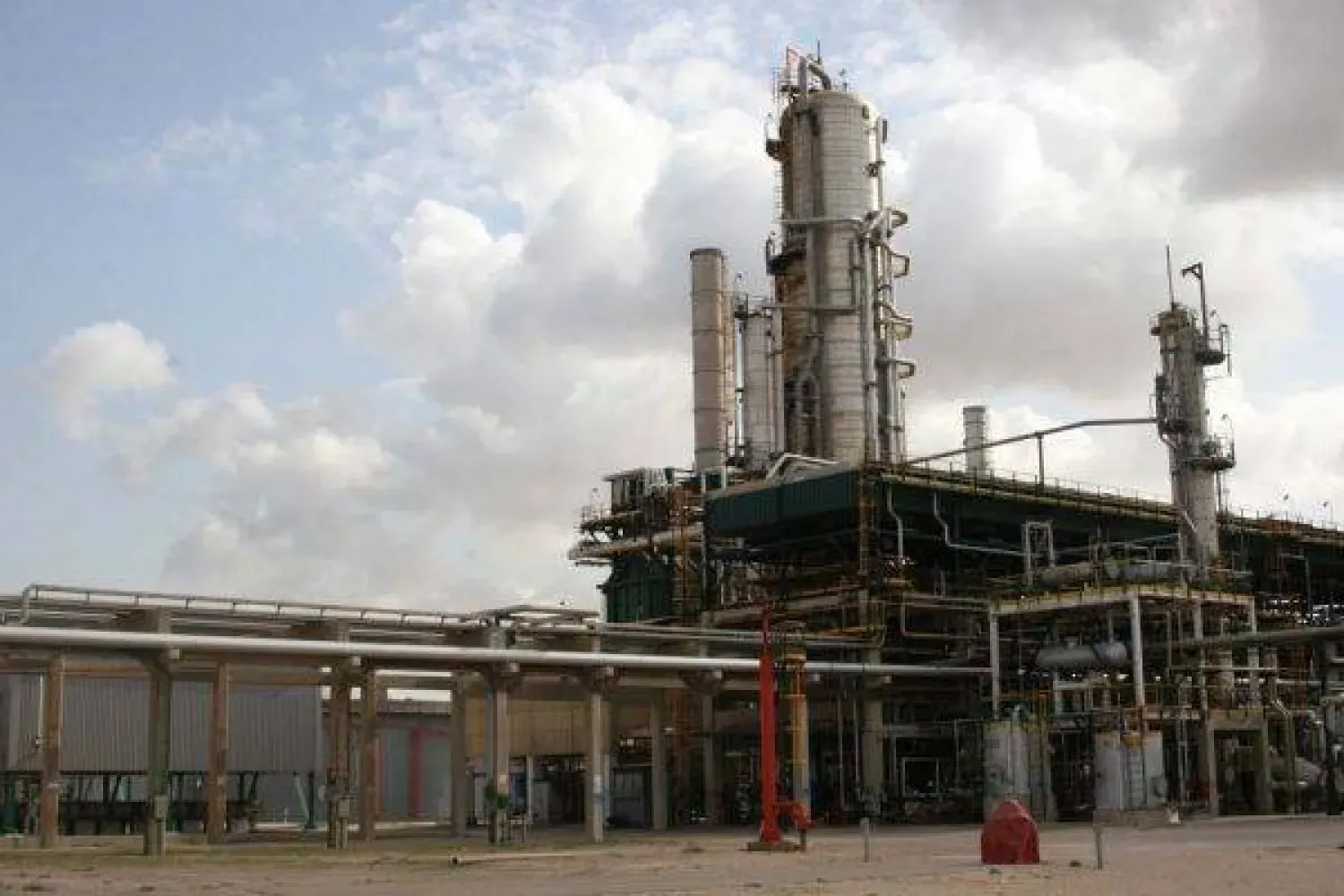
A huge fire broke out in a fuel tank inside the Zawiya refinery, after what the National Oil Corporation described as a "direct targeting" of the tank.
According to the corporation, the tank contained about 4.5 million litres of motor gasoline before the flames consumed its contents and the tank collapsed completely.
The corporation declared a maximum state of emergency in the area and called for a comprehensive investigation to determine the nature of the attack and the party responsible.
As for Brega Oil Marketing Company, affiliated with the National Oil Corporation, it announced that firefighting teams had moved to contain the fire and that damage assessment had begun in parallel with efforts to bring the flames under control.
Zawiya Refinery: Why Is Targeting It a Greater Danger?
The Zawiya refinery is not an ordinary oil facility. It is located about 40 kilometres west of the capital Tripoli, and its refining capacity reaches around 120,000 barrels per day, making it one of the most important oil refining facilities in the country, especially given the shutdown of the Ras Lanuf refinery.
It is also linked to an important oil supply system, including the Sharara field, whose production reaches about 300,000 barrels per day.
Therefore, any prolonged disruption to the refinery's operations may not remain confined to a single industrial facility, but could extend to the fuel market and local supplies.
More dangerous still, the targeted tank contained huge quantities of gasoline, meaning that any attack on the facility carries security, environmental and economic risks at the same time.
A New Attack After the Drone Incident
The Zawiya incident did not come alone. According to available information, two days before the fire, the refinery was subjected to another incident when a drone struck a tank containing untreated naphtha in the early morning hours.
The impact caused a leak, but workers managed to bring it under control.
On another front, the National Oil Corporation spoke of a direct targeting of the gasoline tank, while Brega Company stated that the circumstances of the incident were still under assessment.
At the same time, engineers working inside the refinery reportedly said that operations had continued and had not stopped.
This detail is important, because a fire in a facility of this size does not necessarily mean the refinery has stopped entirely, especially if the damaged section can be isolated from the rest of the operating units.
Images of the Fire, but the Details Are Incomplete
Video clips circulating online showed huge flames and dense columns of black smoke over Zawiya, but these clips could not be independently verified.
Nor had the identity of the party behind the targeting been determined at the time this report was prepared.
These developments come in a country which, despite the halt of major military operations, has not fully overcome its political and security division.
Since 2014, Libya has been split between rival authorities and forces in the east and west, following years after the fall of Muammar Gaddafi's regime in the wake of the 2011 uprising.
Although a ceasefire was reached in 2020, the agreement did not end the institutional division or fully unify the armed forces.
The "Libyan National Army," led by Khalifa Haftar, exerts influence over large areas of the east and south of the country and is allied with the authorities based in Benghazi, while the Government of National Unity is based in Tripoli and exercises influence over most areas of the west.
This map means that any major security incident can affect the fragile balance between the various centres of power.
Why Do the Two Incidents Cause Concern?
The assassination and the attack on the refinery belong to different fields, but they strike two essential elements of the state's capacity to endure.
The first targets security and intelligence through the assassination of a figure holding a senior post in military intelligence; the second strikes energy and fuel, two of the sectors most closely tied to daily life and the Libyan economy.
Therefore, the repetition of such operations could create an impact that goes beyond the direct losses. Targeting a security official may send a message about the fragility of security protection, while targeting an oil facility may send another message about the possibility of striking vital infrastructure.
When the two occur within a short period, they serve as a reminder that Libyan stability still rests on a fragile security balance rather than a final settlement of the conflict.
Oil: A Source of Strength and a Point of Weakness
Oil wealth is Libya's main source of economic strength, yet it also makes its oil facilities highly sensitive targets.
Oil facilities do not only generate revenues; they are linked to transport, electricity, fuel, exports and domestic market supplies.
Accordingly, repeated operations targeting oil facilities may turn into a tool of political and economic pressure, even if they do not initially lead to a halt in production.
This is what makes the Zawiya incident more than just a fire inside a tank. If the investigation establishes that the attack was deliberate, the question will not only be about the material cost of the losses, but about the authorities' ability to protect the facilities on which the country relies to secure fuel and drive its economy.
Benghazi and Zawiya: The Geography of Libyan Division
The significance of the two developments grows when considering their geographical locations. Benghazi is a main centre of authority and military power in eastern Libya, while Zawiya lies in western Libya within the geographical area controlled by the Tripoli authorities and the armed forces allied with them.
Accordingly, a major security incident occurring in both east and west serves as a reminder that Libya's problem is not confined to one region. At the same time, this cannot automatically be taken as evidence of a return to civil war or of a coordinated campaign linking the two incidents.
The most cautious conclusion is that the Libyan security environment remains open to penetration, and that state institutions and vital facilities have not yet reached the level of protection commensurate with their importance.
Is Libya Returning to a State of Chaos?
The most pressing question now is not whether Libya will witness a new full-scale war, as these events alone do not provide sufficient indicators of that.
The more dangerous scenario may be a different one: the continuation of limited and scattered attacks on security figures and strategic facilities, gradually exhausting state institutions and weakening trust in their ability to impose security.
Libya does not need broad battles to suffer from instability. It is enough for assassinations to become possible, oil facilities to be vulnerable to targeting, and drones capable of penetrating sensitive sites, for political stability to remain exposed to shocks.
Hence, the assassination of Fawzi al-Mansouri and the fire that struck the fuel tank at the Zawiya refinery each present, within their own context, a picture of a deeper problem that has not yet been resolved: Libya has stopped the great war, but it has not yet ended the environment that makes a return to violence possible.
Between Benghazi and Zawiya, the real test before the Libyan authorities now appears to be not only preventing the outbreak of a new war, but proving their ability to protect state figures, vital facilities, oil wealth and the institutions that should stand above the calculations of political and military conflict.


