


The Lebanese army has begun the first phase of its deployment in the town of Zawtar al-Gharbiyeh in southern Lebanon, under a framework agreement between Beirut and Tel Aviv brokered by the United States. The step is seen as a test of the Lebanese state's ability to extend its authority into border areas, while Israeli forces continue their military operations in other towns still under their control.
Army deployment and gradual return of residents
Lebanese army units began deploying in Zawtar al-Gharbiyeh last week, following the withdrawal of Israeli forces from the town's surroundings, making it the first of the "pilot areas" covered by the agreement signed last June.
Local residents said the army's presence has restored a degree of reassurance and encouraged some inhabitants to return to inspect their homes after months of displacement. The army said it carried out sweeps that resulted in the seizure of weapons, the dismantling of explosive devices and military equipment within the town.
Nevertheless, a number of residents remain unable to return to neighbouring villages where Israeli forces are still stationed.
Extensive destruction and shortage of services
The town shows signs of extensive destruction caused by military operations. Local officials said around 75% of buildings had been destroyed, amid power and water outages and ongoing clearance of rubble.
Media teams observed Israeli military vehicles moving on nearby hills, while repeated explosions were heard in neighbouring villages as a result of demolition operations carried out by Israeli forces in areas they still control.
A test for the withdrawal agreement
The agreement, reached through US mediation, provides for the gradual withdrawal of Israeli forces from areas of southern Lebanon in exchange for the deployment of the Lebanese army and its assumption of security responsibility, including dealing with Hezbollah's weapons within what is known as the "pilot areas".
Observers believe the success of the experiment in Zawtar al-Gharbiyeh could pave the way for its application in other areas, but its implementation faces political and security challenges, especially given Hezbollah's refusal to give up its weapons and the continued Israeli military presence at several border positions.
Israeli military operations continue
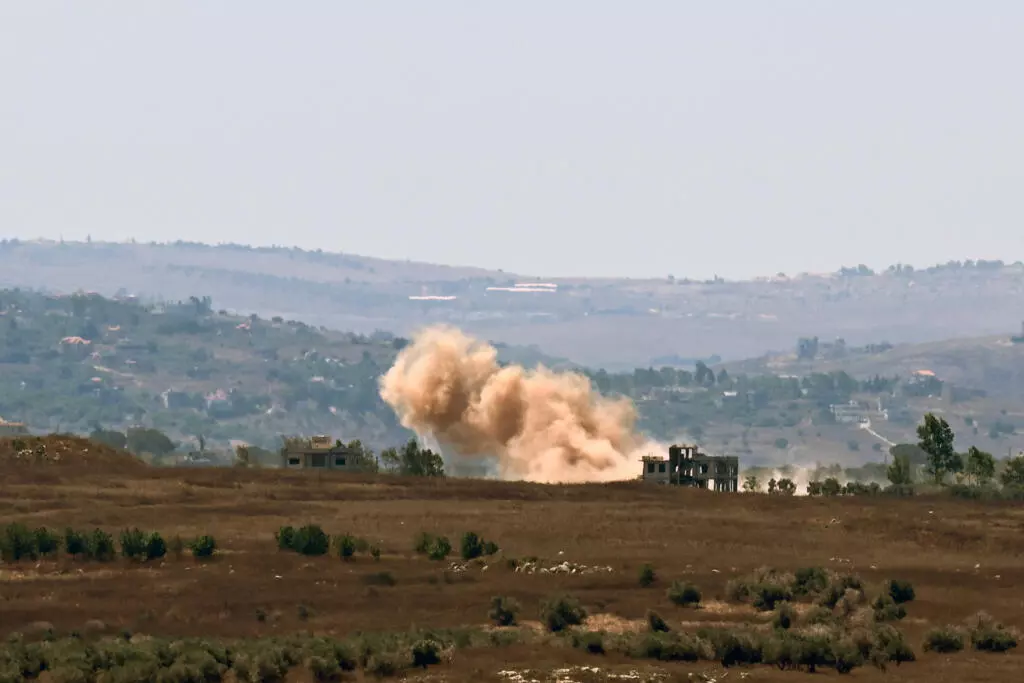
In a related development, the Israeli army carried out a large explosion in the town of Majdal Zoun in the Tyre district, according to the National News Agency, despite the framework agreement between the two sides remaining in force.
Majdal Zoun is among the areas where Israeli forces still maintain a military presence, while Beirut says Israel continues to carry out demolition and explosion operations within Lebanese territory under its control.
According to the Lebanese Ministry of Public Health, Israeli attacks since 2 March 2026 have killed 4,332 people and wounded 12,236 others.
Analysts believe the coming phase will be decisive in determining the extent to which the agreement can establish stability in southern Lebanon, amid continuing field tensions and the complexities surrounding the Israeli withdrawal file and Hezbollah's weapons.


