


Nine Sunni Muslims in the city of Taldykorgan, capital of the Zhetysu region in southeastern Kazakhstan, face criminal trial on charges of participating in the activities of the Tablighi Jamaat, which the Kazakh authorities have banned and classified as an extremist organisation since 2013. The case relies mainly on secret recordings of religious conversations inside the home of one of the defendants, and on analyses carried out by parties commissioned by security agencies.
According to a report published by the freedom of religion or belief organisation Forum 18 on 24 September 2026 (13 Rabi al-Akhir 1448 AH), the trial of the nine men began before the Taldykorgan city court in June, presided over by Judge Alibek Abdikhayev, and its sessions were postponed or disrupted several times over the summer. The court was scheduled to resume hearing the case on Friday 25 September (14 Rabi al-Akhir), but no reliable published information is yet available on the outcome of that session.
A sentence of up to two years
The prosecution charges the nine men under Part 2 of Article 405 of the Kazakh Criminal Code, which punishes participation in the activities of an association or organisation previously banned by a court ruling on the grounds that the authorities link it to "extremism or terrorism."
If convicted, the defendants face a fine or a prison sentence of up to two years, in addition to a possible ban on engaging in certain activities for up to three years. None of the nine men is currently in pre-trial detention, but they are barred from leaving the country, according to one of the defendants.
The case includes Jakibbek Ormanov, Aidos Albiev, Nariman Amanov, Istai Dzhakaiev, Dubek Buzov, Duman Kabdoldanov, Zhenisкali Nuralin, Zhumart Begyzhanov and Albisbai Tleubaev. Eight of them live in the Zhetysu region, five of them in Taldykorgan, while the ninth defendant lives in the neighbouring Almaty region.
Hidden camera and microphones inside a home
One of the most prominent aspects of the case is that the evidence presented by the authorities rests on a covert surveillance operation carried out by the Committee for National Security of Kazakhstan inside the home of defendant Jakibbek Ormanov, aged 49.
According to the indictment seen by Forum 18, the Zhetysu regional prosecutor's office approved what was described as "special measures" against Ormanov, including the installation of a hidden camera and the recording of conversations inside his home in Taldykorgan. The documents indicate that the covert recording began on 8 July 2025 and continued for parts of the year, and included conversations among the defendants on religious and other matters.
An investigator in the Committee for National Security, Major Nurbol Zhanabayev, requested religious, psychological and linguistic analyses of those recordings. One report issued in November 2025 found indications linked to the Tablighi Jamaat, while another religious analysis dated 20 February 2026 considered that the conversations included "propaganda for the religious ideology" of the group.
The elements on which the analysis relied included the use of terms related to religious gatherings, preaching and sharing faith, expressions which the expert bodies said are used within the Tablighi Jamaat. On 27 November 2025, security personnel searched Ormanov's home and found a single copy of a book that the authorities had banned in August 2016.
Defendants deny membership of the group
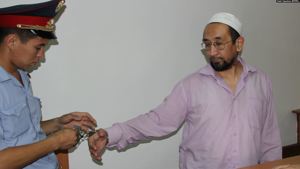
The nine men categorically deny belonging to the Tablighi Jamaat. Their lawyer, Agiespek Tuleginov, and the religious expert and head of the public foundation "Liberty," Galym Agylov, said at a press conference held in Almaty on 21 September 2026 (10 Rabi al-Akhir 1448 AH) that the defendants reject the prosecution's allegations that they belong to the movement.
The defence lawyers also called for the case to be reviewed carefully and comprehensively. The Kazakhstan International Bureau for Human Rights and Rule of Law, which hosted the press conference, announced that the defence says the defendants personally did not commit any extremist acts or make any extremist statements.
Investigator Nurbol Zhanabayev did not respond to Forum 18's questions about the reasons that lead him to regard the nine men as "extremists," or about the people they are believed to have harmed.
Government official: "They did not kill anyone"
Statements by an official at a state religious institution have added to the controversy surrounding the case. When Forum 18 asked the deputy director of the Centre for Religious Studies and Rehabilitation, which is attached to the authorities of the Zhetysu region, whom the defendants were believed to have harmed, she said they "did not kill anyone" and "did not call for anyone to be killed."
The official added that she could not say whether the Tablighi Jamaat was dangerous, and she declined to take a position on whether the 2013 decision to ban the movement in Kazakhstan was justified, explaining that this was outside her remit.
Four defendants with previous cases
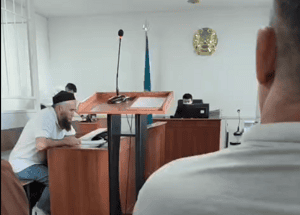
The case also reveals that four of the nine men had previously faced legal proceedings related to religious activity.
Nariman Amanov was previously prosecuted in a case concerning possession of religious materials before being released under a general amnesty in 2012, while Istai Dzhakaiev was sentenced in 2016 to three years in prison under roughly the same article.
In February 2024, Aidos Albiev and Albisbai Tleubaev were each sentenced to one year of "restriction of freedom," with a three-year ban on certain public, educational and religious activities linked to internet use. The current indictment treats the continued activity of these men after their earlier sentences as evidence of their continued adherence to the banned ideology, a claim the defence disputes.
Not the first case
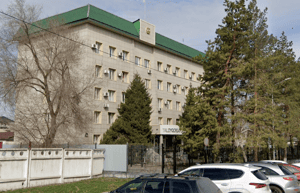
The new trial comes less than a year after a similar case in Kazakhstan. In December 2025, a court in the Almaty region sentenced 12 Muslims to terms ranging from one to five years on charges related to belonging to the Tablighi Jamaat.
A court in Astana banned the Tablighi Jamaat in 2013, and since then Article 405 has been used to prosecute people whom the authorities accuse of continuing the group's activity. Human rights organisations, for their part, have repeatedly raised concerns about the extent to which the country's "extremism" legislation is applied to peaceful religious practice.
The current Taldykorgan case makes this debate more pronounced, as the evidence published so far does not focus on acts of violence attributed to the defendants, but on religious conversations recorded secretly and on terms which experts consulted by the state considered indicative of adherence to the banned group's ideas. With the defendants insisting they are not members, the final court ruling will determine the fate of the nine men.


