


Israeli occupation forces are moving to expand their military capabilities from land into space, while their operations continue in southern Lebanon, Syria and the occupied West Bank. These developments reflect a widening of Israel's security strategy and growing reliance on technological and military superiority in the region.
The most recent indication of this is that what is called "Israel" is preparing to develop offensive space capabilities, including systems to protect its satellites from hostile spacecraft, as well as weapons that could be used to strike targets from space, among them laser systems.
Israel seeks superiority in space warfare
The new plans fall within a multi-year budget for the space sector at the Israeli Ministry of Defense, and include developing military intelligence and communications capabilities, alongside allocating resources for offensive operations in space.
Israeli Defense Minister Israel Katz said earlier that his country wants to become the world's leading state in space attack capabilities, considering that possessing these capabilities would strengthen Israel's ability to deter and strike its adversaries' targets.
These ambitions come amid growing global interest in military space capabilities, especially as Russia and China develop anti-satellite capabilities, and the United States also seeks to strengthen what it calls "space superiority."
However, the drive to militarise space raises growing international concerns about a new arms race beyond the atmosphere, particularly as the costs of launching satellites fall, their manufacturing technologies advance, and commercial companies operating in the space sector proliferate.
Moreover, the increasing military reliance on satellites makes communications and information networks more vulnerable to cyberattacks, opening a new front in any future conflict.
Escalation in the West Bank and the destruction of a Palestinian monument
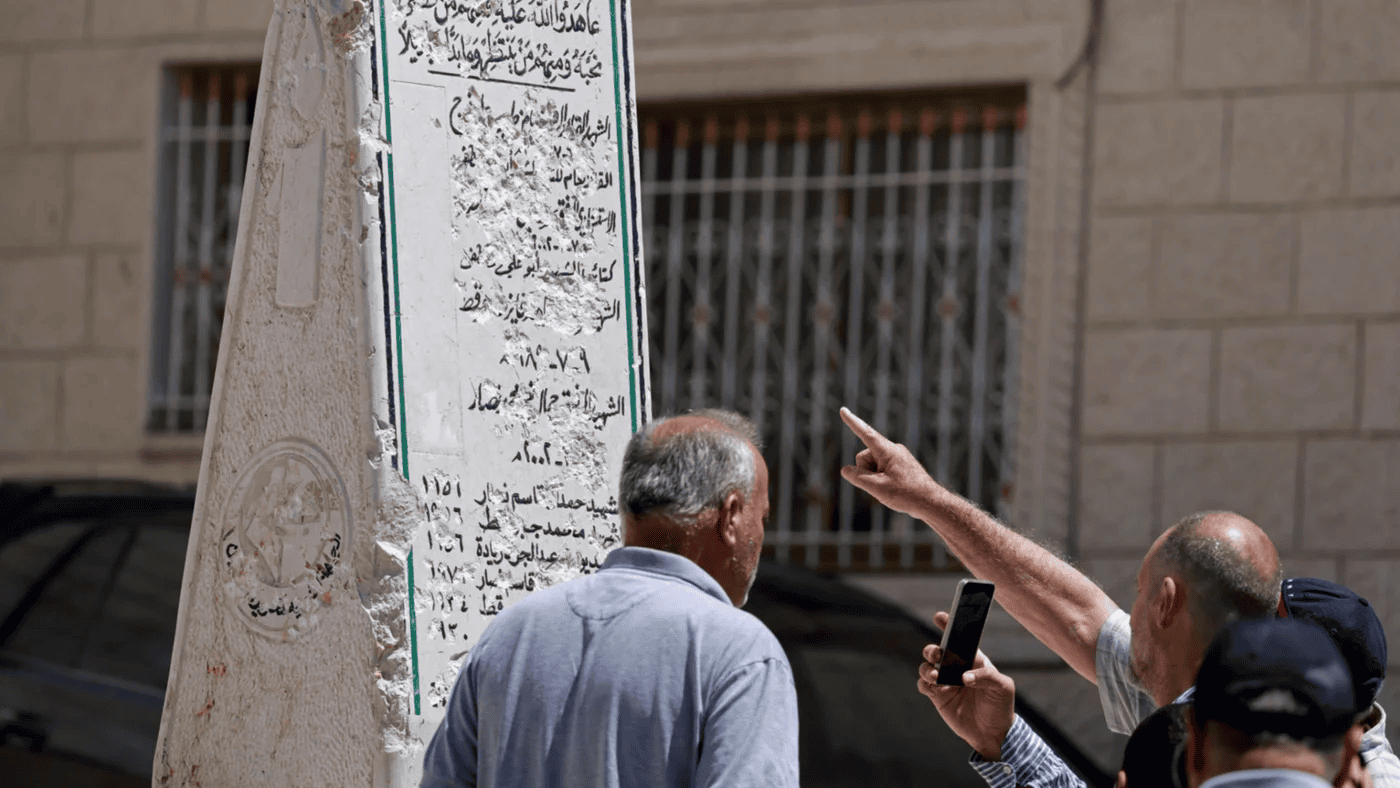
In parallel with the movement in the space domain, the occupied West Bank witnessed an incident that sparked political controversy inside "Israel".
Israeli Knesset member Zvi Sukkot, of the Religious Zionism party, smashed a Palestinian memorial in the village of Madama south of Nablus using a heavy hammer, in a step he said aimed to remove a monument commemorating two Palestinians who were killed after attacking Israelis, according to his account.
Israeli forces were present at the site during the incident, before the army later announced that the demolition had not been authorised, and that Sukkot and his team acted in a manner the army described as misleading and endangering its soldiers.
At the same time, the Israeli occupation army said its forces periodically destroy what it describes as incitement monuments and symbols.
UN: entire neighbourhoods in southern Lebanon being erased
In Lebanon, international criticism of Israeli operations in the south is growing.
Candice Ardiel, spokesperson for the United Nations Interim Force in Lebanon (UNIFIL), said Israeli demolition operations in southern Lebanon appear "systematic rather than selective."
She noted that UNIFIL forces are documenting the extent of destruction in areas including Naqoura, Khiam and Kfarkela, stating that entire neighbourhoods have been destroyed, including homes, shops, schools, hospitals, road networks, and electricity and water systems.
The United Nations says the demolitions began with the Israeli incursion in March, but have continued nonetheless.
These developments raise growing concerns about the future of the Israeli presence in southern Lebanon, especially as demolitions and the burning of agricultural land and orchards continue.
The future of UNIFIL itself has also become a matter of debate as its mandate nears its end, at a time when Israel seeks to end the international force's presence in the area, while the Lebanese government prefers to extend its mission.
"Israel" maintains its military presence in Syria
In Syria, Israeli occupation Defense Minister Israel Katz, during a rare visit to Israeli forces in southern Syria, affirmed that the Israeli army will remain in the area as long as Israel sees threats to its security.
Tel Aviv has kept forces within what it calls a "security zone" in southern Syria since the fall of Bashar al-Assad's regime in December 2024, in the area that previously formed a buffer zone separating Israeli and Syrian forces.
Katz said Israeli forces operate daily to prevent what he described as threats, eliminate remnants of the former regime, and prevent dangerous forces from consolidating near the border.
His remarks come a week after Israeli occupation forces bombed the abandoned Abu al-Duhur air base in northwestern Syria, on the pretext of preventing Turkish forces from deploying there, a claim Ankara denied.
A strategy built on military expansion
These simultaneous developments reveal an Israeli trajectory that goes beyond conventional military operations, towards entrenching a long-term military presence and widening the scope of technological superiority.
In space, Tel Aviv is working to develop new offensive and defensive capabilities; in Syria it affirms its intention to keep its forces within areas it says are necessary for its security; in Lebanon, demolition operations continue in the south; while the West Bank witnesses rising attacks on Palestinian symbols and facilities.
This comes at a time when Tel Aviv speaks of deterrence and preventing threats, while critics of its policy argue that the continuation of military operations and the expansion of control zones could reshape the security and geographic reality of the region over the long term.
Thus, Israeli moves do not appear separate from one another; rather, they form parts of a broader strategy that combines technological superiority, direct military presence, the expansion of zones of influence, and preventing adversaries from building capabilities that could threaten what is called "Israel" in the future.


