


Southern Lebanon has witnessed a new escalation between the Israeli occupation and Lebanon, after Lebanese authorities reported that Israeli forces had advanced overnight on Friday into the village of Zuta al-Gharbiya, which is under the control of the Lebanese army, and set up an earthen barrier at its eastern entrance.
The National News Agency said that a force of the Israeli army moved into the village after midnight and erected an earthen barrier near the town square. A France-Presse correspondent confirmed the presence of the barrier, while it was not immediately clear whether the Israeli forces had remained inside the area.
The incident is of particular significance because Zuta al-Gharbiya is one of two pilot areas that were agreed to be brought under Lebanese army control, within a framework agreement brokered by the United States in June, following the Israeli war on southern Lebanon.
A village that is supposed to be under Lebanese army control
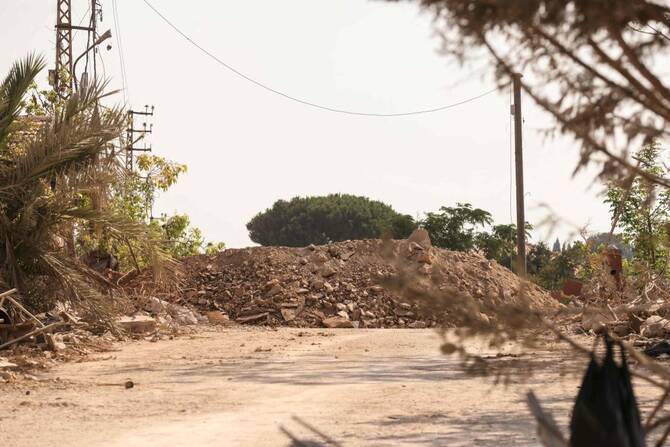
The Lebanese army began deploying in Zuta al-Gharbiya on 21 July, and some 50 families returned to the village after the Lebanese forces deployed, according to the mayor, Abed Ezzeddine.
Israeli forces were already present on the outskirts of the village before the Lebanese army deployed, but the construction of the earthen barrier inside the area prompted a Lebanese objection.
A Lebanese military source told France-Presse that the step constitutes a violation of the framework agreement.
This comes as the understandings signed in June provide for two parallel tracks: the deployment of the Lebanese army and its assumption of responsibility for the southern areas, in exchange for a gradual Israeli withdrawal, alongside a commitment by Beirut to disarm Hezbollah.
Disagreement over the Israeli withdrawal
The incident came a few days after the end of the seventh round of direct negotiations between Lebanon and Israel in Rome, which were held on Thursday.
According to a Lebanese source quoted by France-Presse, the Israeli side refused during the negotiations to discuss withdrawal from additional areas before confirming that the Lebanese army had gained full control of the pilot areas.
This reflects the continued disagreement over the sequencing of the agreement's implementation: while Lebanon demands the consolidation of the army's control over its territory and an Israeli withdrawal, Tel Aviv links withdrawal to the question of disarming Hezbollah and ensuring that its military activity does not return to the south.
Hezbollah rejects the agreement
Hezbollah's position further complicates the picture, as the group rejects the agreement and does not agree to hand over its weapons, while Israeli forces continue to carry out intermittent strikes in southern Lebanon despite the ceasefire in force since June.
The war had broken out in a wider context after Hezbollah fired rockets toward what is called "Israel", and the latter responded with a broad bombing campaign and ground incursions into southern Lebanon.
According to the Lebanese Ministry of Health, Israeli military operations resulted in the deaths of more than 4,300 people and the displacement of hundreds of thousands.
A new test for the agreement
The Zuta al-Gharbiya incident places the Lebanese-Israeli agreement before a new test, particularly as the area was among the first sites that were expected to demonstrate the success of arrangements for the Lebanese army to assume responsibility in exchange for an Israeli withdrawal.
The erection of an earthen barrier inside a village where the Lebanese army has deployed means that the question of field control has not been settled definitively, while the file of Hezbollah's weapons and the Israeli withdrawal remain linked to each other in the negotiations.
Accordingly, the development does not appear to be a limited field measure alone, but rather reflects the fragility of the new understandings and the difficulty of moving from a ceasefire to a stable settlement in southern Lebanon.


