

Israeli Forces Commit War Crimes Through Deportation Campaigns in the West Bank
Human Rights Watch said on Thursday that Israel's expulsion of tens of thousands of Palestinians from three refugee camps in the West Bank in 1446 AH (early 2025 CE) amounts to war crimes and crimes against humanity, calling for urgent international measures to hold Israeli officials accountable and to halt further abuses.
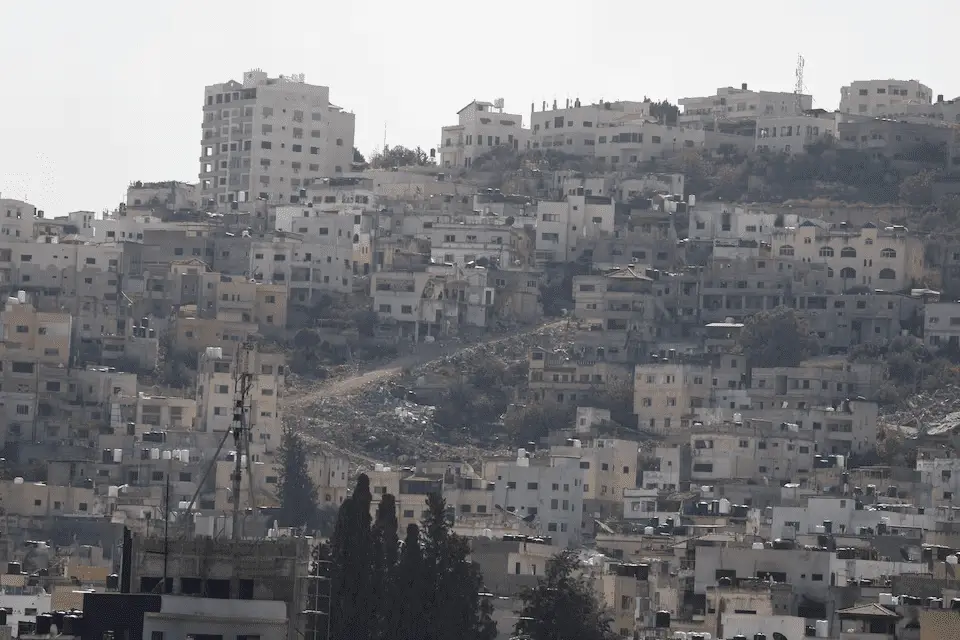
The rights organisation said Israeli forces forcibly displaced some 32,000 residents of the Jenin, Tulkarm and Nur Shams camps during Operation "Iron Wall" in January and February. The report, issued by the organisation in 105 pages under the title "All My Dreams Were Erased," added that the displaced were prevented from returning and that hundreds of homes had been demolished.
Milena Ansari, the Human Rights Watch researcher who worked on the report, told Reuters on Wednesday: "Ten months after they were displaced, none of the family members have been able to return to their homes."
The Israeli military, in a statement to Reuters on Wednesday, claimed that it needs to demolish civilian infrastructure so that militants cannot exploit it. It did not specify when residents would be able to return.
"We are living a very difficult life"
The Geneva Conventions prohibit the transfer of civilians from occupied territory, except temporarily for imperative military reasons or for their own security. Human Rights Watch said senior officials should be prosecuted for war crimes and crimes against humanity.
Hisham Abu Tabeekh, who was expelled from the Jenin camp, said his family was unable to take anything with them when they were expelled.
Abu Tabeekh told Reuters on Wednesday: "We are talking about no food, no drink, no medicine, no expenses... We are living a very difficult life."
Human Rights Watch said it had interviewed 31 Palestinian displaced persons from the three camps, and analysed satellite images, demolition orders and verified video footage. It found that more than 850 buildings had been destroyed or severely damaged, while a United Nations assessment put the number at 1,460 buildings. The camps, which were established in the 1950s for Palestinians displaced when Israel was founded in 1948, had housed generations of refugees.
Human Rights Watch said Israeli officials responded by writing that the operation targeted what they called terrorist elements, but they provided no justification for the mass expulsion or the ban on return.
Human Rights Watch said the expulsions, carried out at a time when global attention is focused on Gaza, constitute part of the crimes against humanity of apartheid and persecution.
Escalating violence in the West Bank
Since the war of 7 October 2023, Israeli forces have killed nearly 1,000 Palestinians in the West Bank, expanded detention without trial, demolished homes, and accelerated settlement construction, while settler violence and the torture of detainees have increased, according to the report.
Israel cites historical and biblical ties to the West Bank, which it occupied during the 1967 war, and says the settlements provide strategic depth and security.
Most of the international community considers all settlements illegal under international law. Israel rejects this, saying the West Bank is "disputed" territory and not "occupied."
Human Rights Watch urged governments to impose targeted sanctions on Israeli officials and leaders, suspend arms sales and trade preferences, ban settlement goods, and enforce arrest warrants issued by the International Criminal Court.
The group described the expulsions as ethnic cleansing, a term it characterised as a legal term commonly used to describe the unlawful removal of residents of a particular ethnic or religious group from an area by another group.
Source: Human Rights Watch and Reuters.


