


The battle over Islamophobia in Britain no longer takes place only in the streets or on social media, where racist expressions and campaigns against migrants and Muslims spread. A more complex question has begun to impose itself within the British media and political spheres: what happens when the same ideas move into long-established media institutions, are presented through articles and analyses, are discussed in political salons, and then gain the presence of influential figures from across the political spectrum?
This question was brought back to the forefront by a broad study that examined the production of the British magazine "The Spectator" on Islam and Muslims, and revealed a recurring pattern of coverage that the study describes as biased.
The findings are of particular significance because the issue concerns not a single article or a single writer, but thousands of pieces published over the years, and the standing the magazine holds within the British political and media establishment.
According to what the British writer Nesrine Malik presented in "The Guardian", a media monitoring centre reviewed 3,733 pieces published by "The Spectator" on Islam and Muslims over eight years, and concluded that more than half of the relevant pieces were marked by bias.
Yet the figure, important as it is, does not tell the whole story. What matters most is the pattern that emerged behind it.
When the Muslim Becomes a "Problem"
The reading presented by Malik reveals that Muslims did not appear, in a portion of this coverage, as a natural component of British society. Instead, they were repeatedly placed within a frame linked to danger, isolation or difficulty of integration.
Topics recurring in the pieces the study monitored questioned the concept of Islamophobia or downplayed the complaints of Muslims about racism and discrimination, while other topics linked the growing number of Muslims to demographic and cultural anxieties.
In some cases, the debate took a more direct turn, when Islam was presented as a religion difficult to reconcile with the nature of the modern secular state, or when the building of mosques became a subject calling for questions about influence, identity and security.
The difference between the two questions is not only linguistic but also political. The first assumes that Muslims are part of society, while the second places their very existence under test.
A Paradox Created by the Coverage
One of the most striking points in the study concerns the contradictory image that forms of Muslims. In one discourse, the Muslim appears as an isolated group living within closed communities and unwilling to integrate.
In another discourse, the Muslim appears as an organised force expanding within British society and seeking to impose its influence.
From here, some everyday issues linked to Muslims become loaded with political meanings greater than their real size. Prayer, mosques, the hijab, migration and even population growth can, in this type of discourse, turn into indicators of a wider battle over the future of Britain.
Why Does the Muslim Become a Suitable Target for the Right?
Nesrine Malik sees Islam, within British right-wing discourse, as a space in which a broad range of political anxieties can be gathered into a single package.
Migration can be linked to Islam, national identity can be linked to mosques, anxiety about demographic change can be linked to the rising number of Muslims, and disagreement over multiculturalism can be turned into a debate on "whether Islam is compatible with Britain."
Thus, talking about Muslims becomes a way of talking about other issues indirectly.
This point is important, because hostility towards Muslims does not necessarily require explicitly racist language in order to perform a racist political function. It is enough for the problem to be redefined as one of "religion," "integration" or "culture."
At that point, it becomes possible to pass on more extreme ideas under a cover that appears more acceptable in the public sphere.
From Enoch Powell's Condemnation to Its Rediscovery
The issue does not stop at the content of the articles, but extends to the historical shift that some parts of the British right have undergone.
Peter Oborne, the journalist who previously served as political editor of "The Spectator", points to a striking paradox in the magazine's history. The institution that once condemned the anti-immigration speech of the British politician Enoch Powell later became more willing to present him as a figure of significant influence on conservative thought.
This process does not stop at the re-evaluation of a historical political figure. The magazine also gave space to voices from the far right, including writings that portrayed the activist Tommy Robinson in a positive light, despite his association with anti-Muslim rhetoric and campaigns.
Over time, the problem becomes larger than a mere change in editorial opinion. It amounts to a redrawing of the boundaries separating traditional conservative discourse from extremist discourse.
How Extremist Discourse Enters Through the Front Door
In the past, it was relatively easy to distinguish between a traditional media institution and a fringe platform publishing extremist discourse. When the same language begins to appear within long-established institutions, however, the boundaries become less clear.
The words may change, and some of the crudest expressions may disappear, but the basic idea can remain intact. Here lies the danger of what Malik calls normalisation: discourse does not need to persuade everyone in order to succeed; it is enough for it to become familiar.
"The Spectator" Is Not Just a Magazine
The matter gains additional importance because of the position of "The Spectator" within the British political environment. The magazine is not an obscure platform with little influence, but an institution with a long history and close relations with media and political circles.
Malik notes that its parties and social events attract politicians, journalists and public figures from both the Labour and Conservative parties, alongside prominent figures from the British right, among them Nigel Farage.
Here appears one of the most sensitive aspects of the case. Even if those present disagree politically with some of what the magazine publishes, their regular presence within its social and political space gives it a standing different from fringe platforms.
Legitimacy comes not only from the number of readers, but also from the people who agree to sit around the same table.
From the Magazine's Pages to Society
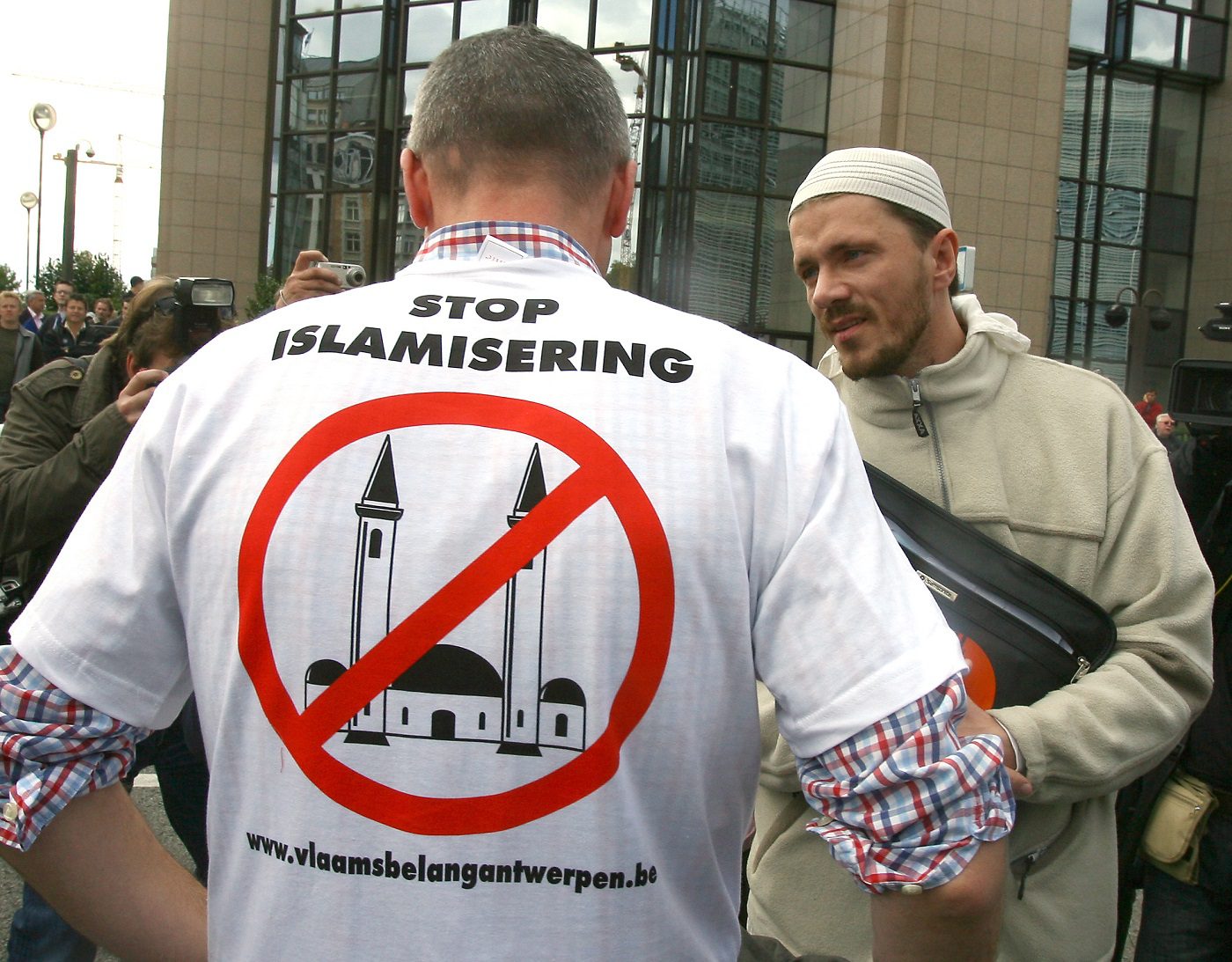
This debate coincides with a British environment witnessing rising polarisation over migration, identity and multiculturalism, alongside protests with a racist character, attacks on mosques and an increase in hate crimes against Muslims.
In such an environment, media language does not remain confined to the pages of newspapers and magazines. Published material can be excerpted, republished and turned into a post on a social platform, then used by a political activist or protest group, before returning to the media as "a view widely held in society."
Thus a closed circle emerges, in which the boundaries between who produces the discourse, who promotes it and who benefits from it may disappear.
The Problem Is Not Only Islamophobia, but Also the Decline of Journalism
Malik levels another criticism no less important than her charge that the magazine normalises anti-Muslim discourse. She considers that a number of the pieces the report examined also suffer from professional and intellectual weakness, and that some writing is closer to the style of popular journalism and populist content than to the political analysis that a magazine with a long history should provide.
Here appears another shift within right-wing media: instead of building a coherent political argument, anger itself becomes media product, fear becomes a tool for attracting audiences, and the enemy becomes a necessary element for the story to continue.
In such a case, the institution does not need to offer a solution to a complex problem. It is enough to present a person or group that can be blamed for the problem.
Why Did the Economy Disappear Behind the "Battle of Identity"?
Malik goes further, seeing excessive focus on Muslims as potentially harmful to the conservative project itself. Conservative movements face difficult questions concerning the economy, the decline of public services, productivity, wages, living standards and the role of the state.
These issues require complex answers, whereas talk of identity and fear of the other is easier to consume politically.
For this reason, Muslims practising their rites in public spaces can become a provocative political subject, while questions about the decline of services or weak economic growth recede into the background.
The debate over "who we are" becomes more prominent than the debate over "how we are governed."
When the Minority Becomes a Scapegoat for the Majority's Crisis
This point leads to a broader conclusion. A society suffering from economic or political problems does not necessarily need a real enemy in order to feel anger; sometimes it is enough to find a discourse that directs this anger towards a specific group.
Here the Muslim can play the role of a scapegoat. Instead of questioning the policies that produced the housing crisis, migration can be discussed; instead of examining the decline of services, the conversation can shift to a debate about multiculturalism; and instead of explaining complex social transformations, they can be reduced to a narrative claiming that "the country is changing because of Muslims."
It is an easy answer to difficult questions, but its ease does not make it correct.
The Real Test Is Not for Muslims Alone
At its core, the issue reveals a wider test of British democracy itself. Freedom of expression allows institutions and individuals to put forward the most provocative views, but the existence of a right to expression does not mean that every discourse is immune from criticism, or that media institutions are exempt from professional responsibility.
Conversely, confronting Islamophobia does not mean preventing debate about Islam, migration or integration.
The problem begins when the debate shifts from scrutinising policies and ideas to characterising an entire human group as a threat, and this characterisation is then repeatedly reproduced until it becomes part of everyday language.
From the Margins to the Centre
The story of "The Spectator" is not merely an example of a dispute over the coverage of Muslims in British media. It reveals a broader trajectory that can be summed up in three stages.
In the first stage, the idea appears on the edges, finding only a limited audience. It then moves to more influential political and media platforms, where it is reformulated in more acceptable language.
Finally, it reaches the heart of the institution, where journalist, politician, businessman and activist meet, and the discourse becomes part of general conversation.
At this point, extremism no longer needs to announce itself as extremism; it is enough for it to become familiar.
This is perhaps the most troubling aspect of the issue that the study of "The Spectator"'s coverage has brought back to the surface: the most dangerous shift does not occur when the voices of extremists grow louder, but when their voices become less strange to the ears of the institutions that were supposed to draw clear lines between them and acceptable political discourse.


