


The eighth episode of the map "Islamic Cities Through History" turns to an Iraqi city whose role as a capital did not last long, yet was enough to keep its name present in the history of the Abbasid Caliphate and Islamic architecture.
It is Samarra, the city the Abbasids built on the banks of the Tigris, which Caliph al-Mu'tasim bi-Allah adopted as the capital of the caliphate in 221 AH/836 CE, after Baghdad had become less suitable for accommodating military expansion and the Turkish elements whose influence had grown in the Abbasid army.
Samarra: a city made by the caliphate
Samarra lies in Iraq, on the eastern bank of the Tigris, north of Baghdad. Before its Abbasid founding the area was inhabited by an older presence, but the city that entered history is linked to the project begun by Caliph al-Mu'tasim bi-Allah in 221 AH/836 CE.
Al-Mu'tasim had inherited a vast state facing multiple military and political challenges, and the army occupied a position of growing importance in the administration of the state. As the influence of Turkish soldiers in Baghdad increased, al-Mu'tasim chose a new site far from the old capital and began building Samarra to be the seat of the caliphate and the army. References indicate that the Abbasid city extended for a distance of about 41 kilometres along the Tigris, and included a large complex of palaces, mosques and public buildings.
Why did the Abbasids leave Baghdad?
The move of the capital was not the result of Baghdad's cultural decline, but of political and military circumstances. The strength of the army in the Abbasid state grew, especially the Turkish soldiers on whom al-Mu'tasim relied, and relations between them and the people of Baghdad became tense at certain periods.
The caliph needed a new city in which he could organise his army and administer the state away from the frictions Baghdad had witnessed.
Thus Samarra became a military and political capital more than a commercial centre that had arisen naturally.
Al-Mu'tasim: founder of the new metropolis
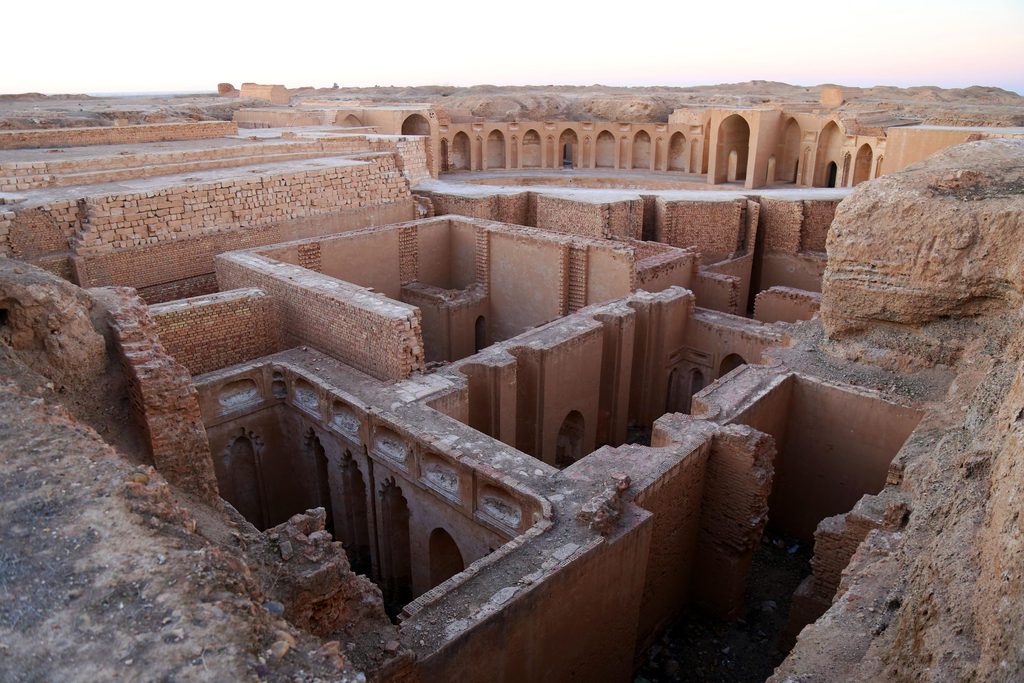
The founding of Samarra is associated with Caliph al-Mu'tasim, who ruled between 218 AH/833 CE and 227 AH/842 CE. Among the most important features of his reign was military strength, and this was evident in the new city.
Neighbourhoods and dwellings were built for the army's personnel and their families, palaces and government buildings were erected, and the Tigris became an essential artery of life in the city.
But Samarra would reach the peak of its architectural glory during the reign of another caliph, al-Mutawakkil 'ala Allah.
The Great Mosque: architecture that defies time
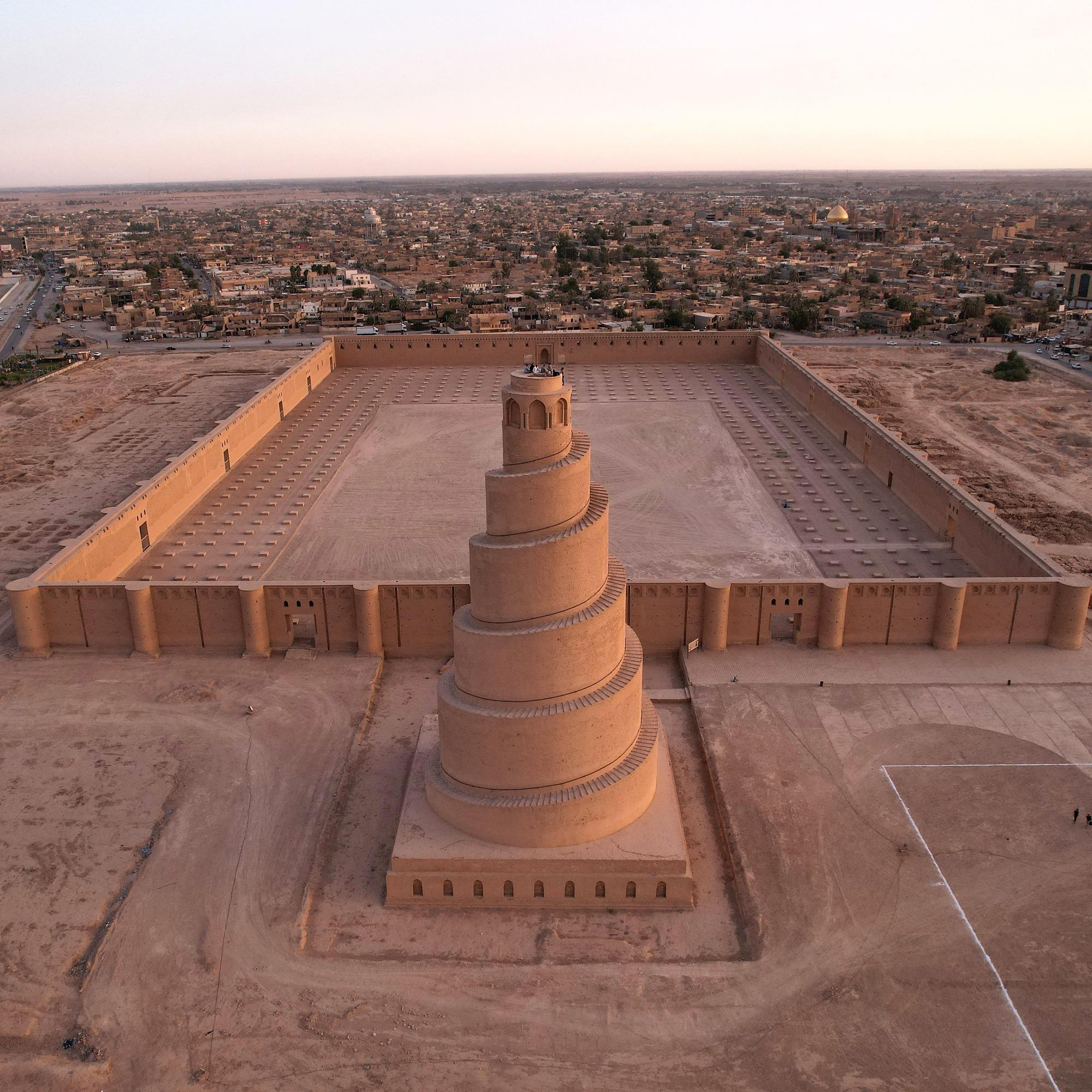
The Great Mosque of Samarra is among the most famous monuments of Abbasid civilisation. It was built by Caliph al-Mutawakkil between 234 AH/848 CE and 237 AH/852 CE, and in its time it was one of the largest mosques in the Islamic world.
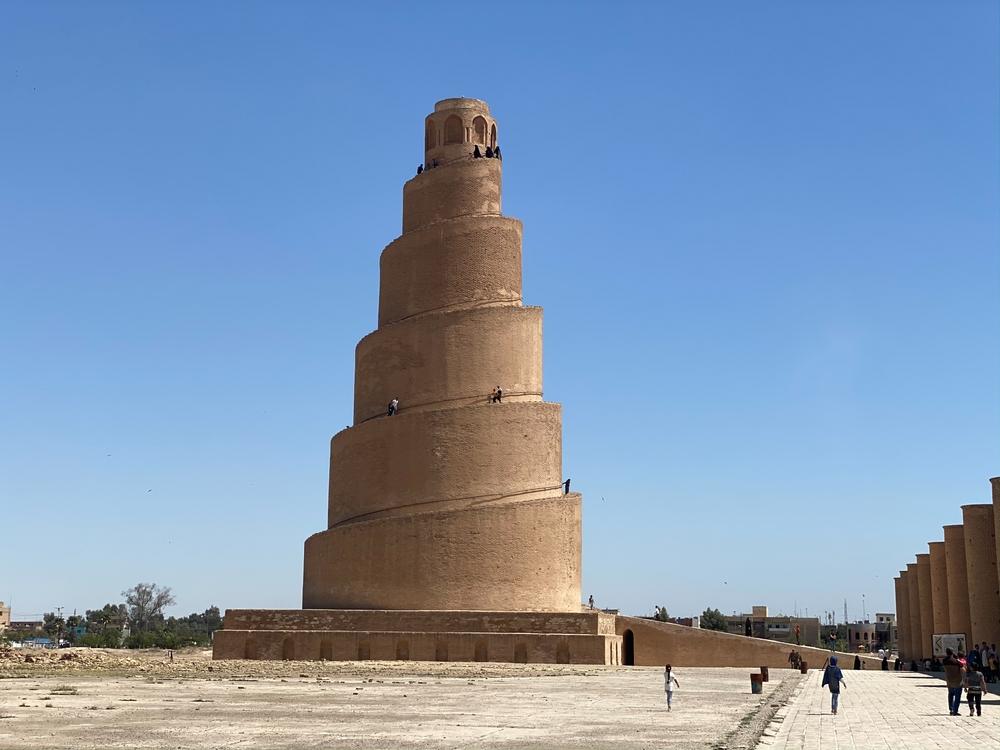
The mosque and its annexes cover vast dimensions, while its spiral minaret known as the Malwiya is famous, and has become a visual symbol of the city and of Abbasid architecture.
UNESCO notes that the Great Mosque and its Malwiya are among the most prominent elements that made Samarra one of the most important Islamic archaeological sites in the world, and that its architecture influenced the later development of Islamic architecture.
The Malwiya was not merely a tall minaret; it became a unique architectural model associated with the name of Samarra to this day.
Samarra: the city of palaces
Among the most prominent features of Abbasid Samarra was the spread of royal palaces. Caliphs built vast complexes such as the Jawsaq al-Khaqani palace and the Balkuwara palace, in addition to other palaces, gardens and facilities.
These buildings reveal the scale of resources that the Abbasid caliphate was able to deploy in founding a new capital.
The plaster decorations discovered in Samarra also show an important development in Islamic art, particularly what was later known as the Samarra style, which left its influence in distant Islamic regions.
The caliphal capital in a time of power and turmoil
During the caliphate's residence in Samarra, a number of Abbasid caliphs succeeded one another, the most prominent being al-Mu'tasim, al-Wathiq, al-Mutawakkil, al-Muntasir, al-Musta'in, al-Mu'tazz, al-Muhtadi and al-Mu'tamid.
But this period was not stable. The army became a highly influential element in the selection of caliphs and in the administration of the state, and the caliphate entered repeated internal conflicts.
The killing of Caliph al-Mutawakkil in 247 AH/861 CE was a notable point in the history of what came to be known as the Anarchy at Samarra, a period that witnessed intense struggle among military forces for power.
Ironically, the city that had been founded originally to protect the caliphate from turmoil became the arena of military conflicts that threatened the stability of the caliphate itself.
Samarra and the Sunni Abbasid caliphate
Despite the political upheavals, Samarra remained the seat of the Abbasid caliphate, which represented the largest political framework of the Sunni sphere in that period.
The Abbasid caliphs patronised institutions of learning and religion, while Baghdad and other cities continued to fulfil their scholarly roles.
It is important here to distinguish between Samarra as a political capital and Baghdad as a more firmly established scholarly centre. The move of the caliphate to Samarra did not mean that all scholarly activity moved there.
This is one of the important lessons in the history of Islamic cities: the political capital is not always the first scholarly city.
From Samarra back to Baghdad: the return of the capital
The caliphate's residence in Samarra did not last long. In 279 AH/892 CE, Caliph al-Mu'tadid bi-Allah returned the seat of the caliphate to Baghdad.
Samarra thus ended its role as the political capital of the Abbasid state, and Baghdad returned to its central position.
But the city did not disappear from history immediately. It remained inhabited, and some of its structures endured; then its status gradually declined, and over the centuries large parts of Abbasid Samarra turned into ruins, yet it remained one of the most important witnesses to the golden age of Abbasid architecture.
Samarra today: a city turned into a world heritage site
Today Samarra is a modern Iraqi city located near the remains of the old Abbasid city.
In 2007 UNESCO inscribed the archaeological city of Samarra on the World Heritage List, as a site of exceptional value for understanding Islamic civilisation in the Abbasid era. UNESCO notes that Samarra represents a unique model of a major Islamic capital of the ninth century CE, and that its remains offer a broad picture of urban planning, architecture and the arts in the Abbasid era.
Among the most prominent surviving elements are the Great Mosque and its Malwiya, in addition to the palaces, buildings and monuments spread across the area.
Samarra reveals a different dimension of the story of Islamic cities. It was not a city that grew over long centuries; rather, the caliphate founded it to be a capital, and it witnessed both the power and the upheavals of the state before the caliphate returned to Baghdad.
Nevertheless, its legacy has outlasted its political lifespan. Its monumental architecture, decorations and palaces made it one of the most important chapters of the Abbasid era, and a witness to a period in which Baghdad and Samarra were centres of political and cultural power whose influence extended across the whole Islamic world.


