


After Kufa, which was the capital of the caliphate during the reign of Ali ibn Abi Talib (may God be pleased with him), the series "Islamic Cities Through History" moves to another Iraqi city that was no less influential in shaping Islamic civilisation: Basra, the city that began as a Muslim encampment on the edge of Iraq, then became a centre of conquests in the East, a commercial port linking the Islamic world with the Indian Ocean, and a major school of jurisprudence, hadith, language and literature.
Basra: a city born of the conquests
Basra lies in southern Iraq, near the Shatt al-Arab and the confluence of the Tigris and Euphrates rivers. Its location made it, from its founding, a link between Iraq, Persia, the Gulf and the Indian Ocean.
Historians differ on the precise year of its founding. The sources cite 14 AH/635 CE, 16 AH/637 CE, or 17 AH/638 CE, while a number of modern studies favour a link between its origins and the early years of the Islamic conquests in Iraq. Basra was originally established as a Muslim encampment and a military base for operations heading east.
The choice of its site was linked to the need for a base close to waterways and to land suitable for grazing. From there, armies could move towards the territories under the Sasanian Empire.
From military camp to base for conquests
Utbah ibn Ghazwan was among the most prominent figures associated with the founding of Basra. Its site was chosen in an area known to the Arabs as al-Khuraiba, near an ancient Persian settlement.
In its early days its buildings were simple, made of reeds and local materials. The mosque and the governor's house were established there. The city then gradually expanded as Arab tribes settled in it. The sources indicate that Abu Musa al-Ash'ari, who served as governor of Basra, contributed to organising its quarters and distributing the tribes within it.
With the completion of the conquests in Iraq, Basra ceased to be merely a military garrison and became a principal base for Islamic operations towards Fars, Khurasan and Sistan.
From it, armies set out that contributed to the Islamic expansion eastward, and the city became an administrative centre for wide regions of Iran during phases of the Rashidun and Umayyad periods.
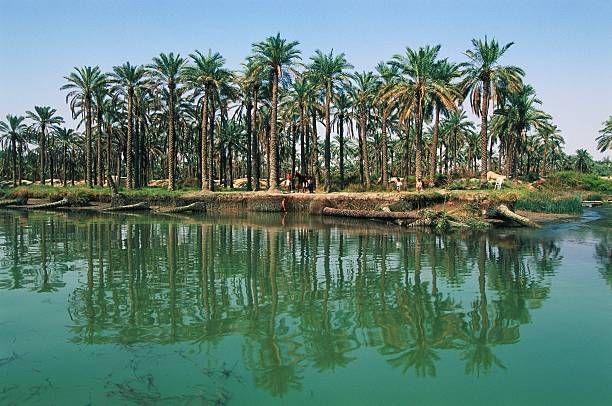
Basra: gateway of trade between East and West
Basra's importance was not only military. Its location near the Gulf connected it to a wide trade network linking Iraq with Persia, India and the regions of the Indian Ocean.
Al-Ubulla, near it, was an important commercial port, and Basra itself later became a centre of commercial activity, attracting merchants from many regions.
Historical studies indicate that in its early phases Basra's population was not made up of Arabs alone. The city included groups of varied origins, among them Iranians and people who arrived by the trade routes of the Indian Ocean, which gave it a diverse social and cultural character.
Al-Hasan al-Basri: the voice of asceticism and learning
But what Basra became most famous for was not its trade or its armies. It was learning.
Among its most prominent figures was al-Hasan al-Basri, one of the leading Successors, who lived most of his life in Basra and died in 110 AH/728 CE.
His scholarly presence was not separate from public life. He lived through periods of intense political turmoil, witnessed the transformations of the Umayyad state, and his voice remained present in debates about asceticism, authority, ethics and religious responsibility.
Here Arabic grammar was born
If al-Hasan al-Basri left his mark on hadith, preaching and jurisprudence, Basra also enters history through another highly important door: the Arabic language.
In this city one of the earliest schools of grammar arose, in the context of the need to regulate Arabic after the expansion of the Islamic state and the mixing of Arabs with other peoples.
The beginnings are associated with the name Abu al-Aswad al-Du'ali, and successive generations of scholars of language and grammar followed, until the Basran school reached the height of its maturity with al-Khalil ibn Ahmad al-Farahidi.
Al-Khalil was among the greatest scholars of Arabic. His name is linked to the development of the science of language and prosody, and he was the teacher of Sibawayh.
Thus Basra was no longer only a city where people learned Arabic; it became a city whose scholars helped build the science of Arabic itself.
Basra and Kufa: a rivalry that shaped the sciences of language
On the other bank lay Kufa. A famous scholarly rivalry arose between the two cities, especially in grammar and language.
Basra developed a method based on induction, analogy and the study of the speech of eloquent Arabs, while the Kufans had their own choices and methods in dealing with transmitted reports and evidence.
This rivalry was not merely a disagreement among scholars; it enriched the Arabic language and broadened the study of its rules and its evidence.
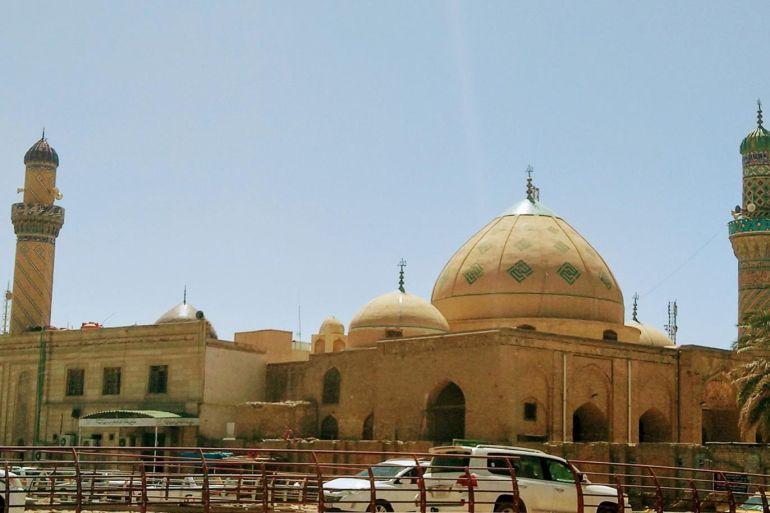
Al-Jahiz: when Basra became a school of literature and thought
From Basra emerged one of the most famous writers of Islamic civilisation: Abu Uthman Amr ibn Bahr al-Jahiz, who died in 255 AH/868 CE.
Al-Jahiz was not a grammarian in the traditional sense, but he was a man of letters and a thinker of wide learning. He left works that became classics of the Arabic heritage, such as al-Bayan wa-l-Tabyin and Kitab al-Hayawan.
In his books, Basra appears as a vibrant intellectual environment: a city of debate, language, literature and thought, where the religious sciences intersected with natural and social knowledge and with literature.
Thus the picture of Basra was completed as one of the most important laboratories of Islamic and Arabic thought in the early centuries.
Basra and hadith, qira'at and jurisprudence
Alongside language and literature, Basra was a centre of hadith, jurisprudence and qira'at. A large number of Companions and Successors resided there, and circles of transmission and teaching followed one another.
Thus the city became a meeting point for the sciences: jurisprudence, hadith, exegesis, qira'at, language, grammar and literature.
A city that knew politics and conflict
As in Kufa, Basra was not far from politics. The city witnessed the Battle of the Camel in 36 AH/656 CE, one of the most serious events of the First Fitna. Afterwards Basra experienced unrest and various political movements, yet it remained able to recover its scholarly and commercial role.
In the Abbasid period its economic and cultural importance continued, although Baghdad gradually began to draw the centre of political and scholarly gravity towards itself.
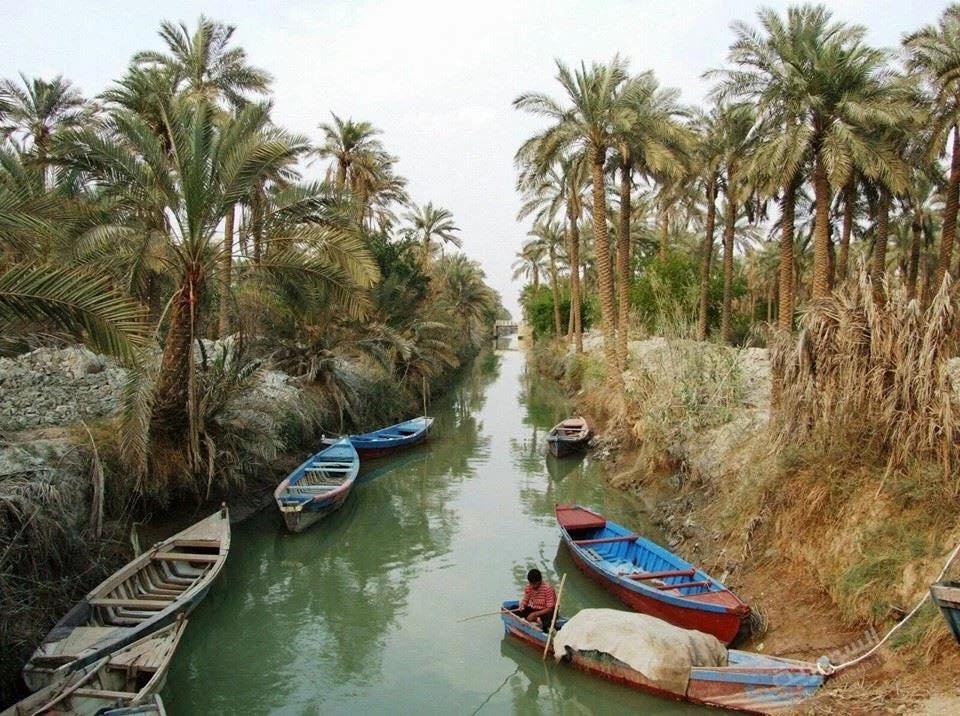
The city's decline, and the survival of its name
Over the centuries Basra suffered political instability, wars, and changes in trade routes and waterways. Regional conflicts and natural disasters also affected its standing.
But the city did not disappear from history. Even when its political influence declined, its name remained present in every discussion of Arabic grammar, language, literature, hadith and jurisprudence.
And while Baghdad would later become the capital of Abbasid civilisation, a significant part of the scholars who helped build that civilisation came from Basra or were influenced by its school.
In the next episode we leave the early garrison cities for the city that would become the capital of the Abbasid caliphate and one of the greatest cities of the medieval world: Baghdad.


