


After Mecca, where revelation descended, and Medina, where the first Islamic state was established, and Jerusalem, which is linked to the Isra and liberation, the map of "Islamic Cities Through History" moves to Damascus, the city that became the capital of a state under the Umayyads, whose territory stretched from the borders of China in the east to al-Andalus in the west.
Damascus was not merely a political capital for the Umayyads. For nearly a century it became one of the most important centres of urban development, administration, learning and commerce in the Islamic world. Within it, the remains of ancient civilisations met emerging Islamic architecture, and from it was administered one of the largest states the world had known in that era.
Damascus, the Ancient Capital of the Levant
Damascus lies in the southwest of present-day Syria, within the region of Bilad al-Sham. Its location on the edge of the Ghouta gave it water and agricultural land, creating an environment different from that of many cities of the East.
Damascus is considered one of the oldest continuously inhabited cities in the world. When Muslims reached Bilad al-Sham, the city was an important centre of the Byzantine Empire, with a strategic position that made control of it of great military and economic significance.
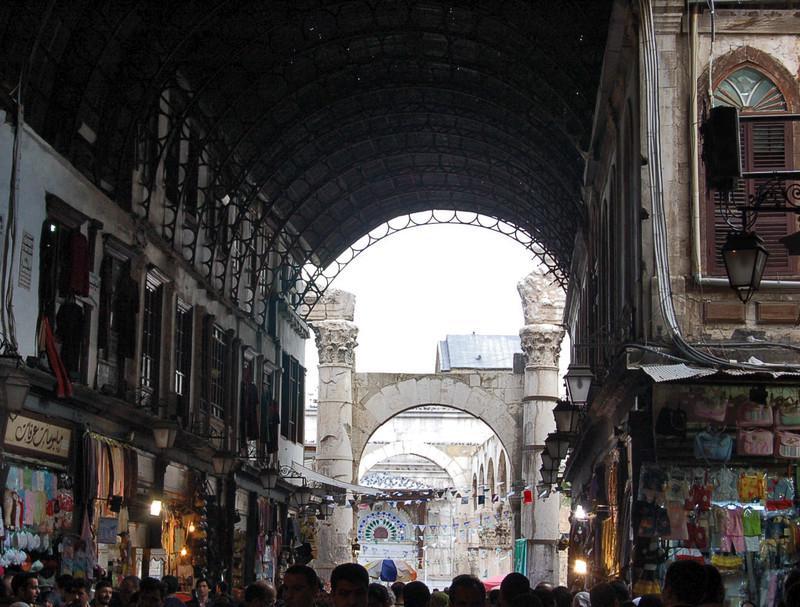
The Islamic Conquest: Khalid and Abu Ubayda at the Walls of Damascus
Damascus entered a new phase during the caliphate of Abu Bakr al-Siddiq, may God be pleased with him, when the armies of the Muslims began to move towards al-Sham.
In 13 AH/634 CE, Abu Ubayda ibn al-Jarrah took command of the Syrian front after the death of Abu Bakr, while the name of Khalid ibn al-Walid is associated with the military operations that led to the encirclement of Damascus.
In 14 AH/635 CE the city fell into the hands of the Muslims after a siege. The sources record several accounts of how the Muslims entered it, before it settled within the Islamic state.
The conquest of Damascus was part of a larger transformation that Bilad al-Sham witnessed, as its main cities passed in succession from Byzantine rule to the Islamic state.
From a Conquered City to a State Capital
The centre of the caliphate remained in Medina during the era of the Rightly Guided Caliphs, then moved to Kufa in the time of Ali ibn Abi Talib, may God be pleased with him, before the major transition in 41 AH/661 CE.
In that year Muawiya ibn Abi Sufyan, may God be pleased with him, settled in Damascus and made it the capital of the Umayyad caliphate.
From that moment the city's history changed. Damascus became the seat of central government for a vast state, and massive administrative, military and financial institutions began to take shape around it.
The Umayyads: The Golden Age of Damascus
Damascus reached the peak of its prosperity in the Umayyad era. Under Abd al-Malik ibn Marwan and then his son al-Walid ibn Abd al-Malik, administration and architecture developed, and the state undertook major projects that left their mark on Damascus and other cities.
Among the most important achievements of the Umayyad era were the Arabization of the administrative registers (diwans) and the minting of Islamic coinage under Abd al-Malik, steps that helped build an administrative apparatus more independent of the earlier Byzantine and Persian systems.
As for al-Walid ibn Abd al-Malik, his name is associated with the expansion of the Umayyad Mosque and the construction of prominent architectural works.
Thus in the Umayyad era Damascus was more than a seat of government; it became the capital of an emerging Islamic empire.
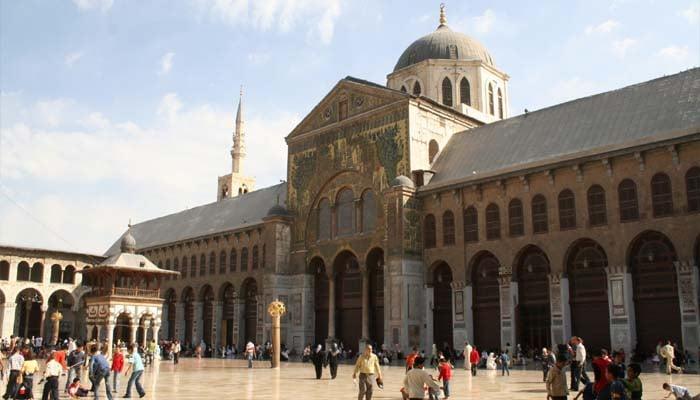
The Umayyad Mosque: The Islamic Heart of Damascus
The Umayyad Mosque remains the most prominent witness to the status Damascus reached.
The mosque was built in its great Umayyad form under al-Walid ibn Abd al-Malik and was inaugurated around 96 AH/715 CE, on a site that had been associated with worship since ancient times.
The mosque became a centre of prayer, learning and preaching, and turned into one of the most famous mosques in the Islamic world.
Influences of Umayyad architecture spread from Damascus to wide areas of the Islamic world.
Damascus: The City of Scholars
Damascus's greatness was not only political and architectural. Over the centuries the city hosted scholarly schools and study circles in hadith, jurisprudence, exegesis and language, and it welcomed scholars and students from the various regions of the Islamic world.
In this way the city preserved its scholarly role even after its era as the political capital of the caliphate had ended.
From Damascus, Armies Went Out to the Edges of the World
Damascus's position at the heart of al-Sham made it an important military base. From it the Umayyad armies moved towards Anatolia, Transoxiana and North Africa. The Umayyad period was also linked to the conquest of al-Andalus in 92 AH/711 CE, when Tariq ibn Ziyad crossed into the Iberian Peninsula, beginning a new phase of Islamic history in Europe.
Islamic armies also continued their advance in the East, and at the height of its expansion the Umayyad state reached distant areas of Central Asia.
Thus Damascus became the city that administered, from the heart of al-Sham, a state spanning continents.
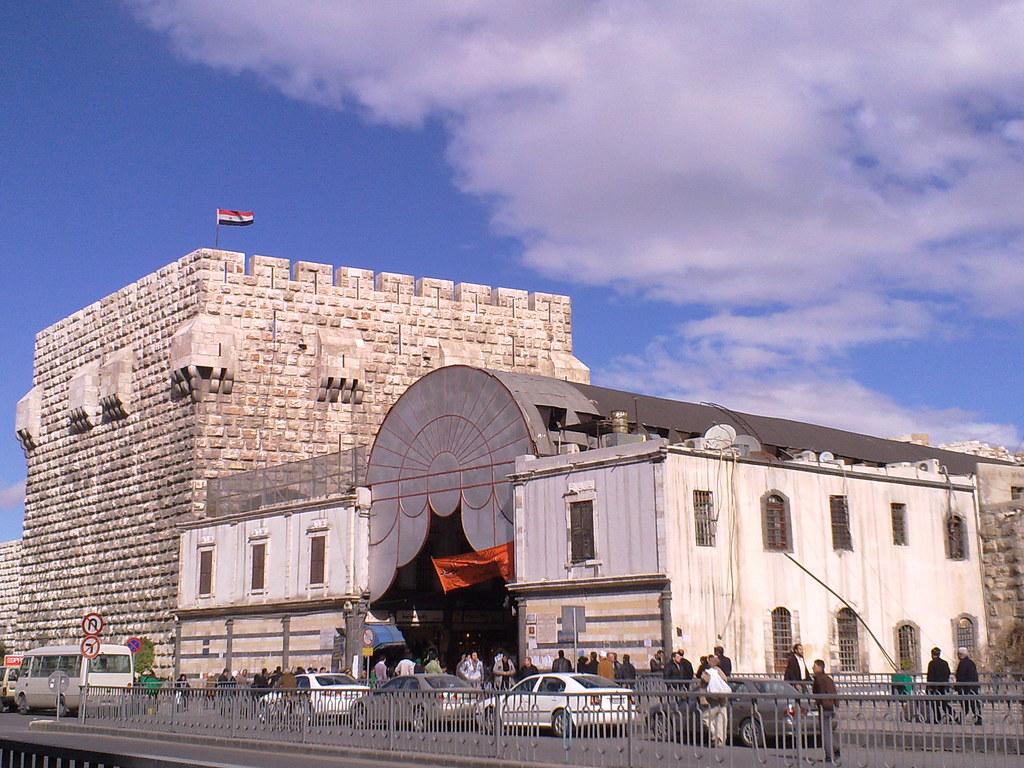
The Fall of the Umayyads and the Loss of Damascus as Capital
In 132 AH/750 CE the Umayyad state came to an end after the victory of the Abbasids, and the seat of the caliphate moved to Iraq, first to Kufa and then to Baghdad, which was founded in 145 AH/762 CE.
Here Damascus lost its role as the capital of the caliphate, but it did not lose its standing.
The city remained an important centre in al-Sham, and a succession of states and dynasties ruled it, from the Abbasids to the Seljuks, Ayyubids, Mamluks and Ottomans.
Damascus Facing the Crusades and the Mongols
During the Ayyubid and Mamluk periods Damascus became one of the most important cities confronting the Crusader campaigns, and its position made control of it a strategic matter for the powers competing in Bilad al-Sham.
The city also faced the Mongol threat in the seventh century AH, and the region witnessed major struggles that ended with the Mamluk victory over the Mongols at the Battle of Ain Jalut in 658 AH/1260 CE, which kept Damascus and Bilad al-Sham within the Mamluk Islamic sphere.
Damascus: The City That Survived the Fall of Capitals
Damascus's great distinction is that it did not depend on a single state to remain great.
Its location also made it a major station on the roads between Anatolia, Iraq, the Hijaz and Egypt. For this reason, the history of Damascus is, to a large extent, the history of the continuity of an Islamic metropolis despite changes of states.
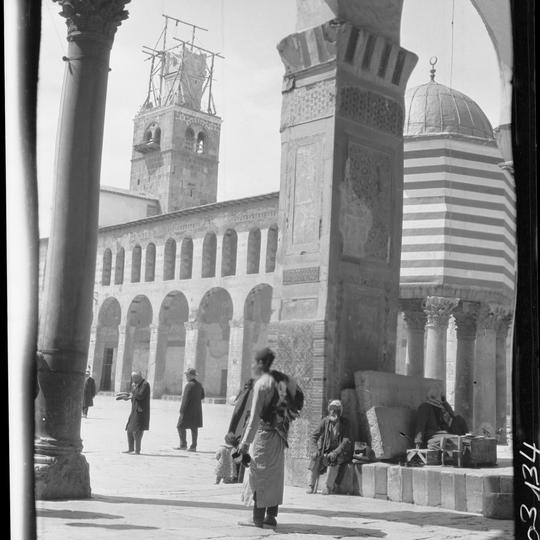
What Remains of Damascus?
Many landmarks still preserve the city's memory, foremost among them the Umayyad Mosque, the Eastern Gate, Bab Touma, the Citadel of Damascus, and the old markets, alongside the schools, caravanserais and buildings that accumulated over centuries.
What remains greatest, however, is its status itself. The city that was the capital of the Umayyad caliphate remains present in the Islamic memory as one of the cities that witnessed the transformation of Islam from a regional power in the Hijaz into a globally influential force.
From Jerusalem to Damascus, the map moves from a city linked to sacred sites and liberation to a city that became the capital of an Islamic empire spanning two continents. From here the series will continue its journey to Baghdad, Kufa, Basra and other cities that shaped new chapters in the history of Islamic civilisation.


