


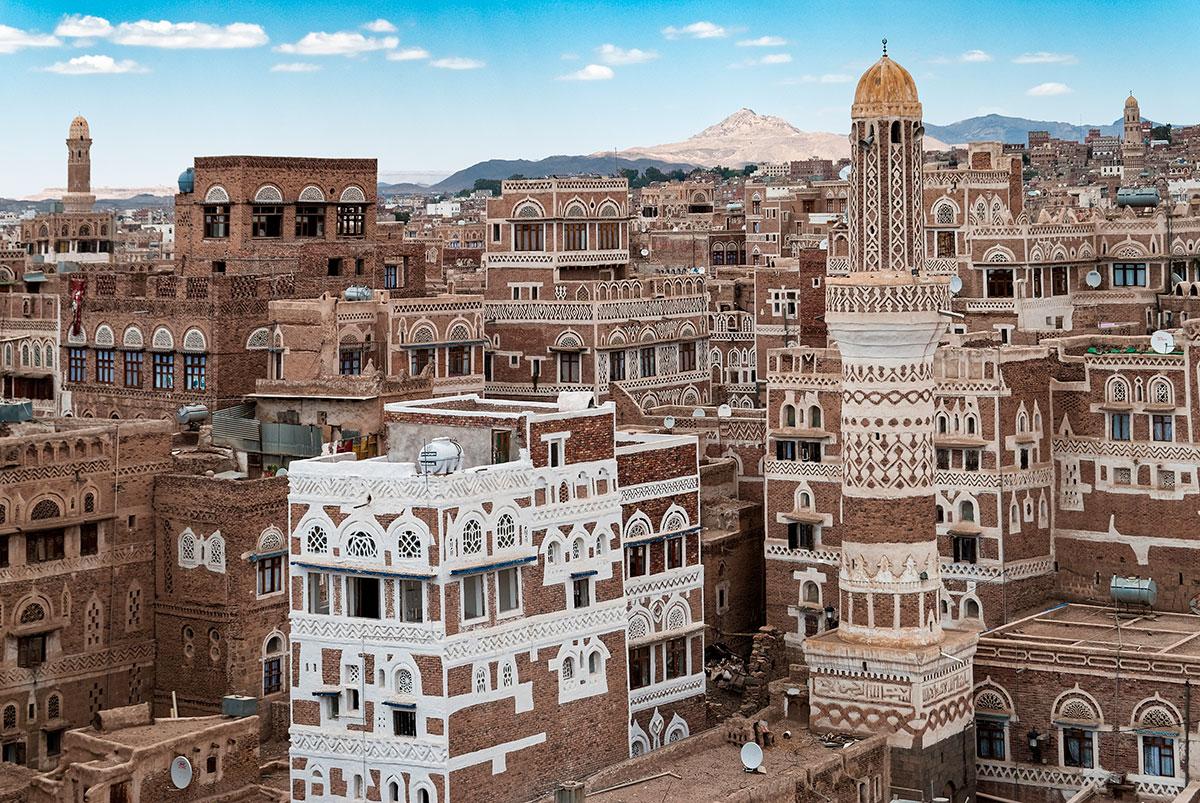
Sanaa holds a prominent place in the history of Yemen and the Arabian Peninsula. An ancient city, it became an important political and religious centre in the early Islamic centuries and remained at the heart of the transformations Yemen witnessed between local states and regional powers. Its mosques, markets and mud-brick houses reveal an accumulated urban history, shaped over centuries by the interaction between the Yemeni environment and Islamic traditions.
The history of Sanaa cannot be read as the history of a single state or a single period. Different authorities succeeded one another over it, and its political standing changed according to the balance of power in Yemen, while its role as a centre of population, trade and religious education continued.
Sanaa before Islam: A City at the Heart of Yemen's History
Sanaa lies on the high Yemeni plateau, surrounded by mountains and valleys that shaped its agricultural and urban environment. The area knew early settlement, and its history is linked to the Yemeni kingdoms before Islam, including the kingdoms of Saba and Himyar, although the details of the city's origins and early development are subject to research in historical and archaeological studies.
With the advent of Islam, Yemen was an area of strategic importance because of its position between southern Arabia, the Red Sea and the trade routes leading to the Hijaz and East Africa. Yemeni groups and tribes embraced Islam during the lifetime of the Prophet Muhammad, peace be upon him, and Yemeni delegations and the Prophet's correspondence with them helped establish ties between the region and the emerging Islamic state.
The Great Mosque: A Landmark from the Beginnings of Islamic History
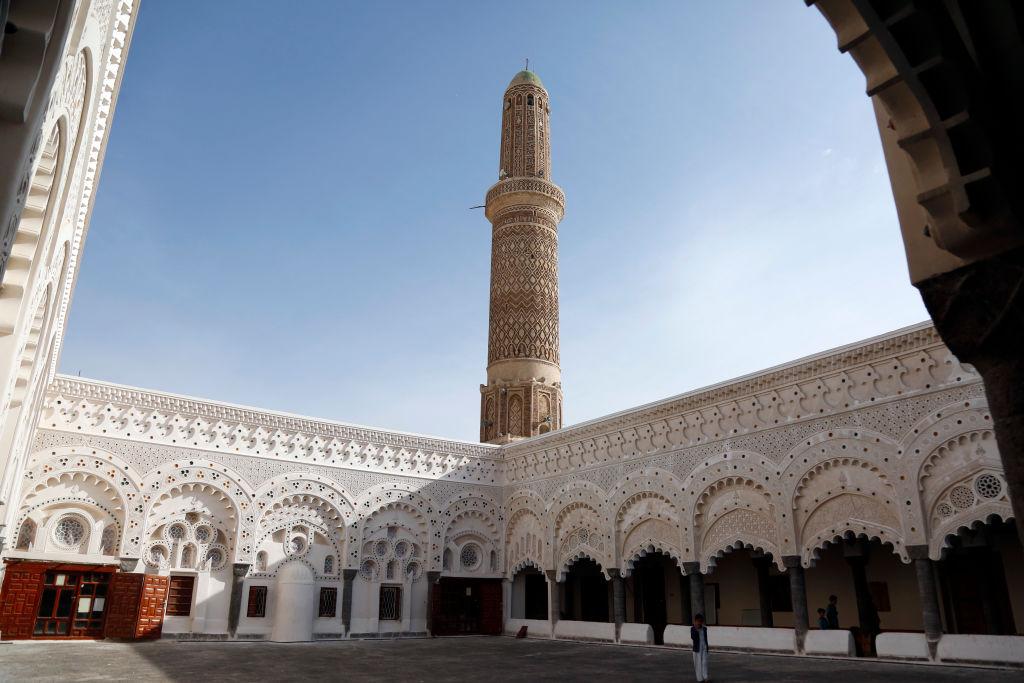
The Great Mosque of Sanaa is among the most important historic landmarks of the city and one of the most prominent early mosques in Yemen. Islamic narratives link its foundation to the Prophetic period, but studying the history of its construction and development requires distinguishing between early accounts and architectural evidence that reveals multiple phases of expansion and restoration.
Specialised studies indicate that the mosque underwent significant changes during the Umayyad period, and later saw repair and development works in subsequent eras. Its presence at the heart of the city strengthened the standing of the surrounding area, as the mosque was associated with worship, education and social gatherings, and markets and routes of daily movement developed around it.
The importance of the mosque is not limited to its antiquity. Its architectural remains and accumulated components allow researchers to study the development of religious architecture in Yemen and the interaction between local building elements and architectural traditions that spread across the Islamic world.
From Early Islamic Rule to Local States
Yemen witnessed successive political transformations in the first centuries of the Hijri era, and Sanaa was not distant from them. Local and regional powers competed for influence across Yemen, and the rulers' control over the highlands, the coastal cities and the roads linking them varied.
In the medieval period, Sanaa became one of the centres contested by several Yemeni authorities, including the Zaydi imams of the state and other political forces. The city was not subject to a single stable rule; the limits of influence and alliances changed repeatedly, and Sanaa's relationship with other political centres in Yemen also differed over time.
The significance of this phase lies in its contribution to shaping the city's political and religious role, but it also left a complex history that cannot be reduced to a single narrative. Studying Sanaa therefore requires distinguishing between its long urban and social history and the political phases during which it was subject to different authorities.
Sanaa, Religious Learning and Social Life
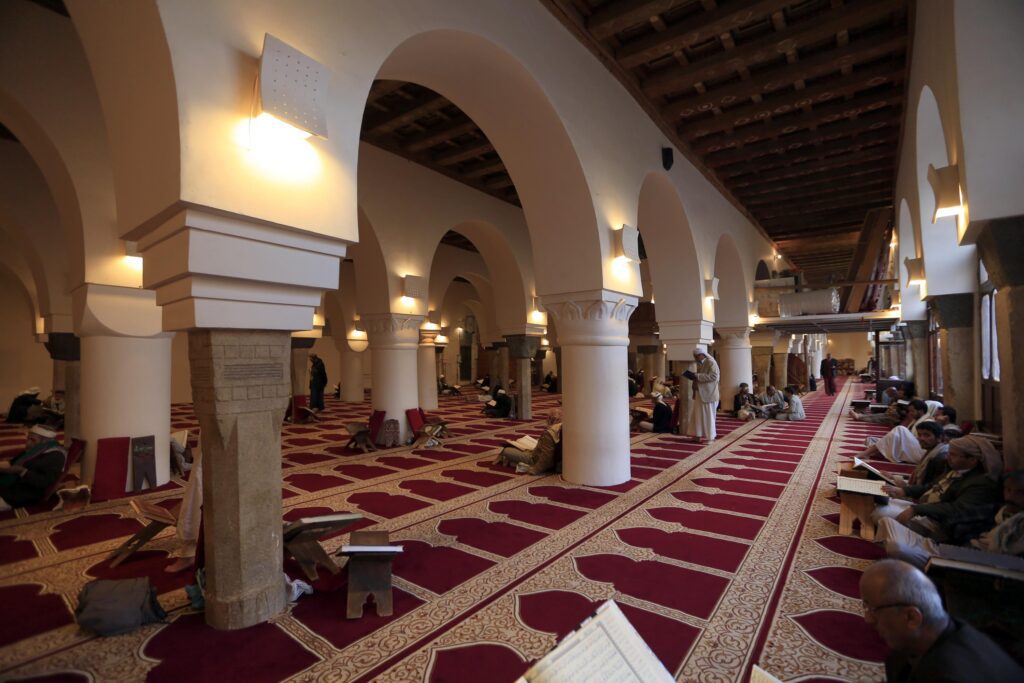
Mosques and circles of learning held a central place in the daily life of Sanaa, as in other Yemeni cities. Religious teaching was tied to the mosques, to networks of scholars and students, and to the circulation of books and narrations between cities and villages. The Yemeni environment, with its jurisprudential, linguistic and historical traditions, helped form a diverse scholarly landscape across the ages.
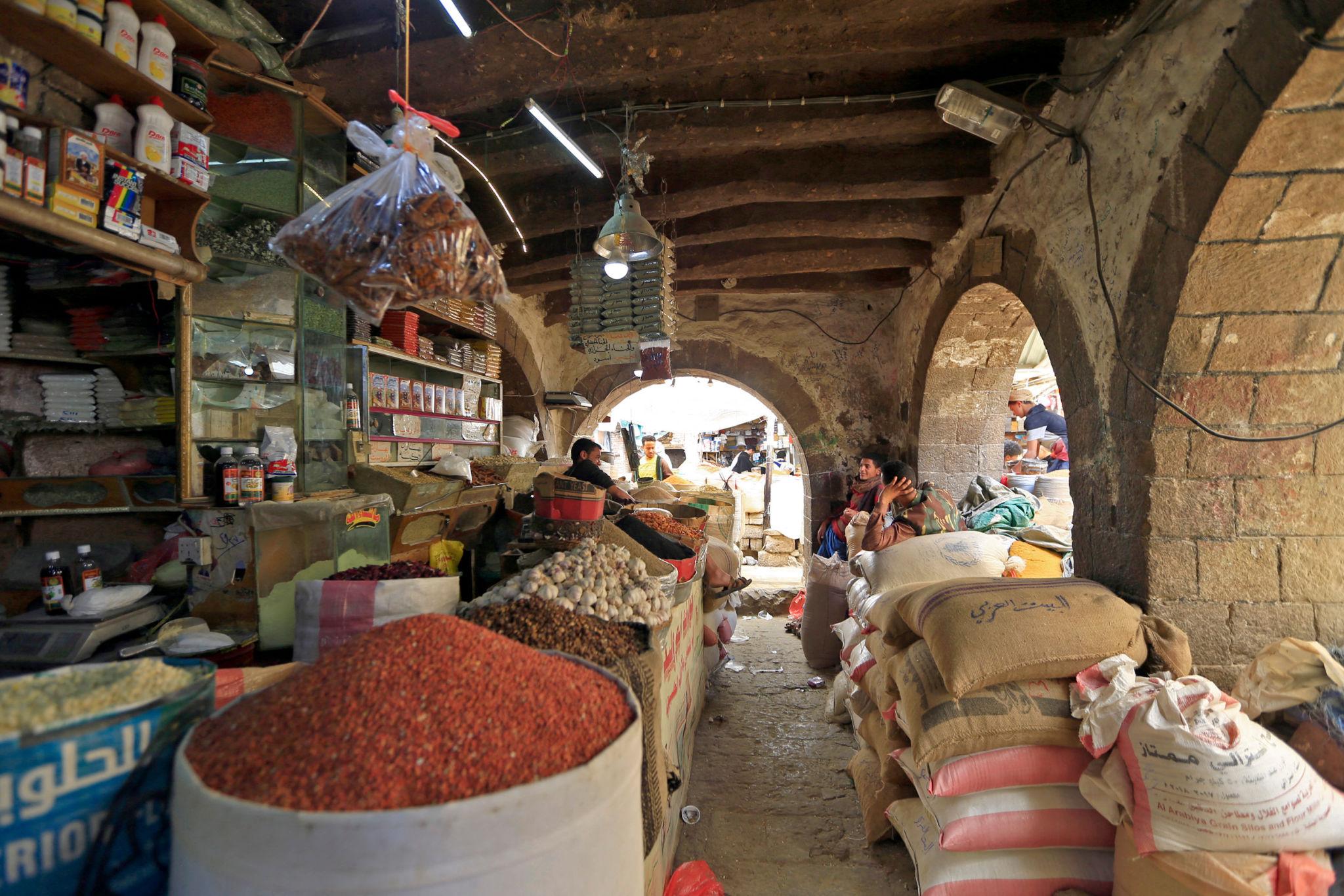
Markets also played an important role in linking commercial activity with social life. The city combined the trade of agricultural produce, local crafts and goods arriving from other regions, and its location on the highlands helped connect population centres and internal routes. Markets were not merely places of buying and selling but also spaces for communication and the exchange of news and knowledge.
Sanaa under the Ayyubid State: A Struggle over the Unification of Yemen
The sixth century AH / twelfth century CE witnessed an important transformation in Yemen's history, when Ayyubid influence extended from Egypt to southern Arabia. In 569 AH / 1174 CE, Ayyubid forces entered Yemen under the command of Turan Shah, brother of Saladin, and a new phase of competition over the political centres of the country began. Sanaa was among the cities that gained importance in this struggle, although it did not become the permanent capital of the Ayyubid state in Yemen, as Taiz retained a central role in administering rule.
Ayyubid expansion was not merely a military campaign; it was linked to an attempt to bring scattered Yemeni regions under a single authority and to strengthen political ties with the Abbasid Caliphate. However, control over the northern highlands continued to face challenges due to the strength of the Zaydi imams and networks of local and tribal influence.
Sanaa between the Zaydi Imams and the Sunni States
One of the distinctive features of Sanaa's history is that its political position was not fixed. It fell under the influence of the Zaydi imams in some periods, while the influence of Sunni states, such as the Ayyubids and later the Rasulids, extended into large parts of Yemen. Throughout the medieval centuries, the city remained a point of competition between powers seeking control of the highlands, trade routes and population centres.
The Rasulid state governed most regions of Yemen during one phase of its history and made Taiz its principal seat of government, while Sanaa was not permanently subject to it. This divergence is important for understanding the city's history: it was not the stable capital of a single Islamic state, but a strategic centre whose importance was determined by the balance of power in Yemen.
Al-Hasan al-Hamdani: The Scholar of Sanaa Who Preserved the History of the Arabian Peninsula
Sanaa's standing was not limited to politics and urban development; it was also linked to the history of knowledge in Yemen. Among the prominent figures associated with the city is al-Hasan ibn Ahmad al-Hamdani, the historian, geographer and man of letters, born in Sanaa in around 280 AH / 893 CE, and who died after 336 AH / 947 CE, according to the most likely reckoning, although sources differ on the year of his death.
In his works he gathered reports about regions, tribes and places, drawing on narrations, direct observation and the historical materials available in his time.
Al-Hamdani's importance lies in the fact that he did not confine himself to recording the reports of rulers and wars; he was also concerned with the land, its people, language, genealogies and antiquities. As a result, his works became an important reference for researchers in the history of Yemen and the Arabian Peninsula, and helped preserve information indispensable to the study of Arab society before Islam and in the early Islamic centuries.
Imam al-Shawkani: A Scholar of Sanaa Whose Influence Went Beyond Yemen
Among the scholars whose names are associated with Sanaa in the modern era is Imam Muhammad ibn Ali al-Shawkani, born in 1173 AH / 1759 CE and died in 1250 AH / 1834 CE. He grew up in Sanaa, studied the religious and linguistic sciences under its scholars, then distinguished himself in jurisprudence, hadith, exegesis and the principles of jurisprudence, and held the office of judge in Yemen during the rule of the Qasimi imams.
His influence went beyond the Yemeni setting, and his books circulated among scholars and students of knowledge in several regions of the Islamic world.
Sanaa under Ottoman Rule: Competition for Influence and Sovereignty
The Ottomans entered Yemen in the tenth century AH / sixteenth century CE, as part of their expansion into the Red Sea and the Arabian Peninsula. Sanaa held military and administrative importance because of its position on the highlands, but it was not easy to subdue. The Ottomans faced resistance from local powers, and the limits of their control shifted with wars and alliances.
Direct Ottoman rule returned to Sanaa in 1289 AH / 1872 CE, during the second phase of the Ottoman presence in Yemen. This rule continued until the First World War, when Ottoman forces withdrew from Yemen in 1337 AH / 1918 CE. That phase left traces in administration, fortifications and some buildings, but it did not end the role of local Yemeni forces, which remained an essential part of the political equation.
These transformations show that Sanaa's history was not an unbroken sequence of stability, but a course marked by struggle between central authority and local influence, and between attempts to subdue the city and its capacity to retain its standing on the Yemeni highlands.
Sanaa and Its Place in Islamic History
Sanaa's importance in Islamic history is evident in three interconnected roles: its religious role, represented by the Great Mosque and the teaching and worship associated with it; its political role as a centre contested by states and imams; and its cultural role, which preserved a part of Yemen's heritage, history and language.
Its location on the Yemeni plateau also made it a link between agricultural communities, internal routes and markets, which helped sustain its position as an important urban centre despite changes of rulers. Its scholarly standing was not uniform across all periods, but it was tied to networks of scholars, jurists and narrators, and to a body of knowledge preserved in the writings of figures such as al-Hasan al-Hamdani and Imam al-Shawkani.
The old city is not merely a collection of beautiful buildings; it is a material record of Islamic life in Yemen, encompassing mosques, markets, homes, crafts and building traditions. Through this record one can read the relationship between religion, society and the economy, and how the city preserved its local character within the broader framework of Islamic civilisation.


