


On the Iranian plateau, between the Zagros mountains and the inner highlands, Isfahan rose as one of the most influential cities in the history of Islamic civilisation in the East. The city entered the Islamic sphere in the first century AH, then passed through successive political phases until it became, in the fifth century AH, the capital of the Seljuks, where administration, learning and architecture flourished. It was afterwards subjected to destructive invasions that reshaped its history many times.
Isfahan's importance did not stem from its role as a political capital alone. Scholars, jurists, men of letters and merchants gathered there, and its markets, mosques and madrasas became essential components of a major Islamic city. Later, Shah Abbas I rebuilt its urban centre at the end of the tenth century AH, and a new Isfahan emerged that differed architecturally from the Seljuk city, although the old city and its Friday Mosque remain witnesses to the earlier Islamic layers. Historical sources describe Isfahan as one of the most important urban centres on the Iranian plateau throughout its long history.
Isfahan Enters Islamic History
Before Islam, Isfahan was an important centre in central Iran. The area contained two main cities, Jay and Yahudiyya, before the two gradually developed into the urban fabric that later became known as Isfahan.
The Muslims reached Isfahan during the caliphate of Umar ibn al-Khattab, may God be pleased with him, in the context of the Islamic conquests of Persia. Sources indicate that forces coming from Basra entered the region in 23 AH/644 CE, and that Jay and Yahudiyya fell into Muslim hands after earlier resistance and unrest, after which arrangements concerning the jizya and safe conduct were concluded.
The city did not immediately become a major political capital; it needed centuries to reach the peak of its influence.
Isfahan in the Abbasid and Buyid Periods
As the central Abbasid authority weakened in the East, Isfahan became an arena for competition among local ruling families, and several powers succeeded one another over it, before Buyid influence reached it in the fourth century AH/tenth century CE.
Under the Buyids the city saw notable urban and scholarly growth, particularly during the reign of Rukn al-Dawla and his sons.
Among the figures associated with Isfahan in this period was the minister and man of letters Sahib ibn Abbad, whose majlis became a destination for men of letters and scholars. The city attracted a large number of transmitters of hadith, writers and poets. Sources indicate that more than four hundred and fifty hadith scholars were known in Isfahan during the Buyid period, and that in the eyes of its contemporaries the city became one of the foremost cities of the region after Baghdad and Rayy.
Ibn Sina in Isfahan
One of the most important chapters of Isfahan's scholarly history in this period is its association with Abu Ali al-Husayn ibn Abd Allah ibn Sina, known as Avicenna.
After moving between a number of cities in the East, Ibn Sina found protection and patronage with Ala al-Dawla Muhammad ibn Kakuya, who ruled Isfahan in the first half of the fifth century AH.
This association makes Isfahan one of the cities whose name is linked with an important phase in the history of sciences in Islamic civilisation, before the city reached another peak in the Seljuk period.
Isfahan, Seat of the Seljuks
The greatest transformation in Isfahan's history came when the Seljuk sultan Tughril Beg entered it in 443 AH/1051 CE and made it the capital of his state.
This event was a turning point: Isfahan became the political centre of one of the strongest Islamic states of the fifth century AH. The city then reached the height of its prosperity under Sultan Malikshah, who ruled from 465 AH/1072 CE to 485 AH/1092 CE.
In this period the city expanded, palaces and gardens were built, markets developed, and parts of the urban space were reorganised.
Nizam al-Mulk: Madrasa, Politics and Learning
The flourishing of Seljuk Isfahan is associated with the name of the minister Nizam al-Mulk, one of the best-known administrators of the medieval Islamic world.
Nizam al-Mulk was a Shafi'i in jurisprudence and an Ash'ari in creed, and he gave great importance to Sunni education through a network of madrasas that he founded or supported in a number of cities of the Seljuk state.
In Isfahan he established a Nizamiyya madrasa and brought scholars from outside the city to it, among them Abu Bakr Muhammad ibn Thabit al-Khujandi, who took charge of the Shafi'i madrasa there after Nizam al-Mulk invited him to Isfahan around 457 AH/1064–1065 CE.
The Nizamiyya madrasas were part of a broader project to strengthen juristic education and organise scholarly life in the Seljuk state.
It is important here not to confuse the Nizamiyya of Isfahan with that of Baghdad. The latter is the better known and better documented, with its opening dated to 459 AH/1067 CE, whereas Isfahan had a Nizamiyya madrasa within the network of madrasas associated with Nizam al-Mulk.
The Friday Mosque of Isfahan: A Record of Islamic Architecture
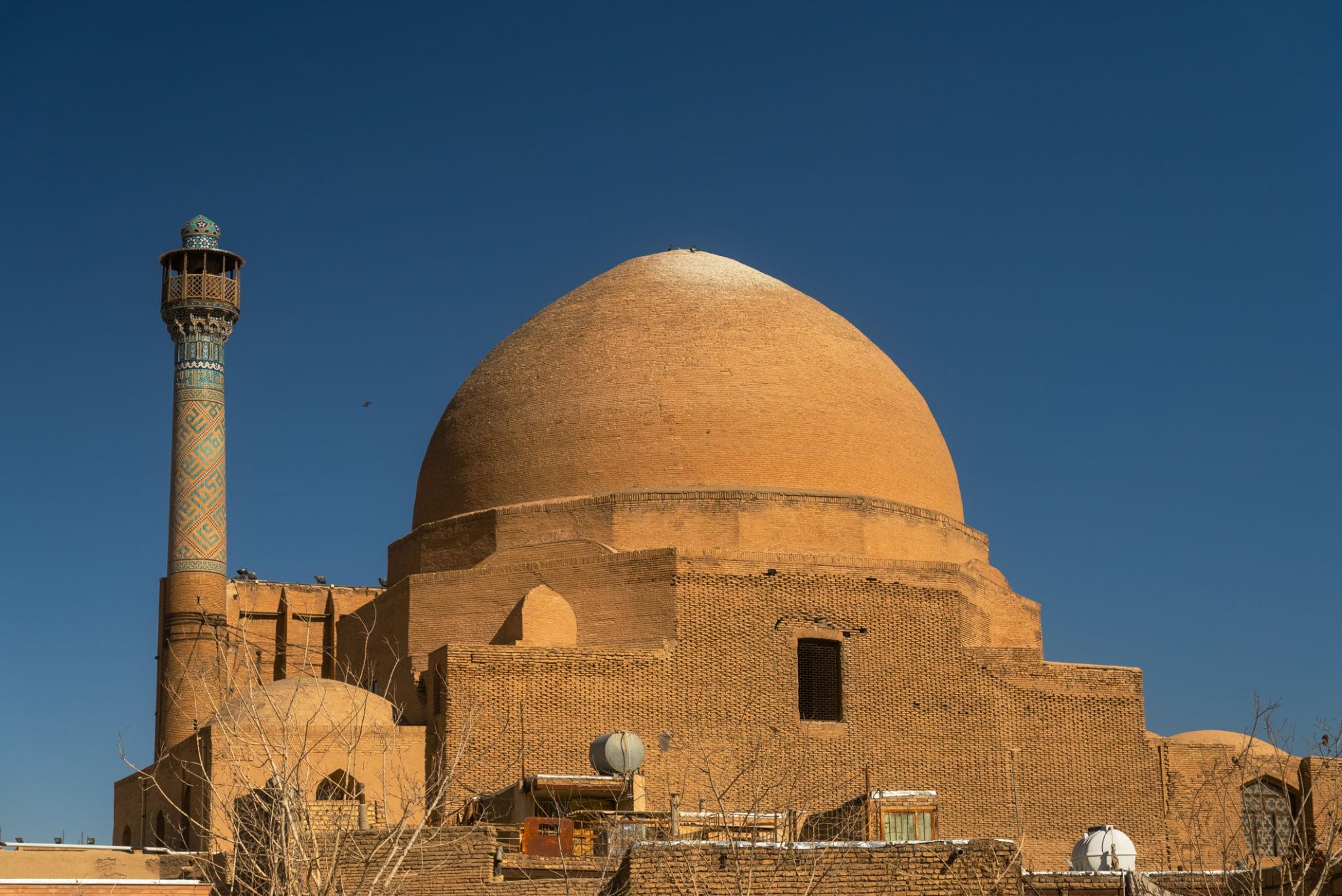
If a single building can be used to read Isfahan's Islamic history across centuries, it is the Friday Mosque.
The mosque began in its early Islamic form in the second century AH/eighth century CE, and then underwent successive expansions and reconstructions.
The most important architectural transformations took place in the Seljuk period. Nizam al-Mulk added the great southern dome during the reign of Malikshah, and its date is thought to fall between 465–485 AH/1072–1092 CE; then Taj al-Mulk, Nizam al-Mulk's political rival, built the northern dome in approximately 481 AH/1088 CE.
The mosque was reshaped in later phases until it became a prominent model of the four-iwan mosque, a form that became one of the important features of Persian Islamic architecture.
The mosque therefore does not represent a single era; it contains within it Abbasid, Seljuk, Timurid and Safavid layers, which makes it a living architectural record of the city's history.
From the Seljuks to the Mongols
The political prosperity of Isfahan did not continue uninterrupted. After the weakening of the Seljuks, the city became embroiled in conflicts between local powers and the Khwarazmians, and then became a direct target of the Mongols.
Isfahan resisted the Mongol campaigns for years, but the Mongol siege ended with its fall in approximately 633 AH/1235–1236 CE, and its inhabitants suffered mass killing, in one of the most violent catastrophes the city experienced during its medieval history.
Nevertheless, Isfahan did not disappear from the civilisational map.
Timur and Isfahan
Another catastrophe came in the Timurid period. In 789 AH/1387 CE Timur entered Isfahan after its initial submission, and then a revolt broke out inside the city against the tax collectors and the forces under his command.
Timur responded with severe repression and ordered large numbers of the inhabitants to be killed. Historical sources cite huge figures for the victims, but their estimates differ, so a single figure should not be treated as a definitive fact. Academic sources affirm that the massacre of 789 AH/1387 CE was among the most destructive events in the medieval history of Isfahan.
Thus the city entered a new era after a series of catastrophes that altered its population structure and its urban fabric.
Safavid Isfahan: A New City Above the Old
After the establishment of the Safavid state in 907 AH/1501 CE, Isfahan did not immediately become the capital: Tabriz was the first Safavid capital, and the centre then moved to Qazvin for military and political considerations.
However, Shah Abbas I decided to move the capital to Isfahan, and the official transfer took place in approximately 1006 AH/1597–1598 CE. The choice of the city was linked to its inland position, to the waters of the Zayandeh Rud river, and to its commercial location between the heart of Iran and the Gulf.
From that time a vast process of reshaping the city began.
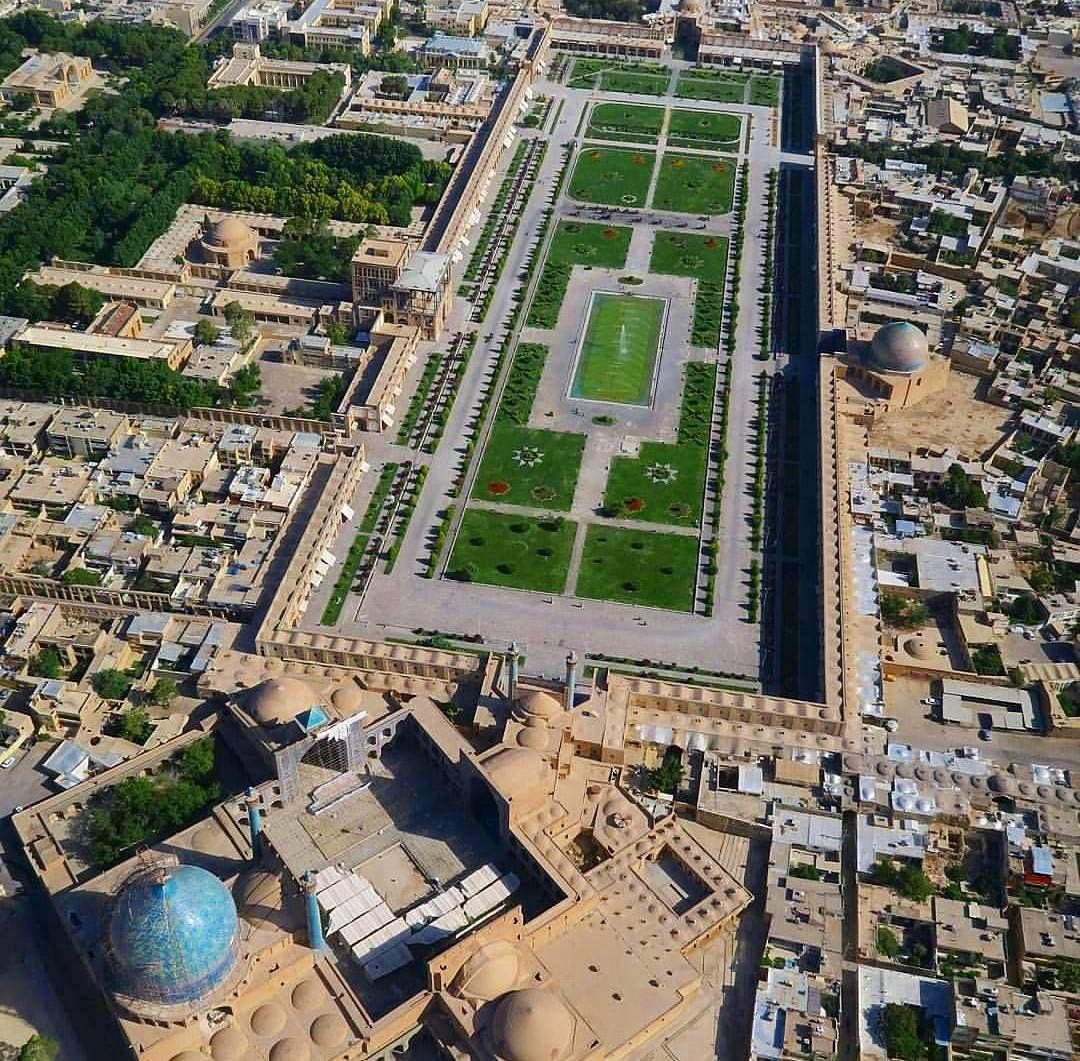
Shah Abbas created the Naqsh-e Jahan Square, around which a group of structures, a palace, markets and mosques were erected, and Isfahan became a new administrative and commercial centre.
Naqsh-e Jahan: The Heart of New Isfahan
The Naqsh-e Jahan Square, whose development on a large scale began in the early eleventh century AH/seventeenth century CE, was the heart of the new urban project.
Around it were built the Ali Qapu palace, the Sheikh Lotfollah Mosque, and the mosque known as the Royal Mosque or Shah Mosque, in addition to markets extending along the edges of the square.
The square combined several functions: authority in the palace, trade in the markets, and religious life in the mosques.
This made Safavid Isfahan a model different from the older Seljuk Isfahan, while preserving the idea of the Islamic city in which political, commercial and religious institutions intermingle.
Isfahan, Trade and Culture
Shah Abbas's policies made Isfahan a commercial centre with wide-ranging connections. Its production of textiles, carpets, ceramics and metalwork flourished, and the movement of merchants increased between Iran, the Gulf, the Ottoman world, Central Asia and Europe.
The city also became a centre for the arts, architecture and calligraphy, and a broad class of craftsmen and artisans emerged who took part in state projects.
Yet this prosperity should not obscure the fact that the city had entered a new religious and political phase distinct from the Sunni phase that characterised Seljuk Isfahan.
The Fall of Isfahan in 1135 AH/1722 CE
The Safavid golden age in Isfahan ended during the twelfth century AH.
Historical sources indicate that the fall of Isfahan was a major turning point, and that the city thereafter lost its status as the imperial capital and never regained that central political role.
Nevertheless, Isfahan remained a major city, and its monuments, markets and institutions continued to shape its character.
What Remains of Islamic Isfahan?
Isfahan is distinguished by the fact that its monuments do not belong to a single era. The Friday Mosque represents centuries of Islamic architecture, especially the Seljuk phase, while the Naqsh-e Jahan Square reflects Safavid architecture of the tenth and eleventh centuries AH.
Within the Safavid city stand out the Ali Qapu gate, the Sheikh Lotfollah Mosque, the Royal Mosque, and the markets and bridges over the Zayandeh Rud river.
Among these layers appears the historical reality of Isfahan: a city that did not know a single era, but rebuilt itself almost after every political transformation.


