


If Mecca is the cradle of revelation and the qibla of Muslims, Medina al-Munawwara is the place where the call was transformed into a state, a society and a civilisation. Here Islam moved from a phase of vulnerability and persecution to the phase of building a nation. Here the Prophet ﷺ spent his final years, and from here armies, envoys and books went out. Here the Companions gathered around the Messenger of God ﷺ, and from here the state set out that soon extended beyond the Hijaz to the horizons of the world.
Before Islam, the city was known as Yathrib. After the Hijra its name became associated with the Prophet ﷺ, and it came to be called "Madinat Rasul Allah" (the City of the Messenger of God), "Taybah," "Tabah," and other names preserved in the books of hadith and history.
Medina al-Munawwara lies in the west of the Kingdom of Saudi Arabia, in the heart of the Hijaz region. Official sources describe it as the first capital in the history of Islam.
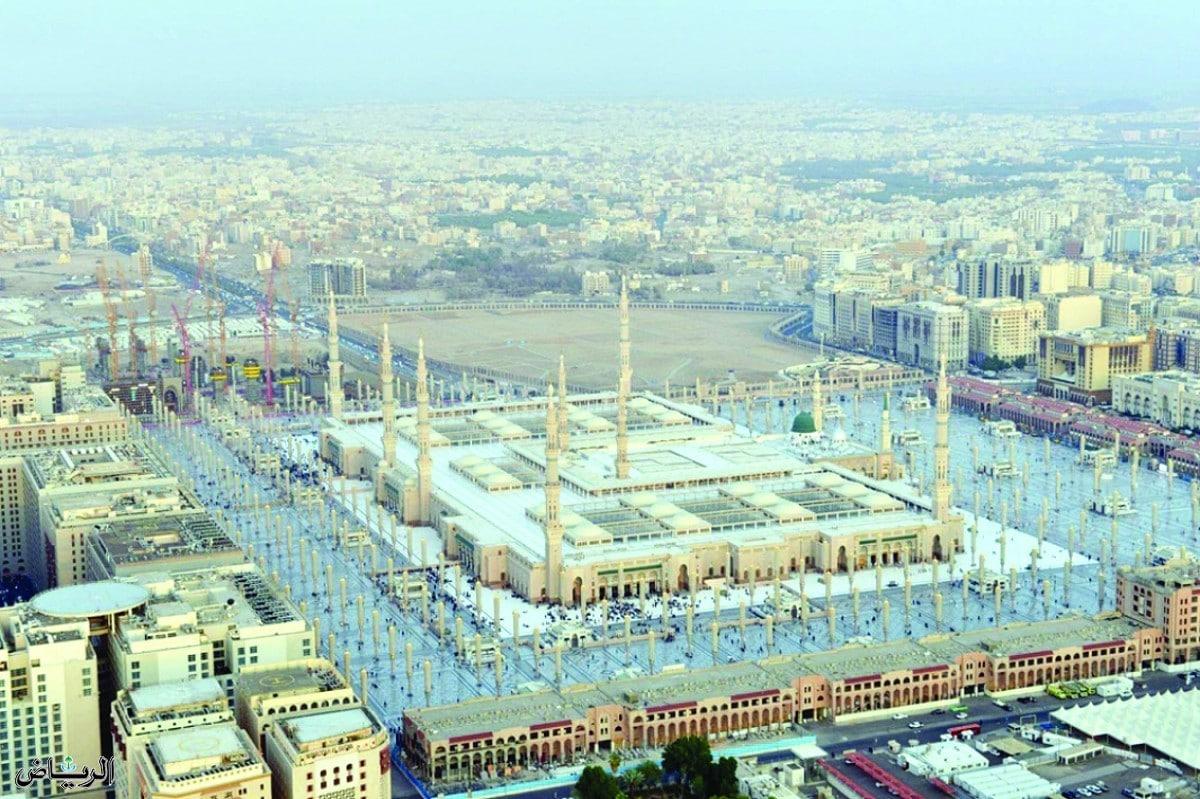
Yathrib before Islam: a city awaiting its great transformation
Yathrib was not a marginal city before Islam. It knew agricultural settlement, possessed palm groves and land that was relatively fertile compared with the surrounding environment, and was inhabited by several groups, including the Aws and the Khazraj and Jewish tribes.
The conflict between the Aws and the Khazraj had exhausted the city, until the Islamic call opened a new path before it. Contact between the people of Yathrib and the Prophet ﷺ began during the pilgrimage seasons in Mecca, and then came the two pledges of al-Aqaba, which were the political and social prelude to the Hijra.
The Hijra: the moment that changed the city's history
In 1 AH / 622 CE the Prophet ﷺ arrived in Yathrib after the journey of the Hijra, which became the starting point of the Hijri calendar. The people of Medina received the Prophet ﷺ and the emigrants, and Yathrib became the centre of the emerging Islamic state. From that time the city began an entirely new phase. The emigrants who had left Mecca found in the Ansar a community that embraced them, and a new bond formed that transcended tribal loyalties.
The Prophet's Mosque: the heart of the first Islamic state
The construction of the Prophet's Mosque was among the first undertakings of the Prophet ﷺ after his arrival in Medina in 1 AH / 622 CE.
The mosque was not merely a place of prayer; it became the centre of the new Islamic life. In it prayers were offered, verses of the Qur'an were recited, circles of learning were held, delegations were received, directives were issued, and matters of society and state were discussed. The People of the Bench, who were poor emigrants and students of knowledge, were also associated with it.
Thus Medina became an early model of the Islamic city, in which the mosque was intertwined with education, judiciary, administration and society.
At the heart of the Prophet's Mosque remains the Noble Rawda, referred to in the hadith: "Between my house and my pulpit is a garden from the gardens of Paradise."
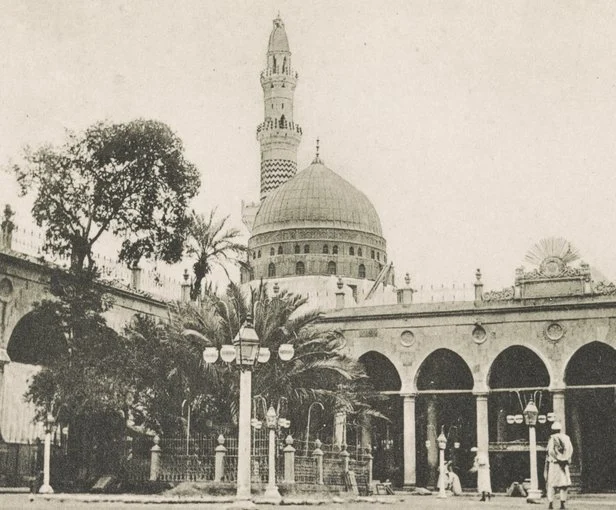
Brotherhood and the Constitution of Medina
The new state faced a challenge greater than building the mosque: it had to build a society capable of withstanding threats.
The brotherhood between the emigrants and the Ansar established a new social bond, and then the Constitution of Medina came to organise relations within the society and define responsibilities, rights and obligations.
Medina: the capital of struggle and the defence of the state
Medina was not only a house of knowledge and worship; it was also the military capital of an emerging state that faced continuous threats. From it Muslims set out to Badr in 2 AH / 624 CE, to Uhud in 3 AH / 625 CE, and to the Trench in 5 AH / 627 CE.
In the Battle of the Trench the danger reached the heart of the city, and Medina became a decisive field of defence for the Islamic state. After the Trench the balance of power gradually shifted, and the state based in Medina became more able to assert its presence in the Arabian Peninsula.
From Medina envoys, expeditions and letters also went out to tribes and kings, and a small capital in the Hijaz became a political centre to which vast areas of the peninsula were connected.
From Medina a state reached out to the world
After the conquest of Mecca in 8 AH / 630 CE, the Islamic state was no longer confined between Medina and Mecca. Arab tribes gradually entered Islam, and the state began to expand politically and religiously.
When the Prophet ﷺ died in 11 AH / 632 CE, Medina remained the seat of the caliphate. At the Saqifa of Banu Sa'ida the allegiance to Abu Bakr al-Siddiq, may God be pleased with him, was given, and from Medina the wars of the Ridda (apostasy) were launched, before the great Islamic expansion beyond the peninsula began.
Medina: the school of the Companions and the Successors
But the greatest legacy Medina left was not weapons or politics, but knowledge.
Among the scholars of Medina were Abu Hurayra, Abu Sa'id al-Khudri, Zayd ibn Thabit, and 'A'isha, may God be pleased with them. Among the senior Successors were Sa'id ibn al-Musayyab, 'Urwa ibn al-Zubayr and al-Qasim ibn Muhammad, followed by imams and scholars associated with the Medinan school.
From Medina came the sciences of hadith, jurisprudence and biography, and the practice of the people of Medina later became one of the most prominent scholarly questions in the Maliki school.
Thus Medina was not only a political capital but an open university without walls, to which students of knowledge came from many regions.
Medina after the transfer of the caliphate
In 41 AH / 661 CE the capital of the Umayyad state moved to Damascus, and Medina ceased to be the seat of the ruling caliph. This did not, however, deprive it of its status, as Medina retained its religious and scholarly centrality.
The Prophet's Mosque remained a destination for scholars and pilgrims, and Medina stayed tied to the memory of the Prophet ﷺ and the Companions. Its visitation also became a firmly established part of the journey of many Muslims to the Hijaz.
Over the centuries Medina underwent political and urban changes, and it saw the building of walls and fortifications to protect it from raids. The Prophet's Mosque also witnessed successive expansions.
Landmarks that still carry the memory of Islam
Today Medina contains a number of the most prominent Islamic and historical landmarks: the Prophet's Mosque, Quba Mosque, the Mosque of the Two Qiblas, Mount Uhud, the Baqi' cemetery, in addition to sites associated with the Prophet's biography and the military expeditions.
Quba Mosque is among the most notable of these landmarks, as it is linked to the beginnings of the Hijra and, according to historical sources, is the first mosque built in Islam.
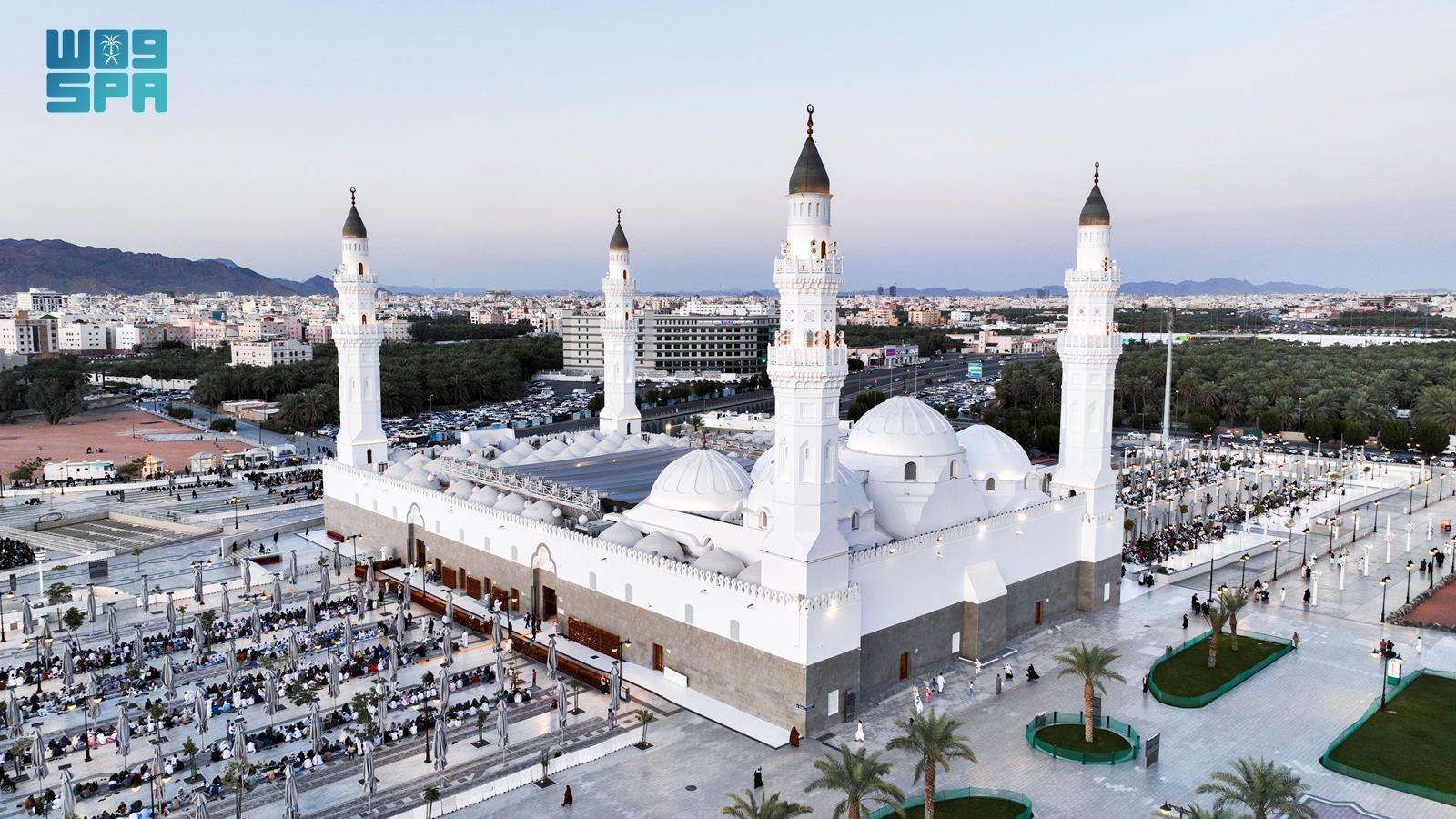
As for Mount Uhud, it stands as a witness to one of the most famous battles of early Islam, while al-Baqi' holds the memory of generations of Companions, the family of the Prophet ﷺ, and the scholars of Medina.
Medina al-Munawwara: where the Messenger walked
With every step, visitors feel the dignity of the place, for this is the land on which the Messenger of God and his Companions walked. This is Medina al-Munawwara: the seat of prophethood and the first Islamic state, the abode of the Hijra and the school of the Sunna.
Mecca was the place where revelation descended; Medina was the place where the message took form as a society, a state and a civilisation.
From here Medina deserves to be the second city on the map of "Islamic Cities Through History," for from it the Prophet ﷺ went out to the world, from it the Rightly Guided Caliphate was administered, from it the Qur'an and the Sunna spread, and across the centuries it remained one of the greatest centres of the religious and scholarly memory of Muslims.


