


Córdoba was never merely a city that Muslims entered and left architectural traces in. Over centuries, it became one of the most important Islamic metropolises in the West, and a center of authority, scholarship, jurisprudence, medicine, literature, industry and trade.
At its height, the city became a political, cultural and economic center of wide influence, and its name became more closely associated with the history of Islam in al-Andalus than that of any other city. Specialized studies of the history of Islamic cities confirm that cities were not merely population clusters; they were centers where authority, knowledge and social life were produced in the Islamic world.
From the Conquest to the Capital of al-Andalus
Muslims entered al-Andalus in 92 AH/711 CE, and Córdoba became a principal political center a few years later, before its role reached its peak with the establishment of the independent Umayyad Emirate in 138 AH/756 CE by Abd al-Rahman ibn Muawiya, known as Abd al-Rahman I (al-Dakhil).
Al-Dakhil's arrival in al-Andalus was a direct result of the fall of the Umayyad state in the East in 132 AH/750 CE, but he succeeded in rebuilding an independent Umayyad rule in al-Andalus, and he made Córdoba its capital.
From that time, the city began to transform from a regional center into the capital of an Islamic state politically independent of the Abbasid Caliphate, while continuing to belong to the broader Islamic civilizational sphere.
The establishment of the Umayyad Emirate in Córdoba was also tied to the reorganization of the city and the development of its palaces, mosques, walls and facilities, until Córdoba became a stable political center for al-Andalus.
The Great Mosque: The Heart of Islamic Córdoba
If a single building had to be chosen to summarize the history of Islamic Córdoba, it would be the Great Mosque.
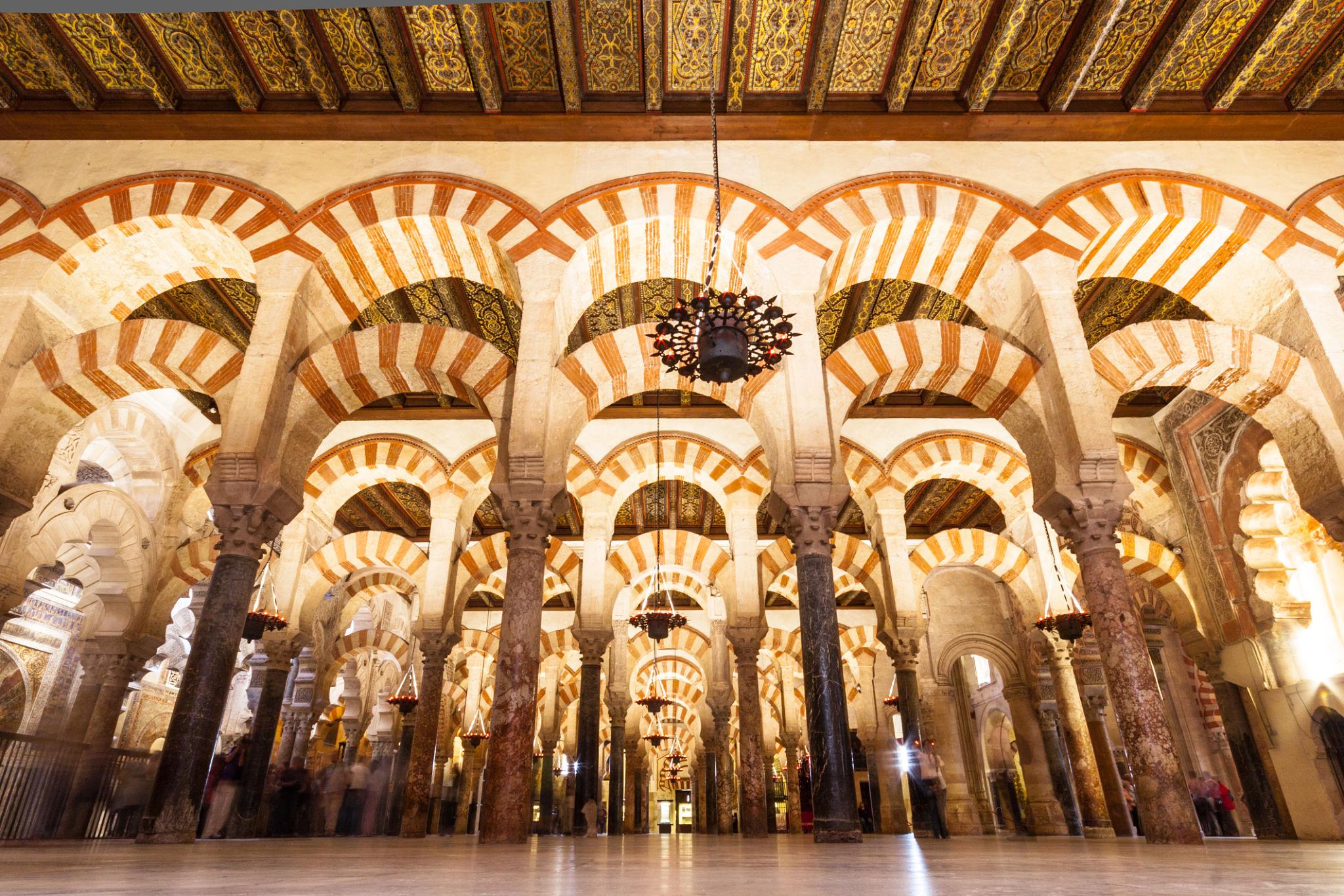
Abd al-Rahman I began building the mosque in approximately 169 AH/785 CE, and it was subsequently expanded under a number of Umayyad emirs and caliphs, until it became one of the greatest mosques of the Islamic West.
Sources specialized in the history of Islamic art indicate that the construction and expansion of the mosque passed through several phases between 169 and 377 AH/786 and 988 CE, including the works of Abd al-Rahman I, Abd al-Rahman II, Abd al-Rahman III, al-Hakam II, and then the expansion by al-Mansur ibn Abi Amir.
The double arches, the alternation of stone and red brick, the spaciousness of the prayer hall, and the decorated mihrab were among the most prominent architectural features that made the Córdoba Mosque an influential model in the architecture of the Islamic West.
The mosque was not merely a place of prayer; it was a center of learning, education and jurisprudence, and part of the city's political and social heart.
Abd al-Rahman III: From Emirate to Caliphate
Córdoba reached a new stage when Abd al-Rahman III, known as Abd al-Rahman al-Nasir, declared the Umayyad Caliphate in al-Andalus in 316 AH/929 CE.
The declaration was a turning point in the city's history: Córdoba was no longer merely the capital of an independent emirate, but became the seat of a caliphate that rivaled, symbolically and politically, the Abbasid Caliphate in Baghdad and the Fatimid Caliphate in North Africa.
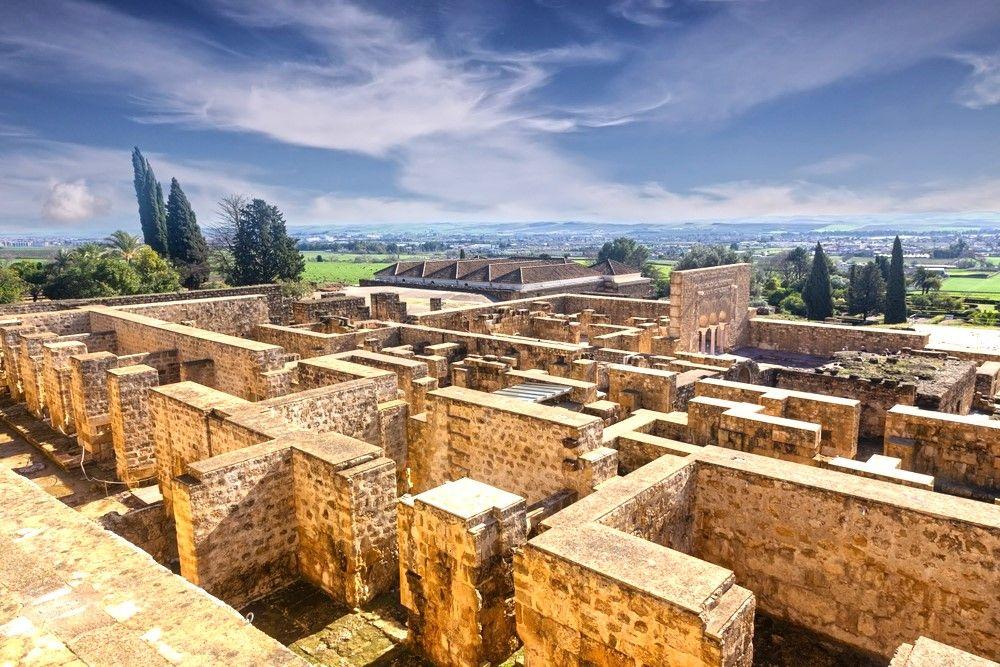
During his reign, administration, the economy and urban development flourished, and the city of Madinat al-Zahra was built near Córdoba to serve as the seat of the caliphate and a center of administration and the court.
Historical and archaeological sources indicate that Madinat al-Zahra was founded in the fourth century AH/tenth century CE, and contained a network of roads, structures, water facilities, palaces and administrative buildings, and became one of the most prominent symbols of the strength of the Umayyad state in al-Andalus.
Al-Hakam II: When Books Became a Source of State Strength
During the reign of the caliph al-Hakam II al-Mustansir bi-Llah, who ruled between 350 and 366 AH/961 and 976 CE, intellectual life in Córdoba reached a highly significant stage.
Al-Hakam was known for his attention to learning and books, collecting manuscripts from across the Islamic world, and the library of Córdoba became one of the most renowned book collections in the Islamic West.
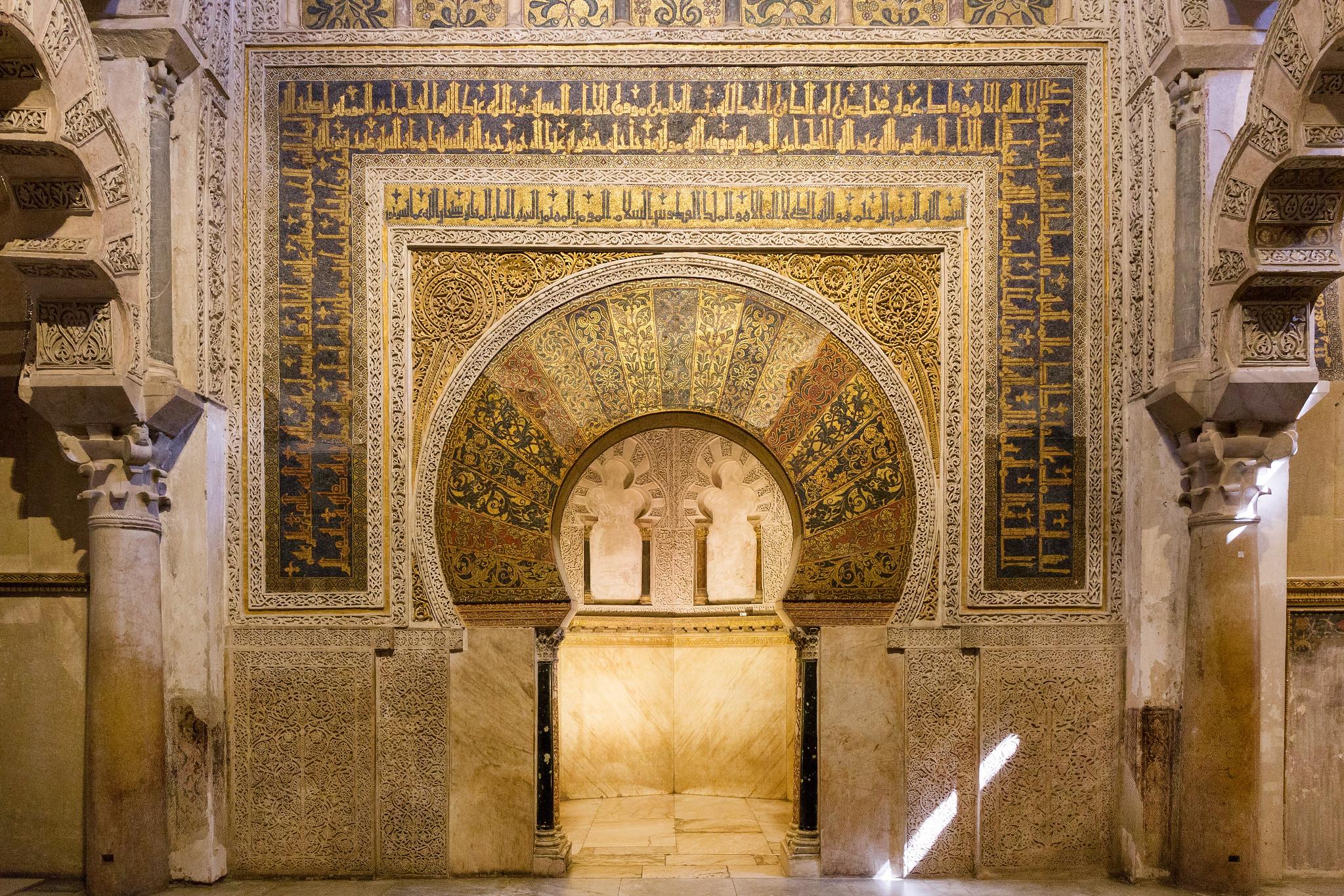
He also continued the expansion of the Great Mosque, adding one of its most beautiful sections: the decorated maqsura and mihrab.
Sources connected with the history of the mosque note that al-Hakam's expansion was carried out during the period 351–357 AH/962–968 CE, and that the inscription of its mihrab dates to 354 AH/965 CE.
Here the nature of the Islamic metropolis of Córdoba becomes clear: the mosque, learning, the library, the palace and the market were not separate worlds, but parts of a single city in which knowledge played a fundamental role in building the state.
Córdoba: A City of Jurisprudence, Hadith and Language
Córdoba was not only a political capital. It became one of the principal centers of Maliki jurisprudence in al-Andalus.
The Maliki school spread in al-Andalus from the earliest centuries, and Córdoba became one of its most important scholarly centers, associated with a large number of jurists, hadith scholars and judges.
Ibn Abd al-Barr, who died in 463 AH/1071 CE, also distinguished himself as one of the great scholars of hadith and Maliki jurisprudence in al-Andalus.
In medicine, Abu al-Qasim al-Zahrawi, who died around 404 AH/1013 CE, emerged; his name is associated with Madinat al-Zahra and Córdoba, and his work on surgery and medical practice became one of the most important medical and surgical books in the history of Islamic medicine.
Thus, jurisprudence, hadith, language, medicine, philosophy and literature came together in Córdoba, although scholars differed in their orientations and methods in these fields.
Markets and Industry: The Economy of the Capital
Córdoba's location supported the flourishing of trade and industry. The city was connected to the Guadalquivir River and close to the routes of the Andalusian interior, while trade routes linked it to the ports of al-Andalus and its other cities.
Various industries flourished there, including leather, textiles, pottery and metalwork, and the city was renowned for papermaking, book production and the copying of manuscripts.
During the caliphal era, the city became a center attracting merchants, scholars and delegations, which tied its economic prosperity to its political and scholarly strength.
Historical sources describe the city during the caliphal era as an extensive urban center, and its name became associated with a large number of mosques, palaces and public facilities. Sources on urban heritage note that at its height Córdoba contained a large number of mosques and public buildings.
The Fall of the Caliphate and the Breakdown of the Metropolis
But Córdoba's strength did not last forever. The Umayyad Caliphate in al-Andalus began to face mounting political crisis in the late fourth century AH/tenth century CE; then civil strife erupted in 399 AH/1009 CE, and the caliphal era officially ended in 422 AH/1031 CE.
The collapse of central authority was a major turning point in the history of the city and of al-Andalus.
Having been the capital of a unified state, Córdoba entered a period of political turmoil, authority was dispersed among multiple forces and petty kingdoms, and the city gradually lost its central position to other capitals.
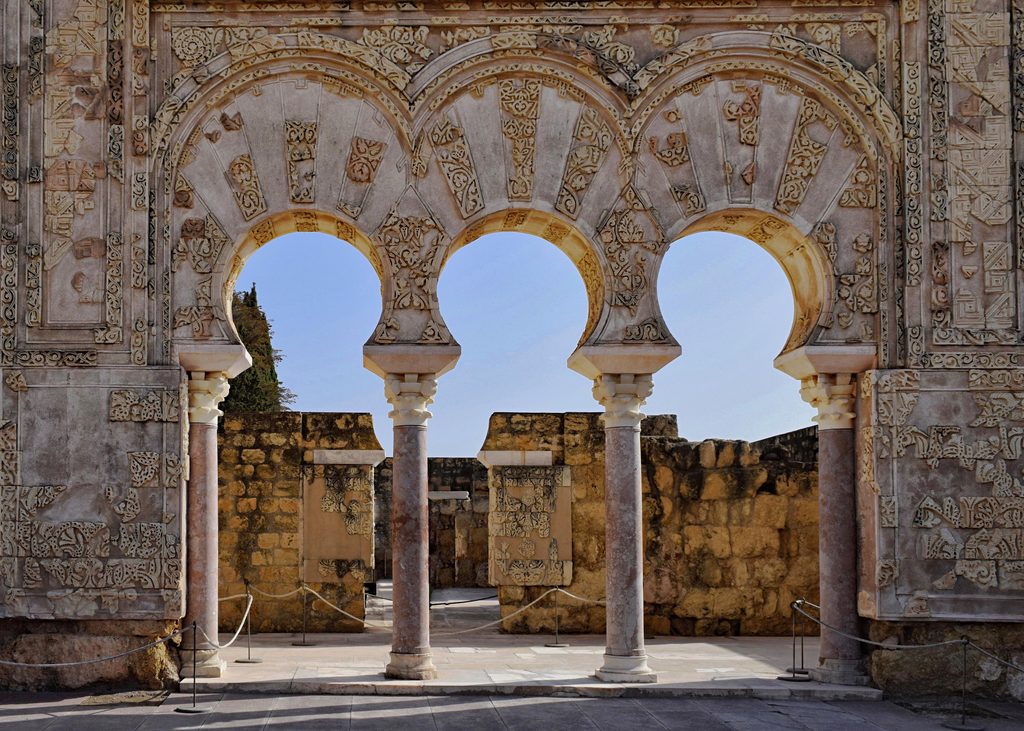
As for Madinat al-Zahra, it was destroyed during the events of the civil strife at the beginning of the fifth century AH/eleventh century CE, and then gradually fell into ruin, until its ruins remained as a witness to the era of the Umayyad Caliphate.
633 AH/1236 CE: The End of Islamic Córdoba
Córdoba remained under Islamic rule for centuries after the fall of the caliphate, passing through various political phases, until it fell to Castile in 633 AH/1236 CE.
Its fall was a major blow to al-Andalus: the city that had been the capital of the caliphate and a center of learning and politics was now outside Islamic rule.
What Remains of Córdoba?
Córdoba remains one of the clearest cities through which the impact of Islam in Western Europe can be read. The Great Mosque, the remains of Madinat al-Zahra, the walls, the bridges, the baths, the courtyard houses and the old urban layout all preserve parts of the city's Islamic memory.
Yet more important than the stone is what Córdoba left in the history of Muslims: the experience of the Umayyad state in al-Andalus, institutions of learning and jurisprudence, schools of medicine, the movement of writing and authorship, trade networks, and an architecture that later influenced the cities of the Maghrib and al-Andalus.
Therefore, Córdoba's value in this series comes not merely from the beauty of its buildings, but from its being an Islamic metropolis that shaped an entire era of Muslim history in the West.


