


Before Cairo became the heart of Egypt, and before its minarets rose above the old city, there was another city carrying the banner of Islamic Egypt: Fustat.
Fustat was not merely a capital founded by the conquerors led by the noble Companion Amr ibn al-As after entering Egypt; it was the turning point at which the country moved from the Byzantine era into a new phase of its political, urban and economic history.
Located near the Babylon Fortress on the eastern bank of the Nile, Fustat marked the beginning of a city that would become the direct precursor of historic Cairo. Historical sources state that Fustat was the first city founded by Muslims in Cairo in 21 AH/642 CE, and its archaeological area contains remains of the first city, the site of the Amr ibn al-As Mosque, and industrial and craft centres revealed by excavations.
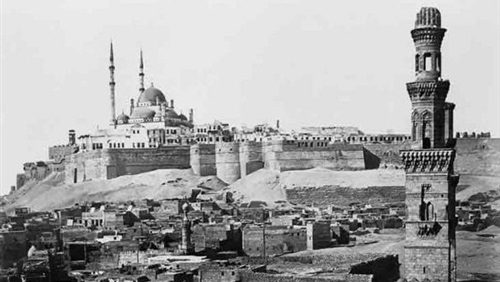
Why did Amr ibn al-As choose this place?
After the conquest of Egypt, the challenge was not only military. The Muslims needed a stable centre to administer the country and house the army.
Alexandria was a major city with a long history, but it was a coastal city linked to the Mediterranean. The new state needed a location closer to the heart of Egypt and better connected to the Nile and the routes of the valley.
The choice fell on the area adjacent to the Babylon Fortress.
Amr ibn al-As founded Fustat in 20 AH/641 CE or 21 AH/642 CE, depending on differing dates in the sources, to become the seat of the Muslim governors and the first Islamic capital of Egypt. The Egyptian Ministry of Awqaf states that its location on the east bank of the Nile, near the Babylon Fortress, made it a point linking the northern and southern parts of the valley, and that the Arab tribes settled around the governor's house and the congregational mosque, each group being allotted a plot in which to settle.
Thus Fustat was not built solely as a military garrison; it quickly became a real city with neighbourhoods, markets, mosques, dwellings and administrative institutions.
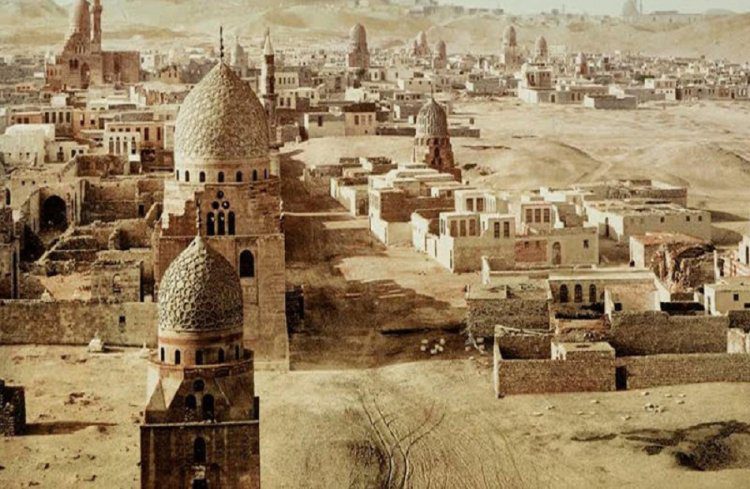
The mosque that was the heart of the city
In the centre of Fustat rose the landmark that became a symbol of the birth of Islamic Egypt: the Amr ibn al-As Mosque, founded by the noble Companion Amr ibn al-As by order of Caliph Umar ibn al-Khattab. The mosque is known as "the Crown of Mosques" and "the Ancient Mosque," and represents the first foundation of Islamic civilisation in Egypt and a historic religious and scholarly beacon.
But the mosque's importance did not lie in its architecture alone. In the early Islamic city, the congregational mosque was not a place of worship separated from public life; it was a space for learning, justice and gathering, which is why the Amr mosque became one of the most important centres of public life in Egypt.
The city took shape around it, as if Fustat began with the mosque and the governor's house and then gradually expanded around them.
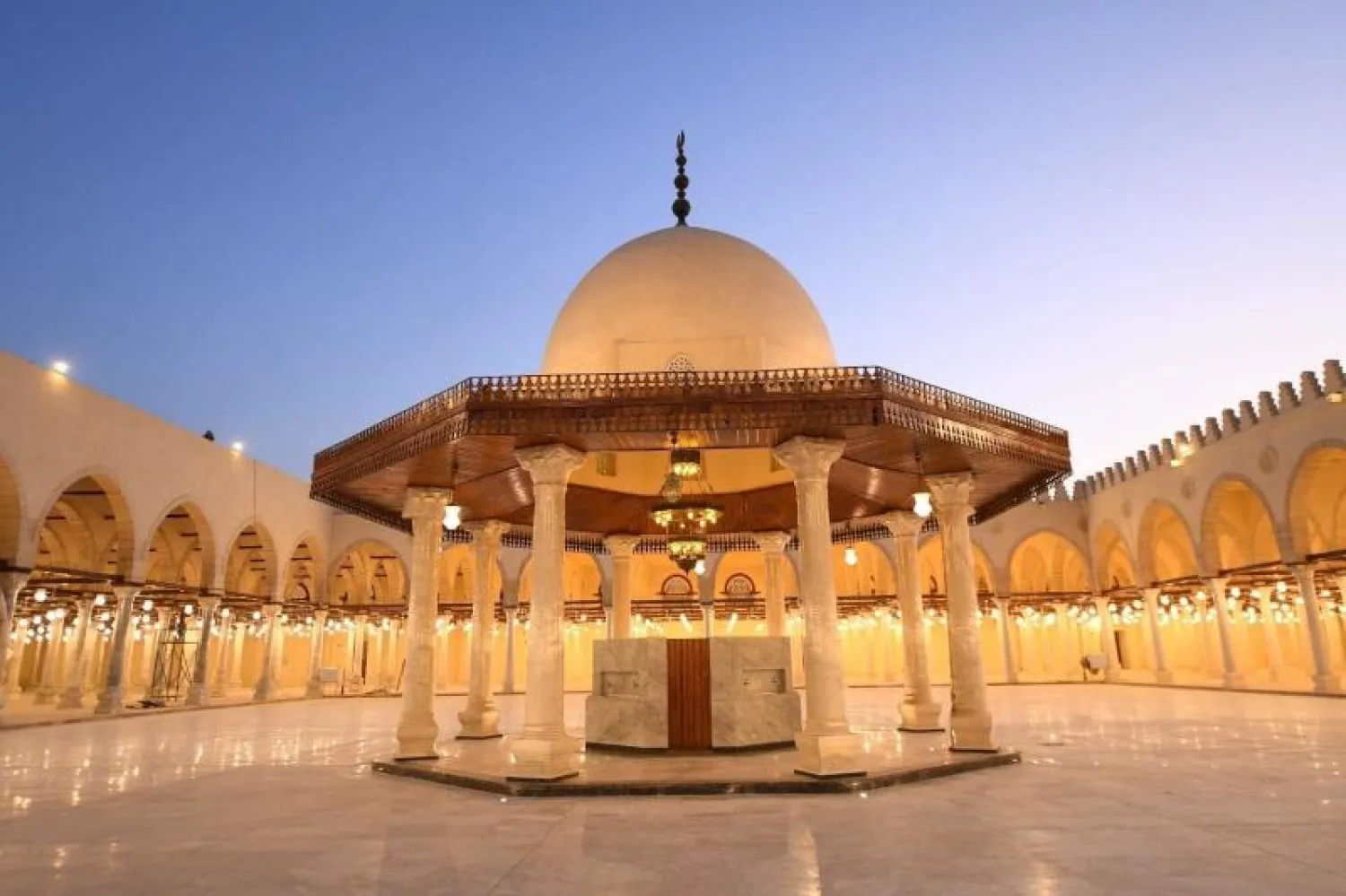
A city that was not only military
The city soon became a broad economic centre. The Nile was its natural artery, and its location connected it to Egypt's inland routes and to the roads leading to the Mediterranean and the Red Sea. Archaeological studies reveal extensive activity in pottery, glassmaking and other crafts, and the city's remains reveal dense urban and economic life.
UNESCO notes that the Fustat archaeological area was a centre of crafts, known for the production of glass and ceramics, and that the historic port of Fustat was closely tied to the Nile and to trade with Europe.
Fustat thus became one of the most important commercial cities in Egypt and the early Islamic world, and its function was not limited to administering the country.
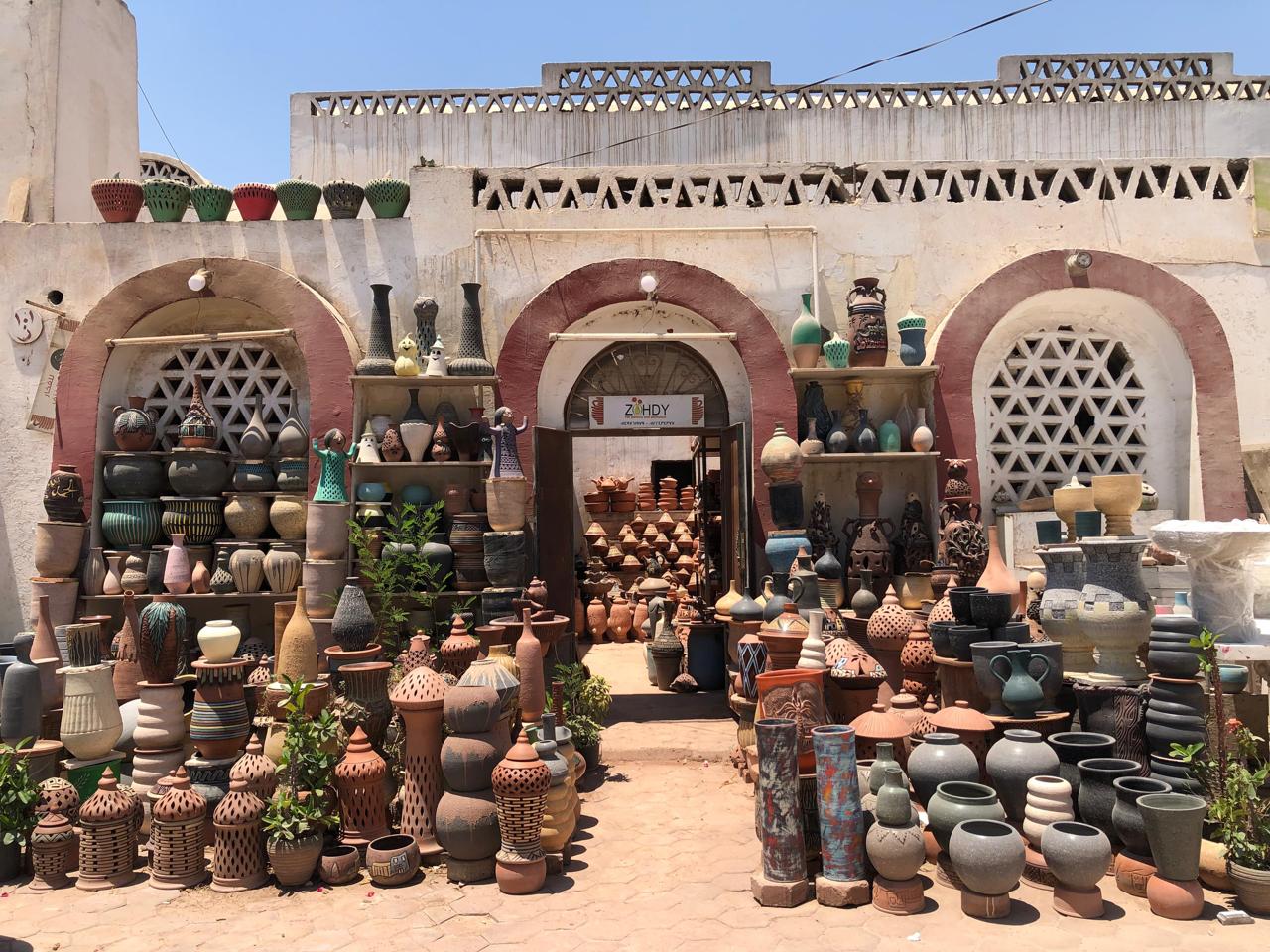
Fustat, city of scholars
The city also became an important scholarly centre.
Fustat became part of the network of Islamic learning that linked Egypt with Medina, Iraq, the Levant and elsewhere.
Scholars were not the only ones who passed through it. The city became a meeting place for merchants, craftsmen, soldiers, administrators and people of different faiths, which made it a diverse urban society from the earliest Islamic centuries.
When new capitals emerged, Fustat did not disappear
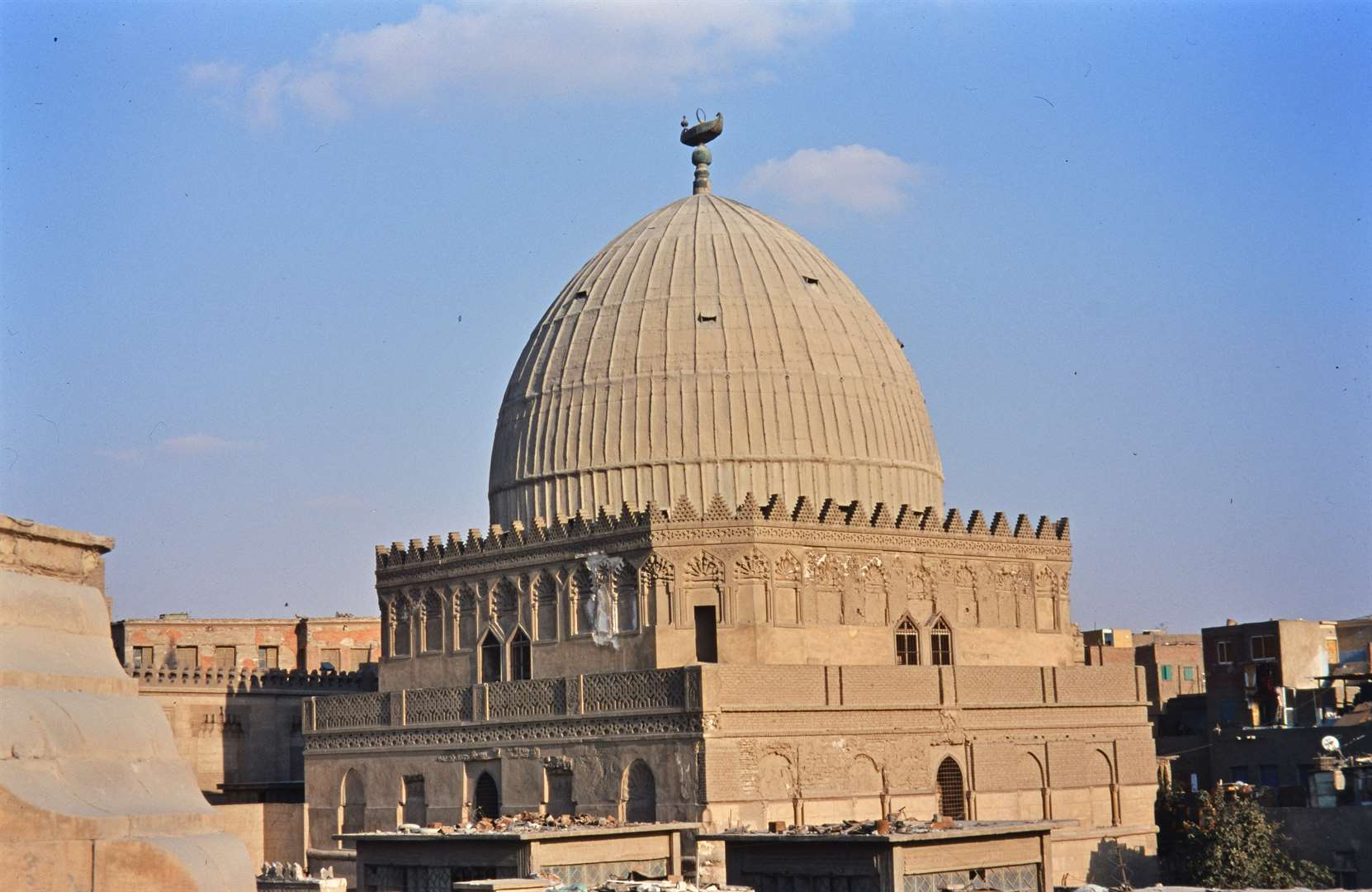
Fustat did not lose its importance when the Abbasids founded al-Askar in 132 AH/750 CE, nor when Ahmad ibn Tulun built al-Qata'i in 254 AH/868 CE.
The new capitals arose to its north, but Fustat remained an important economic and population centre.
The greatest transformation came in 358 AH/969 CE, when the Fatimids founded Cairo. The picture became more complex: Cairo was the centre of power, palaces and government, while Fustat remained the broader economic and social city.
An academic study of urban society in Fatimid Egypt states that Fustat and Cairo together formed the centre of the Fatimid state, with a clear difference in the functions of the two cities: Cairo was tied to the seat of government, while Fustat remained a vibrant urban and economic community.
This is a key point for understanding Cairo's history: Cairo did not immediately abolish Fustat; it grew alongside it and then gradually absorbed it.
The tragic end: when fire consumed the city
After more than five centuries of prosperity, Fustat reached one of the most tragic moments in its history.
In 564 AH/1168 CE, as the Crusader campaign led by Amalric I approached Egypt, the Fatimid vizier Shawar ordered Fustat burned so that the attackers would not seize it and use it as a base for advancing on Cairo.
That fire was not merely an urban catastrophe. It effectively ended the central role Fustat had played for centuries.
With the end of the Fatimid state and the rise of the Ayyubid state, the centre of gravity moved decisively to Cairo. But Fustat did not disappear entirely.
A city buried by the centuries and preserved by the earth
Paradoxically, Fustat's collapse helped preserve an important part of its history.
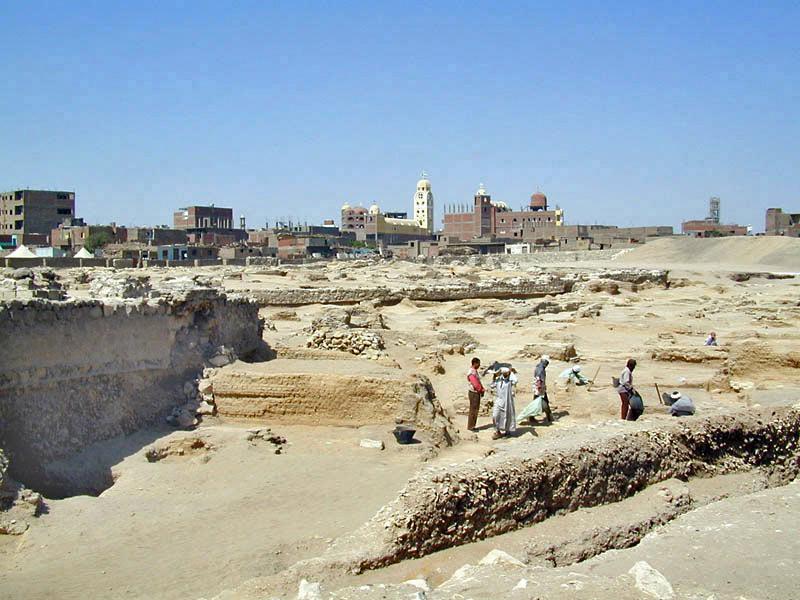
Wide areas of its former site remained buried under layers of rubble, so that in the modern era the area became one of the most important archaeological sites for studying the early Islamic city.
The Fustat archaeological site contains remains of the first city, where excavations have uncovered dwellings, structures and craft workshops, while the area still faces challenges of protection and conservation.
Today, the Amr ibn al-As Mosque stands as a living witness to a city whose buildings mostly no longer survive, while excavations reveal a whole world that once teemed with residents, merchants, craftsmen and scholars.
Herein lies Fustat's value in the series on Islamic cities: it is not the city whose buildings survived, but the city whose influence remained.
From it began the capital of Islamic Egypt; from it emerged the first of its major Islamic institutions; in its markets part of Egypt's economy took shape; in its mosque layers of learning developed; and on its land began the urban sequence that ended in Cairo.
Thus the "Islamic Cities Through History" train passes through Fustat: the first Islamic capital of Egypt, the cradle of Islamic urban development in the country, its political, economic and scholarly centre in the early centuries, and the city that grew around the Amr ibn al-As Mosque and then became the foundation on which historic Cairo was later built.


