


The Islamic civilisation was not the story of a single state, a single capital, or a single era. It was a long journey through cities and urban centres that stretched from Mecca and Medina to Jerusalem, Damascus, Baghdad, Cairo, Kairouan and Córdoba, and then to Bukhara, Samarkand, Delhi, Timbuktu, Malacca and Istanbul, among other cities that left their mark on the history of Islam.
From here comes the series "Islamic Cities Through History", which maps the world not in search of today's most famous cities, but of those that were, at certain stages of history, the beating heart of the Muslim world. They carried the banner of the caliphate, hosted circles of knowledge, hadith and jurisprudence, served as centres of trade, fortresses of jihad and defence, or gateways through which Islamic preaching and culture passed to new peoples and regions.
We begin with Mecca al-Mukarramah, the place where revelation descended and the qibla of Muslims, before the journey extends to the other cities that wrote distinct pages of Islamic history.
In each city we will ask: Where was it? When did it reach its peak? Why did it become a centre? Who were its scholars and leaders? What sciences and books did it produce? And what remains of it after states changed and the map of the world was redrawn?
It is another map of the world: one drawn by Muslims through knowledge, architecture, travel, trade and jihad, and whose cities left pages that still deserve to be read.
Mecca: Where Revelation Began and Islam Set Out
Before Mecca became a city to which millions come from the east and west of the earth, it was a centre unlike any other. It was a city whose glory was not made by rivers, fortresses or empires, but by the Sacred House of God.
From this spot in the heart of the Hijaz mountains began one of the greatest transformations in human history. In Mecca, revelation descended upon the Prophet Muhammad ﷺ, from it the Islamic call went forth, toward it Muslims turn five times each day, and from it set out a message that soon crossed the borders of the Arabian Peninsula to become a global civilisation.
Mecca's standing in the Islamic outlook is tied to a history far older than the mission of the Prophet Muhammad, may God bless him and grant him peace. It is the city associated with Ibrahim and Isma'il, peace be upon them, and the building of the Sacred House and the raising of its foundations.
Over the centuries the House became a destination for the Arabs, and Mecca became a centre for pilgrimage and a season in which the tribes gathered, until the city became a rare space where religion, trade, security and social standing converged.
The Quran, in Surat Quraysh, offers a condensed picture of the role Mecca played in the life of Quraysh: the winter and summer journeys were tied to the movement of trade, while the presence of the Sacred House provided religious standing and a security that helped sustain commercial activity. Hence Mecca was not merely a centre of worship, but also a point of connection between the trade routes linking the south of the Arabian Peninsula with its north.
Quraysh: When Mecca Became a Centre for the Arabs
Mecca reached a more organised stage with the rise of Quraysh, particularly in the time of Qusayy ibn Kilab, whose name is associated with organising the affairs of Mecca and gathering Quraysh around the Haram.
Institutions linked to the administration of the city and the service of pilgrims emerged, such as al-Siqaya, al-Rifada and al-Hijaba, and the Dar al-Nadwa was a place where the leading men of Quraysh gathered to consult on its affairs.
Thus a centre took shape in Mecca with an influence exceeding its geographical size: whoever came to it came for pilgrimage, the merchant came to its markets, the tribes knew its standing, and Quraysh held a wide network of relations with the Arab tribes.
Mecca was, then, before Islam, a religious, commercial and political centre in the Arabian Peninsula.
The Year of the Elephant: The Haram Confronts Power
Among the events that entrenched Mecca's standing in the Arab and Islamic memory is the story of Abraha al-Habashi's attempt to reach Mecca to demolish the Kaaba, the incident associated with Surat al-Fil.
Islamic sources recount that Abraha's army set out from Yemen toward Mecca, and that his campaign ended before reaching its goal, in an event that became one of the most prominent episodes tied to the history of the Sacred House.
Here Revelation Began
In Mecca, in the Cave of Hira, the moment that changed history began. Muhammad ﷺ was forty years old when Jibril, peace be upon him, brought down the first revelation, and the descent of the Noble Quran began.
From that moment Mecca was transformed from a stage for trade and pilgrimage into the cradle of the Islamic call.
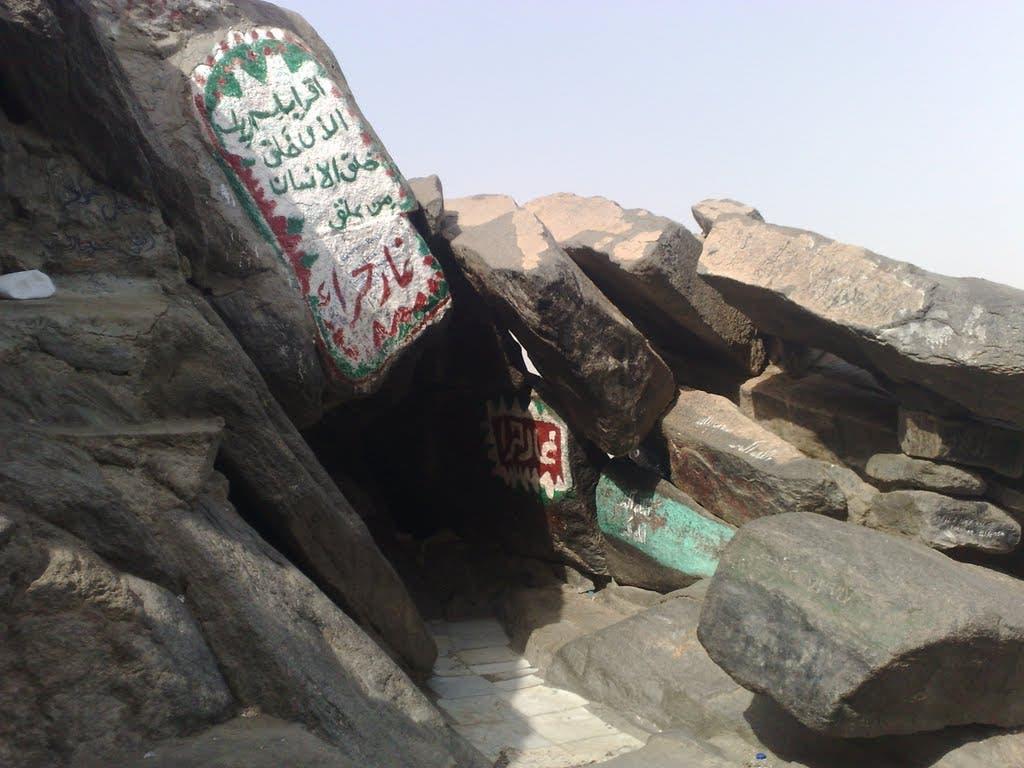
The Prophet ﷺ called his people to the oneness of God and to abandon the worship of idols, but the call collided with the religious, social and economic structure that existed around Mecca.
Quraysh's opposition to Islam was not merely a religious disagreement. The Meccan elite saw in the new call a challenge to a religious and social system tied to Mecca's standing and to the influence of Quraysh.
The Years of Trial: Islam Spreads Despite the Siege
Pressure on the Muslims intensified, the vulnerable were tortured, and the Prophet ﷺ and his companions faced many forms of harm and boycott. Nevertheless, the call did not stop.
Then came the migration to Medina al-Munawwara in 1 AH / 622 CE, and the political leadership of the emerging Islamic state moved to Medina. But Mecca did not lose its standing: the Kaaba remained the qibla of Muslims, and its liberation and return remained a central part of the course of the call.
Badr: The Long Road to Mecca
After the migration, the Muslims and Quraysh entered a series of military and political confrontations: the Battle of Badr in 2 AH / 624 CE, then Uhud in 3 AH / 625 CE, and the Trench in 5 AH / 627 CE, before the balance of power gradually shifted.
In 6 AH / 628 CE the Prophet ﷺ set out with his companions intending to perform Umrah, and events ended with the Treaty of Hudaybiyyah, which provided a truce that gave the Islamic call greater room to spread.
Then Quraysh's allies broke the covenant, and the moment long awaited arrived.
The Conquest of Mecca: The House Returns to Monotheism
On 20 Ramadan 8 AH the Prophet ﷺ entered Mecca at the head of the Muslim army. The event was a decisive moment in the history of the city: Mecca, from which the Muslims had gone out as fugitives, came under the banner of Islam.
The Prophet ﷺ entered Mecca victorious, then the Kaaba was cleansed of idols, and the end of organised idolatry around the Sacred House was proclaimed.
Afterwards many Arab tribes entered Islam, and Mecca became a religious centre for the Islamic world.
Mecca After the Prophetic Era: A City of Knowledge and Pilgrimage
Mecca was not the capital of the caliphate after the state moved to Medina and then to other capitals, but it retained a standing that no political capital could rival: it is the qibla, the Haram, the destination of pilgrimage, and the gathering place of Muslims.
In the Sacred Mosque successive circles of knowledge arose, and great scholars associated with Mecca emerged, among the most prominent of whom were Abdullah ibn Abbas, Ata ibn Abi Rabah and Mujahid ibn Jabr. Mecca became a destination for students of hadith, jurisprudence and exegesis.
The Hajj was a factor of the utmost importance in sustaining Mecca as a centre of contact between the regions of the Islamic world: the scholar coming from Iraq met a scholar from Khurasan, and the merchant coming from Yemen met the pilgrim coming from Egypt or the Maghrib, so that the seasons of pilgrimage turned into a vast network for the exchange of knowledge, trade, news and culture.
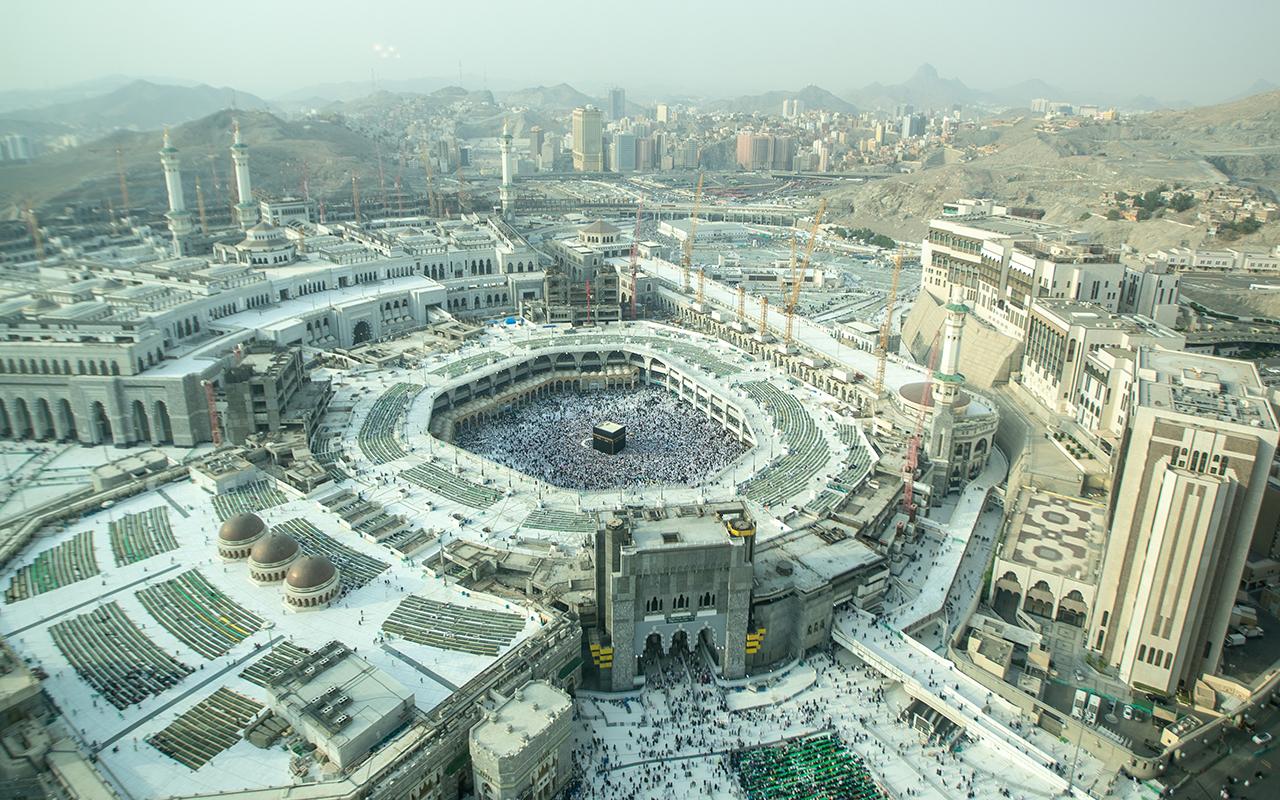
Landmarks That Shaped Mecca's Memory
The Sacred Mosque and the Noble Kaaba remain at the heart of the city, and beside them are al-Safa and al-Marwa and the sacred sites at Mina, Arafat and Muzdalifah.
Mecca is also historically tied to dozens of places preserved in the books of the biography and the chronicles of Mecca. Among the most important sources documenting the geography and landmarks of the city is the book "Akhbar Makkah" by al-Azraqi, which represents an important source for the study of the history of Mecca and the Sacred Mosque.
What Did Mecca Export to the World?
Mecca did not export industry, armies or administrative systems to the world so much as it exported an idea.
For this reason Mecca's influence is measured not by its area, but by what its message created.
What Is It Known For?
Mecca al-Mukarramah: the place of the descent of revelation, the qibla of Muslims, the Sacred House of God, and the cradle of the Islamic message.
From here begins the series "Islamic Cities Through History": from a city that was not the greatest of cities in architecture, but was the greatest in influence, and from which began the story of a nation whose civilisation later extended from Medina to Damascus, Baghdad, Cairo, Kairouan and Córdoba, and then to Bukhara, Samarkand, Timbuktu, Delhi, Istanbul and other cities of the Islamic world.


