


Five months after the outbreak of war between the United States and Iran, the question within American military circles is no longer about the results of the air strikes or the scale of the damage inflicted on Iranian facilities. It has become a more sensitive issue with a greater impact on US national security: to what extent can the United States continue conducting intensive military operations if the current rate of consumption of missiles and strategic munitions persists?
This question is being raised not only by the media, but also in congressional sessions, research centre reports and closed-door discussions within the US Department of Defense (the Pentagon).
Although Washington continually asserts that its forces possess everything needed to carry out any military operation, experts point out that the problem does not lie in owning thousands of missiles, but in the rate of their consumption compared with the speed of their production. This equation could turn into a point of weakness if a broad confrontation erupts with a major military power.
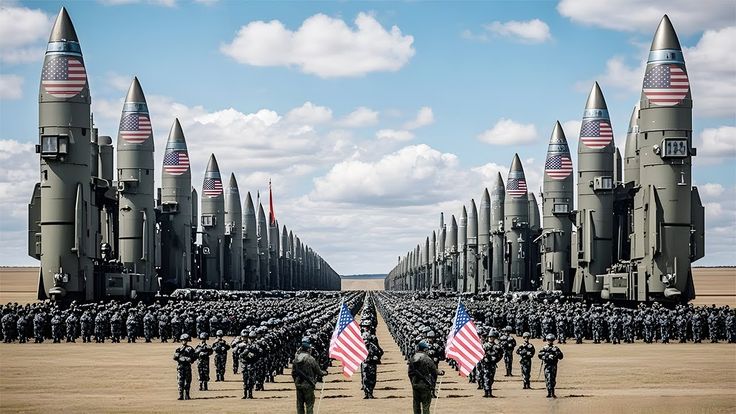
Absolute Secrecy Over the Size of the Stockpile
For decades, the United States has treated the size of its stockpile of missiles and precision munitions as one of its most sensitive military secrets. For this reason, the Department of Defense does not announce official figures on the number of missiles in service or in reserve, whether in peacetime or during wars. American officials argue that disclosing such data would give rivals such as China, Russia, Iran and North Korea an opportunity to assess the US military's capacity to sustain operations, and to estimate how long Washington might need to rebuild its arsenal after any broad confrontation.
During a session of the United States Senate, Senator Mark Kelly, a former US Navy pilot, pointed out that the recent war consumed large numbers of cruise missiles and air defence missiles, warning that any new escalation could increase pressure on strategic stockpiles, particularly given the continuing US military commitments in Europe, the Middle East and the Indo-Pacific region.
For its part, Pentagon officials refused to provide any figures, confirming that this information falls within classified files that may not be discussed publicly.
A Short War with Consumption Equivalent to Years
Estimates from American research centres indicate that military operations against Iran saw one of the highest rates of precision munitions use in the history of modern warfare. Long-range missiles have become the preferred weapon of US forces because they allow targets to be struck without risking aircraft or soldiers, yet they are at the same time among the most costly and complex weapons to manufacture.
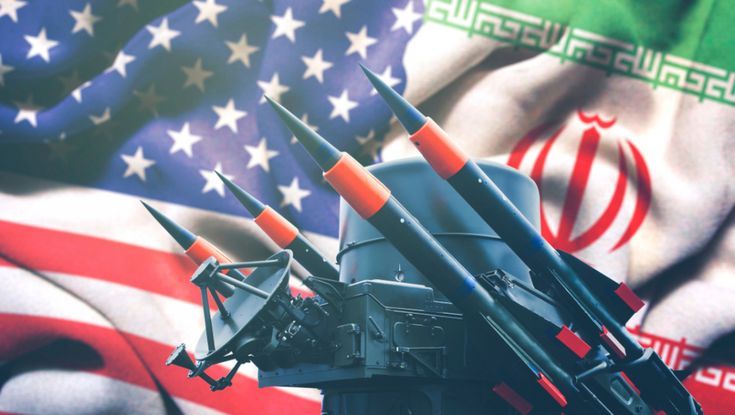
Although there are no official figures confirming the scale of consumption, most studies agree that the rate of use of these missiles was the highest since the Iraq War, and possibly the highest in the history of the use of some of these systems.
Military analysts point out that modern warfare differs radically from traditional warfare, as the United States increasingly relies on precision-guided munitions. This raises the cost of each strike, but in turn reduces human losses.
The Problem Is Not Depletion but the Speed of Replenishment
Experts in the defence industry argue that talk of the American arsenal being "depleted" is exaggerated. The United States still possesses the largest stockpile of advanced munitions in the world, but the real concern lies in the gap between the speed of consumption and the speed of production.
Modern missiles are not manufactured in the same way as conventional munitions. They rely on advanced electronics, precision engines, satellite navigation systems and components produced by dozens of companies across different American states, in addition to suppliers from allied countries. This means that manufacturing a single missile may take many months, whereas dozens of missiles can be fired within a single day of military operations.
Estimates from the Center for Strategic and International Studies (CSIS) indicate that some missiles, such as the Tomahawk, THAAD and Patriot, may need three years or more to fully replace the quantities consumed, while other missiles can be produced again within shorter periods thanks to the expansion of production lines in recent years.
The Defence Industry Faces an Unprecedented Test
The war has prompted the US administration to reconsider the philosophy of military manufacturing that prevailed after the end of the Cold War. For years, the Department of Defense relied on purchasing limited numbers of missiles each year, on the assumption that major wars had become less likely and that military operations would be short and limited.
However, the war in Ukraine, followed by the confrontation with Iran, showed that modern wars can consume enormous quantities of precision munitions over a short period. Washington has therefore begun pressing major companies, such as Lockheed Martin, Raytheon and Northrop Grumman, to increase production capacity, offering financial incentives and long-term contracts that enable companies to expand factories and invest in new production lines.
The US administration has also used the Defense Production Act to accelerate the supply of sensitive components and remove bureaucratic obstacles that had delayed manufacturing.
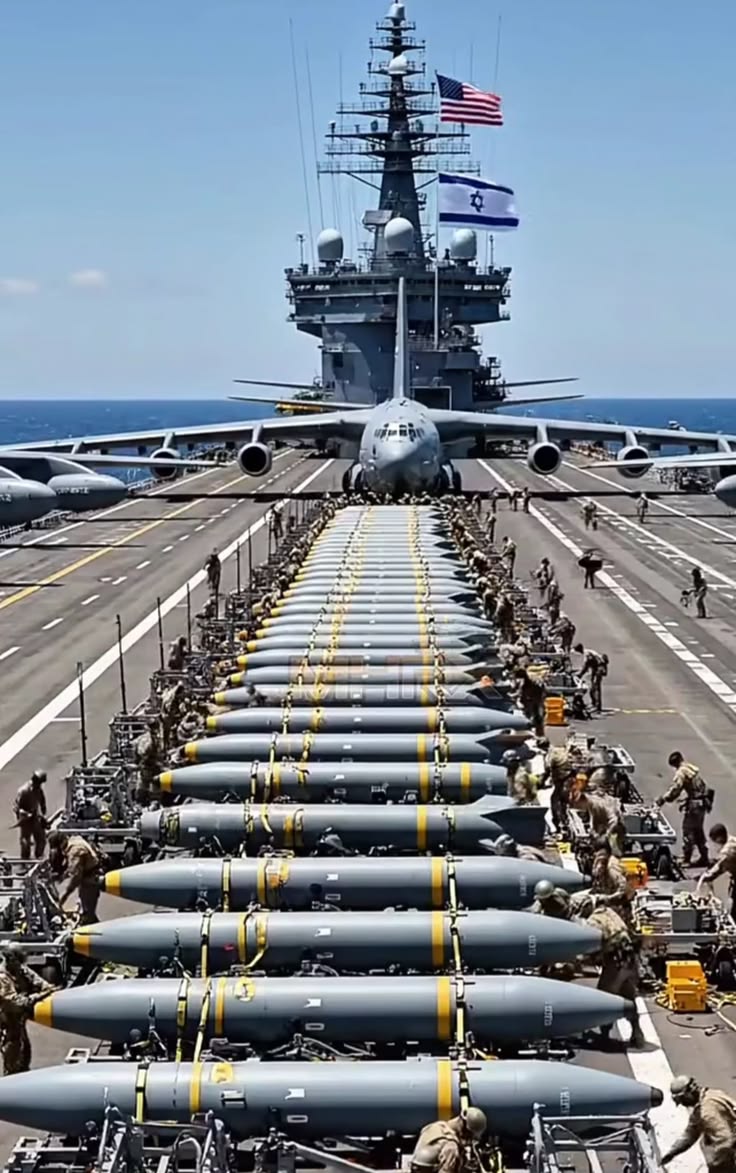
Nevertheless, officials in the defence industry stress that increased production does not come about through a political decision alone. Factories need trained workers, new suppliers and specialised equipment, which may take years before results appear on the ground.
Trump Between Reassurance and the Military Reality
For his part, US President Donald Trump has been keen to downplay concerns about the military stockpile. On more than one occasion he has asserted that the United States possesses sufficient missiles and advanced weapons, noting that defence companies have agreed to multiply production several times over, and that the US military will not face a shortage that affects its ability to carry out any military operation.
However, these statements have not ended the debate within military circles. A number of American reports have referred to discussions within the National Security Council and the Department of Defense on how to manage the strategic stockpile if the war continues for a longer period, or if the United States is forced to fight simultaneous confrontations in more than one theatre of operations.
These discussions point to an important shift in American military thinking. The question is no longer about the ability to win a single war, but about the ability to fight several simultaneous conflicts without draining the strategic arsenal or affecting defence commitments to allies.
Has China Become the Biggest Beneficiary?
Away from the battlefields of the Middle East, military planners in Washington view the war with Iran from a markedly different angle. The real challenge for the United States was never Iran itself, but the impact of munitions depletion on its ability to confront larger strategic competitors, foremost among them China. Over the past decade, the US Department of Defense has redirected its military priorities towards the Indo-Pacific region, which it regards as the most important theatre in the competition with Beijing. American military doctrine there rests on using vast numbers of long-range and precision missiles to destroy Chinese warships, missile bases, air defence systems and command and control centres in the event of any confrontation over Taiwan or the South China Sea. Yet this type of missile is the same one that was used intensively in the war against Iran.
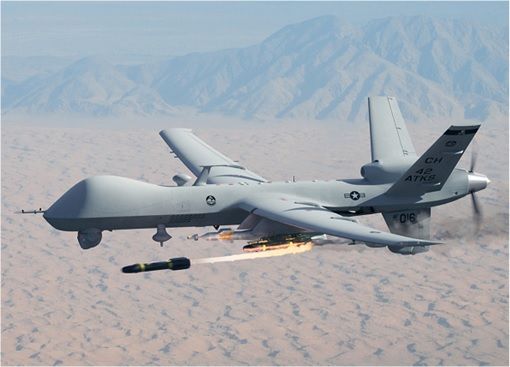
Military experts believe that the continued depletion of these munitions in the Middle East could limit the United States' ability to sustain a prolonged conflict in Asia, or force it to reorder its military priorities between the two theatres.
The Allies' Dilemma: Who Gets the Missiles First?
The pressures are not limited to the needs of the US military alone, but extend to Washington's commitments to its allies around the world. Since the outbreak of the war in Ukraine, the United States has become the main supplier of air defence systems and interceptor missiles to Kyiv, particularly Patriot missiles and other air defence munitions.
At the same time, Gulf states are demanding stronger air defences in light of continuing missile threats, while Japan, Australia and South Korea are seeking to increase their stockpiles of long-range missiles in anticipation of any escalation with China or North Korea.
This means that American factories are now required to meet the needs of the US military while also fulfilling military contracts signed with dozens of allied countries.
Estimates from defence industry experts indicate that some foreign orders may face delivery delays, not because of a shortage of funding, but because of the limited current production capacity, which could affect the timetables of arms programmes in a number of countries.
Why Are Modern Missiles Difficult to Manufacture?
Some may assume that increasing production is simply a matter of opening new manufacturing lines. In reality the picture is more complicated, as modern missiles contain thousands of precision components, including advanced electronic chips, satellite-guided navigation systems, sensors, solid-fuel engines, highly complex software, and composite materials that withstand extreme temperatures and pressures.
These components are produced through a wide network of suppliers, some of whom make a single part that goes into hundreds of different missiles.
The wars in Ukraine and Iran have exposed the fragility of some supply chains, particularly with regard to electronic components and rare earth metals. This has prompted the US Department of Defense to review its reliance on foreign suppliers and to work on bringing a larger share of defence manufacturing back onshore.
Companies also face another challenge, namely the shortage of specialised technical workers. Producing modern missiles requires engineers and technicians with precise expertise, who cannot be replaced quickly.
Are Cheaper Alternatives Sufficient?
In the face of this reality, the US military has begun expanding the use of less expensive munitions for certain tasks that do not require firing high-cost strategic missiles.
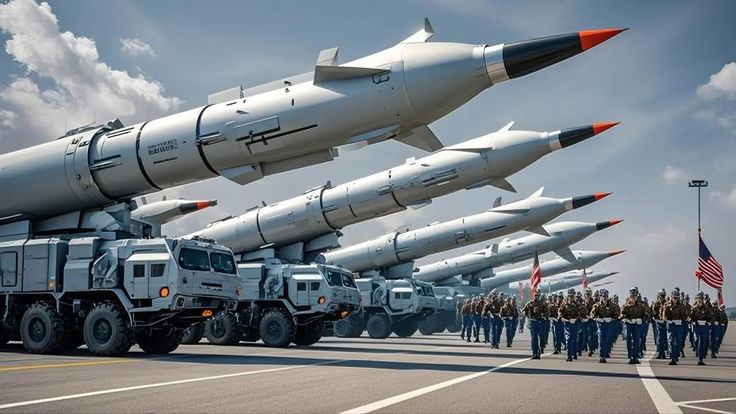
Analysts see this trend as an attempt to manage the stockpile more efficiently, by allocating strategic missiles to targets of high military value, while using cheaper munitions against tactical targets.
The US Navy is also developing new methods for deploying air defence systems, including integrating some interceptor missiles with warships to increase deployment flexibility, in parallel with plans to raise production of upgraded Patriot missiles in the coming years.
Has the Nature of Modern Warfare Changed?
One of the most important lessons the American military establishment has drawn from the recent war is that modern warfare now relies to an unprecedented degree on long-range precision munitions. In past decades, military strength depended on the number of tanks, aircraft and soldiers. Today, the ability to produce smart missiles and maintain sufficient stocks of them has become a decisive factor in the balance of power.
Military reports indicate that some recent conflicts consumed, within a few months, quantities of munitions that previously would have sufficed for years of limited military operations, prompting many Western countries to revise their estimates of strategic stockpiles.
The United States is no longer alone in facing this challenge. European countries have also begun increasing spending on defence industries and establishing new production lines for munitions and missiles, after the Russian-Ukrainian war exposed the fragility of Western stockpiles in the face of prolonged conflicts.
Between Official Reassurance and Military Warnings
Despite the reassuring statements issued by the White House and the Pentagon, a careful reading of official positions reveals a delicate balance between two parallel messages.
The first, addressed to rivals, is that the United States still possesses sufficient military capability to deter any threat, and that talk of a weakened arsenal is exaggerated. The second, addressed to Congress and defence companies, underlines the need for additional investment and accelerated production programmes in anticipation of any long-term conflict.
A Race Against Time
National security experts argue that the United States is not facing an immediate shortage of munitions, but it is engaged in a race against time to preserve its military superiority in a world where flashpoints are multiplying. The war with Iran, and before it the war in Ukraine, have shown that modern wars are decided not only by advanced technology, but also by a state's ability to produce large quantities of munitions and quickly replace what is consumed.
From this standpoint, the real challenge facing Washington lies not in the number of missiles currently in its depots, but in its capacity to maintain a strategic stockpile that allows it to sustain more than one confrontation within a close timeframe, without affecting its military commitments deployed across the world.
While the US administration insists that the readiness of its forces has not been affected, many analysts believe the coming months will be a significant test of the success of stockpile rebuilding plans. If the United States manages to accelerate production and overcome bottlenecks in its supply chains, it will preserve the margin of superiority it has enjoyed for decades. If consumption rates continue to outpace manufacturing rates, it may find itself compelled to reorder its military priorities, balancing the requirements of deterrence in the Middle East, continued support for allies, and preparedness for possible competition with China and Russia in the years ahead.
In this way, the munitions file is no longer merely a logistical matter within the Pentagon. It has become one of the clearest indicators of the United States' ability to maintain its global military standing in an era marked by multiple crises and intertwined theatres of conflict, where possessing weapons is no less important than the capacity to produce and continually renew them.


