

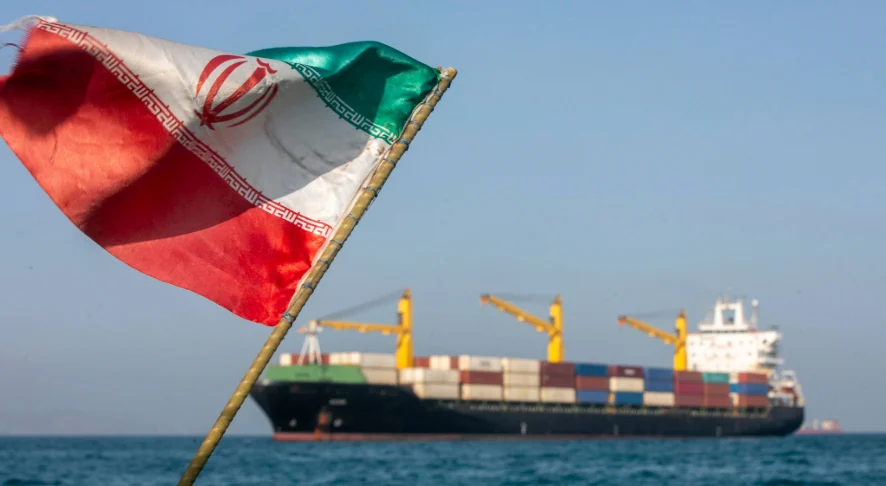
The Islamic Revolutionary Guard Corps announced on Thursday, 12 November 2026, that two giant oil tankers had been disabled by two explosions that occurred on Wednesday evening in the Strait of Hormuz, one of the most important maritime passages for the transport of oil and gas, amid continuing military tensions and the risks facing commercial vessels in the region.
Reuters reported, citing the IRGC naval forces, that the two tankers were struck by two major explosions after they ignored warnings against following a route that Tehran described as unauthorised within the strait.
Iranian official media later reported that the two tankers had struck naval mines, and broadcast footage that it said documented the two incidents. It was not possible to independently verify the cause of the explosions or the Iranian account regarding the mines. The identities of the two vessels, the extent of the damage they sustained, and the condition of their crews were also not immediately clear.
Escalating Maritime Incidents
The announcement comes amid the continuing military confrontation between Iran on one side and the United States and "Israel" on the other, which broke out in late February 2026 and has affected the security of navigation and international trade through the region's maritime passages.
Over the past months, the Strait of Hormuz has witnessed a series of incidents targeting oil tankers and commercial vessels. In some cases the IRGC announced that ships had been targeted directly, while Iranian authorities attributed other incidents to naval mines that they said the vessels struck while using unauthorised routes.
For its part, the UK Maritime Trade Operations office received reports of incidents in which vessels were hit by projectiles of unknown origin, although the parties responsible were not clear in all cases.
Reuters, in a report on shipping traffic and attacks, noted that the rising number of vessels transiting the strait has been accompanied by an increase in attacks, leaving ship crews exposed to ongoing risks despite efforts to secure some shipping routes.
The Strait of Hormuz and the Global Economy
The Strait of Hormuz connects the Arabian Gulf with the Gulf of Oman and the Arabian Sea, and is a vital corridor for oil and gas exports from Gulf states to global markets.
Rising incidents there expose vessels and their crews to danger, raise insurance and shipping costs, and disrupt transport schedules. The leakage of oil from damaged tankers could also cause environmental damage threatening coastlines, marine resources and water desalination facilities.
Although some states and exporting entities have turned to alternative transport arrangements and routes to reduce the effects of the disruption, securing navigation through the strait remains an important factor for the stability of international energy supplies.
Details Yet to Be Resolved
Until the IRGC announced the two incidents, no sufficient independent information had emerged to confirm that the two tankers struck naval mines, or to establish the circumstances of the explosions definitively.
The Iranian announcement adds a new incident to the series of disruptions in the Strait of Hormuz, at a time when military operations and restrictions on navigation are intersecting with international trade, amid concerns of further incidents and of endangering seafarers and the marine environment.


