


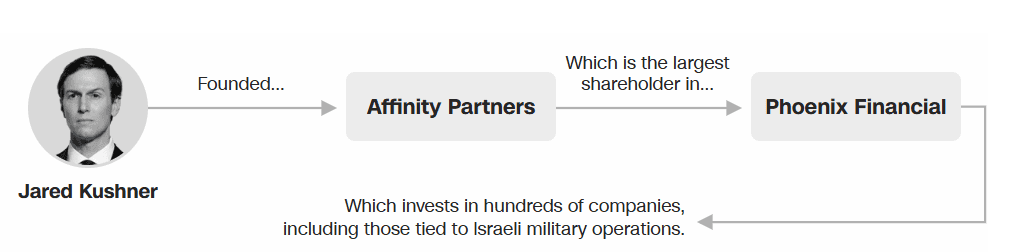
A CNN investigation has revealed that Affinity Partners, the private investment firm owned by Jared Kushner, son-in-law of US President Donald Trump and one of his administration's most prominent unofficial negotiators in the Middle East, holds the largest stake in an Israeli financial group that invests hundreds of millions of dollars in companies linked to the Israeli military, at a time when Kushner plays a pivotal role in negotiations over the Gaza war and the reconstruction of the Strip.
The investigation raises questions about a possible conflict of interest between Kushner's diplomatic role and his business interests. However, CNN said it found no evidence that Kushner's diplomatic moves directly affected the investments it reviewed. His lawyer and the White House also deny any link between his diplomatic activity and his private investments.
From Affinity to Israeli arms companies
The investment network begins with Affinity Partners, which Kushner founded after the end of Trump's first term. In July 2024, the firm bought a 4.95% stake in Phoenix Financial, one of Israel's largest financial groups, for $128.5 million. Just five days before Trump returned to the White House in January 2025, Affinity nearly doubled its stake, becoming Phoenix's largest shareholder.
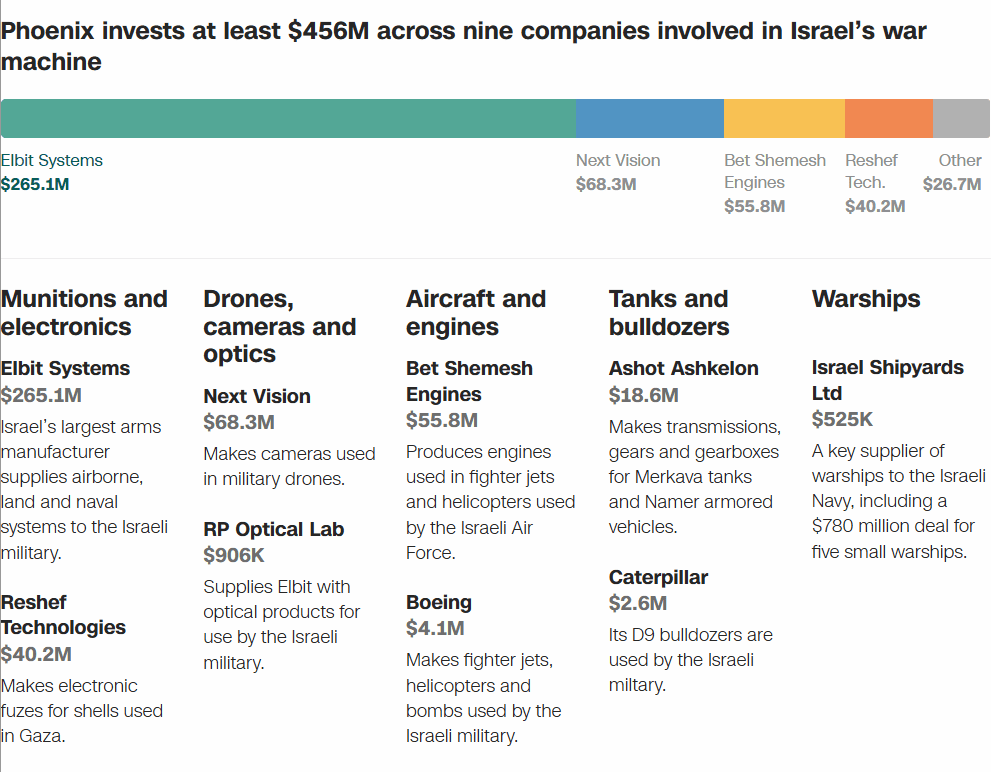
Israeli financial records analysed by CNN show that Phoenix invests in a number of companies that supply weapons, equipment and systems used by the Israeli military in its operations. The investigation identified nine companies in this sector in which Phoenix's visible investments amount to at least $456 million.
Affinity holds no direct stakes in these nine companies; rather, it holds a significant stake in Phoenix and therefore benefits when the group's value and profits rise. The investigation stresses that the public records it was able to analyse represent only part of Phoenix's investment portfolio.
Note: The financial records available to the public, which CNN analysed, show details of only a small part of Phoenix's investment portfolio; these records do not include assets held in retirement accounts, stakes held in companies through mutual funds, corporate bonds and other securities. The data is accurate as of 30 June 2026. Source: Phoenix Financial, the United Nations, and company websites. Graphic: Amy O'Kruk, CNN.
$265 million in Israel's largest arms company
The largest of these investments is in Elbit Systems, Israel's largest weapons manufacturer, in which the stake Phoenix holds, as identified by the investigation, is worth at least $265.1 million.
Elbit produces air, land and naval military systems, and over the past year received contracts worth hundreds of millions of dollars from the Israeli Ministry of Defense, including about $200 million for advanced air munitions, $48 million for thousands of 155mm artillery shells, and $210 million to develop Israeli army tanks.
According to the investigation, Israeli demand for Elbit products has risen noticeably since the Gaza war began, and the company's share price has risen by more than 165% since the start of the war. Products of the company, including highly explosive tank shells and 500-pound bombs, have previously been found at Israeli strike sites that killed civilians, according to CNN analyses and human rights organisations.
Drones, shells, tanks and warships
Phoenix's investments revealed by the investigation are not limited to Elbit.
The group holds an investment worth more than $68 million in Next Vision, a company that makes cameras used in military drones and sells its products to contractors including Elbit and Israel Aerospace Industries. The company reported a rise in Israeli orders since the start of the war in Gaza.
Phoenix also invested more than $40 million in Reshef Technologies, which makes electronic fuzes for artillery shells; the company announced that it had received orders from the Israeli Ministry of Defense worth $165 million since the start of the Gaza war.
Phoenix also holds a stake worth more than $55 million in Bet Shemesh Engines, which produces engines used in fighter jets and helicopters of the Israeli Air Force, alongside an investment of about $18.6 million in Ashot Ashkelon, which produces drive shafts, gears and components used in Merkava tanks and Namer armoured vehicles.
The investigation also identified an investment in Israel Shipyards, which builds attack boats for the Israeli navy. According to CNN, boats built by the company were used to launch missiles toward Gaza, while the company said in a 2026 report that the war had left "positive effects on business", reflected in orders it received for its naval vessels. The Israeli Ministry of Defense signed a $780 million contract with it in 2024 for five ships.
Boeing and Caterpillar too
The portfolio tracked by the investigation also includes smaller investments in the American companies Boeing and Caterpillar.
Phoenix's investments in Boeing amount to about $4 million. The company makes fighter jets, helicopters, bombs and guided munitions used by the Israeli military. Its investment in Caterpillar is about $2.5 million, while the Israeli military uses the company's D9 bulldozers.
The nine companies profited from the war
One of the notable findings of CNN's investigation is that the shares of the nine companies it identified all rose over the past year, while several of them said the war in Gaza had increased demand for their businesses and products.
Meanwhile, Kushner's investment in Phoenix has yielded significant gains. On 27 July 2026, Affinity sold a quarter of its stake in the Israeli group for more than $340 million, a return exceeding five times the original purchase price of the shares, according to CNN.
Despite the sale, Affinity remained Phoenix's largest shareholder with a stake of 7.4%, whose value exceeded $1 billion in July.
At the same time... Kushner negotiates on Gaza
Here lies the conflict-of-interest issue the investigation raises.
Since spring 2025, Kushner has become one of the most influential voices in the Trump administration's Middle East policy, although he holds no official government position.
He took part in negotiations with Israeli Prime Minister Benjamin Netanyahu, and alongside US envoy Steve Witkoff contributed to ceasefire negotiations in Gaza, then took part in formulating visions for the future and reconstruction of the Strip.
In September 2025, Kushner and Witkoff took part in lengthy negotiations with Netanyahu over a Gaza agreement, and the first phase of the plan entered into force in October of that year, including a ceasefire, the release of hostages and a partial Israeli withdrawal.
His role did not stop at Gaza. In April 2026, Kushner, Witkoff and Vice President JD Vance took part in a US delegation to Islamabad for talks aimed at ending the war with Iran, and in June Kushner and Witkoff travelled to Doha to take part in US-Iran negotiations.
In August, Kushner met a Hamas leader in Egypt and then Netanyahu in Israel as part of efforts to revive the stalled Gaza plan, and, according to the timeline reported by CNN, told Netanyahu not to "create obstacles".
A plan for "New Gaza" and 180 skyscrapers

In January 2026, Kushner presented a plan at the World Economic Forum in Davos to rebuild Gaza after the war.
The plan included a coastal tourist zone, an airport, a port and an area accommodating 180 skyscrapers. He called on the private sector to invest, speaking of "amazing investment opportunities" in Gaza.
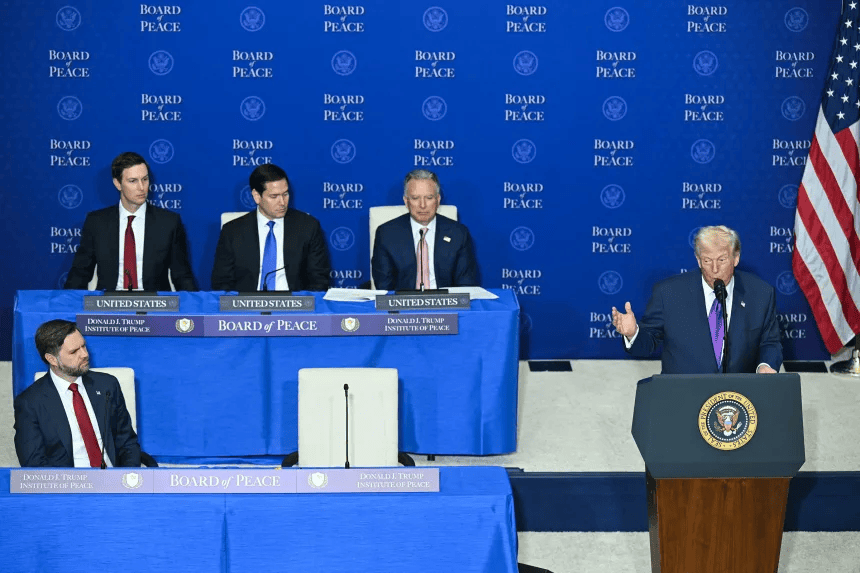
Weeks later, at the inaugural meeting of the "Board of Peace" that Trump established to oversee the redevelopment and security of Gaza, Kushner said that many participants work as volunteers rather than for personal gain, asserting that no one on the board "makes personal profits" from its work.
Why doesn't Kushner disclose his finances like government officials?
CNN's investigation points to an important element of the case: Kushner works as a volunteer, not as an official employee of the US administration.
At an investment conference in Miami in March, he said himself: "Technically, I did not join the administration", explaining that Trump and Witkoff asked him to increase his practical involvement in government work.
According to CNN, this status helped Kushner avoid the level of financial disclosure he would have been subject to had he held an official government post. Affinity is a private company, and neither it nor Kushner is required under US law to publicly disclose the details of all its investments.
Kushner: Phoenix is "our best investment"
CNN notes that Kushner has not been entirely distant from Phoenix in public.
In September 2025 he described his stake in the company as "the best investment" of his firm, and said he maintains a "very active dialogue" with the group and meets its management every few weeks, more than other investors in it do.
In another interview, Kushner said the investment in Phoenix came from a major bet on Israel, and also spoke of the possibility that the Israeli group would in future invest in Saudi Arabia and the UAE, arguing that intertwined economic interests could help bring the countries of the region closer together.
Affinity's own funding sources also trace back to the region: after the firm was founded in 2021, it received an investment of $2 billion from Saudi Arabia's Public Investment Fund six months later, followed by funds from Qatar and the UAE, according to the report.
Kushner's lawyer: he did not intervene in Phoenix investments
For its part, Kushner's lawyer denied that there is any conflict between his diplomatic role and his investments.
He told CNN that Kushner "has never participated in or directed Phoenix's decisions about where to invest", had no role in the decision to buy, hold or sell shares in the nine companies identified by the investigation, and never served on Phoenix's board of directors.
He added that saying Kushner's diplomatic work affected Phoenix's investments, or that those investments affected his diplomatic work, is "not true".
The White House also rejected concerns about conflicts of interest. Deputy Press Secretary Anna Kelly said that "Jared Kushner's personal business activities have nothing to do with his diplomatic engagements", noting that he performs these duties as a volunteer at the request of the President.
Phoenix did not comment on the detailed findings of the investigation, but said it is a regulated company and that the value of its shareholders derives mainly from its operating performance rather than from returns on its investments.
Ethics experts: the problem lies in combining profit with policymaking
Critics, for their part, argue that the problem does not require proving that Kushner issued direct investment instructions.
Cynthia Brown, chief ethics adviser at Citizens for Responsibility and Ethics in Washington, said that people profiting financially from wars or government policies is not new, but the problem arises when the beneficiaries themselves take part in shaping those policies.
Democrats in Congress are also seeking to open new investigations into Kushner's activities in the region. Democratic Representative Jamie Raskin described the combination of his roles as businessman and envoy as an "irreconcilable and unethical" situation, according to a letter he sent to Kushner in April.
The core conclusion of CNN's investigation is that Kushner's firm is the largest shareholder in Phoenix, which invests hundreds of millions in companies linked to Israeli military operations, while Kushner at the same time plays an influential role in shaping the political and diplomatic course of wars in which the products of some of those companies are used, an overlap that the investigation places at the heart of the questions about conflict of interest.


