


Indian authorities have widened a campaign targeting Rohingya settlements in Jammu, with hundreds of families beginning to dismantle their temporary homes and shops and leave land where they have lived for years, while authorities have tightened monitoring of families' movements to prevent the formation of new settlements in other areas.
The campaign began clearly in the Narwal area of Jammu city, where authorities issued notices to landowners requiring them to vacate plots on which Rohingya homes and shops had been built, warning them against allowing new settlements to be established. Photos and field reports showed families dismantling huts and packing their belongings in preparation for departure.
The Press Trust of India (PTI) reported on 16 September 2026 (5 Rabi al-Akhir 1448 AH) that evictions had begun in the Kariyani Talab area of Narwal. It quoted a Rohingya resident saying they had been given three days to leave the land, while another community representative said more than 500 families living in some 80 to 90 temporary dwellings had been asked to leave.
According to field reports, the land affected by the measures covers about 40 kanals. A official told Hindustan Times that the notices were issued to landowners because the land is classified for agricultural use and may not be leased for residential purposes.
Families without a clear shelter
As the dwellings were dismantled, Rohingya families said they did not know where they would go after leaving the settlements in which they had lived for years. Local reports said some families were on the roads with their belongings without alternative housing provided to them immediately.
Some Rohingya spoke of the possibility of moving to other areas of Jammu or to other Indian states and cities, at a time when authorities and security agencies began monitoring the movements of families leaving the settlements.
In a development published on 19 and 20 September, the Indian newspaper Dainik Jagran reported that police stations in Jammu had received instructions to monitor the movement of families, with tighter surveillance in the Narwal, Bathindi, Sunjwan and other areas, and a warning to property owners against providing housing to Rohingya without the required procedures.
Local reports also said authorities in neighbouring areas have begun tracking the possibility of families moving there, amid efforts to prevent new Rohingya settlements from emerging after the removal of existing ones.
The campaign extends to new areas
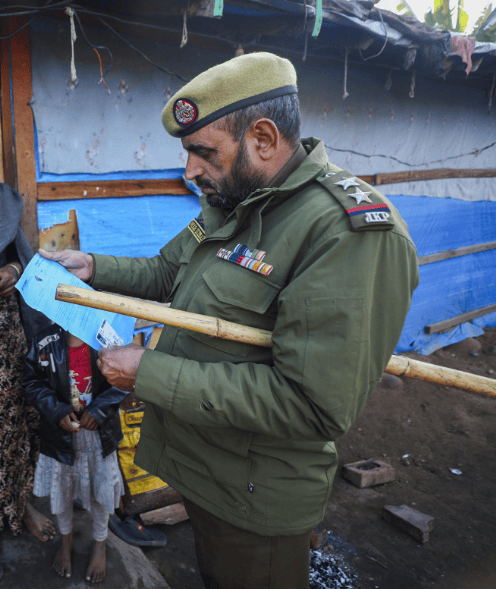
The measures are no longer limited to Narwal. On 19 September 2026 (8 Rabi al-Akhir 1448 AH), Amar Ujala reported that authorities had issued notices to landowners in the Bahlwal area in preparation for removing another Rohingya settlement, with warnings of legal action if the dwellings were not vacated. Local reports say some 50 Rohingya families live in the targeted settlement there.
In their statements and local reports, Indian authorities use the terms "illegal immigrants" or "infiltrators" when referring to the Rohingya, while other press reports describe many of them as "refugees." Some community members say they fled persecution in Myanmar and cannot return there.
More than 7,600 Rohingya in Jammu and Kashmir
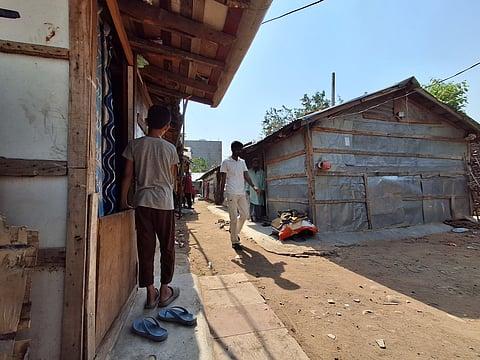
The campaign follows a visit by a high-level government committee on demographic changes to Jammu, which inspected one of the Rohingya settlements in Narwal.
According to government data submitted to the committee, 7,656 Rohingya were identified in the Jammu and Kashmir region, including 6,737 in the ten districts of the Jammu division and 919 in the districts of the Kashmir Valley.
Rohingya groups have lived in Jammu for nearly two decades, after many fled Myanmar in different phases. Their presence in the area has become a subject of growing political and security debate in recent years, amid Indian demands for their deportation and tighter residency procedures against them.
For the families now leaving the Narwal settlements, a more pressing question arises: where can they settle after their homes have been dismantled, amid the widening scope of surveillance and warnings issued to landowners and property owners against allowing new settlements to be established?


