

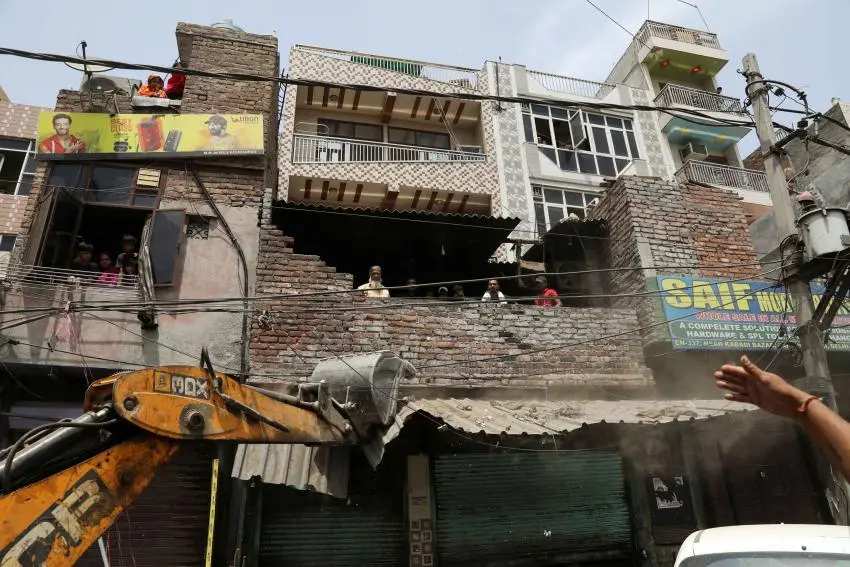
An Indian media monitor documented 11 incidents affecting Muslims during the first week of November 2026 in ten states and territories, including physical assaults, demolition and eviction operations, and disputed security measures, while religious motivation was not established in a number of the cases.
A report by Foej Media published on 7 November stated that the monitoring relied on media reports and open sources, with incidents classified according to the extent to which targeting on the basis of religious identity was established.
Assaults and threats linked to identity
Among the most prominent cases was an assault that a Muslim delivery worker said he suffered in Hyderabad in the state of Telangana, after a group asked him his name and learned that he is Muslim, according to his account as relayed by the monitor.
The monitor also recorded allegations of an assault on a Muslim man who works in livestock transport in Gurugram in the state of Haryana, noting that police had not confirmed the details of the allegation at the time the report was issued.
In Dewas in the state of Madhya Pradesh, stones were thrown at a mosque, a religious shrine was vandalised, and some coverings and flags were set on fire. According to local sources, police registered a case and arrested a suspect, without the ultimate motive for the incident having been established.
Demolition and eviction operations in Assam and Uttarakhand
The monitoring included two eviction and demolition operations that affected Muslim families, one in Dhubri district in the state of Assam and the other in Ramnagar in the state of Uttarakhand.
In Assam, authorities removed structures from about 650 bigha of land (approximately 215 acres) in Almganj in early November. Published estimates of the number of families affected ranged between roughly 550 and 750 families, the majority of them Bengali-speaking Muslims. The authorities said they were reclaiming government land, while those affected spoke of losing homes they had lived in for many years.
Wasl previously published a detailed report on the demolition campaign in Assam, including the discrepancies in family numbers and court challenges.
In Ramnagar in Uttarakhand, the monitor said authorities demolished 86 houses in a predominantly Muslim settlement, on the grounds that they were built on land belonging to government forests.
Not every recorded incident is an established hate crime
The report classified four incidents as reported targeting of Muslims, two as demolition and eviction, four as cases whose motive was not determined, and one as a disputed police action.
This means that the total of incidents does not represent 11 established hate crimes. A number of the incidents are linked to ongoing investigations, legal disputes or allegations that have not been proven, and each case should therefore be assessed according to the evidence available for it.
The monitoring draws attention to the range of issues facing Muslims in different parts of India, from individual assaults to land disputes and government measures, and to the importance of independent verification of the circumstances of each case.


