

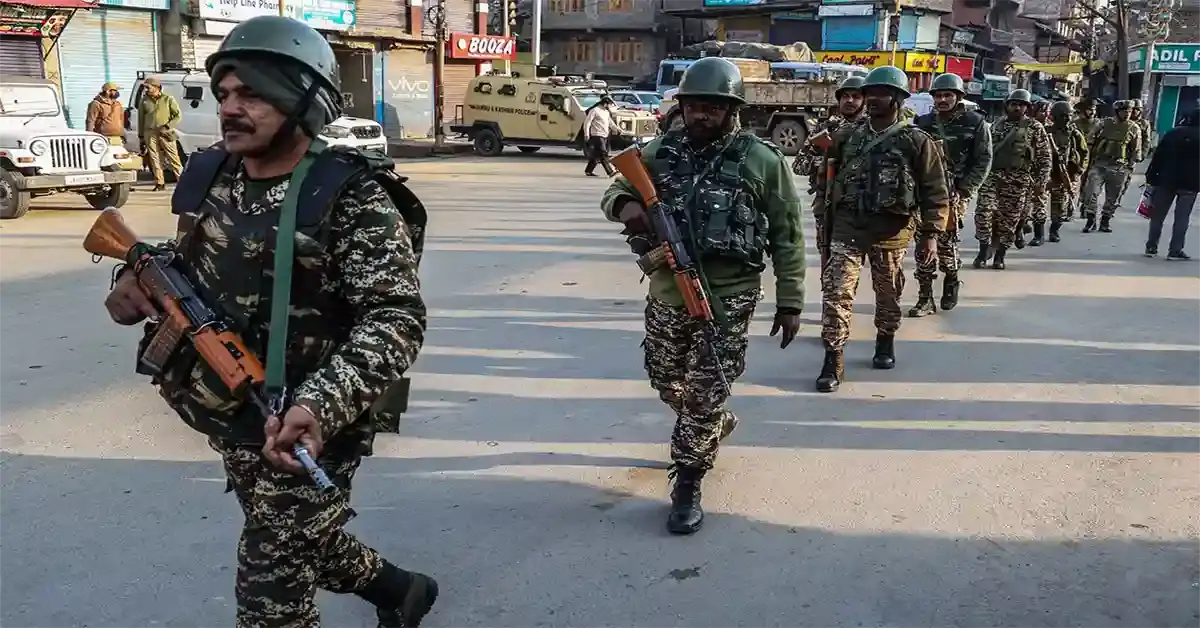
India expands security operation across six districts of Jammu and Kashmir after Kulgam attack.. hundreds of youths questioned
Indian forces have expanded their security operations in Jammu and Kashmir, which India occupies, to include six districts, following an attack that targeted members of the Indian Central Reserve Police Force (CRPF) in the Mir Bazar area of Kulgam district, which wounded three personnel, according to Pakistani and Indian media reports. The escalation coincided with widespread arrests and questioning, amid conflicting media reports that more than 300 to 500 youths were subjected to interrogation, with a number of them remaining in custody, raising questions about the scope of the security measures and the legal safeguards available to those detained.
Security operations across six districts
According to local reports, the security campaign extended to the districts of Srinagar, Kulgam, Anantnag (Islamabad), Pulwama, Shopian and Kishtwar, and included cordon-and-search operations, raids and inspections, along with reinforced security checkpoints and tighter monitoring of the movement of vehicles and individuals.
Kashmir Media Service reported that large-scale search operations were continuing in several areas of the territory, with a particular focus on Kulgam and the surrounding areas.
According to the reports, the measures included searching vehicles and passers-by, searching residential areas and sites that security agencies suspect are being used for movement or concealment, as well as increased security patrols and tighter procedures on the highway linking Srinagar and Jammu.
Security movements were spread across the six districts, with intensified raids and the search for suspects in Kulgam, reinforced checkpoints and surveillance in Srinagar and Anantnag, and continued sweeps in Pulwama and Shopian, while the search in Kishtwar focused on mountainous areas, forests and rugged passes.
The Kulgam attack behind the escalation
The developments stem from the attack that took place on Wednesday, 11 November 2026, in the Mir Bazar area of Kulgam district, which targeted members of the Indian Central Reserve Police Force (CRPF).
According to Indian media, the gunfire wounded three personnel, prompting the security agencies to intensify search and investigation operations and raise the level of deployment in the area.
Following the attack, the authorities began examining the site, gathering field information and reviewing the circumstances surrounding it, in parallel with the search for persons suspected of involvement in carrying it out.
Media coverage also addressed the possibility that some parties provided support or logistical assistance to the attackers; however, these possibilities remain within the scope of the investigations, and the published information contains no independent evidence that would allow the existence of support networks or the identification of parties linked to them to be confirmed.
Hundreds of youths questioned.. discrepancy in arrest figures
The matter of arrests has generated debate over the scale of the security campaign, after local and Indian media published differing figures on the number of youths summoned or detained for questioning about the attack.
According to a report published by Kashmir Media Service on 14 November, citing a senior Indian police official, the number of people taken into custody and interrogation exceeded 300.
By contrast, the Indian Express, in a report published the same day, stated that police had detained more than 500 youths for questioning over the preceding three days, noting that most of them were released after investigation while a number remained in custody.
NDTV also reported that more than 500 people had been questioned and that around 20 remained detained for further investigation, according to the information the report provided.
The discrepancy in figures makes it necessary to distinguish between those who were questioned, those who were temporarily detained, and those whose detention continued. Nor does the number of those questioned necessarily mean that all of them are accused or directly suspected of involvement in the attack.
The available information does not include a unified and detailed tally showing the total number of arrests, releases and continued detentions, which means the published figures are estimates attributed to their media sources rather than an official, unified statistic.
Human rights concerns over the situation of civilians
The widening of security measures in Jammu and Kashmir has again highlighted the legal and human rights safeguards linked to arrests and interrogations, particularly given the spread of security checkpoints and the repeated searches of residential areas and main roads.
The most prominent issues raised include the need for every arrest to be based on clear legal grounds, ensuring the safety of detainees during interrogation, disclosing their places of detention and informing their families of their legal status, as well as protecting freedom of movement and limiting the impact of security measures on residents' daily lives.
It is also important to allow independent oversight of detention and interrogation conditions, and to investigate any documented allegations of possible abuses.
Nevertheless, the reports referred to do not contain documented details establishing that specific human rights violations occurred during the current campaign. These matters should therefore be treated as concerns and demands relating to legal safeguards, not as established facts about violations that have actually taken place.
Possible security and livelihood repercussions
The effects of expanding security operations are not limited to the investigative dimension, as they may extend to the movement of residents and daily activities, particularly in areas witnessing repeated searches or tighter restrictions on main roads and routes.
Security checkpoints and prolonged procedures may delay transport, increase difficulties for students, employees and patients, and affect commercial activity, the movement of supplies and essential services.
These repercussions remain tied to the duration of the operations, their geographic scope and the extent to which restrictions persist. The published information does not provide quantitative data indicating the scale of economic losses or livelihood damage resulting from the current campaign.
Political dimensions beyond the security incident
Developments in Jammu and Kashmir carry regional significance given the territory's disputed status and the continuing India-Pakistan dispute over it.
Continued security escalation could return the Kashmir issue to the centre of political and media attention, especially as operations extend to multiple areas and questions grow about the conditions of detainees and the legal safeguards accompanying security measures.
The key questions raised concern the ability of the Indian authorities to pursue those responsible for the attack and prevent the recurrence of armed incidents, while adhering to legal procedures and avoiding collective consequences for civilian residents that are not based on individual evidence.
Widening campaign tests security and legal safeguards
The developments following the Kulgam attack reflect the expansion of the Indian security response in Jammu and Kashmir, with searches and sweeps extending, according to published reports, to six districts, and conflicting figures on the number of youths questioned.
While the authorities focus on tracking down the perpetrators of the attack and verifying the possible existence of accomplices, there is a need to clarify the actual numbers of detainees, to distinguish between summoning for questioning and formal detention, and to announce the legal basis for the measures taken.
Assessing the outcome of the campaign will remain tied to what the investigations produce in terms of verifiable evidence, and to the extent of adherence to legal safeguards and the rights of civilian residents in the territory.
Sources:
1. Kashmir Media Service (KMS) – 14 November 2026: report on the detention of more than 300 youths and the expansion of security operations in the territory.
2. The Indian Express – 14 November 2026: report on more than 500 youths detained for questioning and the release of most of them.
3. NDTV – 14 November 2026: report on more than 500 people questioned and around 20 still detained.
4. The Indian Express – 12 November 2026: report on three CRPF personnel injured in the Kulgam attack.


