

India: Dozens of Rohingya Refugees Expelled, Hundreds Arbitrarily Detained Under Threat of Deportation
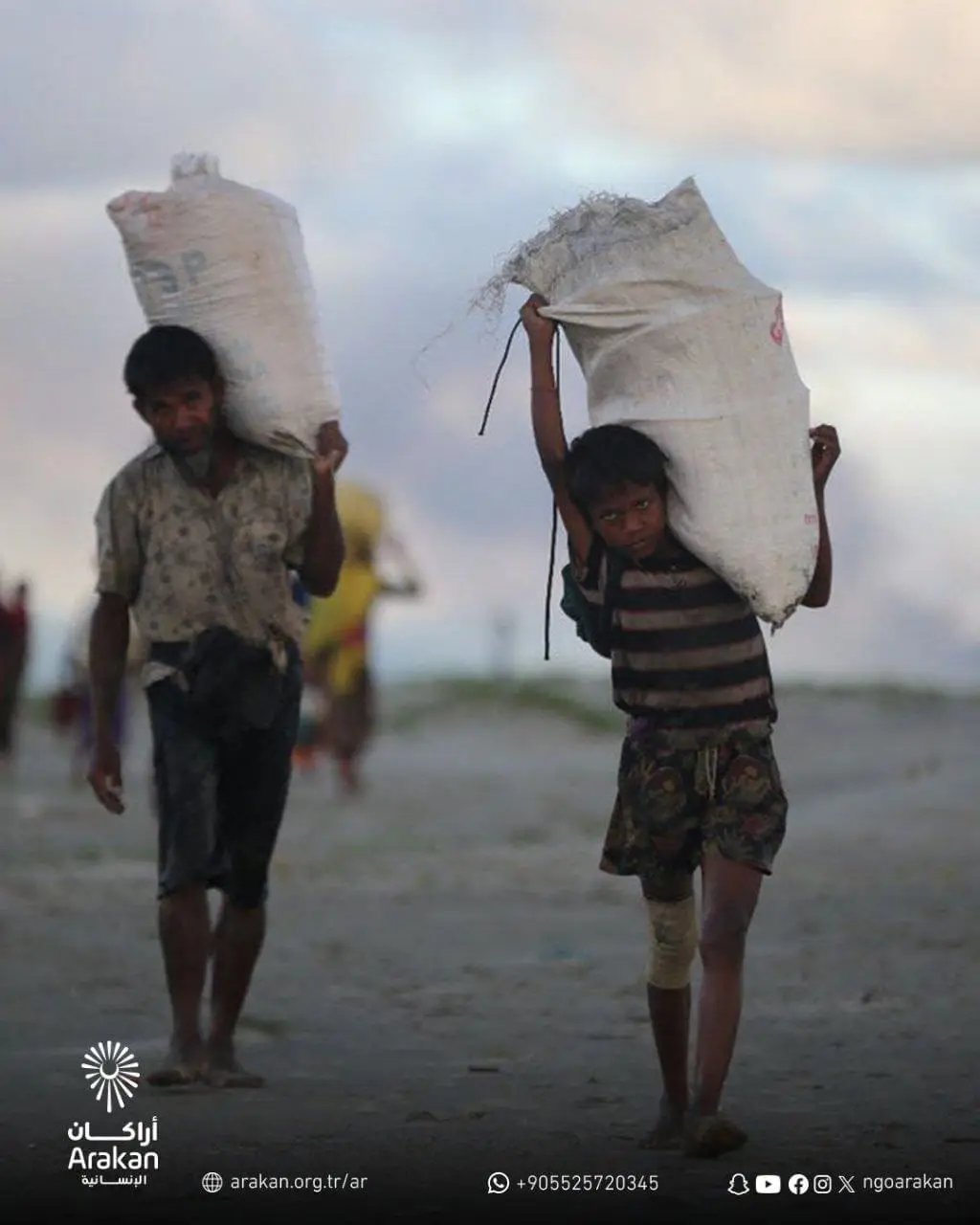
Human Rights Watch said today that since May 2025, Indian authorities have expelled dozens of Rohingya refugees to Bangladesh and Myanmar without any safeguards for their rights, while arbitrarily detaining hundreds of others and mistreating some of them.
In May, Indian states governed by the Hindu nationalist Bharatiya Janata Party launched a campaign to expel Rohingya and Bengali-speaking Muslims on the grounds that they are "illegal immigrants." Those expelled to Bangladesh included at least 192 Rohingya refugees, despite their being registered with the Office of the United Nations High Commissioner for Refugees (UNHCR).
Human Rights Watch interviewed nine Rohingya men and women in the Cox's Bazar refugee camps in Bangladesh who had recently arrived from India. Six of them, who were expelled in May, said Indian authorities assaulted them and confiscated their money, mobile phones and UNHCR registration cards. The other three fled to Bangladesh, each from Jammu and Kashmir, Andhra Pradesh and Delhi, out of fear of arbitrary detention after police threatened them.
An estimated 40,000 Rohingya live in India, including at least 20,000 registered with UNHCR. Although India is not a party to the 1951 Refugee Convention or its 1967 Protocol, it remains bound by the principle of non-refoulement, enshrined in customary international law, which prohibits states from returning or expelling people to places where they face a threat to their lives or freedom.
A Rohingya woman, 37 years old, who was being held in Goalpara district in the Indian state of Assam, said that Indian border security forces forced her, her husband and their three children to enter Bangladesh at gunpoint on the night of 6 May. She said: "When my husband asked the officials where we were going, when we have no money and do not know the area, they forced him to cross and slapped him so hard that he almost permanently lost his hearing." She continued: "They threatened to kill us if we dared to speak any more."
The family had fled Myanmar in 1433 AH (2012 CE), escaping the ethnic cleansing campaign carried out by the military against the Rohingya in Rakhine State, but found themselves detained for more than a decade in Assam's prisons.
On 6 May, Indian authorities arbitrarily detained forty Rohingya refugees, both Muslim and Christian, including thirteen women, in Delhi on the pretext of collecting data to verify their identities. They were then flown to the Andaman and Nicobar Islands, where they were forced onto an Indian Navy vessel that sailed with them on board. According to testimonies, they were beaten and interrogated by the ship's crew. A Christian Rohingya man in Delhi whose brother was among those expelled told Human Rights Watch that when the ship approached the coast of Myanmar, the crew handed out life jackets to the refugees and then threw them into the open sea.
The refugees swam until they reached the town of Laungdaung in Myanmar's Tanintharyi Region. One of them was able to use a fisherman's phone to contact his relatives. He told a relative: "We were treated as if we were the most vile criminals; one officer even said to us: No one will defend you, and no one will hold us accountable if we kill you all. Some of us were good swimmers and helped those who could not reach the shore."
Fearing arbitrary arrests, some Rohingya families decided to flee India for Bangladesh. They reported that police beat those fleeing and treated them brutally. A Rohingya man in his forties, registered with UNHCR and living in Hyderabad, said he left on 15 May with his wife and two children, together with a group of Rohingya, by train. However, police stopped the group at a station in Tripura state, recorded their details for identification, and then beat them. He said: "They beat my four-year-old daughter as well, and they humiliated the women too. They took our phones and the 20,000 Indian rupees I had, equivalent to US$230. They left nothing, not even my son's school bag."
The man added that police handed them over to border guards, who beat the men in the group with batons, forced them to record a video, and then compelled them to cross the border into Bangladesh. He said: "They dictated to us that we should say we are from Bangladesh, that we were trying to enter India, and that the Indian government arrested us and is now sending us back. They told us that if the Bangladeshi border guards sent us back to India, they would shoot us."
Rohingya refugees previously enjoyed some opportunities for education and livelihoods in India, but that policy changed in 2017 when the Bharatiya Janata Party government issued "detailed instructions for the deportation of illegal foreigners, including Rohingya."
Human Rights Watch said these expulsion campaigns have made life for Rohingya refugees in India precarious. In Jammu during May, authorities vandalised refugee shelters and arbitrarily detained at least thirty refugees, according to the testimony of a 40-year-old Rohingya woman who fled with her two children to Bangladesh that month after police threatened them. She said: "They accused us of being 'Bengalis,' ignoring our cards issued by the refugee agency and our Myanmar citizenship documents."
A Rohingya man, 29 years old, recounted that Indian border guards forced him to enter Bangladesh on 20 June, saying: "From place to place, and from country to country, we flee, seeking a hope that will never be realised."
The Supreme Court of India has announced that it will rule on whether the Rohingya are to be considered "refugees" or "illegal intruders," and what rights and protections follow from that status. The next hearing is scheduled for 23 September. In May, the court refused to halt deportations and also rejected the account of the Rohingya refugees who were left adrift at sea, describing it as "a skilfully crafted story."
Human Rights Watch.


