


A critical analysis of the contemporary human condition by Dr. Ibrahim al-Rammah
Key features of the book "Impossible Humanism"
- Historical and philosophical analysis: The book traces the historical and philosophical roots of humanism, highlighting its transformation from a moral idea into a "secular religion" that seeks to exclude divine revelation.
- Comprehensive methodological critique: Al-Rammah offers an in-depth critique of humanism as a way of life and a source of legislation, considering it "impossible" in practice and morally when it makes man the sole source of values.
- Simple and direct language: The book is distinguished by its clear and simplified style, making it accessible to a broad readership interested in complex intellectual subjects without requiring specialised academic background.
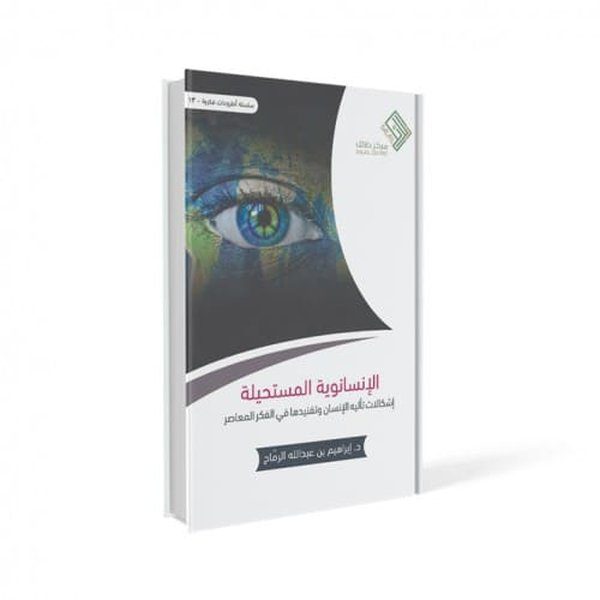
In his book "Impossible Humanism: Problems of Deifying Man and Their Refutation in Contemporary Thought," Dr. Ibrahim al-Rammah addresses humanism, the philosophy that places man, his interests and his values at the heart of existence. He analyses its development and its various manifestations throughout history, up to its contemporary form, which al-Rammah sees as an attempt to "deify man" and to exclude divine authorities.
The essence of humanism: from concept to problem
Humanism is defined as a way of life and a source of legislation that makes man the centre of existence and the reference point for values and ethics. Al-Rammah argues that this tendency, in its modern context, has gone beyond being merely a respect for human dignity and capacities, becoming an attempt to make man the sole source of legislation, disregarding any higher or religious reference.
The book discusses how contemporary humanism claims to free man from any divine constraints, yet in reality pushes him toward new constraints of his own making, raising questions about the value of this alleged liberation. The author holds that a complete detachment from religiosity is impossible, and that all people, even atheists, are religious to some degree, meaning that total skepticism is not achievable.
The roots of humanism: a historical and philosophical journey
Al-Rammah traces in his book the historical and philosophical roots of humanism, explaining how this idea evolved over the ages. He begins with the Renaissance, when the features of this thought, focused on human potential and capacities, began to take shape, and proceeds to contemporary theories that have taken a more radical course in excluding religion and presenting human reasoning as a comprehensive alternative.
The book shows that these deep roots of humanism are closely linked to the emergence of secular, liberal and atheist ideas, which gradually seeped in to form an integrated intellectual framework seeking to place man at the centre of the universe, without the need for a divine or metaphysical reference.
Humanism as a "secular religion"
Among the most important theses presented by al-Rammah is the consideration of modern humanism as a "secular religion." Rather than being merely a philosophy that values human worth, it has come to seek to offer a system of values and legislation as an alternative to religion, meaning that it assumes a religious role but with a purely human logic.
Al-Rammah's critique of humanism: contradictions and dangers
In his critique, al-Rammah relies on an analysis that combines philosophy and history, asserting that the attempt to make man the sole source of values and legislation leads to internal contradictions that render the project "impossible" in practice and morally.
The effects of humanism on contemporary societies
The book discusses in detail the negative effects that may result from adopting humanism as a way of life. It indicates that it may lead to social divisions, value conflicts and wars, on the grounds that the exclusion of divine religion did not achieve the promised peace, but instead led to chaos and conflict once man became the sole legislator.
This critique is reflected in al-Rammah's call to reconnect man with higher principles that transcend worldly affairs, affirming that relying on human logic alone as a moral guide in an age of globalisation and growing pluralism carries serious risks.
Humanism between freedom and servitude
Dr. Ibrahim al-Rammah's critique does not stop at defining humanism or tracing its intellectual roots, but moves on to one of the issues most closely associated with it: the question of freedom. Modern humanism, according to the view presented in the book, raised the slogan of liberating man from the authority of religion and transcendent references, and presented the independence of human will as an essential condition for man's self-realisation.
Yet al-Rammah questions the nature and limits of this freedom, and whether man can be absolutely free in the presence of a social, legal and moral system that determines what is acceptable and unacceptable to him.
Abolishing the divine reference, according to the book's line of argument, does not mean abolishing reference altogether, but leads to the shifting of the centre of authority from a transcendent source to changing human sources.
The crisis of reference and the source of values
The book places the question of reference at the heart of the debate on humanism, as it is the question most closely tied to values and legislation. If man is the one who determines good and evil, who grants these judgements the quality of binding obligation? And if moral values are changeable according to the change of societies and cultures, how can one speak of a fixed morality that transcends time and place?
Al-Rammah addresses this problem by affirming that man has limited knowledge and perception, and therefore making him the ultimate source of values opens the door to moral relativism and renders judgements about right and wrong subject to constant human change.
Here the book highlights the difference between man's capacity to think and choose and his possession of absolute authority in determining truths and values. Reason, in the view presented by the author, is an essential tool for knowing and understanding reality, but it cannot replace revelation in matters that exceed the limits of human experience.
Humanism and the pursuit of happiness
The book also turns to the concept of happiness, one of the concepts that modern humanism has reformulated. It notes that contemporary man has come to seek happiness as a central goal, and this search has often been tied to self-fulfilment, satisfying desires and obtaining the greatest possible measure of freedom and independence.
Al-Rammah sees the problem arising when personal desire becomes the criterion for judging things, such that whatever gives man a feeling of satisfaction or fulfilment becomes acceptable merely because it fulfils a personal wish.
In this context, the author links the inflation of the concept of the self with certain transformations that modern societies have undergone, where the desires and personal rights of the individual have come to occupy a wide space in moral and legal discourse, while talk of duties, responsibilities and moral obligations has receded.
From the honoured human to the human at the centre
The book stresses the need to distinguish between honouring man and placing him at the centre of absolute authority. The Islamic conception, as al-Rammah presents it, recognises man's dignity and grants him reason, will and the capacity to choose, but at the same time places these capacities within a framework of responsibility and servitude to God.
Man, according to the vision presented in the book, is not an independent being detached from his Creator, but a creature with a purpose; his freedom is not separate from his responsibility, and his rights are not separate from his duties.
Humanism and legislation
Al-Rammah gives particular attention to the question of legislation, as one of the most prominent arenas of conflict between religious and humanist reference. Humanism, in the form discussed in the book, enables man to devise the laws that organise his life, relying on reason, experience and human interest.
However, the author holds that human legislation remains bound by the limits of human knowledge, and that the interests on which people rely in formulating laws may differ from one society to another and from one historical period to another.
Hence the book raises the idea that divine legislation provides a reference point that transcends the fluctuations of human desires and interests, and gives values a fixed framework not wholly subject to changes in society or shifts in the balance of power.
Humanism facing the existential question
The book does not confine itself to discussing moral and political questions, but connects humanism to the greatest existential question: why did man come into being?
Humanism, which places man at the centre of the universe, is required, according to al-Rammah's argument, to provide an answer about the ultimate purpose of his existence, and about death, destiny and life after death.
The book holds that excluding religious reference leaves these questions to man alone, whereas the religious conception offers answers that go beyond the limits of sensory experience and link the worldly life of man to a hereafter whose outcome is determined by his actions and responsibility.
Conclusion of the book's intellectual journey
In this way, "Impossible Humanism" moves from the study of an intellectual term to an attempt to read the major transformations that have affected man's conception of himself in the modern era. The book traces the human being from a stage in which he saw himself as part of a cosmic and religious order that transcends him, to a stage in which he has become the focus of knowledge, value and legislation.
In conclusion, al-Rammah presents his thesis on the need to re-examine the relationship between man, religion, reason and freedom, affirming that moving beyond divine reference does not cancel man's need for a reference point, and that the attempt to build a moral and legislative system self-sufficient in man alone remains, according to the book's thesis, subject to problems relating to the source of values, the limits of reason, the nature of freedom and the purpose of existence.
Hence the significance of the book's title: "Impossible Humanism." What is meant is not the impossibility of respecting man or defending his dignity, but the impossibility of turning man into the final reference for everything, such that he becomes the author of values, the source of legislation and the determiner of the purpose of existence, without relying on a reference that transcends his human limits.


