


>> How did Shaykh al-Islam become one of the most influential and controversial figures in history?
On a morning in Damascus, crowded with scholars, jurists and students, a young man not yet thirty sat in his study circle surrounded by hundreds of seekers of knowledge. He was not a prince, a military commander or a holder of power, yet his words provoked debate and attention that sometimes exceeded the decisions of rulers themselves.
That young man was Taqi al-Din Ahmad ibn Abd al-Halim ibn Abd al-Salam ibn Taymiyyah al-Harrani al-Dimashqi, known in the historical sources as "Shaykh al-Islam Ibn Taymiyyah," a man whose life became a continuous series of intellectual battles, imprisonments and scholarly disputes. After his death he became one of the most present and influential scholars of Islam in the centuries that followed. Nearly seven hundred years after his passing, his name still has the power to provoke discussion and admiration, a rare phenomenon in the history of Islamic thought.
From Harran to Damascus: The Birth of a Scholar in an Age of Great Upheavals
Ibn Taymiyyah was born in 661 AH, corresponding to 1263 CE, in the city of Harran in northern Greater Syria. It was a period in which the Islamic nation was living through one of its most turbulent phases. Only a few years after the fall of Baghdad to the Mongols in 656 AH, Mongol armies continued to expand across the region, while the centres of Islamic civilisation were suffering severe shocks.
The child Ahmad had not yet reached the age of seven when his family was forced to leave Harran and migrate to Damascus to escape the Mongol advance. This early event is one of the important keys to understanding his character later on, as he grew up from childhood amid conflict and the existential threat facing the Islamic world.
In Damascus, the young man found himself within one of the most important centres of learning of that era, a city teeming with hadith scholars, jurists, exegetes and linguists. There the early signs of his exceptional intellect began to appear.
A Child Who Retained More Than He Forgot
The historical sources agree that Ibn Taymiyyah possessed an extraordinary memory and a rare capacity for comprehension and retention. He memorised the Holy Qur'an at an early age, then went on to study hadith, exegesis, jurisprudence, the principles of jurisprudence, grammar, language, logic, philosophy and the history of religions.
Historians note that he studied under hundreds of scholars from various disciplines, so that before reaching the age of twenty he was able to teach and issue legal rulings. Yet what distinguished him was not only the extent of his knowledge, but the way he dealt with it.
The Scholar Who Refused to Be a Copy of Others
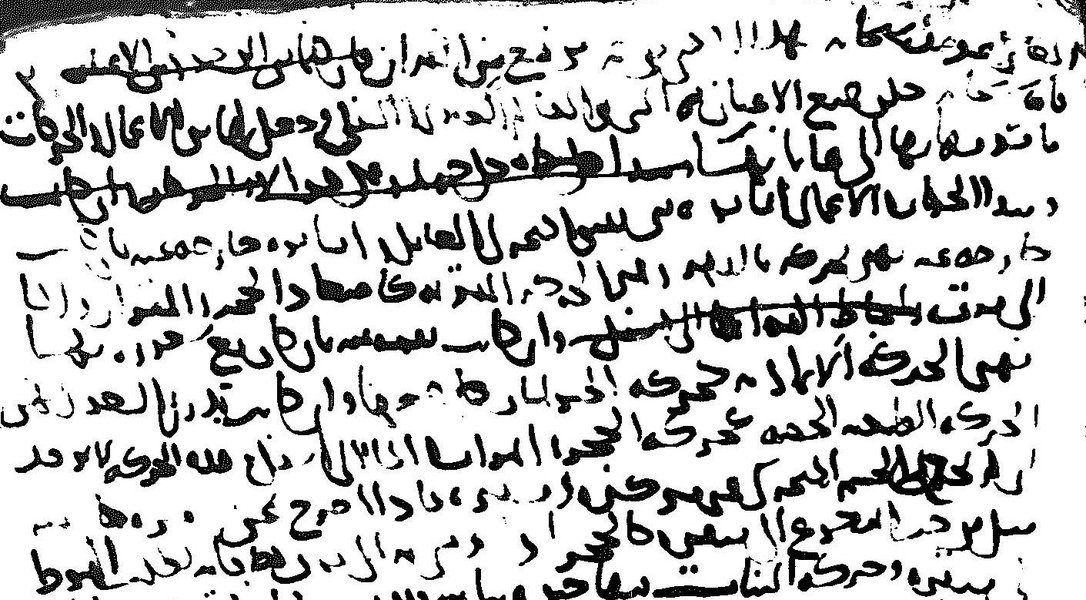
Ibn Taymiyyah was not willing to repeat the opinions of earlier scholars without scrutiny. He believed that a true scholar does not stop at what the predecessors said, but examines the evidence and strives to understand it. This approach brought him into conflict with many of the intellectual currents prevailing in his age.
He engaged in extensive confrontations with some theologians and philosophers, criticised religious practices that he believed contradicted the legal texts, and entered into jurisprudential debates with major scholars of different schools of law.
Fatwas That Built Influence
Ibn Taymiyyah's fame did not derive from his writings alone, but also from his legal opinions, which addressed the most serious issues of his time. When the Mongols overran the lands of the Muslims, he did not limit himself to theoretical jurisprudence, but issued fatwas calling for resistance against them, despite their profession of Islam, holding that what matters is not slogans but genuine adherence to the rulings of the Sharia.
He also addressed questions of creed, worship, transactions, governance under Sharia, the family, the economy and social relations.
His fatwas were distinguished by two main features: first, they were tied to reality rather than isolated from it; second, they relied on direct derivation from the Qur'an and the Sunnah, far from rigid imitation.
For this reason, many researchers consider that his influence exceeded the limits of his age, because his method of dealing with the texts and with reality remained applicable in different eras.
Why Did He Inspire Fear?
Tracing his biography shows that the fear of Ibn Taymiyyah was linked less to his person than to what he represented. A scholar who possesses vast knowledge, a strong memory, courage in expressing his views and the ability to persuade becomes a natural source of concern for everyone who disagrees with him or feels that their influence is under threat.
Consequently, he faced repeated trials and was imprisoned more than once. Some periods of his imprisonment were in fact the result of doctrinal and legal positions that provoked wide controversy among the scholars of his time.
Although imprisonment was usually a means of silencing opponents, in Ibn Taymiyyah's case it became a new stage for reinforcing his presence. Within his cells he continued to write, teach and answer questions, as though the chains could not reach his ideas.
A Prestige That Death Did Not Break
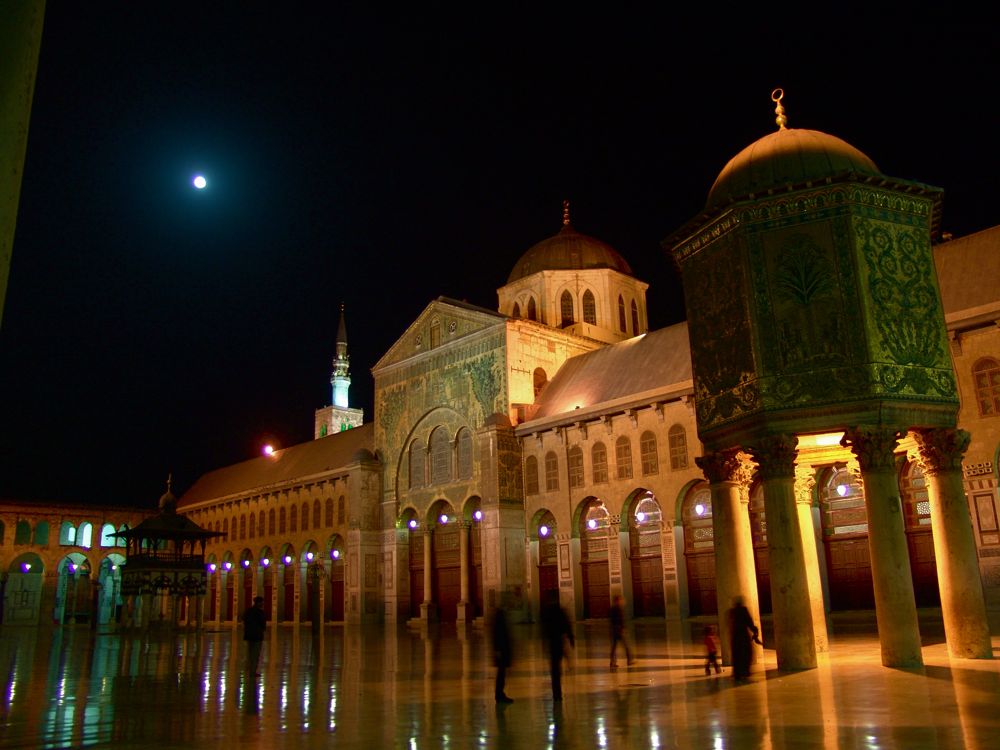
When Ibn Taymiyyah died in Damascus in 728 AH, corresponding to 1328 CE, his opponents believed that the controversy he had provoked would end with his death. What happened was the exact opposite.
His funeral procession took place in an exceptional scene attended by tens of thousands of people, one of the largest funerals Damascus had witnessed in its history. Before long his disciples began spreading his legacy on a wider scale.
Thus the school of Ibn Taymiyyah passed from one generation to the next, until it became part of the intellectual structure of the Islamic world.
From Damascus to the Wider Islamic World
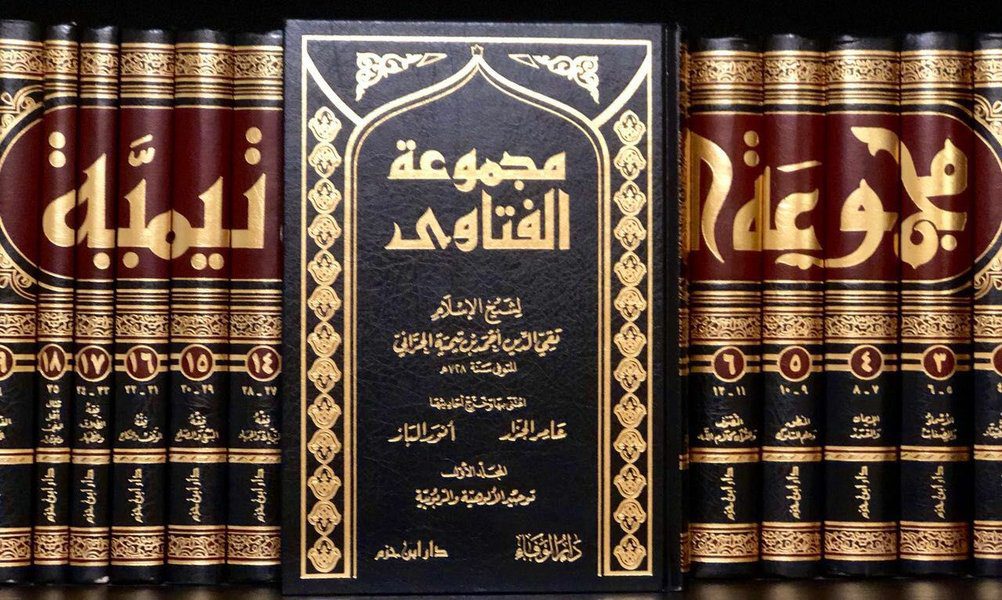
In the following centuries, Ibn Taymiyyah's influence was not confined to the Levant. His works, most notably "Majmu' al-Fatawa," "Minhaj al-Sunnah al-Nabawiyyah" and "Dar' Ta'arud al-'Aql wa-l-Naql," became among the most important references studied by scholars and researchers.
Many reform movements also drew on his ideas concerning a return to the Qur'an and the Sunnah, the rejection of intellectual stagnation and the opening of the gate of independent reasoning (ijtihad).
In the modern era, his influence extended to multiple intellectual schools, some of which adopted his approach directly, while others benefited from his critical tools and his method of argumentation. It was here in particular that a new phase of debate began.
Why Does the Debate Still Continue Today?
It is rare to find an Islamic intellectual figure who remains a subject of discussion seven centuries after death, but the case of Ibn Taymiyyah is different. His supporters regard him as a great renewer who restored the standing of the legal texts, confronted intellectual deviations and offered a model of the independent scholar who does not bend to pressure.
Those who criticised him, especially in our own time, consider that some of his views contributed to later intellectual divisions, and that some movements have selectively used parts of his legacy to serve political or ideological aims.
Yet even these critics implicitly acknowledge one fact: his influence was exceptional. Ordinary figures do not sustain their intellectual battles for seven centuries.
The True Source of His Prestige
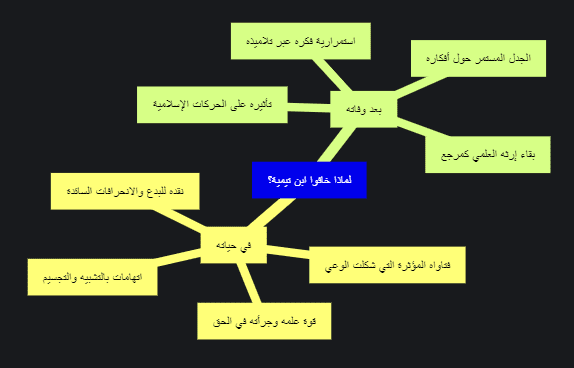
When the phenomenon is analysed away from preconceived positions, the secret of the prestige surrounding Ibn Taymiyyah appears to lie in the convergence of several factors that are rarely found together in one person.
Together these elements produced a scholar who was not merely a transmitter of knowledge but a producer of it, and an influence on its course. For this reason, the fear he inspired did not stem from authority or material force, but from the power of the idea itself.
After Seven Centuries, Why Is He Still Present?
Perhaps the answer lies in the fact that Ibn Taymiyyah offered his age not only ready answers, but a method of thinking and of engaging with the texts and with reality. This is why his presence has continued in intellectual, legal and doctrinal debates across the centuries.
Whenever a question is raised about renewal or independent reasoning, about the relationship between the text and reality, or about confronting intellectual challenges, the name of Ibn Taymiyyah returns to the forefront.
The prestige that outlived his life was not that of a post or of power, but that of a scholar who managed to leave a mark deeper than time itself. For this reason his name has remained present in the Islamic collective memory, not merely as a historical personality, but as an intellectual phenomenon that, seven centuries after his departure, still provokes both admiration and debate.


