

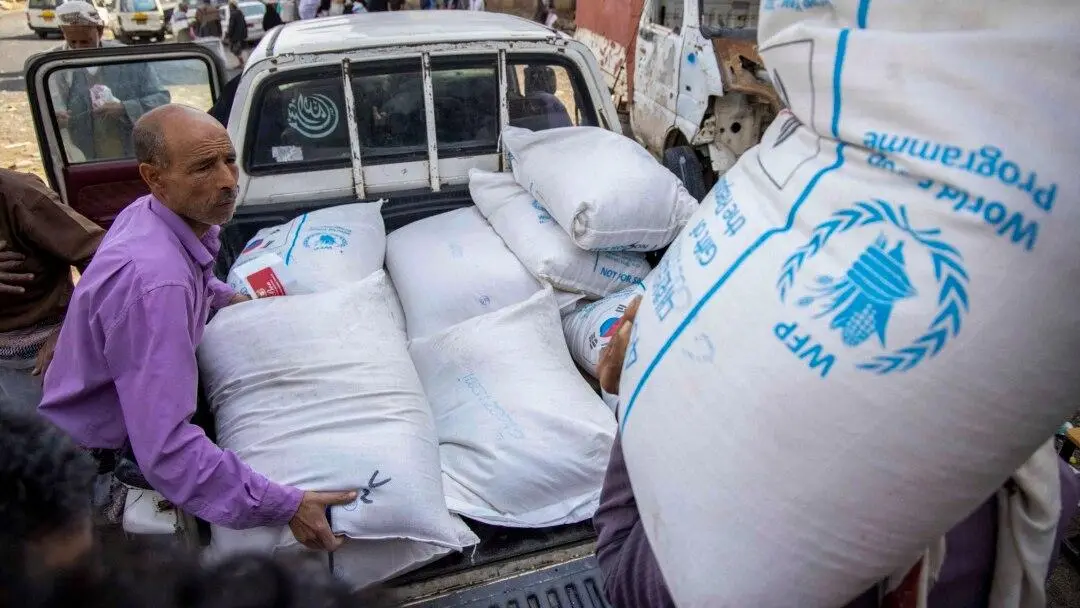
An exclusive Wasl interview highlighting the reality of humanitarian and relief work in Taiz, the challenges facing local initiatives, and prospects for their development.
In prolonged wars, the suffering of peoples is not limited to the victims and destruction left by the fighting. It extends into the details of daily life, where livelihood crises accumulate, the ability to secure basic needs weakens, poverty spreads, and many families find themselves facing challenges beyond their capacity to endure.
In Yemen, a country exhausted by years of war, the importance of humanitarian and community work stands out as one of the most important fields for strengthening the resilience of society, mitigating the repercussions of the conflict, and preserving its social fabric, while reviving the values of solidarity, compassion and shared responsibility.
Far from the political and military scene that takes up most of the media coverage, there is another field that deserves attention, in which volunteers and owners of local initiatives work, with limited means, to meet growing needs, reach affected families, and ease the harsh conditions imposed by the war.
These initiatives gain particular importance because they arise from within society itself, drawing their capacity to act from their knowledge of its realities and needs, their closeness to people, and their understanding of the nature of their suffering.
These experiences also reveal the importance of harnessing youth energies, involving women in serving the community, and turning the feeling of empathy for others into organised and sustainable work, one that does not remain limited to temporary emotional responses but establishes a community culture based on giving, benevolence and the bearing of responsibility.
From this standpoint, Wasl seeks to shed light on the reality of humanitarian and relief activity in Yemen, to highlight the challenges facing those who work in it, and to examine the needs of local initiatives and ways to develop them, in a manner that strengthens their capacity to serve society under current conditions.
In this context, we conducted an interview with Areej Al-Mughbashi, from the city of Taiz, who works in the community and humanitarian field through the initiative "Areej Al-Khair," to learn about her experience as one of the field models of local initiatives in Yemen, and the challenges, opportunities and lessons this experience reveals that go beyond the initiative itself.
From a Feeling of Suffering to Initiative and Action
Wasl: At the outset, we would like you to introduce yourself and the nature of the initiative through which you work.
Areej Al-Mughbashi: I am Areej Al-Mughbashi, from the city of Taiz, and I work in the community and humanitarian field through the initiative "Areej Al-Khair."
The initiative is a humanitarian and community effort that aims to spread the spirit of solidarity and cooperation, stand by needy families, and support those stationed on the frontlines, through food and relief campaigns and humanitarian projects, according to needs and available capacities.
We believe that goodness is not tied to the size of one's resources, but to sincerity of intention and readiness to serve people.
Wasl: How did the initiative begin? And what was the motivation behind its establishment?
Areej Al-Mughbashi: The idea of the initiative emerged from the reality of suffering that we live with and witness in the city of Taiz, and from our sense that there are many needs that we must come together to meet.
I was seeing the needs of families, the suffering of people, and the needs of those stationed on the frontlines, and I felt that standing by as a spectator was not enough. From here came the desire to turn this feeling into real work, even if we began with simple means.
Wasl: What are the most prominent goals you seek to achieve? And which groups do you target?
Areej Al-Mughbashi: Our first goal is to reach those in need, revive the spirit of solidarity among members of society, and promote a culture of initiative and giving.
We target the most needy families, those stationed on the frontlines, and every humanitarian case that calls for intervention, according to our capacities and the nature of the campaigns we carry out.
Responding to Field Needs and Measuring the Impact of Humanitarian Work
Wasl: What are the most prominent projects and activities the initiative has carried out since its launch?
Areej Al-Mughbashi: We have carried out a number of works and campaigns, including:
- Distributing food baskets to needy families.
- Implementing a night meals project for those stationed on the frontlines.
- The "Winter Warmth" campaign to provide winter clothing.
- Providing food and essential needs for those stationed on the frontlines.
- Support and assistance campaigns, including a first aid kit campaign for the Al-Aqrud front.
- Contributing to water supply projects.
We try to ensure that every project we implement is linked to a real need on the ground.
Wasl: How do you identify community needs, reach beneficiaries, and verify their eligibility for assistance?
Areej Al-Mughbashi: We rely on direct communication, receiving cases and needs, and verifying them as far as possible before launching any campaign.
We do not want to collect donations merely for the sake of collecting them. We want to know where they will go, who will benefit from them, and what need they will cover.
Priority is always given to the most needy cases, with care to ensure that assistance reaches those entitled to it.
Wasl: What are the most prominent results the initiative has achieved? And do you have experiences or moments that reflect the impact of these efforts?
Areej Al-Mughbashi: Thanks be to God, we have been able to carry out works that had a tangible impact. Among the moments we take pride in is the night meals project for those stationed on the frontlines, as in one campaign, by the grace of God and the response of people of goodness, we were able to exceed the targeted number.
We were also able to implement the "Winter Warmth" campaign for six people, and to provide food baskets to needy families.
For us, success is not merely numbers. True success is that assistance reaches a person who was waiting for it, and that he feels there is someone who remembers him and stands by him.
Wasl: Given the widening humanitarian needs in Taiz, to what extent has the initiative contributed to addressing some of these needs?
Areej Al-Mughbashi: We do not claim that we have been able to address all of society's needs. Taiz is larger than the capacities of any single initiative, but we try to be part of the solution.
We may not be able to end a family's suffering entirely, but we can relieve some of its burdens. We may not be able to meet all the needs of those stationed on the frontlines, but we can convey to them the message that there are people who remember them and appreciate their sacrifices.
For us, this is an impact worth continuing for.
The Reality of Local Initiatives in Taiz and the Challenges of Humanitarian Work
Wasl: How would you describe the reality of community and humanitarian initiatives in Taiz today, in light of the economic and livelihood conditions left by years of war?
Areej Al-Mughbashi: Taiz has great youth and women's energies, and there are people who carry the concerns of society and work with very simple means.
On the other hand, the scale of need is large, economic and humanitarian conditions are difficult, and there are initiatives that have ideas and the capacity to work but lack support and resources.
I believe Taiz does not lack people of goodness. Rather, it needs to embrace these efforts, organise them, and provide them with greater space.
Wasl: What are the most prominent challenges and obstacles you face in field work?
Areej Al-Mughbashi: The biggest challenges we face are limited funding and resources, and the absence of a stable source of support that we can rely on.
Sometimes we have campaigns and urgent needs, but we do not have sufficient funds to carry them out, and we are forced to search for people of goodness and try to gather contributions.
Work also depends to a large extent on volunteer efforts, which makes continuity a real challenge.
Nevertheless, we try not to stop, because the need on the ground does not wait.
Wasl: Do local initiatives in Taiz receive sufficient support and embrace from institutions, organisations and relevant bodies?
Areej Al-Mughbashi: Frankly, I do not believe local initiatives receive the support they deserve.
There are initiatives that work sincerely and reach real cases, but they do not find sufficient embrace from institutions and relevant bodies.
We need material and logistical support, facilitation of procedures, and opportunities for partnership with institutions and organisations. Most importantly, there needs to be genuine attention to small initiatives and no belittling of their impact.
Cooperation Instead of Competition: Towards More Organised Humanitarian Work
Wasl: Are there sufficient spaces for coordination and cooperation among local initiatives? And how do you view the importance of unifying humanitarian efforts?
Areej Al-Mughbashi: There are efforts and cooperation between some initiatives, but we need more networking and unification of efforts.
I believe humanitarian work is not a competition, and initiatives should not be in a race for visibility. Rather, they should complement one another.
If initiatives came together and cooperated, we could reach a greater number of people in need and implement larger projects than we can implement individually.
Wasl: Given limited resources and reliance on volunteer efforts, how do you ensure the continuity of the initiative?
Areej Al-Mughbashi: After God, we rely on people of goodness and volunteers, and on building trust with donors through clarifying needs, following up on the implementation of campaigns, and delivering assistance to those entitled to it.
We try to work according to the available capacities, and we do not tie the work to the size of donations, because we believe that little, when brought together, makes a great impact.
Prospects for Developing Humanitarian and Community Work
Wasl: What are the most prominent plans and projects you aspire to implement in the future?
Areej Al-Mughbashi: We aspire to expand the scope of the initiative's work, continue supporting needy families, develop the night meals project for those stationed on the frontlines, and carry out food and relief campaigns that are more responsive to the needs present in Taiz.
We also aspire to have an integrated team working with us, so that the initiative does not remain dependent on individual efforts, and so that we can reach areas and cases in greater need.
Wasl: Based on your field experience, what do community initiatives need in order to become more effective and capable of continuing?
Areej Al-Mughbashi: They need three essential things: support, trust and cooperation.
Support so they can carry out their projects, trust so they can continue to fulfil their mission, and cooperation so that efforts complement one another instead of each person working alone.
I hope there will be an umbrella that embraces serious initiatives in Taiz and helps them develop and continue.
The Responsibility of Society and the Role of the Young Generation
Wasl: To conclude this conversation, what is your message to the relevant bodies and to society, and to the young men and women who wish to engage in humanitarian work and serve their communities?
Areej Al-Mughbashi: My message to the relevant bodies is that community initiatives are not merely simple volunteer activities, but energies capable of bringing about real change when they receive support and embrace.
My message to society and people of goodness: do not belittle any contribution. A meal you provide may be the reason hunger is relieved for someone, a garment that protects a person from the cold, or a small contribution that opens a door of hope for a needy family.
As for the young men and women, I say: do not wait until you have great resources before you begin. Start with what you can and with what you have, and do not belittle your work.
And I would like to say one final word:
I am a daughter of Taiz, and I know well the meaning of need, and what it means for a person to live in difficult conditions. For this reason, humanitarian work for me is not merely an activity or the name of an initiative, but a responsibility and a mission.
I may not have the ability to change the reality of an entire city, but I can try, and I can be a reason for easing a person's suffering.
I believe impact is not measured by the size of what we possess, but by what we offer despite how little we have.
Beyond the Experience: Lessons in Humanitarian Work
This experience reveals a number of issues that deserve attention in the reality of Yemeni humanitarian work, foremost among them the importance of moving from individual efforts to organised institutional work, building trust, strengthening transparency, coordinating among initiatives, and directing resources according to actual needs, away from competition for visibility or the repetition of efforts.
The importance of preserving the independence of relief work directed at civilians also stands out, distinguishing it from support activities linked to parties to the conflict, which safeguards independence and ensures that assistance reaches those entitled to it without discrimination.
Another important meaning is that societies suffering from war are not merely recipients of aid, but possess human energies and self-capacities to confront crises, and can contribute to addressing some of their problems if the appropriate environment exists to organise and harness these energies.
Among the most dangerous consequences of prolonged wars, alongside human and material losses, is that people become accustomed to scenes of suffering, their sensitivity to the pain of others diminishes, and the inability to address major crises turns into reluctance to address what can be addressed.
Hence the importance of community initiatives in keeping the human conscience alive, entrenching a culture of responsibility, and reviving the meanings of solidarity that Islam has enjoined, as the Messenger of God ﷺ said:
"The believers in their mutual love, mercy and compassion are like one body; when one part of it suffers, the rest of the body responds with sleeplessness and fever." Narrated by Muslim.
Humanitarian work is therefore not a social luxury in times of crisis, but one of the pillars of societies' resilience, and one of the means of preserving their cohesion and their capacity to rise after hardship.
This experience is but one model among many experiences that deserve monitoring, study, and listening to their owners, not merely to introduce their work, but to understand the reality of Yemeni society, the challenges of humanitarian work within it, and to explore ways of developing it and strengthening its impact.
Interview: Mai Al-Hashimi – Wasl


