

Human Rights Watch said on Thursday that Indian authorities have expelled dozens of Rohingya refugees to Bangladesh and Myanmar since May without any protection of their rights, accusing officials of arbitrary arrests, mistreatment and violations of international law.
The organisation added that the campaign, launched in several states governed by the Hindu nationalist Bharatiya Janata Party, targeted Rohingya and Bengali-speaking Muslims, whom it described as "illegal migrants." At least 192 registered Rohingya refugees were expelled to Bangladesh, while 40 others were forced to disembark from an Indian naval vessel near the coast of Myanmar and were made to swim to shore. Dozens fled India out of fear of arrest.
Eleanor Pearson, Asia director at Human Rights Watch, said: "The Indian government's expulsion of Rohingya refugees shows a complete disregard for human life and international law." She added: "These refugees fled atrocities in Myanmar only to face vilification and abuse in India."
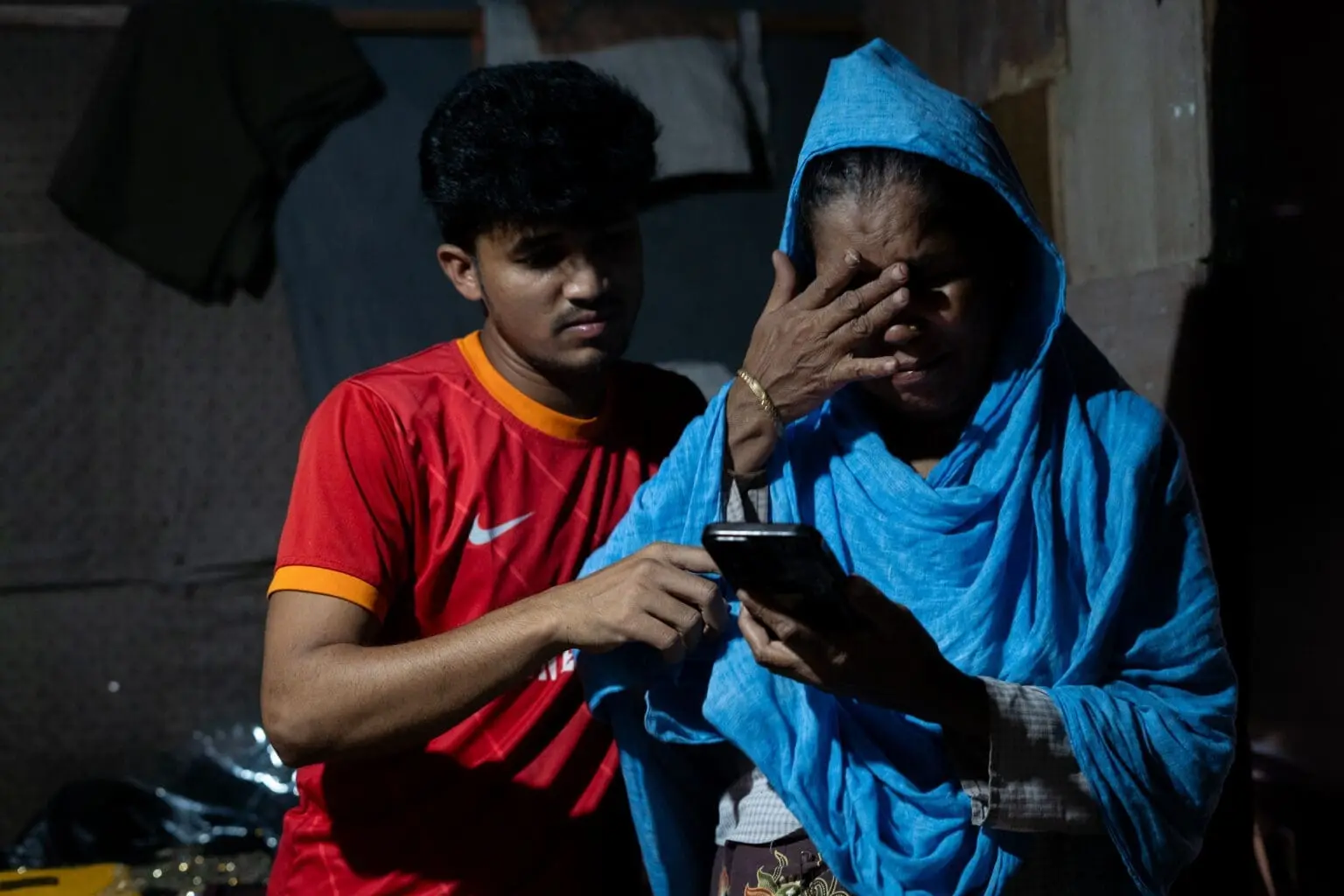
Human Rights Watch interviewed nine Rohingya men and women in the Cox's Bazar refugee camps in Bangladesh who had recently arrived from India. Six of them, who were expelled in May, said Indian authorities assaulted them and confiscated their money, mobile phones and UNHCR registration cards. The other three fled to Bangladesh, one each from Jammu and Kashmir, Andhra Pradesh and Delhi, out of fear of arbitrary arrest after police threatened them.
A woman who was expelled with her husband and three children from the state of Assam in May said Border Security Force officers slapped her husband so hard that he lost hearing in one ear. Another man said police in Tripura beat his four-year-old daughter and confiscated 20,000 rupees before forcing his family to go to Bangladesh.
A group of 40 Rohingya were flown from Delhi to the Andaman Islands, where they said naval officers beat them on board a ship and later ordered them to throw themselves into the sea near the Thanintharyi area of Myanmar. One survivor told relatives: "We were treated like the most heinous criminals."
India hosts an estimated 40,000 Rohingya, roughly half of whom are registered with the UNHCR. Although India is not a party to the 1951 Refugee Convention, it is bound by the principle of non-refoulement, which prohibits returning people to places where they face persecution.
The rights group said the expulsions have left Rohingya in India still fearful and vulnerable. In Jammu, officials destroyed shelters and arrested at least 30 refugees in May. Some who fled said police rejected their UN-issued documents and accused them of being "Bengalis."
The Indian Supreme Court is scheduled to hear a case in September concerning whether the Rohingya should be recognised as refugees or as "illegal foreigners." In May, the court refused to halt deportations and rejected reports of refugees being left at sea, describing them as a "well-crafted narrative."
Human Rights Watch urged Indian authorities to end the expulsions, investigate allegations of abuse, and recognise the Rohingya as refugees.
Agencies


