

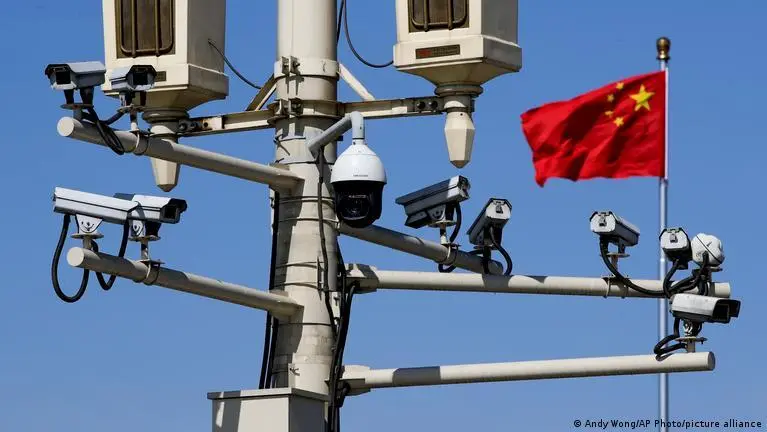
Human rights issues in China and the territories under its control vary in form and are shaped by the political, social and legal circumstances of each region. Taken together, they raise questions about the limits of state authority, the independence of the judiciary, freedom of expression and belief, and the capacity of local communities to preserve their cultural identities.
In a research report issued on 16 November 2026, running to 88 pages, the organisation Voice of Liberation reviewed sixty selected human rights incidents that occurred or were disclosed during the first ten months of the current year.
Having addressed the situation of Uyghur Muslims in East Turkestan in a separate article, this review examines the most prominent files concerning Tibet, Southern Mongolia, Hong Kong, Macau and mainland China, drawing on complementary human rights and media sources.
Tibet: The Future of Cultural Identity Amid School Closures
The Tibetan Centre for Human Rights and Democracy reported in October 2026 that Chinese authorities had closed three private schools in Golog Tibetan Autonomous Prefecture, administratively part of Qinghai Province, during August and September.
The affected schools included a school for girls from pastoral communities, a school for orphans that also provided their education, and a primary school founded by local residents.
These institutions provided education that placed particular emphasis on the Tibetan language and local culture, alongside other school subjects.
The closures follow the entry into force on 1 July 2026 of the Law on Promoting National Unity and Progress, as well as amendments to the law governing the use of Standard Chinese.
Tibetan human rights organisations believe these developments threaten the ability of residents to transmit their language and culture to future generations, particularly as boarding education expands away from the communities in which children grew up.
For its part, the Chinese authorities present their educational and linguistic policies as a means of enhancing educational and development opportunities and communication among the various nationalities.
However, the fate of all the students affected by the closure of the three schools, and the languages actually used in the institutions to which they moved, has not been fully clarified.
This raises an issue that goes beyond the provision of school places, relating to the right of families to choose the educational and cultural environment for their children, and the extent to which they can preserve their linguistic and religious distinctiveness.
Tibet: Religious Restrictions and the Pursuit of Expressions of Spiritual Loyalty
Alongside education, debate continues over restrictions on religious practice and on symbols associated with Tibetan identity.
Among the cases that stand out in this context is that of Zhang Yi, whose family said authorities detained him on 1 July 2026, after he displayed a picture of the Dalai Lama to a worshipper at Sera Monastery in the city of Lhasa.
Amnesty International reviewed a notice stating that he had been formally arrested on 28 July on suspicion of incitement to separatism.
In October, his son reported that the family had learned the case had been referred to the prosecutor, while the lawyer had not yet been able to review the case file at that time.
The case raises questions about the dividing line between expressing religious beliefs or attachment to spiritual symbols, and acts that the authorities criminalise as a threat to national unity.
This matter carries particular significance in areas where religious identity overlaps with historical memory and national belonging.
Southern Mongolia: Land and the Rights of Local Communities
The nature of some human rights issues in Southern Mongolia, officially known in China as the Inner Mongolia Autonomous Region, differs from those that attract wide international attention in Tibet and East Turkestan.
Land use rights, compensation for expropriation, and the protection of local livelihoods form important aspects of the disputes witnessed in the region.
On 17 August 2026, residents of Chaideng village, under the Jungar district of Ordos city, staged a protest over compensation related to land used for the construction of a road.
A platform specialising in monitoring protests accused the police of assaulting some residents, including children and elderly people.
The report also addressed the case of a child under the age of sixteen working in a restaurant in Tongliao city, where local authorities confirmed that measures had been taken against the establishment, the child had been returned to his family, and a fine had been imposed, without clarifying whether he had received all of his financial entitlements.
These incidents highlight the importance of not reducing human rights issues in Southern Mongolia to national identity alone, as they also encompass economic and social rights, working conditions, and residents' ability to object to decisions affecting their sources of livelihood.
Hong Kong: National Security and the Future of Press Freedom
Hong Kong is among the most prominent places where judicial developments related to freedom of expression and political participation occurred during 2026.
On 9 February, a court in Hong Kong sentenced the founder of the newspaper Apple Daily, Jimmy Lai, to twenty years in prison, in a case linked to national security legislation.
The authorities said the case concerns activities that harmed national security, including calling for foreign sanctions against China and Hong Kong, and stated that the judicial proceedings do not target press freedom as such.
By contrast, Human Rights Watch described the ruling as a harsh blow to media freedom, while the UN High Commissioner for Human Rights, Volker Türk, called for Lai's release, considering that the case affects rights protected under international law.
This case highlights the dispute over the legal boundary between journalistic activity and communication with international bodies, and between acts that the authorities regard as cooperation with foreign forces to harm national security.
The repercussions of such rulings are not confined to the individuals convicted; they also raise questions about their potential impact on the independence of media institutions and on the decisions of journalists and editors.
Hong Kong: Narrowing Political and Civic Space
On 23 February 2026, the Court of Appeal rejected the appeals of twelve defendants in the case relating to the primary elections organised by political opponents in 2020.
By the end of October, applications by eleven defendants for permission to appeal to the Court of Final Appeal were still pending.
The case centres on the interpretation of the use of parliamentary and electoral mechanisms to achieve political goals, and on whether this can be considered a violation of national security legislation.
The authorities consider the case to concern a plot aimed at disrupting the work of the government, while human rights bodies consider that some of the acts under indictment fall within the exercise of parliamentary oversight and political participation.
The study also addressed other cases related to civil society organisations, aid funds, and organised political activity.
These files point to the importance of clear legislation, so that individuals and institutions can know the legal limits of civic and political activity before engaging in it, rather than only after they face prosecution.
Macau: The First Known Trial Under the National Security Law
In the Macau Special Administrative Region, the case of former legislator and political activist Au Kam-san stood out; he was subjected to a closed trial during September 2026.
The court justified not admitting the public to the sessions on grounds relating to the protection of national security.
When the period covered by the report ended, on 31 October, no verdict had yet been issued.
However, on 6 November, the court sentenced Au Kam-san to twelve and a half years in prison, in the first known trial under the national security law in the territory, according to the Reuters news agency.
The case included charges relating to subverting state power, communicating with external parties in a manner that harms national security, and breaching confidentiality.
Human Rights Watch criticised the verdict and the trial procedures, considering that the case raises concerns about guarantees of a fair trial and the rights of pro-democracy advocates.
This case reopens the question of the balance between considerations of national security and the public nature of trials, and the opportunities that judicial procedures afford defendants to access and challenge evidence.
Mainland China: Restrictions on Freedom of Worship
Cases concerning freedom of belief in China are not limited to Muslims or Tibetan Buddhists; they also include some Christian communities, particularly churches operating outside official religious frameworks.
Among the incidents addressed by the study are reports of the demolition of a church building in Yaiyang district during May 2026, and the conversion of its site into a park.
Reports from China Aid also documented the detention of 27 people over church-related activities in Pingxiang city in Jiangxi Province; 25 of them were later released, while the families of two church leaders received notices of criminal detention in October.
The available sources did not sufficiently disclose the detailed evidence on which the charges are based, or the extent to which the detainees were able to obtain legal assistance.
These cases reflect the importance of monitoring the status of independent religious institutions, and of distinguishing between administrative regulation of religious activities and measures that may effectively prevent their practice.
Freedom of Expression and Historical Memory
Human rights issues in China also include citizens' ability to discuss historical events and commemorate them collectively.
The report addressed testimonies from the families of victims of the Tiananmen Square events of 1989, concerning restrictions on marking the anniversary on 4 June.
Some families reported that they had been forced to commemorate the anniversary inside their homes rather than gathering at the cemetery they customarily visit on this occasion.
The report also addressed cases relating to artistic production and journalistic activity, including the sentencing of the artist Gao Chen to three years in prison in August 2026, according to media and human rights reports, over artworks that the authorities considered defamatory to the reputation of figures the state classifies as heroes and martyrs.
These incidents raise questions about who determines the acceptable account of historical events, and the limits the state imposes on artistic expression and public debate about them.
Forced Labour and the Exploitation of Persons with Disabilities
Among the aspects deserving particular attention in the report is the documentation of abuses suffered by people from socially vulnerable groups, including persons with intellectual disabilities.
In Hubei Province, the study addressed the case of eight people with intellectual disabilities who were exploited in brick factories, with their movement restricted and their wages seized.
After they were rescued in 2025, a local court on 24 March 2026 sentenced three people to prison terms ranging from fifteen months to three years, and ordered the illegally obtained funds to be returned to the victims.
However, the published information did not settle whether all those affected had actually received their entitlements, or whether they were given the necessary social and health support after their rescue.
This case shows that confronting forced labour does not end with the conviction of those responsible, but extends to restoring victims' financial rights and securing living conditions that prevent their exploitation from recurring.
Mental Health Institutions: Abuses Confirmed by Official Investigations
On 13 February 2026, authorities in Hubei Province announced the findings of an investigation covering 51 mental health institutions in the cities of Xiangyang and Yichang.
The investigation confirmed that patients in three institutions had been assaulted by staff there, as well as the continued hospitalisation of some patients after the medical need for their stay had ended.
The investigation followed an investigative work carried out by the newspaper Beijing News in December 2025.
The authorities imposed administrative penalties on four staff members, and took other measures on the basis of suspicions relating to financial irregularities and concealment of records.
At the same time, the official investigation reported that it had found no cases of people without psychological disorders being admitted to the institutions covered.
This case reveals the importance of independent oversight of institutions where people who depend on staff to meet their daily needs reside, and of ensuring their ability to submit complaints and obtain care without facing reprisals or unjustified detention.
Economic Rights and Discrimination in the Labour Market
The study also addressed delayed wage payments and discrimination in employment, highlighting cases in which the authorities intervened to provide redress to those affected.
In Anhui Province, 38 workers in the garment sector were able to recover their overdue wages after filing a collective complaint and the intervention of the competent bodies.
In Yangzhou city, the prosecution identified 65 discriminatory job advertisements containing conditions related to sex or childbearing, and the advertisements concerned were corrected.
The report also addressed the case of a company in Beijing that asked eleven women to provide recent pregnancy test certificates as part of pre-employment medical examinations, which led the competent authorities to impose a fine on it.
These cases underline the importance of distinguishing between abuses resulting from employers' practices and those directly attributed to the authorities, as well as assessing the effectiveness of regulatory bodies in providing redress.
The Common Thread: The Capacity to Object and Recover Rights
Despite the differing nature of the cases in the regions covered by the report, they converge on a fundamental question: the extent to which those affected are able to object to decisions that affect their lives, and to reach an independent body capable of reviewing them and providing redress.
The closure of a school, the restriction of a religious activity, the prosecution of a newspaper, the refusal to compensate residents for their land, or the exploitation of a worker are all events that differ in their causes and legal contexts, yet they raise shared questions about transparency, accountability, and the availability of avenues for appeal.
Conclusion
A combined reading of the human rights situation in China during 2026 reveals the diversity of challenges facing residents: from preserving linguistic and religious identities in Tibet and East Turkestan, to protecting political and media space in Hong Kong and Macau, and economic and social rights in Southern Mongolia and mainland China.
The nature of these issues remains tied to the particularities of each region, and cannot be understood apart from its history, its legal status, or the relationship between its residents and the central and local authorities.
Assessing the human rights situation in China also requires monitoring that goes beyond recording abuses, to include legislation and mechanisms for its implementation, the independence of investigations, avenues for recovering rights, and the ability of those affected to access justice.
The report does not offer a comprehensive count of all abuses in China during the year; rather, it documents a selected set of incidents on which information could be obtained. This makes continued independent monitoring and verification necessary for understanding human rights trends over the longer term.
References
- Voice of Liberation – Human Rights Events in China in 2026: Selected Incidents and Analysis, 16 November 2026.
- Tibetan Centre for Human Rights and Democracy – Three More Tibetan Schools Forcibly Closed, 19 October 2026.
- Radio Free Asia – Closure of Tibetan Schools and the Threats Facing Language and Culture, 23 October 2026.
- Human Rights Watch – Publisher Jimmy Lai Sentenced to Twenty Years in Prison, 9 February 2026.
- UK Government – Six-Monthly Report on Hong Kong, January to June 2026.
- Reuters – Former Macau Lawmaker Sentenced to Twelve and a Half Years in Prison in the City's First National Security Trial, 6 November 2026.
- Human Rights Watch – Criticism of the Proceedings in the Trial of the Former Macau Lawmaker, 9 November 2026.


