


What does a person do when they have enough money to buy almost anything, but cannot buy a guarantee that the world will remain stable?
For a segment of the ultra-wealthy, the answer no longer appears limited to building luxury homes or diversifying investments. It has begun to move toward a bleaker question: where can one survive if the systems on which modern life depends collapse?
Reports published by the Financial Times reveal a notable shift in how some wealthy individuals approach the risks of war, geopolitical crises and major disasters. Rather than settling for stockpiling food or buying generators, they are turning to something scarcer: distance from centres of conflict, land, relative independence, and the right to enter another country when options narrow.
In this way, preparing for the end of the world is moving from a hobby associated with basement shelters to an investment strategy for some holders of vast fortunes.
When location becomes more important than money
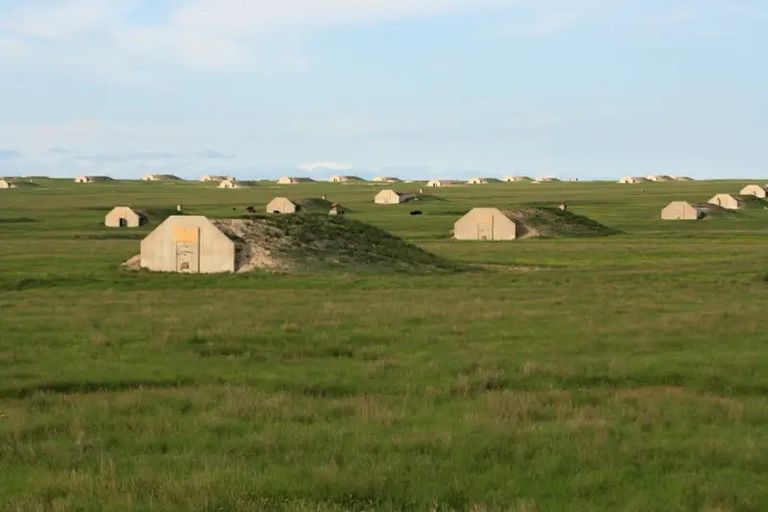
In western Argentina, on the broad foothills of the Andes mountain range, this idea takes tangible form on a farm known as "Wamani".
For Argentine-Spanish businessman Martín Varsavsky, the site represents a kind of "lifeboat seat" in the event of a global catastrophe.
According to his vision, as relayed by the newspaper, the region is distant from the main nuclear power centres, while at the same time relatively close to sources of food and energy in Patagonia and Mendoza.
Varsavsky does not base his thinking on a simple theoretical possibility. He believes the world has already entered a phase that can be described as a Third World War, and that international alignments have become clearer between Russia, China, North Korea and Iran on one side, and most other countries of the world on the other. In such a world, a remote land becomes, in his view, a form of insurance.
A farm that does not want to be merely a shelter
Yet "Wamani" reveals another dimension of how the wealthy think about confronting disasters. The aim is not to hide inside a fortified building and wait for the crisis to end, but to try to build a community capable of continuing if global supply chains are disrupted.
Varsavsky owns the project in partnership with five Argentine and American investors, including Alec Oxenford, Argentine President Javier Milei's ambassador in Washington, and Dan Lubetzki, founder of the company Kind.
The investors are working to develop a system that can provide a degree of self-sufficiency, through solar energy and livestock breeding, while studying the possibility of expanding the land allocated to agriculture.
The plans go beyond food and energy, however. The investors are also examining running large language models on solar-powered computers, which would allow the creation of a limited version of internet services should global infrastructure collapse or data centres become unavailable.
The idea here is not only physical survival, but the preservation of the minimum technology on which modern life rests.
Why has Argentina become a destination for wealthy survivors?
The Financial Times sees the interest in this region as also linked to the new image of Argentina among some technology billionaires.
The rise of Javier Milei and his economic policies based on the free market have strengthened the country's appeal for a category of investors who view it as a nation distant from the main centres of tension, with vast natural resources and extensive, sparsely populated spaces.
Geographic distance from major military targets, together with the availability of agricultural land and energy sources, may give the region an advantage that money alone cannot provide elsewhere.
However, this view does not enjoy local consensus. In areas close to the project, the purchase of huge tracts of land without clear commercial activity raises questions among residents, while others consider the presence of wealthy investors unproblematic so long as they preserve nature and do not turn it into dense urban developments.
The race of the wealthy for an alternative way of life
"Wamani" is not an isolated case. The report places the project within a wider phenomenon among holders of enormous fortunes, where owning an alternative place to live has become a kind of "end-of-the-world insurance".
This reveals an important change in the nature of "hedging" among the wealthy.
An ordinary investor tries to protect their money from inflation or the collapse of a particular market, while some ultra-wealthy individuals try to protect themselves from the collapse of the system itself.
New Zealand: when a residence visa becomes a survival plan
But owning a remote piece of land is not the only route. In New Zealand, preparation appears more formal, as some wealthy individuals choose to buy the possibility of staying in another country through investment-linked residence programmes.
According to another Financial Times report, applications from wealthy individuals seeking the right to live, work and study in New Zealand rose to more than 700 over 14 months, after only 115 applications in the preceding three years.
This increase followed the easing of the investment programme's requirements, at a time when geopolitical tensions and New Zealand's geographic distance from conflict zones made the country more attractive to holders of wealth.
The new rules offer different investment pathways. One requires an investment of at least NZ$5 million, or about US$2.93 million, over three years in local funds, companies or charitable institutions.
A higher track requiring NZ$10 million, or about US$5.86 million, over five years in more passive assets such as bonds has attracted 127 investors.
New Zealand bets on the fears of the wealthy
For the New Zealand government, the matter is not only about offering the wealthy a safe place. Authorities see the programme as a means of attracting capital and expertise to the country, in an attempt to address the problem of skilled emigration.
Since the programme was amended in April 2025, applicants from North America, Europe and Asia have pledged investments totalling NZ$4.8 billion, or about US$2.82 billion.
American investors led the applicants with 277 applications, with clear interest from California.
Yet behind the investment figures lie more complex motives. For some applicants, residence in New Zealand is not merely an investment opportunity but provides a backup geographic option: a country to which they can move if the political or security environment in their home country becomes more turbulent.
Residents also pay the price of survival
The flow of capital and large fortunes, however, does not pass without side effects.
The average property price stands at around NZ$1.8 million, roughly double the national average.
In local culture, an ironic expression has emerged to describe some billionaires who live out of sight in mountainous areas; some residents call them "the hill sleepers".
This reality raises a question about the limits of the relationship between investment and the right to residence.
Critics of the programme argue that paying millions of dollars should not be sufficient to obtain special treatment, and that those granted residence should be genuine investors in the economy and local community, not merely people buying an alternative plan for their lives.
"Every dollar is mobile"
By contrast, some investors arriving from the United States do not conceal their logic in dealing with these programmes. One investor who obtained the visa believes that capital constantly seeks the best possible use of the dollar, and if New Zealand does not offer the best value, the money can move elsewhere.
The land in Argentina gives them isolation, residence in New Zealand gives them a legal option to relocate, and private refuges give them a degree of independence from public services.
As for the wealth itself, it gives them what matters most: the ability to decide before others do.
From food stores to a "survival passport"
In 2023, a survey published by the platform "Finder" revealed that around a third of adults in the United States were preparing for a catastrophic scenario, and that collective spending on such preparations reached about US$11 billion within a single year.
But what the Financial Times observes among the ultra-wealthy represents a completely different level of preparation. An ordinary person may store food and water and buy a generator or first-aid kit.
An ultra-wealthy person can buy a remote farm, build an independent facility, obtain residence in another country, or distribute their assets across different geographic regions.
In other words, the difference lies not only in the size of the money, but in the kind of options that money opens for its owner.
What do they actually buy?
Ultimately, these wealthy individuals do not appear to be buying "the end of the world" so much as buying themselves a chance to survive it. They buy geography when they choose the Andes or New Zealand, and they buy independence when they build their own sources of energy and food.
They buy legal flexibility when they secure residence rights in distant countries, and they buy time when they plan before a catastrophe rather than searching for an exit after it has begun.
Yet even the most isolated refuges cannot guarantee the future. Nuclear war, the collapse of markets, pandemics, climate change, or disruption to food and energy supply chains are all crises that do not respect the borders money can purchase.
The wealthy may be able to buy remote land, an alternative visa and a self-sufficient farm, but the harder question will remain: if the world on which these refuges depend collapses, how far can they stay isolated from it?
Source: Financial Times


