


This article was originally published by The Conversation by Anisa Bajaspa, Associate Professor of Psychology, Kennesaw State University.
US Representative Randy Fine of Florida wrote on X that "choosing between dogs and Muslims is not hard," and added in another post: "We need more Islamophobia, not the opposite." Similarly, US Representative Brandon Gill of Texas called for halting the entry of "Muslim immigrants into America."
I have studied the impact of Islamophobia on mental health over the past two decades, following the rise in hate crimes after the 11 September attacks. Research consistently shows that negative stereotypes about Muslims shape public attitudes towards them, and can lead to increased discrimination, hate crimes and negative psychological effects.
The rise of Islamophobia
Islamophobia in the United States tends to rise during global conflicts, political campaigns and terrorist attacks. Human Rights First, an organisation that works to advance human rights in the United States and abroad, documented a rise in Islamophobia in 2015 following the Syrian refugee crisis, when large numbers of people were displaced. In the same year, the Paris attacks and the shooting in San Bernardino, California, heightened public concern about terrorism, and an increase in crimes against Muslims followed.
Anti-Islamic rhetoric intensified in the United States during Donald Trump's 2016 presidential campaign and continued throughout his presidency, during which Muslims were often portrayed as posing a security threat. Digital media researcher Berton Spikeman and I found growing acceptance of this rhetoric among the political right in social media posts between 2016 and 2019.
Social media posts and comments showed an increase in the use of language demeaning to Muslims. In a study I conducted in 2020, a majority of 830 American Muslims reported being exposed to the greatest amount of anti-Islamic content on Facebook, followed by Twitter and Instagram. This shift was also reflected in the language and coverage of Islam in right-wing media, which often portrayed Muslims as invaders seeking to impose Islamic law and as a burden on welfare.
Mainstream media can also amplify negative stereotypes about Muslims by discussing Islam in the context of terrorism, and by portraying Muslims more negatively than other racial, ethnic or religious minorities.
Hate crimes tend to increase alongside anti-Islamic rhetoric. In 2016, a year that saw a notable rise in anti-Islamic rhetoric, 307 incidents were recorded, the highest figure recorded directly after the 11 September attacks. The numbers fell the following year, but rose again in 2024 with the outbreak of the Israel-Hamas war, when 288 hate crimes against Muslims were recorded that year.
The mental health of Muslim Americans
The cumulative effects of Islamophobia affect the mental health of Muslim Americans and their access to healthcare.
Many studies conducted since the 11 September attacks link higher rates of discrimination experienced by Muslim Americans with higher rates of depression. Experiences of discrimination also lead some Muslim Americans to believe that they are not seen as American.
31% of participants in my 2020 study described the impact of social media on their mental health: many said they avoided showing their Islamic identity in their social media posts, supporting a Muslim political candidate, or even sharing religious content or videos. Some withdrew entirely, with 27% deactivating or deleting their social media accounts.
In addition, many Muslims reported feeling frustrated about seeking physical and psychological treatment from non-Muslim healthcare providers, which has led to a notably lower rate of use of available services by Muslim Americans compared with other racial and religious minorities.
A study conducted in 2015 found that nearly a third of Muslim Americans reported experiencing discrimination in healthcare facilities, which affected their trust in healthcare providers. A majority reported being treated poorly by healthcare providers, modesty requirements not being respected, or their pain being ignored. One female participant in that study said: "When I entered the operating room, the healthcare providers did not understand the importance of my wearing the hijab and my wish for most of my body to be covered…"
In my study conducted in 2023, a number of participants described their personal experiences with mental health professionals who seemed to see them only through their religious affiliation. One participant described a provider as "quick to attribute problems" to religion or culture. This participant said: "I worry about them generalising prejudgements, and I end up feeling as if I am on the defensive."
My most recent study, conducted in 2024 and currently under review, asked 325 Muslim Americans who had used any mental health services about their healthcare-seeking behaviour: 56% said they were worried about providers' bias, while 57% expressed concern about being misunderstood.
Following Trump's travel ban, which targeted several Muslim-majority countries in 2017, a study conducted by researchers at the Yale School of Public Health found that many Muslim Americans missed appointments with primary care physicians; at the same time, their visits to emergency departments rose.
Confronting the challenges
In response, several initiatives have emerged at the local and national levels. One of these approaches involves raising mental health awareness within the community. Muslim communities are building networks of mental health professionals who provide services to Muslims.
For example, mental health professionals and community leaders seek to raise mental health awareness through direct and digital education. Members of the Muslim community learn to recognise the symptoms of mental disorders through training courses, such as mental health first aid. Online guides for Muslim mental health service providers have also been created.
Another approach is training mental health professionals. A team from Stanford University created a six-part training module that provides therapists with knowledge of religious norms and gives them an opportunity to reflect on their potential personal biases.
Finally, Muslim researchers and professionals have begun developing treatments and resources that integrate Islamic beliefs and spiritual approaches into therapy. These therapies include psychological approaches inspired by the Holy Qur'an, the teachings of the Prophet, and spiritual practices such as self-reflection, prayer and mindfulness.
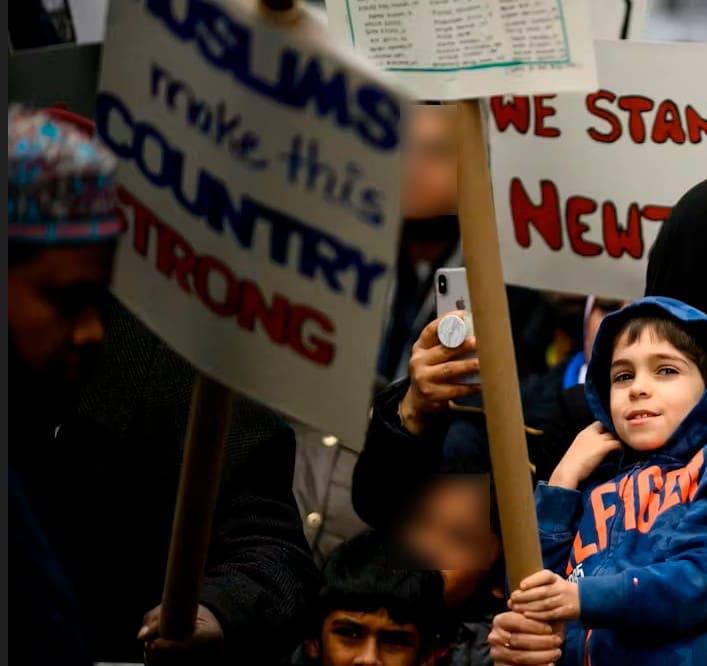
Muslim Americans often feel powerless in the face of the hatred they experience, so raising awareness and advocacy can help reduce Islamophobia and meet the mental health needs of a community that is already vulnerable.


