


In many of our societies, the cream-decorated cake is no longer a sweet served alongside other kinds of food; it has gradually become an almost fixed symbol of celebration itself.
Graduation? There is a cake.
Academic success? A cake.
A new job? A cake.
Completing a course, memorising a book or finishing a project? A cake bearing its owner's name and the occasion's phrase.
Returning from a trip, opening a new place or achieving a personal goal? The scene repeats: a decorated cake, perhaps candles and balloons, then a commemorative photo published on social media.
This may seem a minor detail not worth pausing over. But what is it about a piece of sweet that carries all these meanings?
Yet from a cultural standpoint, the question is not: is it permissible to eat "cake"? Nor: is every foreign custom to be rejected? The deeper question is: how did a single imported model become the way millions imagine the shape of joy and celebration? And what happens to the distinctiveness of societies when they begin to import not only products, but the symbols, rituals and images through which they express their feelings?
The cake is older than "cake parties"
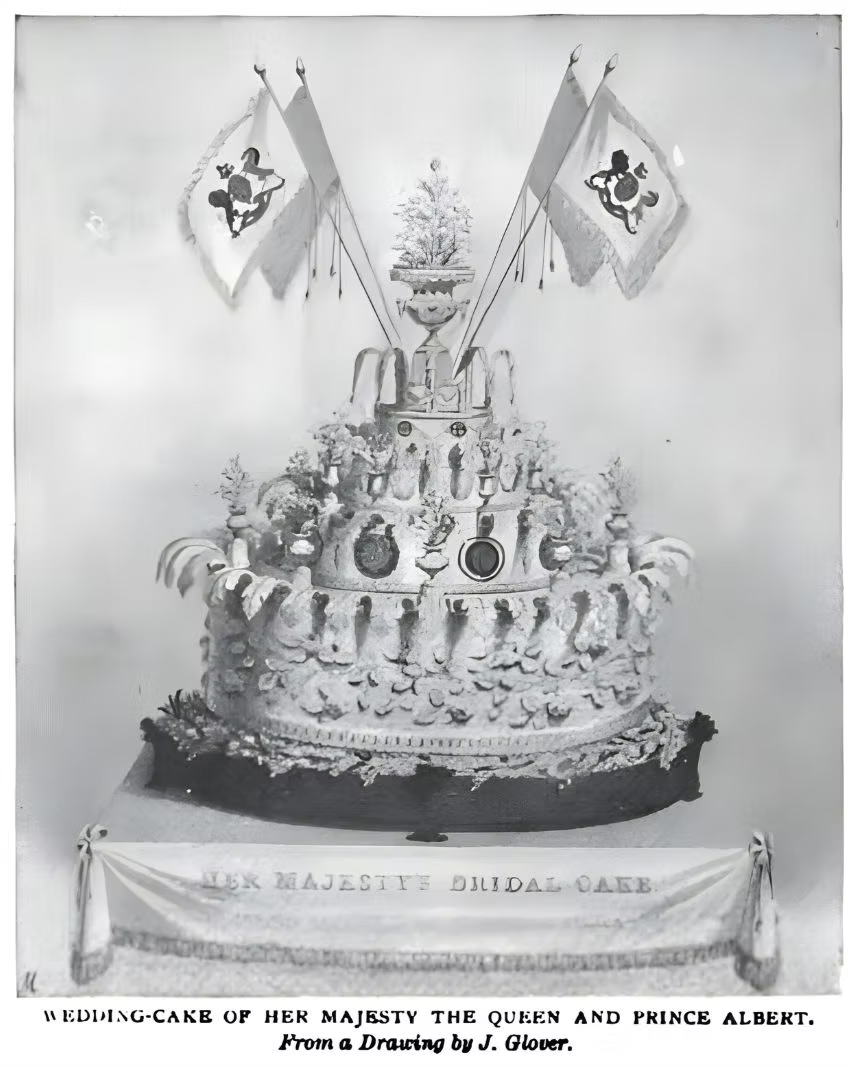
A wedding cake of Queen Victoria and Prince Albert in 1840, an example of the development of European cakes covered in white sugar icing and decorated, before the emergence and wide spread of modern icing-decorating forms.
Humans have known various forms of cake and sweet bread since ancient times, so it would be wrong to say that the modern cake suddenly appeared at a specific time.
Nor is the use of special foods for occasions the preserve of any single civilisation; almost all human societies have linked food with joy, seasons and occasions.
Europeans have known covering cakes with sugar and egg white since the seventeenth century, and techniques of covering and decorating cakes then developed alongside improvements in sugar production. In the nineteenth century, the commercial spread of granulated sugar, the development of ovens, and raising agents enabled the making of multi-layered cakes decorated in a form much closer to their modern appearance. Food history references note that multi-layered cakes expanded considerably after around 1870, once the necessary tools and techniques became available.
So the "cream cake" we place today at the centre of the table is not merely an extension of an ancient human food; its shape, its method of decoration and its present symbolic function are the product of a modern European celebratory culture that later developed within American consumer culture.
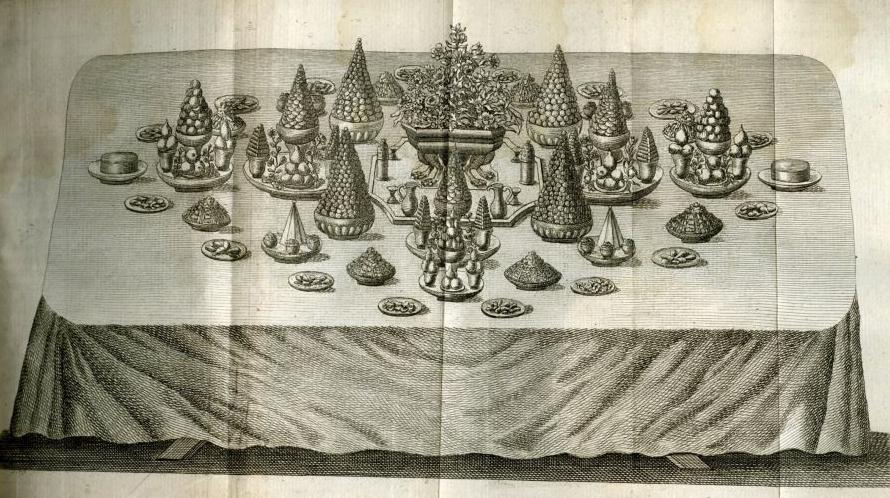
A scene from a European pastry shop from around the seventeenth century, showing the form of baked goods and sweets before the modern layered cake with cream became the dominant image.
What about a religious origin?
It is sometimes repeated that the birthday cake and candles trace directly to Greek pagan rituals, especially the worship of the goddess Artemis. The matter requires some precision. There is indeed historical evidence of round cakes being offered in rites associated with Artemis in ancient Greece, and some researchers have linked them to light and the moon. However, there is no documented historical chain proving that the custom of placing candles on a modern birthday cake passed directly from those Greek rituals.
The closest and clearest origin of the modern ritual, namely a cake bearing candles linked to a person's age, appears in Germany, particularly in children's celebrations known as Kinderfest. Smithsonian sources (a major American institution of museums, research and education, founded in 1846 in Washington) note that German traditions included a cake topped with candles, and that the child would make a wish and then try to blow out the candles in one breath.
Some of these practices were then surrounded by popular and spiritual beliefs; in some accounts candles were associated with protection, and it was believed that their smoke carried the child's wish to the heavens. Nevertheless, this does not make the "cake" itself a religious rite, and historically the story of the cake cannot be reduced to a single pagan origin. What matters most for our subject is what happened afterwards.
From Germany to America… then to the world
German immigrants carried the tradition of the birthday cake and candles with them to the United States in the nineteenth century, and the custom gradually spread beyond German communities.
Between roughly 1900 and 1920, candled cakes became familiar among the middle classes in the United States and Britain, and in the 1920s candles and their accessories entered a phase of wide commercial production.


Then came the power of the media. Films, cartoons, greeting cards, advertisements and food companies created an image that almost repeats endlessly: a person at the centre, a decorated cake in front of them, and celebrants all around.
National Geographic points to the role of American media and consumer culture after the Second World War in spreading this model globally, through tourism, children's products, brands and American popular culture. By the 1950s, the custom had reached even culturally distant societies such as Japan.
Then the cake left the birthday
The cake did not remain confined to birthdays. Over time, the "occasion cake" became part of weddings, annual anniversaries, job promotions, corporate celebrations and other life milestones. Smithsonian today notes that cake is used to mark a variety of occasions, from weddings and birthdays to promotions at work.
This is the point that concerns us when we look at Muslim societies today. We did not merely take a sweet cake that pleased us; we gradually took a whole celebratory system, then widened its use to enter almost everything.
As a result, a girl graduating imagines a graduation cake, a student who passes expects a success cake, and a businessman opening his project sees the decorated table and the cake inscribed with the project's name as a natural part of the event.
Why? Because the image has come to precede the experience.
Instagram and TikTok… when celebration is designed for the photograph
Social media gave this model enormous force. The modern cake is a perfect product for image culture: beautiful, colourful, able to bear the name, achievement, age and phrase of the occasion, and placed centrally in the scene so that whoever views the photograph immediately knows what the occasion is.
For this reason it performs not only a nutritional function, but has become a visual signboard.
Smithsonian points to the continuation of cake culture in the twenty-first century through TikTok trends and social sharing of the experience.
Here a transformation occurred that deserves reflection. In the past, a person held the celebration and perhaps kept a photograph of it afterwards.
Today, many celebrations are arranged in advance to suit photography: the backdrop, the balloons, the colours, the table, the cake, then the pose of the person being celebrated.
The question thus shifts from: how do we rejoice? to: how should the image of our joy look?
With repetition across platforms by the millions, the scene moves from a fashion to a "norm", and then to something a person almost feels the occasion lacks if it is not done.
When peoples import the way they rejoice
It would be unfair to say that everything coming from another culture is bad. Civilisations have never lived behind closed walls. Muslims throughout their history took from other peoples and gave to them, borrowing foods, crafts, clothing and tools, then reshaping them within their own environment.
But the problem is not influence. The problem is the loss of the capacity to reformulate.
A living civilisation may take a product and then give it its own meaning. A consumer civilisation takes the product, the way it is used, the symbol attached to it, the image that must be captured with it, and the words said around it.
It is not coercion that forbids people by force from practising their customs; it is the quiet process whereby local customs recede of their own accord before a single global model that is more present in the media and the market.
Thus dozens of local forms of expressing joy disappear, and everyone sits before almost the same table.
This phenomenon is not specific to Muslims; studies of food globalisation themselves discuss the risk that global consumer culture may produce a cultural homogenisation before which local food and social practices retreat.
And what do we lose?
Muslim societies have a long history of diversity in expressing joy. Each country did not have the same image, and not every family celebrated in the same way.
There are feasts, feeding relatives and neighbours, making local sweets, giving gifts, visits, family gatherings, honouring those who had favour, charity, and expressing praise and gratitude to God when a blessing is realised.
We do not say that all of these are specific "Islamic rites" for which the law prescribed a success party in a particular form; that would be imprecise. But there is a clear Islamic spirit in dealing with blessings: thanking the Giver, humility, sharing good, bringing happiness to others, and not turning every achievement into an occasion for self-display.
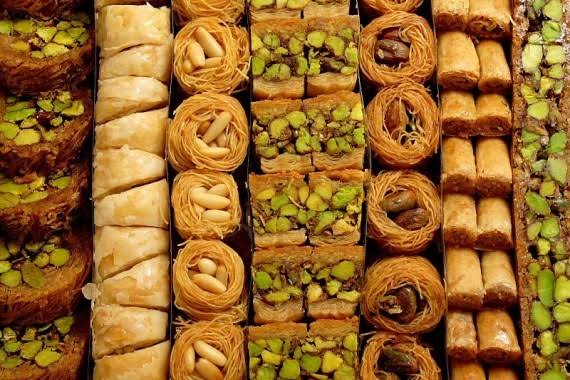
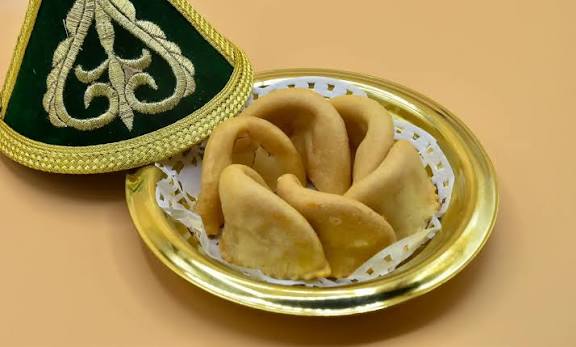
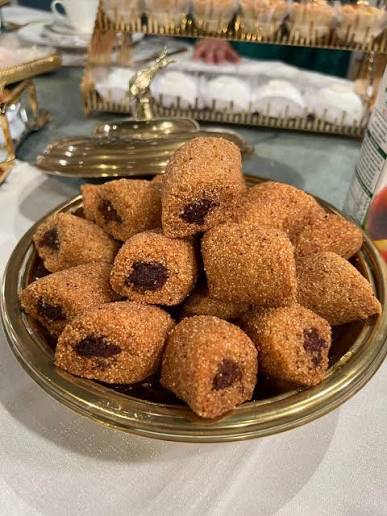
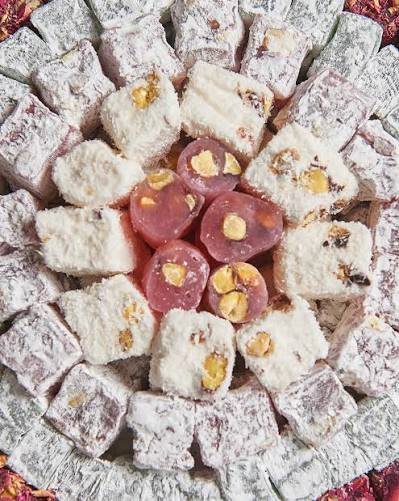
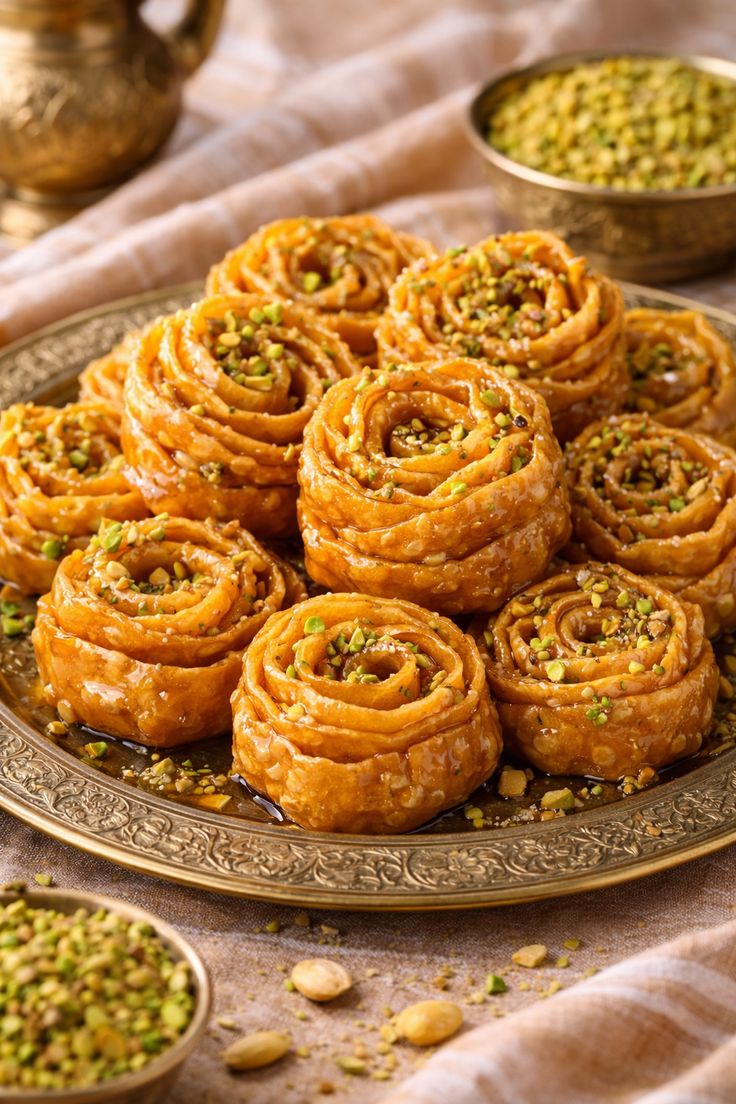
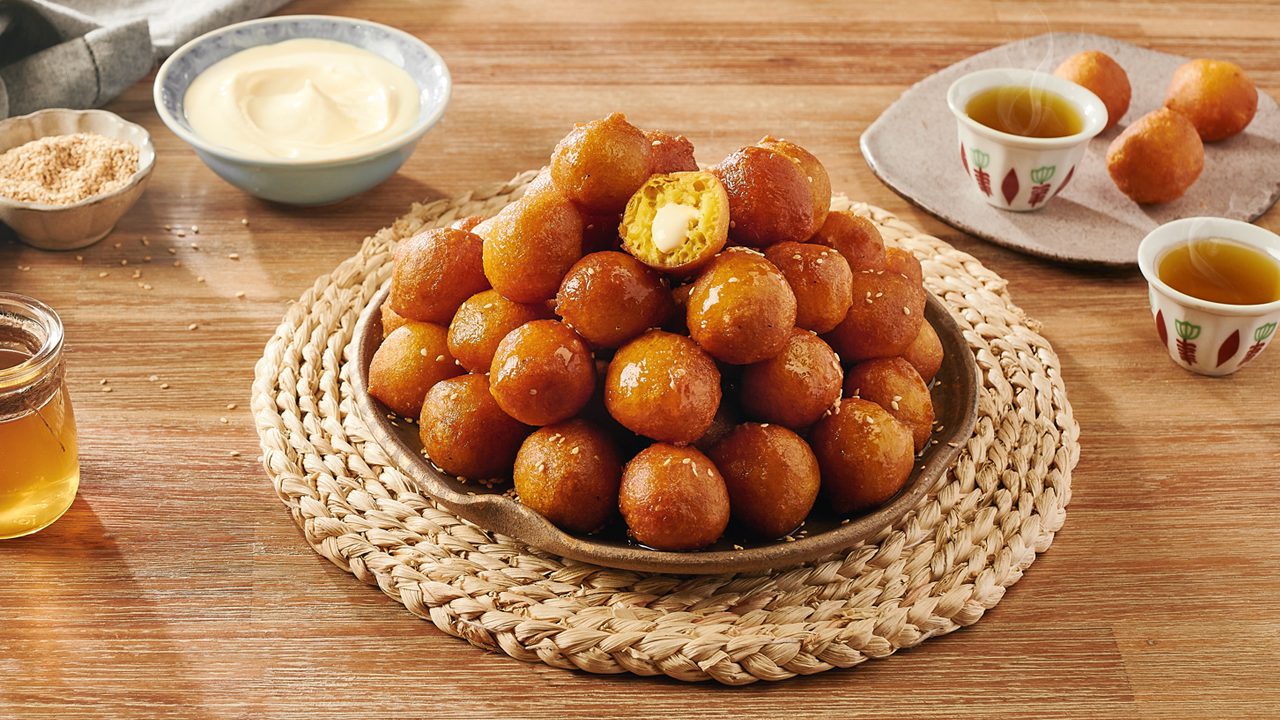
Moreover, the peoples of Muslim lands possessed dozens of sweets and foods specific to occasions, differing from Morocco to the Levant, the Gulf, Turkestan, India, East Asia and Africa. This diversity is itself a civilisational wealth.
But globalisation does not tell you: "abandon the sweets of your country."
It is enough that your phone is filled every day with the same celebratory image, until the new generation automatically begins to believe that this is the original form of joy, and anything else is less elegant or less modern.
Even success has become a consumer product
There is another dimension to the matter. Success was originally a value: knowledge acquired, work mastered, a stage passed. But consumer economies are adept at turning values into occasions for purchase.
Every event has its own decoration: a dedicated cake, dedicated balloons, ready-made phrases, gifts, wrapping, a photo session, clothes for the occasion. Then the next achievement requires a new set. In this way the margins swell until they sometimes overshadow the core.
Concern with how a graduation is photographed can become greater than discussion of what the graduate learned, and celebrating the completion of a project can outweigh the question of what that project produced. Here a person becomes a consumer even in their joys.
Is the solution to fight the cake?
This is not the intention: turning the issue into a battle against a type of sweet would strip cultural critique of its meaning.
Whoever wishes to eat cake or serve it to guests does not face a civilisational problem in the piece of sugar and cream before them.
The real question is: has the cake remained one option among dozens, or has it become the image we cannot imagine celebrating without?
The critique required, then, is not a critique of food, but the recovery of awareness.
We must learn anew to create the forms of our joy ourselves.
A family, when its son succeeds, can hold a small feast and thank those who stood by him. The successful person can set aside part of their happiness for charity. Local sweets from the surrounding environment can be distributed. A useful gift can be given. Family and friends can be gathered in a way that does not require a full photography stage.
New traditions can also be invented; civilisational identity does not mean freezing life at the practices of the ancestors, but means that we are the ones who create the new form, starting from our values and taste, rather than having it arrive in full, in a ready box from another culture.
Who shapes the form of our joy?
The strength of civilisations does not lie in their armies and economies alone.
The strong civilisation is the one that makes others eat as it eats, dress as it dresses, decorate their homes as it does, design their parties as it does, express love as it does, and portray success in the way it portrayed it.
When this happens, a person usually does not feel that they have been subjected to any pressure. They simply say: "this is how people celebrate."
But the question that a contemporary Muslim should ask is: who are the "people" who determined for us how joy should look?
And why, when our children succeed, graduate or complete an achievement, does the ready-made global image come to mind before the customs of our homes and communities?
The problem is not that a Muslim eats a cake. The problem is that they lose the ability to imagine joy outside the image that another culture has made for them.
Civilisational independence does not mean closing our doors to the world, but recovering our right to choose: taking what benefits us, leaving what we do not need, adapting what we take to our values, and preserving what we have of diversity and memory.
Nations do not lose their identity all at once. It may begin with very small details: a way of dressing, a word, a food, a form of celebration. Then the details accumulate, until a generation comes that knows well how the world celebrates, but does not know how its own people expressed joy before every occasion became alike.
More dangerous still is the infiltration of these phenomena into the scholarly, cultural and elite circles that should be best placed to read the meanings of small details and their distant effects; for the imitation of the common people may remain a passing habit, but when it is adopted by the classes that shape awareness and present the model, it becomes an entrenchment of a deeper cultural defeat, in which generations are conditioned to consume the symbols of others as the natural and refined form of life.
These groups should have been more sensitive to such transformations, and should have understood that the project of Islamic revival is not built by grand slogans alone, but also by recovering confidence in language, taste, customs, symbols and patterns of social life and joy. Fine details are not a margin in the battle for identity; they are part of what forms collective consciousness over the long term.
And unless we regain full pride in the manifestations of our civilisation, and possess the ability to produce our images and customs from within our values and memory, the follower will remain a follower; for one who is content to borrow the symbols of others will find it difficult to build cultural sovereignty for himself.
Will we witness an awareness worthy of the demands of the coming stage, one that attends to the details of dignity and the requirements of its renewal, and recognises that the recovery of sovereignty begins with details as it does with great causes? Or will we remain captive to the method of justification, minimisation and vulgar imitation, until we lose the ability to distinguish conscious openness from alienation, and taking from civilisations from dissolving into them?


