


Europe is living through one of the hardest summers in its modern history, as successive heatwaves have sparked widespread forest fires, unprecedented drops in river levels, and a notable rise in death tolls, at a time when climate experts warn that the continent has become the most affected by global warming compared with other regions of the world.
The repercussions of climate change have become more evident this year, with the crisis shifting from rising temperatures to direct effects on water resources, agriculture, transport and the economy, amid expectations that harsh weather conditions will continue in the coming weeks.
The Netherlands Declares a "Water Shortage"
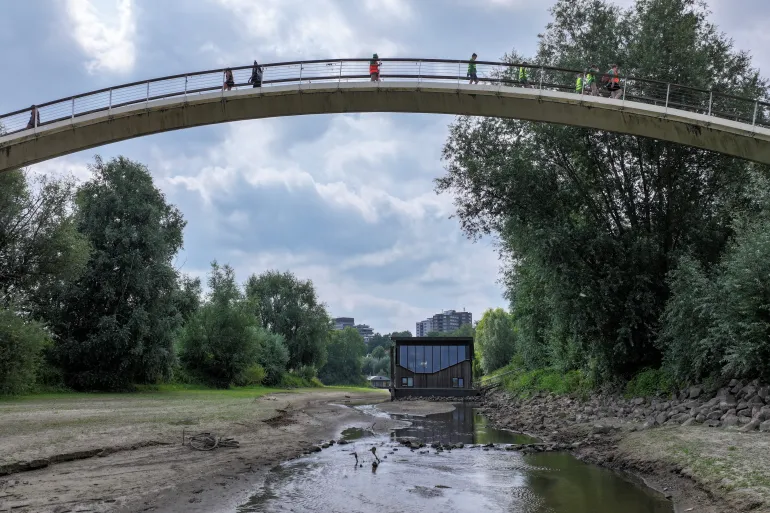
In a step that reflects the scale of the climate pressures, the Dutch government announced that it had raised its water management level to the second phase, which is officially classified as an "actual water shortage."
Authorities explained that the decision came after the levels of the Rhine and Meuse rivers fell to unusually low levels during July, as a result of continued drought and rising evaporation rates, which threatens river navigation and transport and adds pressure on water supplies in the country.
Massive Fires Strike Spain
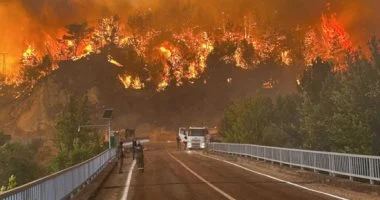
In Spain, firefighting crews continue their efforts to contain a series of forest fires that broke out in different parts of the country, amid difficult climatic conditions including high temperatures, drought and strong winds.
Authorities announced that one of the largest fires, which broke out north of the capital, Madrid, consumed some 13,000 hectares of land, forcing authorities to evacuate hundreds of residents, while around 300 firefighters, supported by helicopters, took part in containing the flames.
Although no deaths were recorded in this fire, concern is growing about its impact on biodiversity, particularly in natural areas that are home to rare species of vultures, wolves and butterflies.
Spain is also preparing for a new heatwave that could push temperatures above 45 degrees Celsius in some areas, only weeks after a major fire broke out in the region of Andalusia and killed 13 people.
Data from the European Forest Fire Information System indicate that fires have consumed some 82,000 hectares in Spain since the beginning of the year, while the burned area in 2025 reached about 400,000 hectares, the highest figure recorded in the country.
France Battles Fires Amid Temperatures Above 40 Degrees
In southern France, a large fire broke out near the town of Draguignan, overlooking the Mediterranean Sea, driven by strong winds and highly dry vegetation.
The fire led to the evacuation of dozens of homes and the evacuation of some 150 people, while more than 600 firefighters, alongside aircraft specialised in fighting fires, worked to contain the blaze.
The fire resulted in the burning of about 180 hectares, in addition to the destruction of four homes and damage to others, while one firefighter was lightly injured.
These developments come at a time when temperatures in some areas of southern France exceeded 40 degrees Celsius in recent days.
Italian Agriculture Faces Growing Pressure
The repercussions of the heatwave extended to Italy, where the effects of drought have begun to show clearly on the agricultural sector, particularly in the Po Valley, one of the most important food-producing regions in the country.
Experts warn that continued rising temperatures and water shortages could negatively affect crop production during the current season.
Thousands Dead from Heatwaves
The effects of the heatwaves were not limited to the environment and the economy, but extended to public health. European data showed more than 10,000 excess deaths recorded during the heatwave that swept across Western Europe in late June.
According to data from the EuroMOMO network, more than 90% of the victims were people over the age of 65, reflecting the vulnerability of older age groups to severe heatwaves.
In Germany alone, estimates from the Robert Koch Institute indicate that the latest heatwave caused the deaths of some 5,100 people, as a result of heatstroke or the worsening of cardiovascular and respiratory diseases.
Europe the Fastest-Warming Continent
The latest reports issued by the World Meteorological Organization and the European Copernicus programme confirm that Europe has become the fastest-warming continent in the world.
According to the European State of the Climate 2025 report, average temperatures in Europe have risen by 0.56 degrees Celsius per decade since the early 1990s, more than double the global average of 0.27 degrees Celsius per decade.
Regions such as the Alps and the European Arctic have also seen far higher warming rates, while 2025 recorded the second most intense heatwave in the continent's history, with temperatures rising above normal levels across some 95% of European land.
Climate Change Reshapes the Continent
Climate scientists see the recurrence and growing intensity of heatwaves as reflecting the accelerating impact of climate change caused by human activity, which leads to forest drought, falling water resources and rising fire risks, in addition to its direct effects on public health and the economy.
Current indicators suggest that Europe may face harsher summer seasons in the future, which poses growing challenges for European governments in managing water, strengthening firefighting capacities and protecting the groups most at risk from high temperatures.


