


At the heart of Anatolia, on the caravan routes linking Iran with the lands of Rum and the Mediterranean, Konya emerged as one of the most important cities to witness the shift of the centre of Islamic gravity from the East to Anatolia. From the late fifth century AH, it was transformed from an ancient Byzantine city into a major Islamic metropolis, then became the foremost centre of the Seljuks of Rum, and its political and architectural standing reached its peak in the seventh century AH, before entering a new phase after the Mongol invasion and the disintegration of the Seljuk state.
From Byzantine Iconium to Islamic Konya
Konya, known in Greek sources as Iconium, was an ancient city in central Anatolia, and it was not among the great Islamic cities in the first centuries of the conquests.
The region was subjected to repeated Islamic attempts at conquest during the second and third centuries AH, launched from the Islamic frontier zones in southern Anatolia, but the real turning point in the city's history came after the Battle of Manzikert in 463 AH/1071 CE, when the Byzantine state's ability to retain full control over large parts of Anatolia collapsed.
It is likely that Konya came under the control of the Turkish Seljuks around 474–477 AH/1081–1082 CE. However, the centre of the Seljuk state was not in Konya from the outset: Nicaea, or present-day İznik, was the initial seat of the Seljuks in Anatolia. The First Crusade and the fall of Nicaea in 490 AH/1097 CE then led to the transfer of the state's centre towards central Anatolia, and Konya became its principal capital.
From that time, a new phase began in the city's history.
Konya and the Islamic Frontier in Anatolia
Konya was not merely a political capital; it was part of a broad military and economic system established by the Seljuks of Rum in Anatolia.
Its location was of paramount importance: it lies on the caravan routes that connect eastern Anatolia with Iran, and it links central Anatolia with the Mediterranean coast. It also connects with other routes towards the Black Sea and western Anatolia.
For this reason, the city became a meeting point for caravans, merchants, artisans and scholars, and it became part of a wide economic network on which the Seljuks relied in building their state.
Kılıç Arslan II and the Beginning of Urban Transformation
The rise of Konya is closely tied to the reign of the Sultan Kılıç Arslan II, who ruled the Seljuks of Rum from 551 AH/1156 CE to 588 AH/1192 CE.
During his reign, the city began to transform more visibly into a royal, religious and architectural centre.
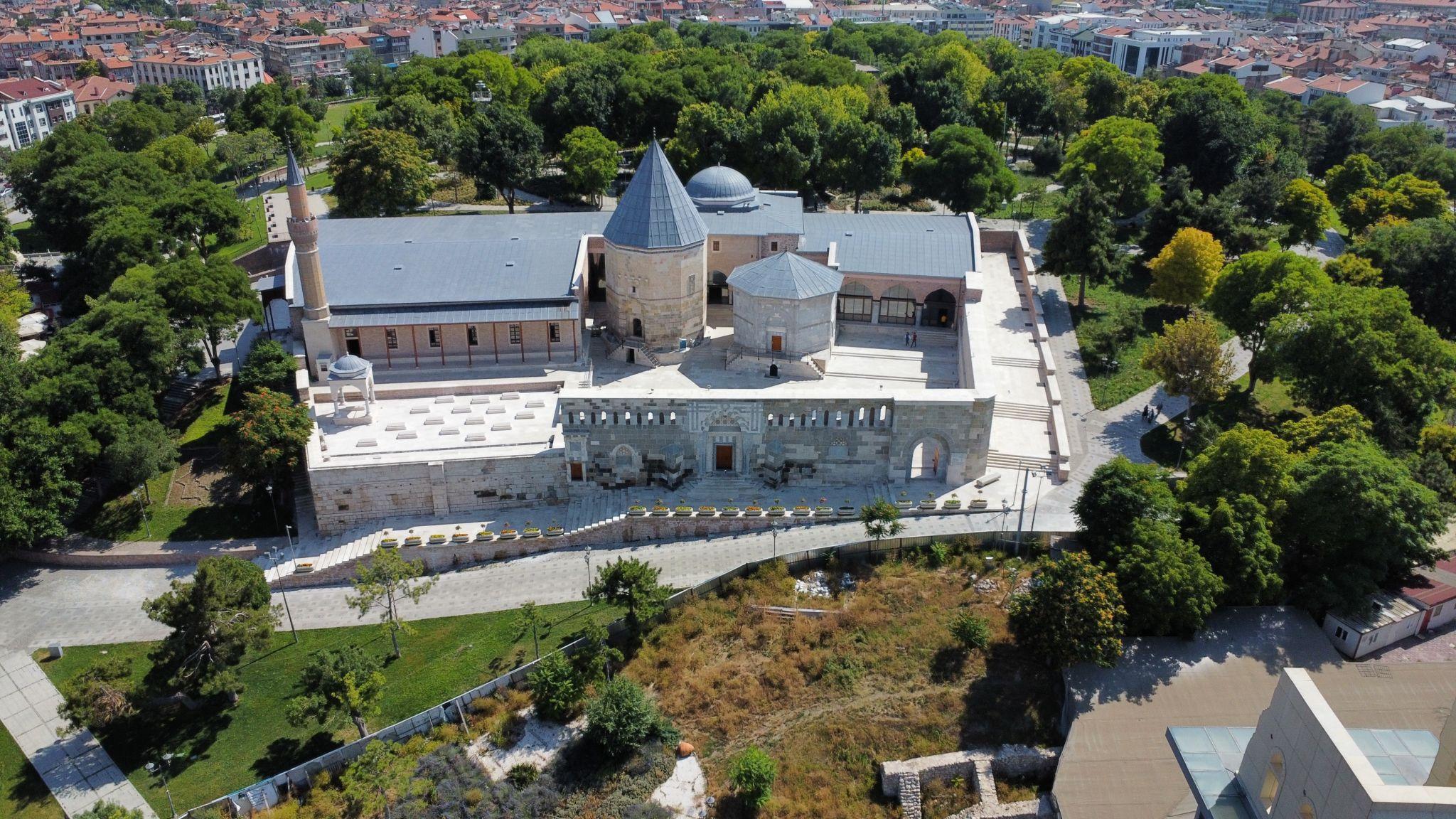
Among the most important monuments of this period is the Alaeddin Mosque, located on the hill known today as Alaeddin Hill. Its origins are linked to the Seljuk era in the late sixth century AH, while it witnessed extensions and reconstruction during the seventh century AH.
The Seljuks also made the area surrounding the mosque a royal centre: there was a sultanic palace and mausoleums for members of the Seljuk family, which gave the hill a special political and religious significance. Architectural studies indicate that some parts of the palace date back to the reign of Kılıç Arslan II, and that its remains represent an important dimension of understanding royal architecture in Konya.
Alaeddin Kayqubad: The Golden Age of Konya
Konya reached a new stage during the reign of the Sultan Alaeddin Kayqubad I, who ruled from 616 AH/1220 CE to 634 AH/1237 CE.
During his time, the city became a key centre for a broad political and architectural project aimed at strengthening the Seljuk state and consolidating its authority in Anatolia.
In this period, the city witnessed extensive works on its walls and public structures, and Kayqubad's name is associated with expanding the state's presence on trade routes, strengthening fortresses and cities, and linking central Anatolia with the southern ports.
The power of the state under his rule extended beyond Konya to strategic areas on the Mediterranean and Black Seas, which gave the capital a place within a political and commercial network stretching from Iran to Anatolia and the Mediterranean coast.
Therefore, Konya's flourishing in the seventh century AH can be understood as a direct result of its position within a strong Seljuk state, rather than as the product of architectural activity separate from political and economic life.
Madrasas and Mosques That Shaped the City
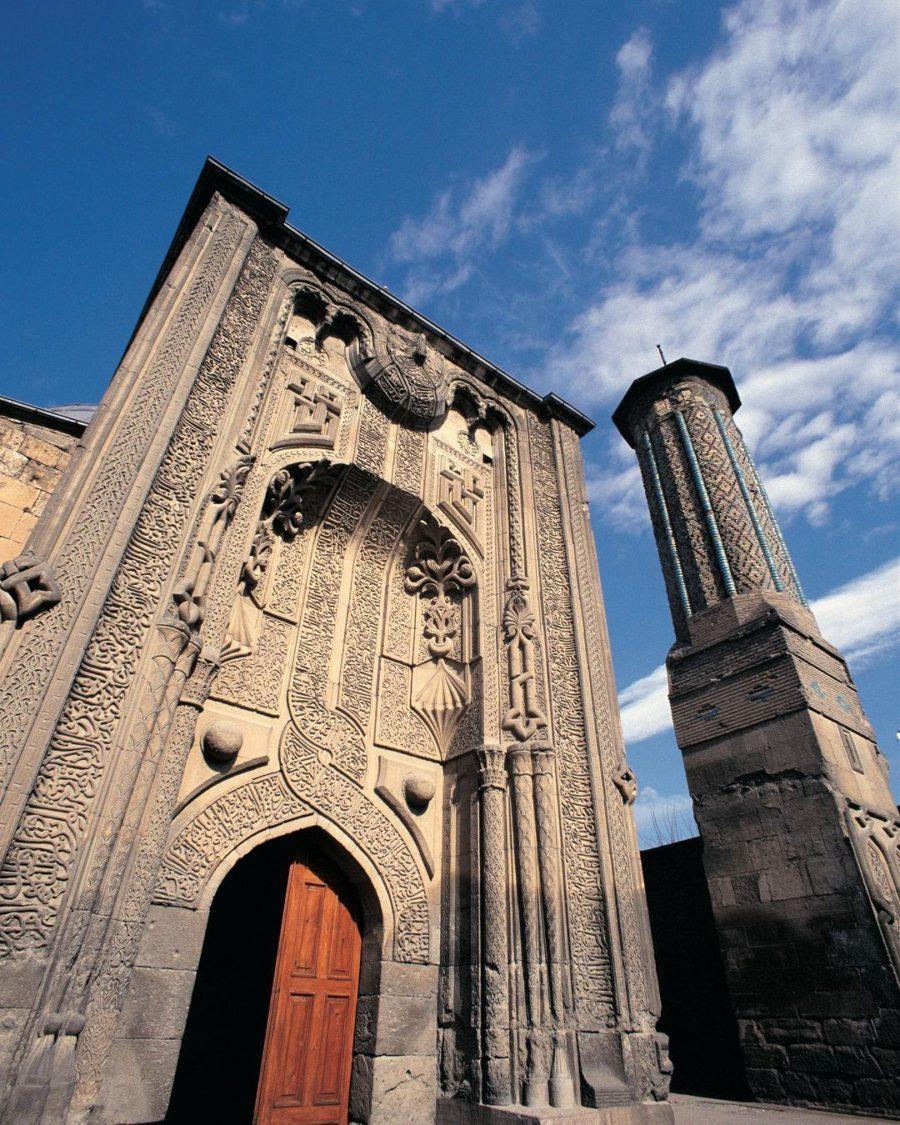
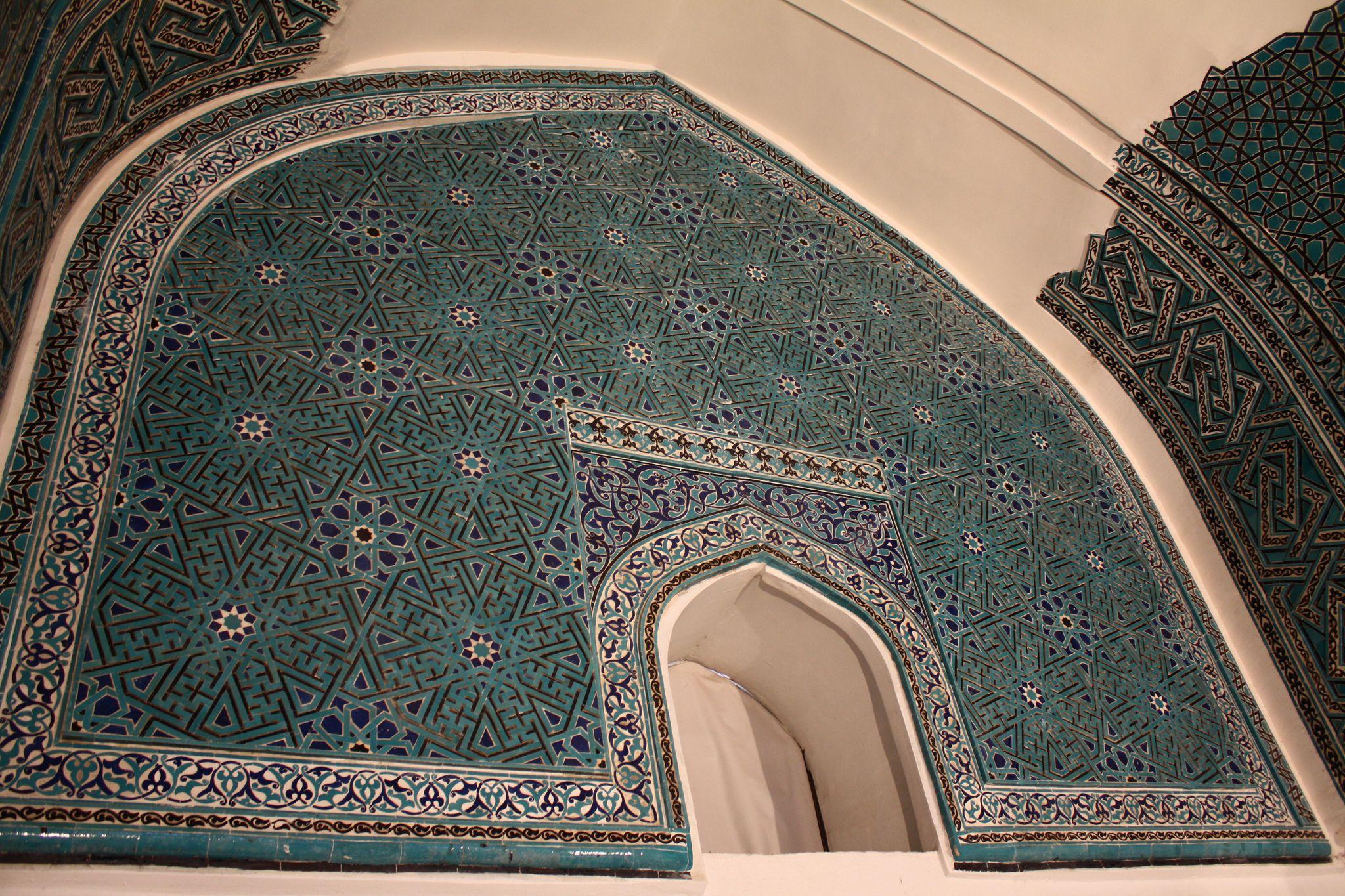
The Seljuk era left in Konya a wide network of mosques, madrasas, khans and public structures. Among the most prominent are the Alaeddin Mosque; the Karatay Madrasa, founded by Jalal al-Din Qaratay around 649 AH/1251 CE; the İnce Minareli Madrasa; and the Sahib Ata complex, associated with Fakhr al-Din Ali, one of the most prominent statesmen of the Seljuk state in the seventh century AH.
Madrasas were an essential part of the city's scholarly life. Konya was not merely a centre of power, but an environment that attracted scholars, jurists and students from many regions.
These institutions reveal the spread of organised Islamic education in Anatolia and the linking of Seljuk cities to a broader network of madrasas and scholarly institutions in the Islamic world.
Konya, Learning and Islamic Culture
The seventh century AH saw an influx of scholars and men of letters from Khurasan, Persia, Iraq and elsewhere into Anatolia, particularly after the upheavals that swept across wide areas of the East with the Mongol expansion.
Konya was among the cities that benefited from this human and intellectual movement.
Under Alaeddin Kayqubad, the city reached a stage of cultural flourishing. The Seljuk court was linked to Persian culture in administration and literature, and linguistic and literary traces combining Arabic, Persian, Turkish and the local Anatolian environment appeared in the city. Sources indicate that Arabic, Islamic and Persian inscriptions appeared even on some of the city's structures and walls in the seventh century AH.
Among the figures whose names are associated with Konya in this period is Jalal al-Din Rumi, who settled there in the seventh century AH and gained a wide cultural and intellectual presence in the city. Yet Konya's Islamic history cannot be reduced to him alone: the city had been, before and after him, a political, military, commercial and scholarly centre with many functions.
After the Battle of Köse Dağ
The Seljuk state suffered a major blow after the Battle of Köse Dağ in 641 AH/1243 CE, when the Seljuks were defeated by the Mongols.
From that time, the Seljuk state of Rum became bound to Mongol power, while its political institutions continued for a period of time.
Nevertheless, Konya did not immediately lose its importance; it remained an important urban and cultural centre in the decades that followed. Statesmen, princes and religious institutions continued to build madrasas, mosques and other structures, even as the political independence of the Seljuks declined.
Around 675 AH/1277 CE, Konya entered a new phase of conflict after the Karamanids briefly seized the city; it was then subject in turn to local and Mongol powers, before becoming part of the struggles among the Turkmen principalities in Anatolia.
From the Seljuks of Rum to the Ottomans
The rule of the Seljuks of Rum gradually came to an end at the beginning of the eighth century AH/fourteenth century CE, and Konya became an arena of competition among local powers, foremost among them the Karamanid principality.
Konya remained under Karamanid influence through several phases, until the Ottomans finally gained control of it in 873 AH/1468 CE, in the context of their expansion in central Anatolia.
Yet Konya gradually lost some of the intellectual weight it had enjoyed during the Seljuk era, while its monuments, madrasas and mosques continued to shape the city's architectural identity.
What Remains of Islamic Konya?
Today, Konya is one of the richest cities in Anatolia in Seljuk monuments. Foremost among these are the Alaeddin Mosque, the Karatay Madrasa, the İnce Minareli Madrasa and the Sahib Ata complex, in addition to the remains of royal structures and Seljuk fortifications.
These monuments reveal a historical phase in which Anatolia became politically, economically and intellectually connected to the Islamic world, and demonstrate the Seljuks' capacity to build an urban model that combined the mosque, the madrasa, the palace, the market, the khan and the trade routes.
Konya also reveals an important phase in the history of Islam beyond its traditional centres: elements of Islamic civilisation moved from Iraq, the Levant and Iran to Anatolia, and were then reproduced in a new environment, making Konya one of the cities that historically paved the way for the architectural and cultural renaissance Anatolia would witness in later eras.


