


Recent reports reveal the widespread circulation in India of what is known as "hate music," a type of song with an extremist political character that targets religious minorities, especially Muslims, through major social media platforms, despite its violation of the platforms' published content policies.
One prominent example cited in the report is a song circulating on YouTube titled "Gau Mata" (Mother Cow). It features a prominent Indian politician from the Hindu nationalist movement, while dramatic music accompanies symbolic images of Hindu nationalist imagery such as cows and saffron flags. However, the song's content goes beyond symbolism into direct language that threatens Muslims, promising pursuit, violence and killing against anyone who slaughters cows, with repeated use of insulting terms against them.
The report indicates that these patterns of content are not isolated cases but part of a broader musical phenomenon known as "H-Pop" or Hindutva music, a wave of music linked to extremist Hindu nationalist ideology that portrays India as a fundamentally Hindu state and presents Muslims and Christians as an existential threat or internal enemies.
According to the reports, these songs are not only published but spread widely through the algorithms of digital platforms, being reused in millions of short clips on Instagram and reaching hundreds of millions of views on YouTube, which makes them part of users' daily digital life.
The census documents more than 523 songs containing content that incites hatred or violence or spreads conspiracy theories against religious minorities, with a major focus on Muslims, followed by Christians. The findings also showed that a large part of these songs includes explicit threats of violence, such as calls to expel Muslims from India or to attack them.
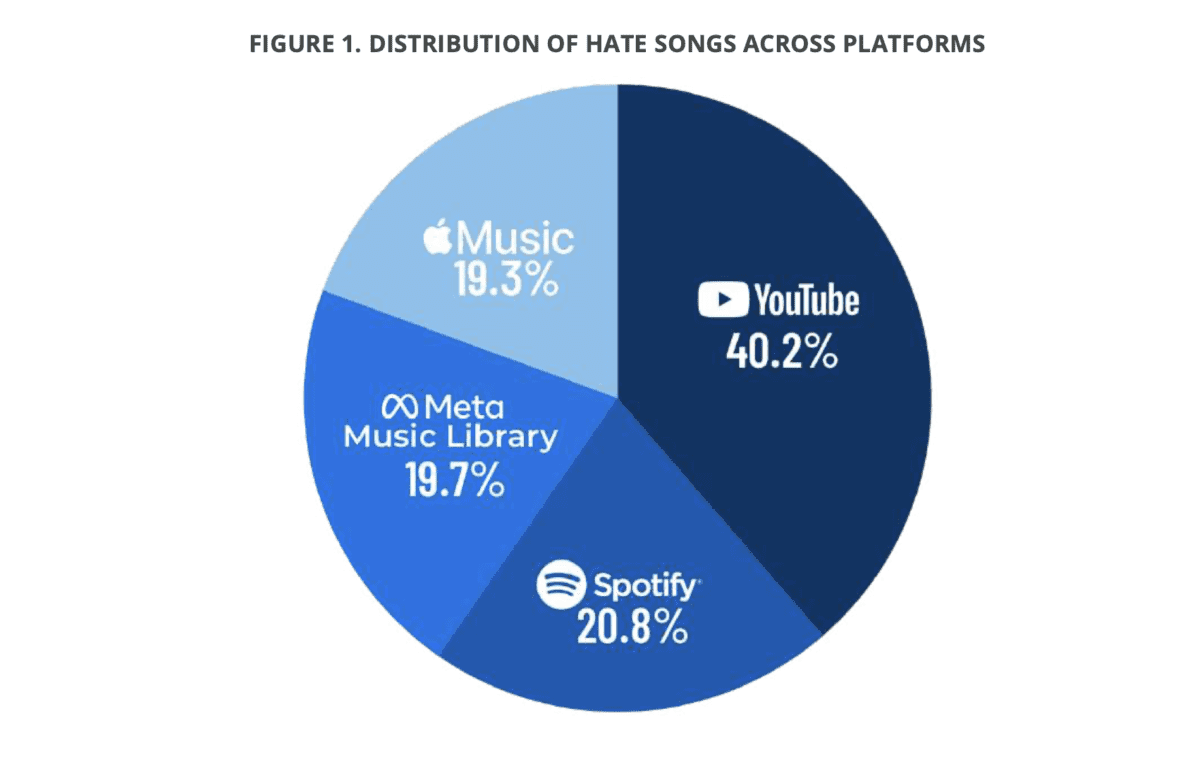
One researcher studying the case notes that a large portion of this material does not merely remain online but continues to spread and generate profits, meaning that the digital system not only ignores it but in some cases contributes to reinforcing it.
Follow-up on this case also reveals that this type of content has reached a massive audience, with views of these songs on YouTube alone exceeding 198 million, while the same clips were used in more than 5.9 million short videos on Instagram.
Among the most serious findings in this regard is that some accounts publishing this content carry official verification marks or earn direct revenue from the platforms, including financial support tools from the public, which gives them a kind of "digital legitimacy" despite the incendiary nature of their discourse.
Observers also recorded the appearance of advertisements from a number of major global companies alongside clips containing hate speech, raising questions about the mechanisms for controlling advertising and preventing the indirect funding of extremist content.
Experts view this type of "extremist political music" not as art or cultural expression, but as a tool of political mobilisation capable of spreading exclusionary discourse and incitement to violence, in a more influential way than traditional political rhetoric, because it reaches audiences in everyday contexts such as driving, work or entertainment.
Researchers warn that the danger of this content lies not only in its existence but in its integration into the platforms' intelligent recommendation systems, meaning it can reach users who were not originally targeted and shape their perceptions without their direct awareness.
The problem is no longer only the presence of hate content, but the platforms' failure to enforce their policies effectively, together with the absence of transparency about how this content spreads and is financed, which opens the door to the continued amplification of incitement discourse on a wide scale within the digital space.


