


Prime Minister Benjamin Netanyahu's address to the United Nations General Assembly on Thursday, 24 September 2026 (13 Rabi al-Thani 1448 AH), became one of the most prominent scenes of isolation and protest faced by an Israeli official within the international organisation, after dozens of delegations left the hall as he took to the podium, while the streets of New York witnessed protests that ended with the arrest of more than 100 people.
As the seats emptied before him, Netanyahu responded by attacking the withdrawing diplomats and describing them as "morally cowardly," before proceeding with an aggressive speech that targeted Iran, Turkey, Qatar, a number of Western governments, and New York Mayor Zohran Mamdani. He also used visual props that sparked controversy, including a "pager" device and a "Starlink" device, which he said he would leave for the Iranian delegation.
Mass Walkout as Netanyahu Took the Podium
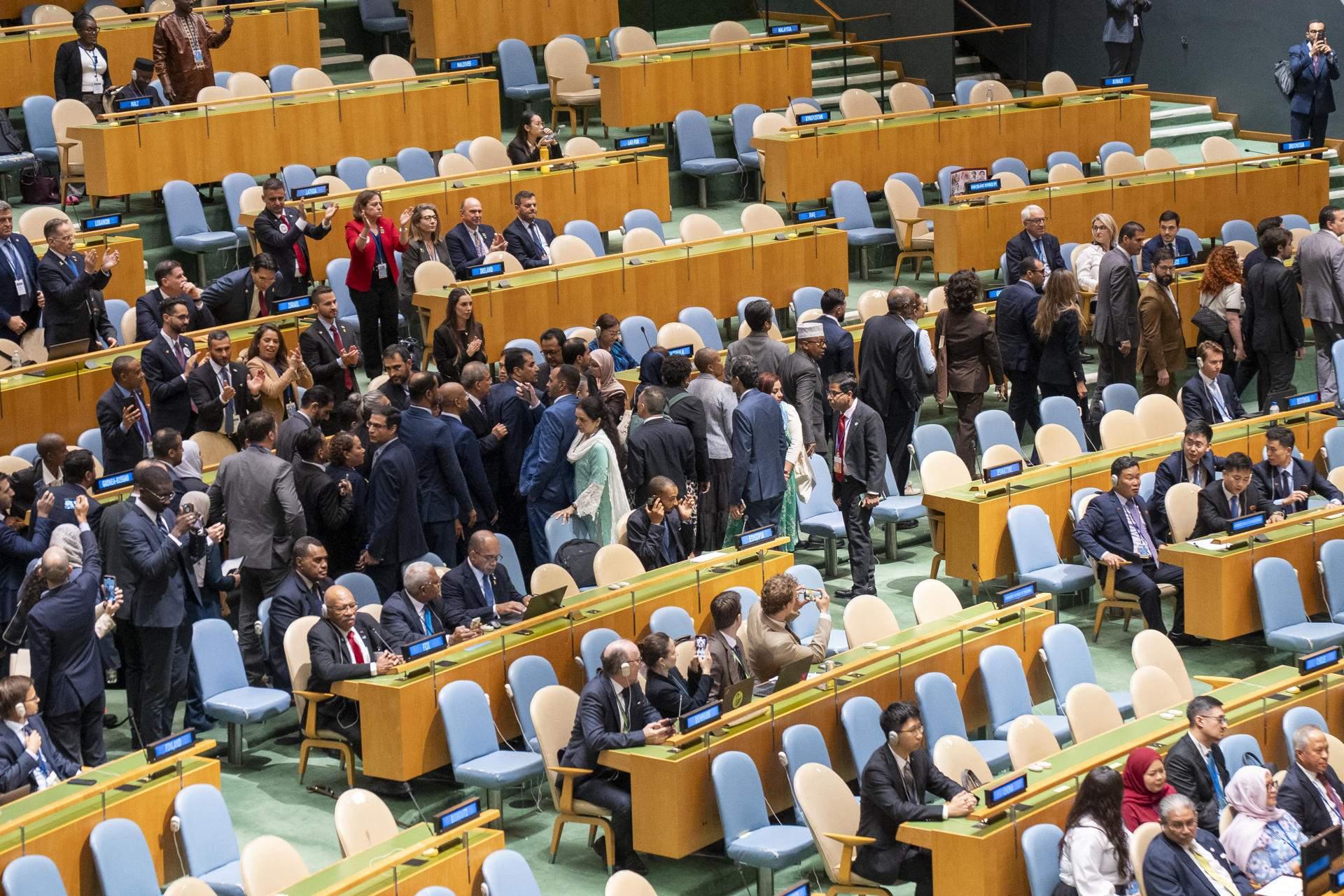
The scene began almost before Netanyahu delivered his first words.
As his name was announced and he approached the podium of the General Assembly, diplomats from dozens of countries began leaving their seats collectively, amid shouts from within the hall, while members of the Israeli delegation and supporters stood in the gallery, applauded him, and chanted "Am Yisrael Chai"; this prompted the presiding officer to repeatedly call for order.
The Palestinian Mission to the United Nations had earlier called on states to send as many of their diplomats as possible to the hall and then withdraw collectively when Netanyahu was announced, considering that the step would send a message rejecting participation in or complicity with what it described as genocide, war crimes and occupation.
Footage showed large sections of the General Assembly hall becoming almost empty after the speech began.
There is no official United Nations disclosure so far that precisely classifies each state between "withdrew in protest" and "absent to begin with." According to an review of the footage by the Anadolu Agency, delegations from around 70 countries withdrew or left their seats empty.
A subsequent Israeli review stated that the seats of 77 countries were empty during the speech, but acknowledged that this figure does not mean that all 77 states took part in the boycott; some were not present in the session at all, while other delegations deliberately withdrew when the speech began.
Which Countries Took Part in the Protest?
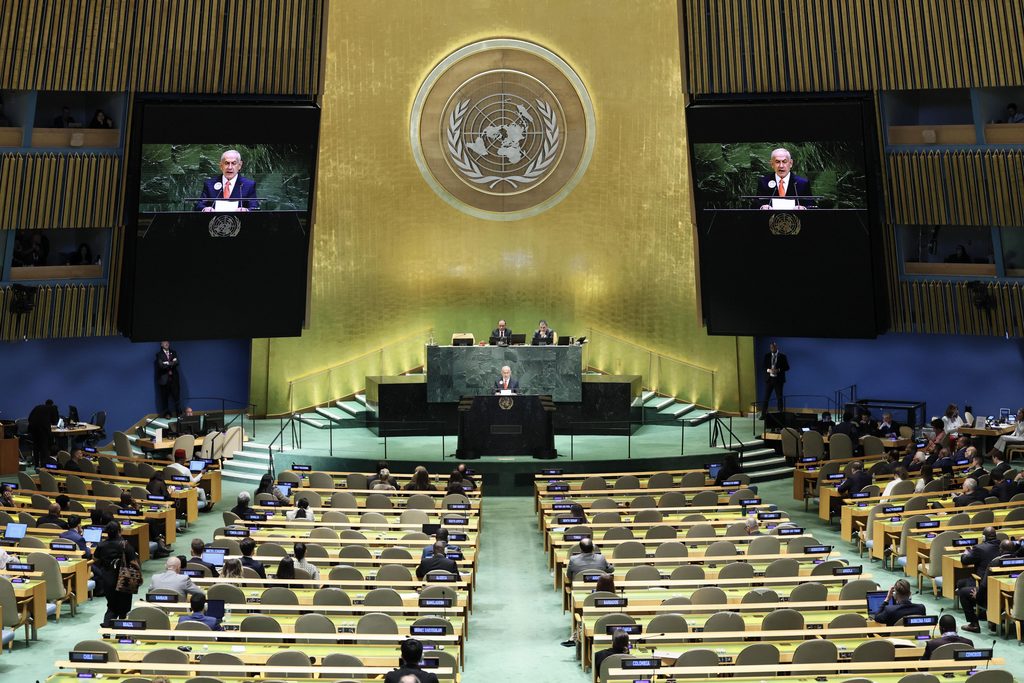
Among the most prominent states whose delegations appeared in the boycott or whose seats were empty were: Palestine, Turkey, Iran, Saudi Arabia, Qatar, Kuwait, Oman, Iraq, Yemen, Syria, Lebanon, Algeria, Tunisia, Egypt, Jordan, Libya, Sudan, Somalia, Mauritania, Malaysia, Indonesia, Bangladesh, Pakistan and Afghanistan.
The boycott extended to countries outside the Muslim world, including Spain, Brazil, South Africa, Chile, Peru, Colombia, Cuba, Ireland, Slovenia, Bolivia, Namibia, Botswana, Nicaragua and other states.
However, there is an important detail: the Israeli review stated, for example, that Egypt and Jordan were not seated in the hall at all at the start of the speech, and therefore they cannot be confidently included among the states that "stood up and withdrew" at that very moment.
In the case of Pakistan, the Israeli account said its delegation walked out in protest, but then stood at the edges of the hall to follow the speech.
By contrast, the delegations of the United States, Germany, Britain, France, Canada, Australia, Greece, Hungary, the Czech Republic and Ukraine remained in the hall, along with the European Union delegation.
The representatives of the United Arab Emirates and Bahrain, the two Arab states that established diplomatic relations with Israel under the Abraham Accords, also remained in their seats during the speech.
As for China, one representative remained in the hall.
Netanyahu to Those Who Walked Out: "Morally Cowardly"
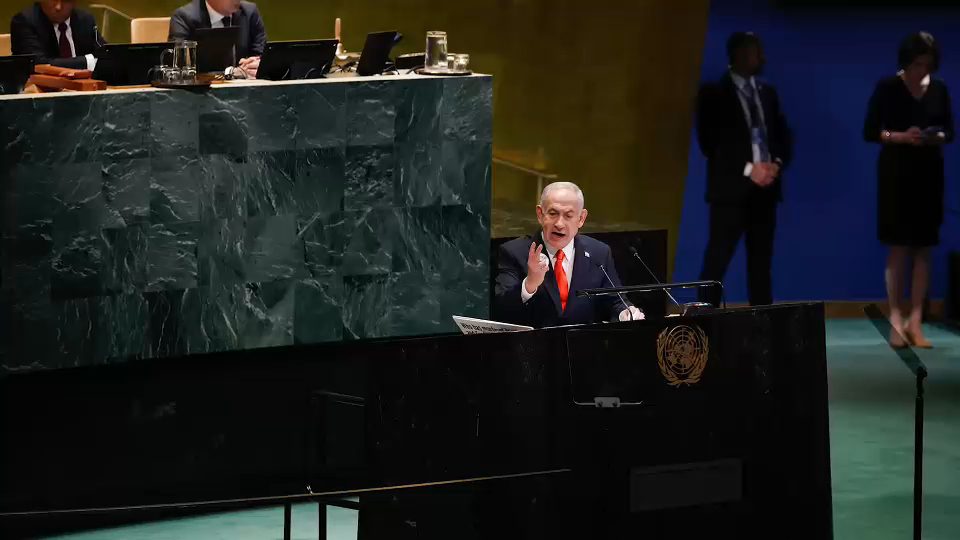
Netanyahu did not ignore the scene.
As soon as he saw the diplomats leaving, he said from the podium:
"If there are any other morally cowardly people who have not yet left the hall, please feel free to leave now."
He then accused the withdrawing states of hypocrisy, saying that Israel, during its fighting, was defending a number of the states whose representatives had walked out of the hall.
He claimed that a number of the leaders of these states "thank us secretly" for striking Iran's nuclear programme.
He said the decision to attack Iran's nuclear facilities was, for him, "one of the easiest decisions" he had taken as prime minister, claiming that not doing so would have exposed Israel to an existential threat.
Israeli Diplomat Walks Between Seats and Takes Notes
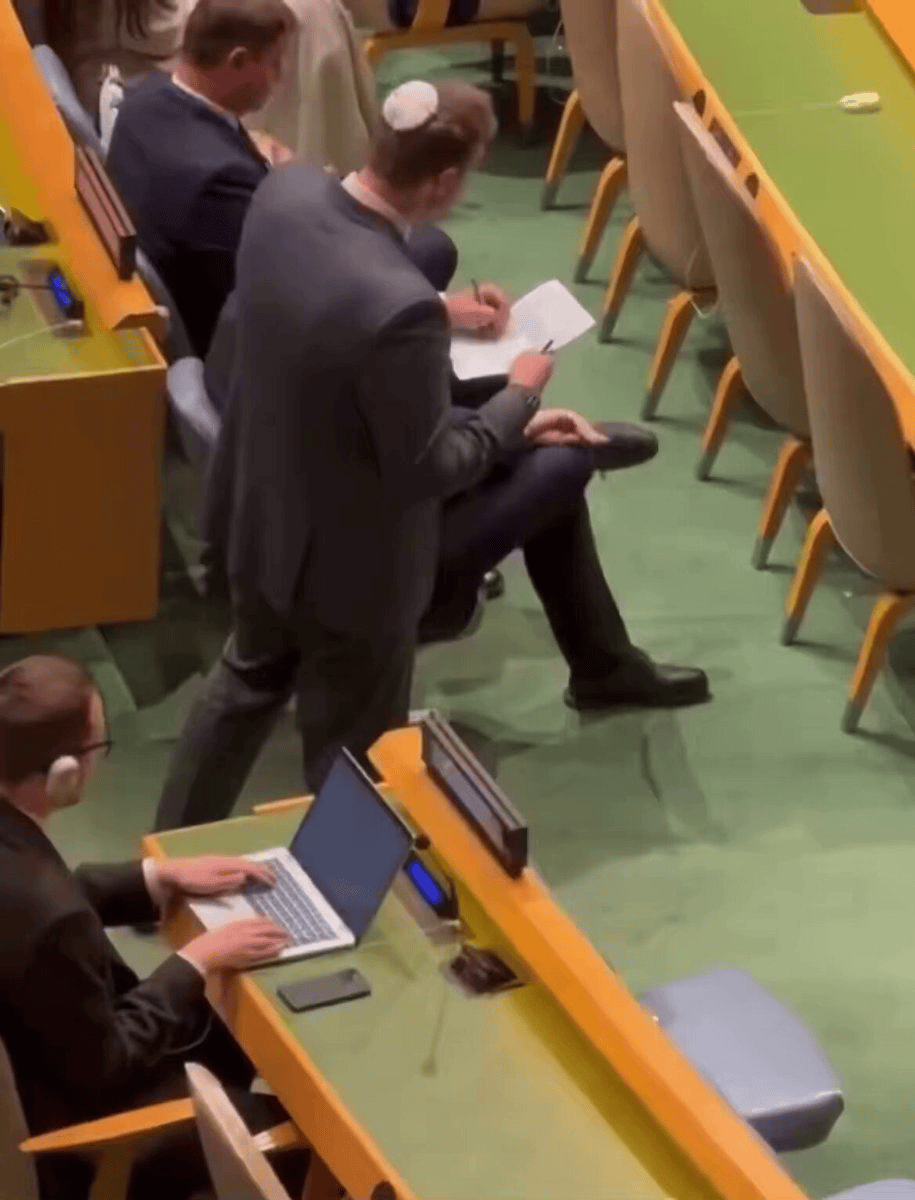
While Netanyahu was speaking, another clip from inside the hall sparked widespread controversy.
An Israeli diplomat was seen moving between rows of empty seats, looking at the places of the delegations and writing notes on papers he was carrying.
The clip spread as showing the Israeli government "recording the names of the states that withdrew."
No official Israeli clarification has been issued confirming that he was recording the names of the states that withdrew in order to punish them or take action against them.
Nevertheless, Israeli bodies did in fact carry out a count of the empty seats after the speech, and the review published by Israeli media outlets concluded that there were 77 delegations absent or withdrawn.
Iran Leaves Qassem Soleimani's Picture on Its Seat
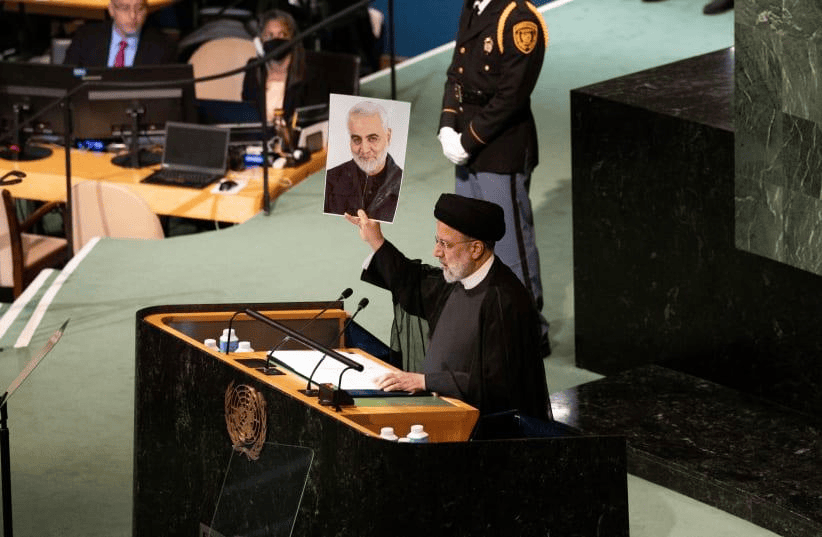
One of the most symbolic scenes in the hall was the empty seats of the Iranian delegation.
After the Iranians left, a framed picture of the former commander of the Quds Force, Qassem Soleimani, who was killed by the United States in a drone strike near Baghdad airport in 2020, remained on their table.
The picture is not merely a story circulating on social media; Reuters documented the empty Iranian delegation seats with Soleimani's picture placed on them during Netanyahu's speech.
This came as Netanyahu devoted a large part of his address to attacking the Iranian regime, predicting its fall, and saying that the day will come when Iranians become "free" and that Israel will celebrate that.
A Provocative "Gift" for the Iranian Delegation
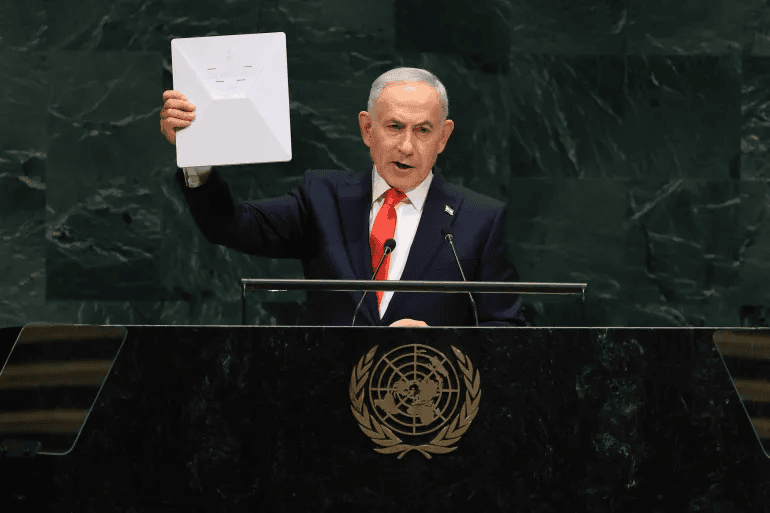
But Netanyahu did not limit himself to verbal attacks on Tehran.
At the end of his remarks on Iran, he held up before the General Assembly a satellite communications device from the company "Starlink," and said the Iranian regime fears its people owning such devices.
He then addressed the presiding officer and said he would leave the device with him so that it could be handed to the Iranian delegation.
He added sarcastically that this would allow members of the delegation, "when they defect, as they surely will," to tell their stories on social media.
The Iranians' seats were empty at that time after the delegation's withdrawal.
Netanyahu Holds Up a "Pager"
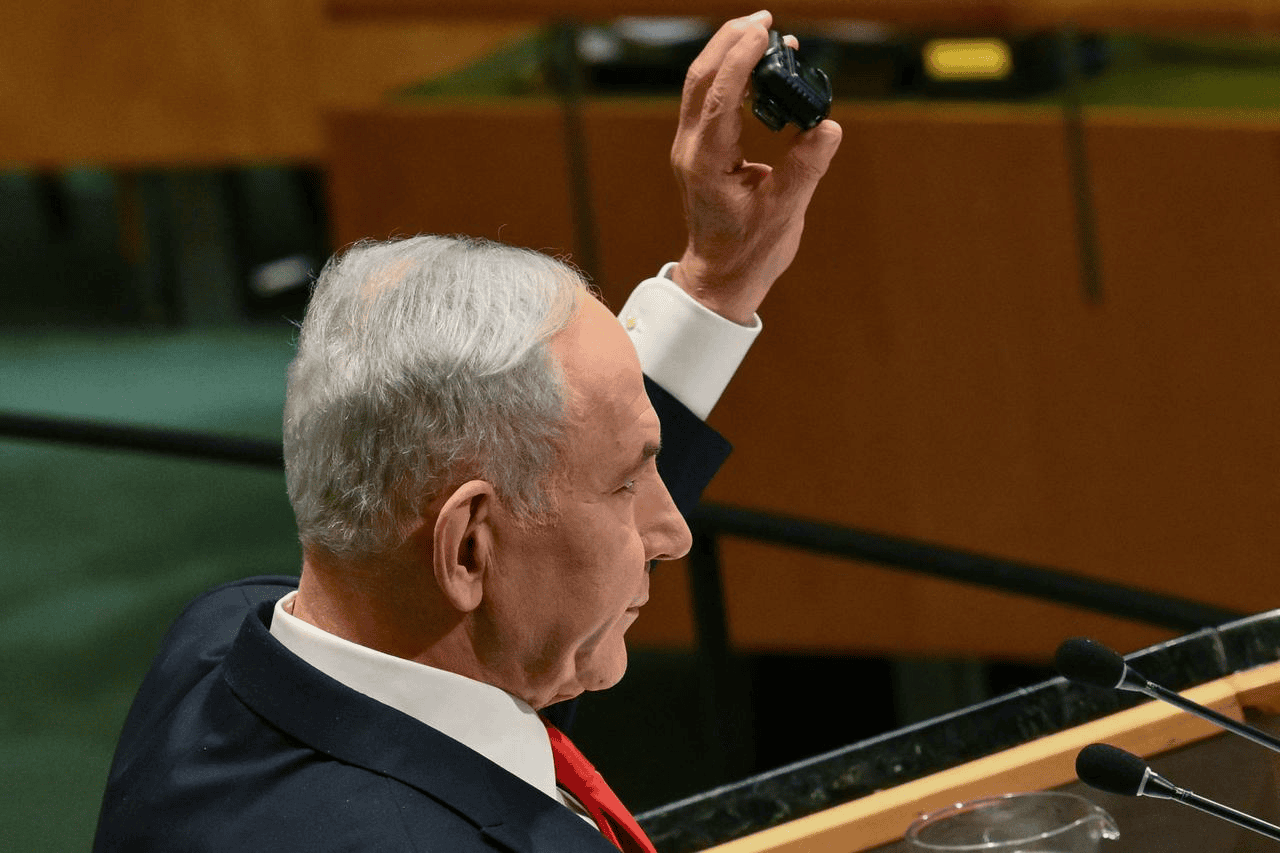
In another scene that drew reactions, Netanyahu took a pager out of his pocket and held it up before the General Assembly.
He said: "Do you remember pagers? Hezbollah certainly remembers them."
He was referring to the explosions of communication devices that took place in Lebanon in September 2024, when thousands of devices used by Hezbollah members exploded simultaneously.
That operation also killed and injured civilians; the first wave of explosions resulted in the deaths of 12 people, including two children, and the injury of more than 3,000, according to the toll reported by international reports.
Netanyahu thus used a secret Israeli military operation on the United Nations podium as a message of threat and a display of Israeli intelligence capabilities.
Attacks on Turkey and Qatar
Netanyahu's attacks extended to two prominent regional states.
He described Turkish President Recep Tayyip Erdoğan as a "tyrant," and in response to his remarks about Jerusalem said Erdoğan would not become its ruler, adding: "It is our country, our city, and our eternal capital."
He also accused Turkey of having become one of the foremost sources of what he described as "antisemitic lies."
As for Qatar, he accused it of financing American universities and media outlets, naming the Al Jazeera channel specifically and claiming that this aims to influence the minds of young people. He also attacked Doha's hosting of Hamas leaders.
Attack on Zohran Mamdani
Netanyahu's speech was not limited to foreign governments.
He singled out New York's Shia mayor, Zohran Mamdani, with a direct attack, describing him as "New York's antisemitic mayor."
He accused Mamdani of trying to prevent him from coming to New York and silencing him, before saying from the podium: "You cannot silence me, and you cannot silence the truth."
Netanyahu also rejected accusations of committing genocide in Gaza, saying: "Israel did not commit genocide, it prevented genocide."
Mamdani later responded with a statement in which he said Netanyahu had used his speech to repeat what he described as "baseless lies intended to absolve the genocide against the Palestinians," and reminded that the International Criminal Court had issued an arrest warrant against the Israeli prime minister.
Outside the United Nations: Protests and Mass Arrests
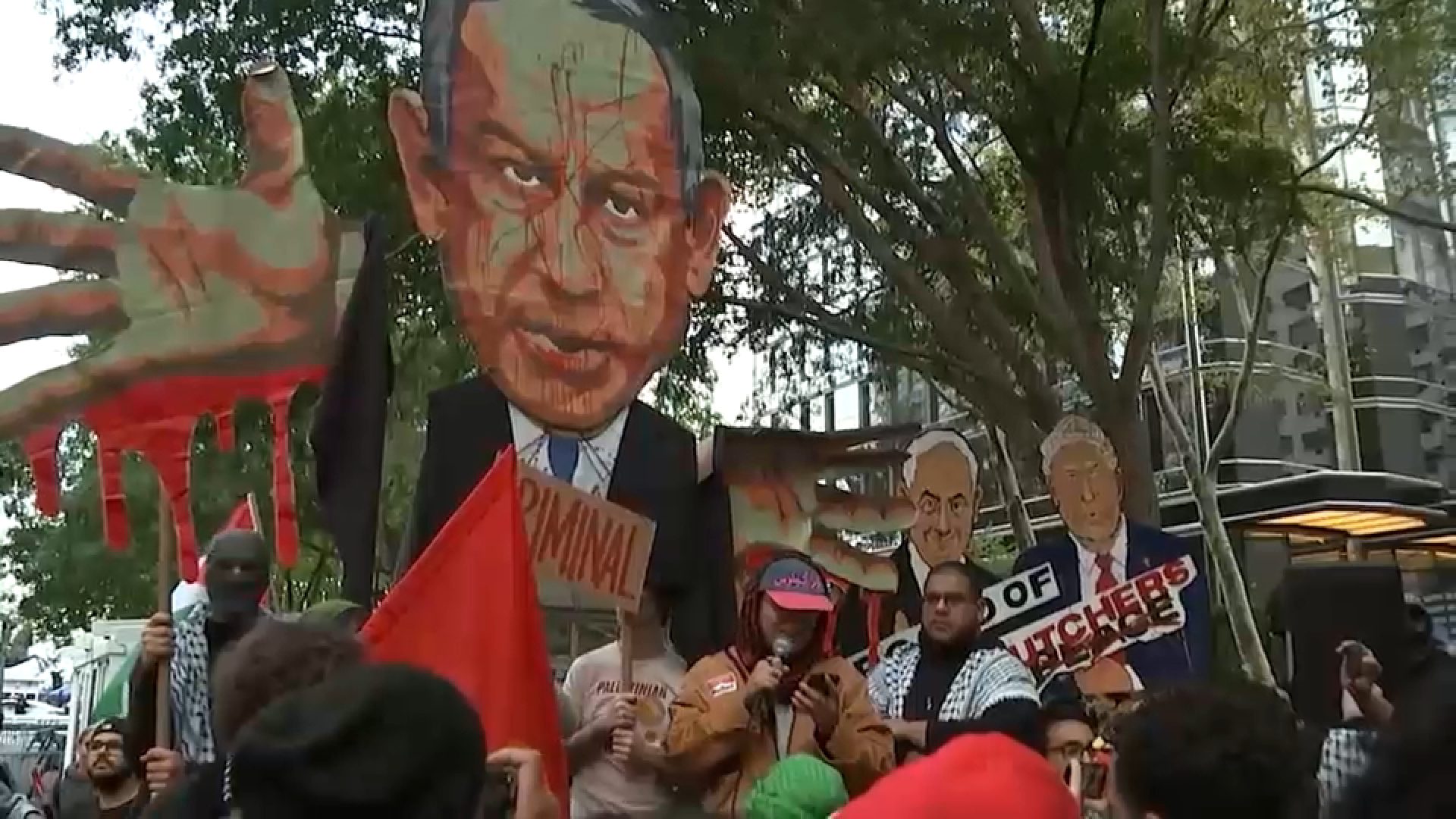
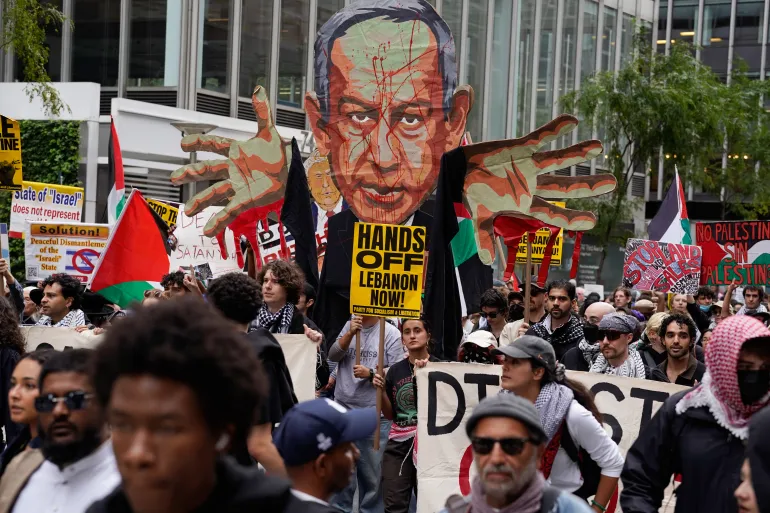
At the same time that the seats were emptying inside the United Nations headquarters, another confrontation was taking place in the streets of New York.
Hundreds of protesters gathered in rejection of Netanyahu's visit, and some of them blocked roads near UN headquarters, chanting slogans demanding an end to the bombing and killing and an end to American support and arming of Israel.
"Jewish Voice for Peace," together with the Democratic Socialists of New York, organised a sit-in in which, according to the organisers, more than 400 people took part.
The New York Police Department said its officers asked the protesters to clear the road, before arrests began after the road closures continued.
According to the official figure provided by the police, 103 people were arrested on charges of disorderly conduct, and were then released after being served with summonses to appear in court.
Among those arrested were public figures, politicians and candidates for elected office, as well as the actresses Susan Sarandon and Hannah Einbinder.
The protest organisers said that nine of the detainees were elected officials or candidates for public office.
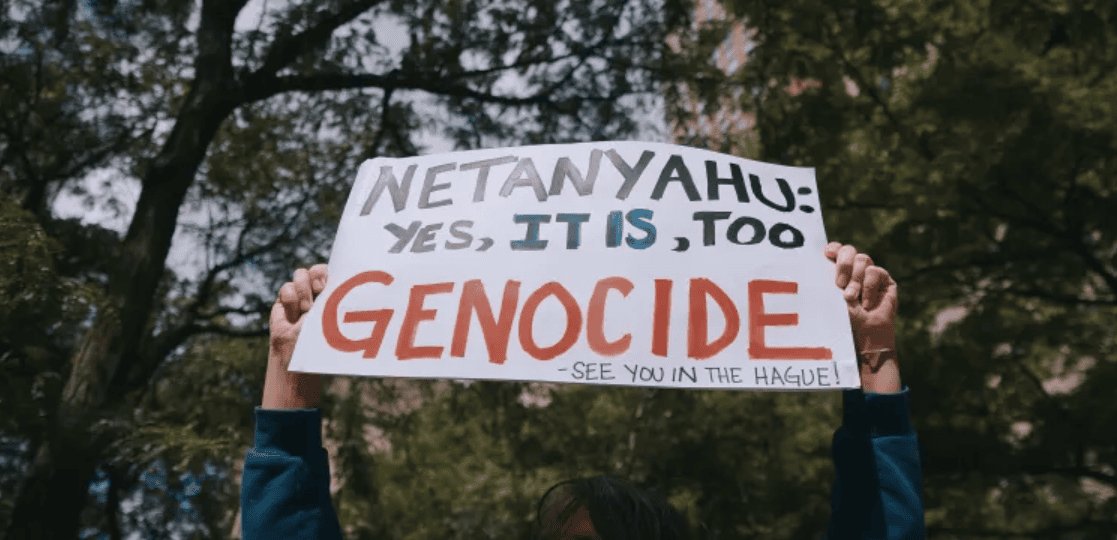
Dariahlisa Avila Chevalier, the Democratic candidate for New York's 13th congressional district, said after her arrest that Netanyahu's place should be "in The Hague, not on the streets of New York or on the podium of the United Nations General Assembly."
Applause from One Side, Empty Seats from the Other
Inside the hall itself, the scene was strikingly divided.
In the gallery, supporters of Netanyahu stood, applauded him, and chanted slogans in support of the state of "Israel," while dozens of diplomats were leaving from below.
The presiding officer repeatedly had to call on those present to maintain order.
Netanyahu continued his speech despite the walkout, attacking states that criticised his country, and accusing Western governments of capitulating to what he described as "antisemitic mobs," while praising U.S. President Donald Trump as the most important partner of the state of "Israel."
77 Empty Seats, but Not 77 Withdrawing States
After the speech ended, debate began over the scale of the boycott.
An Israeli review showed that 77 delegations had empty seats during Netanyahu's address, a large figure given that the United Nations has 193 member states.
But it is journalistically mistaken to say that "77 countries withdrew."
The Israeli figure combines those who withdrew in protest when Netanyahu took the podium, those who were not present at the session at all, and those who left only one representative or followed the speech from elsewhere.
The independent review of the footage carried out by the Anadolu Agency, however, spoke of delegations from around 70 countries that withdrew or left their seats empty.
Regardless of the disagreement over the exact number of those who walked out, the images were clear: large sections of the hall from which the Israeli prime minister was to address the world had become empty.
Thus the story of Netanyahu's speech is no longer limited to the words he delivered.
Inside the United Nations, dozens of delegations walked out, the Iranians left Qassem Soleimani's picture on their seats, and Netanyahu responded by describing those who walked out as "morally cowardly," displaying a "pager" and leaving a "Starlink" device for the Iranian delegation.
Outside, more than a hundred protesters were arrested in the streets of New York in protest against his presence.
Between the two scenes, Netanyahu's speech to the General Assembly this year appeared as a clear reflection of the widening political and diplomatic confrontation surrounding the occupation state over the Gaza war, even on the most prominent international platform.


