


In Hajar district of Hadramawt governorate in eastern Yemen, the date harvest is not merely an annual agricultural activity. For thousands of families, it is a primary source of income and food in an area suffering from weak services, deteriorating infrastructure and the repercussions of more than a decade of war.
At dawn, farmers head out with their family members to the open rocky spaces that, during the harvest season, turn into yards for drying, cleaning and sorting dates, before they are offered to traders and buyers coming from various areas of Hadramawt.
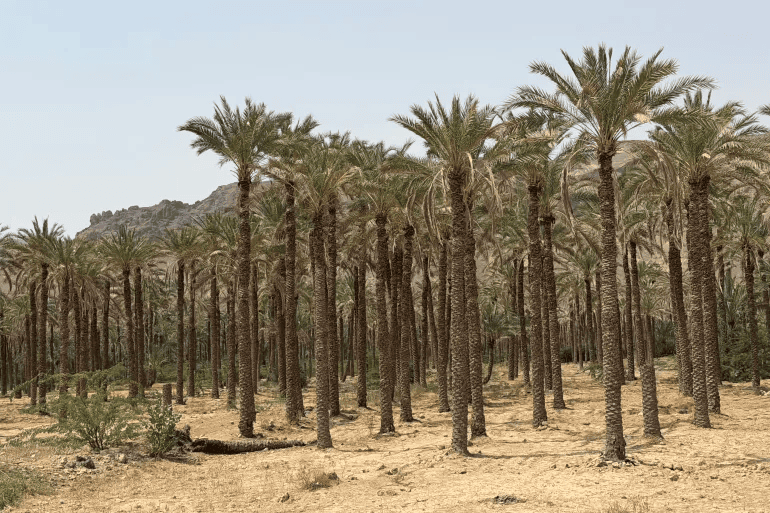
Hajar district is known for the palm groves stretching along its valley, and local officials estimate that there are no fewer than two million palm trees there, placing dates at the heart of the area's economic activity.
A season that determines the fate of entire families
For many farmers, the household budget for the whole year depends on the success of a single season.
Some buy their families' basic needs on credit from local shops, on condition that they settle their debts after selling the date crop. Others postpone major expenses, such as weddings, building homes or buying essential items, until the harvest season ends.
One farmer said he owes a local shop around one million Yemeni rials, and that his inability to sell his crop means he cannot repay the debt.
The role of dates is not limited to providing money. For the poorest families, they become a food safety net. Farmers say some families rely on dates and coffee when they cannot afford other foods such as fish or rice.
Deteriorated roads and absent electricity
Despite the sector's importance, farmers in Hajar work in extremely difficult conditions.
The main road linking the district to the rest of Hadramawt has deteriorated after years of poor maintenance, while many internal roads remain unpaved dirt tracks.
The area also suffers from the absence of electricity and weak telecommunications services, in addition to problems related to water and sanitation, which contributed to the spread of diseases such as cholera in previous periods.
Farmers say poverty prevents many of them from even transporting their products to the major markets, as some lack the money needed to pay transport fares, so they sometimes compensate drivers with crates of dates instead of cash.
Floods threaten palm groves
Palm cultivation also faces growing environmental challenges.
Floods that struck months ago destroyed a small dam that was used to divert water from one of the rivers toward agricultural land, reducing the amount of water reaching the palm groves.
The effects are now visible across the area, where palm trees appear dry or nearly bare after water supplies declined.
Farmers place rebuilding the dam at the top of their demands, stressing that the continuation of the current situation is pushing more of them to abandon farming and seek other jobs, join the security and military forces, or emigrate from the area.
A traditional industry awaiting development
Date production in Hajar still relies largely on traditional methods.
After harvesting, the fruit is transported to open yards to dry in the sun, and families then clean and sort it by hand before packing and selling it.
For this reason, farmers are calling on the government and investors to establish a specialised factory to process and pack dates, arguing that such a facility could reduce effort and time, raise product quality and open larger markets for them.
With economic alternatives limited, the palm tree remains for Hajar's residents more than just a crop. It is a source of livelihood, a food reserve, a means of repaying debts, and one of the last sectors still giving thousands of families the chance to endure poverty and the consequences of war.


