


The Roj camp in northeast Syria witnessed a night of fear and panic after Kurdish-led security forces opened fire inside the camp, following days of protests by detained women who demanded improvements to their conditions and an end to what they described as mistreatment, in addition to being allowed to return to their countries.
According to testimonies from women inside the camp, relayed by Middle East Eye, bullets pierced tents sheltering children during the confrontation that took place on Friday evening, while no deaths or injuries caused by the gunfire have been recorded, according to the available information. The women, however, described what happened as a night of chaos and terror that left deep psychological effects on them and their children.
Roj camp holds about 2,300 people, most of them foreign women and children, some of whom the authorities link to relatives of suspected members of the Islamic State group. The camp is located in Hasakah Governorate near the Iraqi border. It is administered by the Autonomous Administration of North and East Syria, while the Syrian Democratic Forces, which are led by Kurds, are responsible for guarding it.
Protests that began after night raids
According to testimonies from women who spoke to the outlet, the protests began days before the shooting incident, after a Russian woman was beaten during a night raid for refusing to hand over her money and personal phone.
A Bosnian woman detained in the camp, whom the report identified by a pseudonym for security reasons, said the assault was a turning point for the women, especially after months of accusations of night raids, beatings of women and confiscation of personal belongings.
She added that the women came out in larger numbers for the first time to find out what was happening, and since then, according to her account, they have refused to allow security forces to enter the camp in the same manner.
She said she arrived in Syria in 2015 at the request of her husband, who was later killed, and remained stranded in areas that were under Islamic State control, before she was able to leave in 2017. She was then detained by Kurdish forces and transferred to Roj camp, where she has remained with her two children.
She stressed that her main demand is to return to her country, saying she does not want to remain in Syria.
Bullets pierce tents and come close to children
According to the testimony of Huda Muthanna, one of the women detained in the camp, the confrontation began around 6 p.m., when members of the Syrian Democratic Forces entered the camp in armoured vehicles and set up what she described as a "human shield" on the main road.
She said the women gathered to find out why the forces were present, before they were asked to return to their tents. As tensions rose, rounds were fired into the air before a bullet struck one of the tents.
Muthanna added that the bullets pierced a tent next to an Indonesian family, then passed near the place where her child was sheltering.
She said her child had been in that place for about half an hour before the shooting, and that the cloth tents do not provide a safe place to hide.
According to her account, one of the bullets almost hit her child, which left her unable to move from fear.
She said the confrontation lasted about four hours, adding that a number of women close to the guards were beaten during the confrontation.
Children living under fear
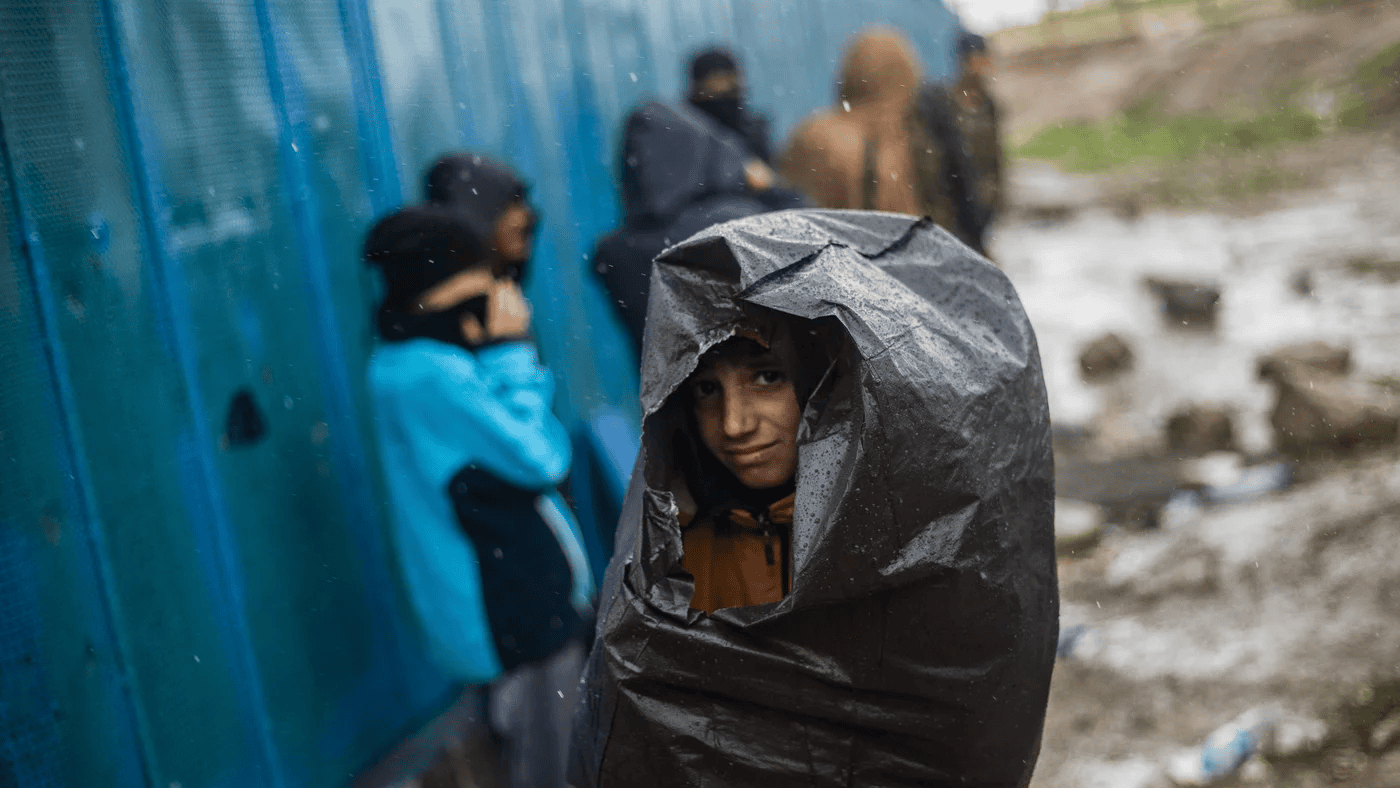
The repercussions of the incident were not limited to the women, but were directly reflected on the children, who already live in an environment of detention and instability.
Another woman inside the camp, who asked not to be identified for security reasons, said that many of the women who confronted the guards were sick or suffering from previous injuries, and some had not received medical care for years. She confirmed that they were unarmed and that their gathering was, according to her account, aimed at protecting their children and speaking with the soldiers.
She added that her two young children believed they were about to be shot after the gunfire broke out inside the camp, noting that the bullets had earlier passed through a neighbouring tent.
She said her seven-year-old daughter ran and hid under a plastic chair while the children screamed, and considered that years of detention had left the families in a state of severe psychological and physical exhaustion.
The woman called for urgent action to end the suffering of the families, affirming that the children living in the camp have rights, and that their continued exposure to danger over years calls for a solution before it is too late.
Accusations of escalating abuses
The shooting incident comes amid growing criticism of the conditions of detainees in Roj camp.
Middle East Eye had reported in June that abuses inside the camp had risen "significantly in frequency and severity" since January, citing a report by the Swedish organisation Repatriate the Children, which was based on testimonies from more than 40 women detained in the camp between January and May.
In February, Human Rights Watch also reported the testimony of a woman from Trinidad who spoke of a similar incident that took place on 31 January, in which she said security forces arrived at her tent firing into the air, before ordering the women out into extremely cold weather.
Detained women demand return to their countries
One of the most prominent demands of the women in Roj camp is to be returned to their countries, amid their continued detention with their children for years.
Huda Muthanna says most of the women hope that the Syrian government will take responsibility for the camp, considering that this could open the way to ending their detention and returning to their families and countries.
These demands come at a sensitive political stage in Syria, as authorities in Damascus seek to expand their influence in the eastern and northeastern regions of the country.
Some women inside the camp believe that the broader political tensions between the Kurdish forces, the coalition and the new Syrian authorities have been reflected in their conditions, while some detainees accuse security forces of attempting to provoke them and to show their reactions to international bodies in a negative light. These are accusations the report attributed to the detainees, and the article did not include a response from the Syrian Democratic Forces to them.
Middle East Eye said it contacted the Syrian Democratic Forces for comment on the allegations relating to the gunfire and abuses inside the camp, but that it had not received a response by the time of publication.
Roj camp: a deferred humanitarian file
Following the collapse of the larger al-Hol camp in January, Roj camp has become the last major detention camp in Syria holding foreign women and children, most of them relatives of people suspected of links to the Islamic State group.
The shooting incident once again highlights the dilemma facing these children and women: long-term detention under difficult security and humanitarian conditions, in the absence of a comprehensive international solution that determines their future.
While the women affirm that they want to return to their countries, the repatriation of citizens from camps in northeast Syria remains a complex issue for the states they come from, especially in cases linked to accusations concerning the Islamic State group.
But what happened in Roj raises a fundamental question that goes beyond political and security disputes: how long can children remain in a detention environment in which their tents are fired upon, while their families and their states await a solution for their fate?
Even in the absence of any declared dead or wounded in Friday's incident, the arrival of bullets at children's tents, the fear experienced by the families, and the repeated accusations of mistreatment are all indicators of a humanitarian crisis that cannot be reduced to a security matter alone.


