

Traditional wars are no longer the only tool international powers use to extend their influence in Africa and reshape its balance of power. Strategic competition now extends into areas where it is hard to separate cooperation from coercion, economic relations from political dependency, and security partnerships from interference in the internal affairs of states.
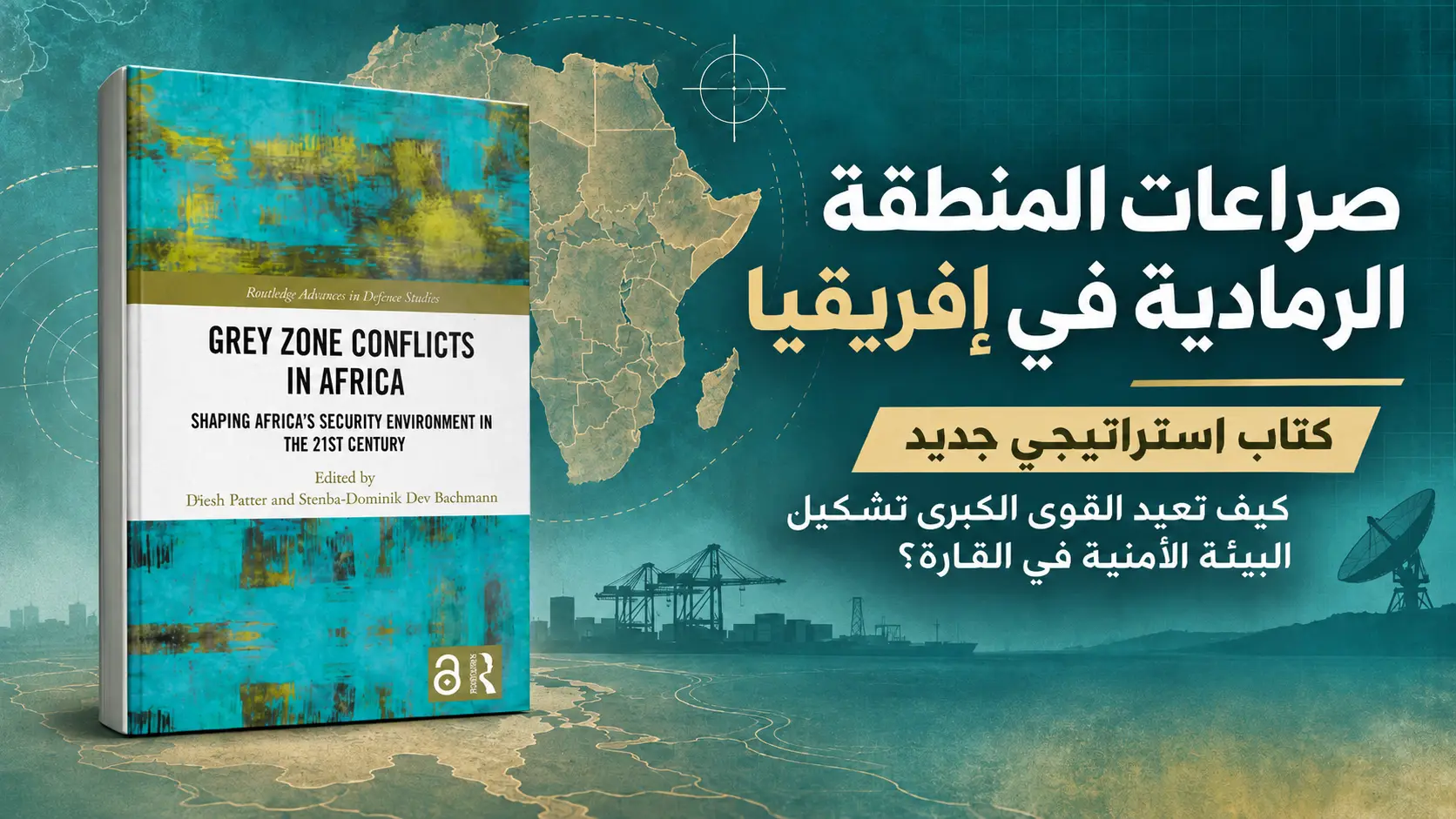
In this context, a book titled «Grey-Zone Conflicts in Africa: Shaping Africa's Security Environment in the 21st Century» was published in November 2026 by the British publisher Routledge, edited by researchers Dries Putter and Sascha Dominik Dov Bachmann, as part of its defence studies series.
The book contains 15 chapters divided into six main sections, addressing the historical, strategic, economic and informational dimensions of unconventional conflicts on the continent, and the roles of international and regional powers and non-state actors in shaping its security environment.
The Grey Zone: Conflict Without a Declaration of War
In strategic studies, the concept of the "grey zone" refers to the space of conflict between peace and open war, where competing parties seek political, economic or security objectives without necessarily engaging in direct military confrontation.
The danger of these conflicts lies in the difficulty of identifying the moment when legitimate competition between states turns into coercive practice that targets another state's will and independence of decision-making.
The instruments of influence may be economic agreements, foreign aid or security arrangements. However, the way they are used, their objectives and the circumstances surrounding them determine whether they are part of ordinary international relations or part of a strategy of pressure and coercion.
This concept makes it possible to understand conflicts as ongoing processes, whose effects may accumulate over years before their results appear in political alliances, sovereign decisions or balances of power.
The Historical Roots of Conflict in Africa
The book does not treat grey-zone conflicts as an entirely new phenomenon. Instead, it links them to African historical experiences, foremost among them occupation and national liberation movements.
One of its chapters is devoted to studying the experience of the African National Congress in confronting the apartheid regime in South Africa, as a historical case of the overlap between forms of political and social resistance and unconventional conflict.
This approach shows that grey-zone instruments are not the monopoly of major powers, nor are they necessarily tied to expansionist goals. Liberation movements and local actors may also resort to them in confronting regimes that are more powerful and better able to use coercive tools.
Hence the importance of studying the political and ethical context of each case, rather than classifying the methods used in isolation from their objectives.
The African Sahel and the Reshaping of Alliances
In the third chapter, the researcher Adi Walley Obaiemi examines the experience of the Alliance of Sahel States, which includes Mali, Niger and Burkina Faso, within the framework of the strategic shifts taking place in West Africa.
This case represents a model for studying the relationship between the choices of local governments and external competition for influence, and the security and political challenges that accompany the reshaping of regional alliances.
The Sahel case raises an important question: does moving from reliance on one external power to partnership with another strengthen strategic independence, or does it reproduce dependency relationships within new arrangements?
This question cannot be answered simply by looking at the identity of the external partner, but by studying the nature of the agreements concluded, the extent to which they are subject to oversight, and their actual effects on the security of the population and the independence of national decision-making.
China: The Economy as a Tool of Strategic Influence
The book devotes two chapters to studying the Chinese presence in Africa. The first addresses the strategic culture of the People's Republic of China and its implications for its activities on the continent, while the second examines the potential role of foreign direct investment and foreign aid in consolidating Beijing's influence.
The importance of this approach stems from the fact that international influence is measured not only by the number of military bases or troops deployed abroad, but also by the scale of economic interests and the ability to shape decisions related to infrastructure, financing and development.
Major economic projects may offer African states real opportunities for development, but they also raise questions about financing conditions, the distribution of benefits, and the ability to preserve independent decision-making when the interests of the parties conflict.
It is necessary here to distinguish between economic cooperation that serves shared interests and the exploitation of imbalances in economic power to extract political or strategic concessions.
Russia: From Military Companies to Grain and Fertilisers
The Russian presence in Africa receives prominent attention in the book, through three chapters addressing Moscow's strategy in the grey zone, its economic instruments of influence, and the role of the Wagner Group in the Central African Republic.
Among the notable topics is a study by researchers Tomasz Pietrzyk and Andrey Dietrich, examining grain and fertilisers as a potential source of Russian geopolitical influence in Africa.
This study opens the way to viewing food security as part of the equation of international power, as the importance of basic commodities exceeds their commercial value when countries that suffer economic fragility or supply disruptions depend on them.
The book also addresses the complexities of the security landscape in the Central African Republic, through a study that combines the role of Wagner, rebel groups, and the intertwining of local and external interests.
This case highlights the problem of resorting to private military companies in environments where security institutions are weak, and the questions this raises regarding legal accountability, national sovereignty and the protection of civilians.
The West, Sanctions and the Reshaping of Internal Relations
The book does not limit itself to studying Russian and Chinese strategies, but also addresses Western policies and the impact of external interventions on the relationship between the state and society.
One of its chapters is devoted to the case of Zimbabwe and its relations with the Western bloc, while another chapter discusses sanctions based on cyber tools in Africa.
These themes raise the problem of the boundary between using sanctions as a means of political pressure and their potential effects on local societies and economies.
While states imposing sanctions offer justifications related to security, international law or human rights, studying the actual outcomes of these measures remains necessary for understanding their impact on the targeted governments and on the lives of the population.
Cognitive Warfare: When Awareness Becomes a Battlefield
In its fifth section, the book turns to one of the most complex dimensions of contemporary conflict: cognitive warfare, which goes beyond influencing the information in circulation to attempting to shape how societies perceive events and interpret reality.
This section examines media disinformation and international law in cyberspace, the role of non-governmental organisations in the context of hybrid wars, as well as the exploitation of narratives linked to the past of European colonial occupation in Africa.
This issue is of particular importance because the historical memory of African peoples is not merely a record of the past, but an influential element in shaping their present political positions.
Historical grievances may become a subject of competition among external powers, which seek to build narratives that strengthen their political legitimacy or undermine the influence of their rivals.
This does not mean questioning the reality of the crimes of occupation or the legitimacy of demanding justice, but rather the necessity of distinguishing between independent historical awareness and the exploitation of collective memory to serve contemporary political interests.
What the Book Offers for Understanding the Conflict in Sudan and the Horn of Africa
Although the book does not devote a separate chapter to Sudan or Somalia, the strategic framework it presents makes it possible to raise important questions about the crises both countries are experiencing.
In Sudan, the concept of the grey zone can be used to study the relationship between external interventions and the internal armed conflict, sources of financing, networks of economic interests, competition over resources, and the extent to which all of this affects prospects for ending the war and restoring stability.
In the Horn of Africa, competition over ports, maritime corridors and security agreements raises questions about the relationship between commercial interests and the military and strategic objectives of external powers.
Here the importance of distinguishing becomes clear between agreements that serve the interests of African states and preserve their sovereignty, and arrangements that may make them vulnerable to external pressure or drawn into conflicts that do not serve the interests of their peoples.
These are analytical applications derived from the book's general framework, and are not findings from studies specifically devoted to these two countries within its chapters.
Africa Is Not Merely an Arena for International Conflict
It is important that the study of international competition in Africa does not reduce the continent to an arena in which major powers contend, while overlooking the role of African governments, political movements and societies in shaping events and determining their course.
Local forces are not always mere tools in the hands of external parties. They have their own interests, and may exploit international competition to enhance their capacity for manoeuvre or to achieve their political and economic objectives.
However, benefiting from a diversity of external partners remains tied to the strength of national institutions, the transparency of agreements, the ability to subject strategic decisions to accountability, and the extent to which the interests of the peoples are present in shaping those decisions.
Conclusion
The book «Grey-Zone Conflicts in Africa» offers an important framework for understanding the shifts in the nature of international conflict within the continent, beyond confining it to direct military confrontations.
Its importance lies in combining the historical, security, economic and cognitive dimensions of strategic competition, and in providing tools for understanding forms of influence that do not necessarily appear as military occupation or a declaration of war.
Yet the most pressing question for African peoples is not only: which international power is the most influential? It is also: to what extent can African states preserve their independence of decision-making, harness their external relations to serve their peoples' interests, and prevent their resources and strategic locations from becoming instruments in other people's conflicts?
Competing powers may change, alliances may shift, and tools of intervention may evolve, but the true measure of the success of any external partnership remains its capacity to strengthen national sovereignty, achieve security and development, and safeguard the interests of the population, rather than merely replacing one external influence with another.


