

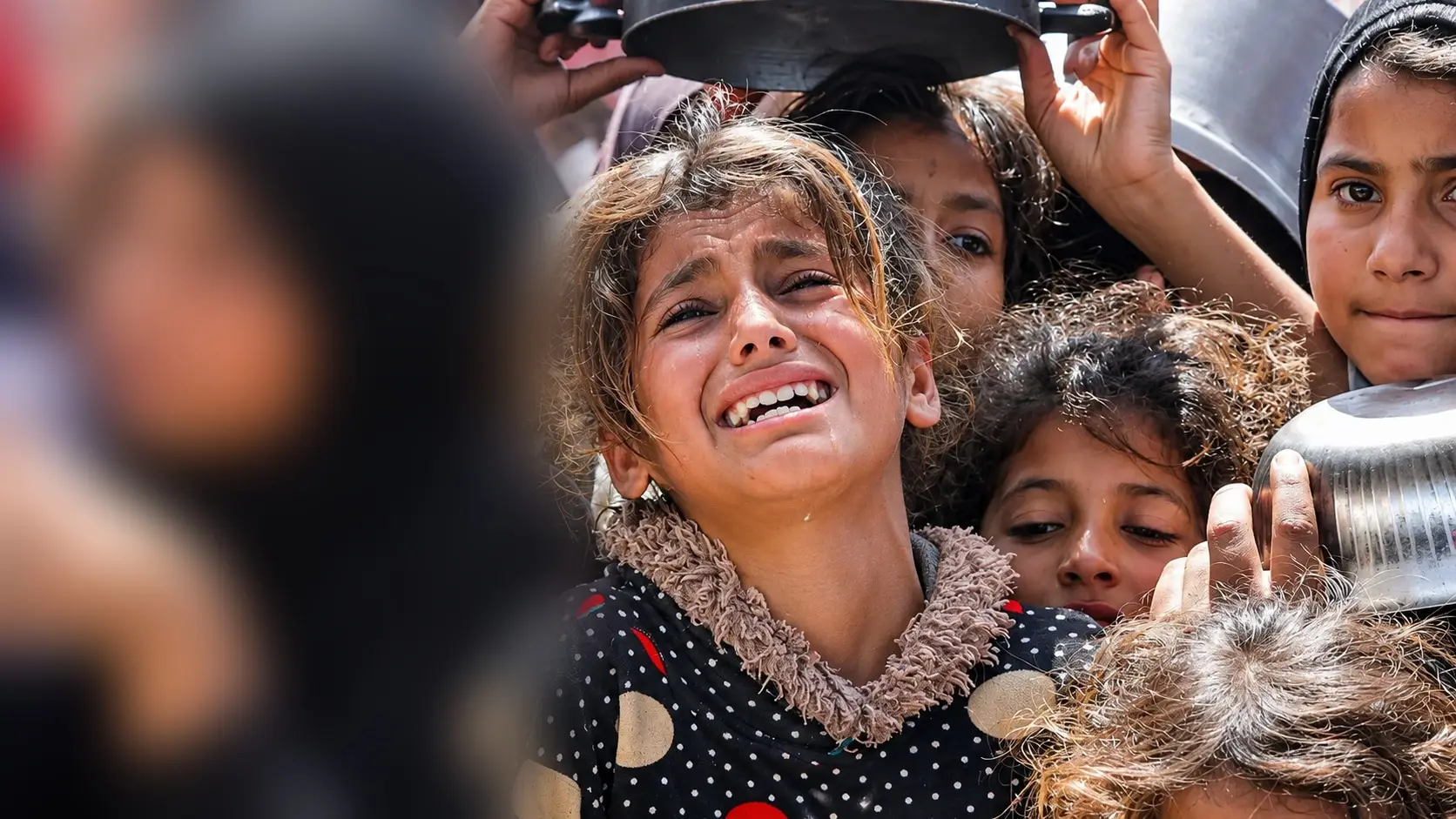
272 cases of meningitis within a single month, 15 deaths since the beginning of the year, and a sharp rise in the most dangerous bacterial cases. These figures prompted the Ministry of Health in the Gaza Strip to declare an epidemic alert, amid fears that the spread of the disease will worsen, especially among children and infants.
The figures reveal that the danger in Gaza is no longer confined to the bombardment that pursues residents, the rubble that buries homes and memories, or the hunger that exhausts bodies. They highlight another threat that is silently creeping into the tents of displaced people and shelter centres, in an environment where water and sanitation networks have collapsed and the capacity for prevention, diagnosis and treatment has declined, making infectious diseases a new part of the struggle for survival.
The epidemic alert is not merely a warning about the rising number of infected people. It reveals a crisis that goes beyond the disease itself to the conditions that enable its spread, where the effects of war, destruction and displacement intersect with the decline of basic preventive health services.
272 cases in October: a leap eight times above usual rates
According to data announced by the Palestinian Ministry of Health in Gaza, the Strip recorded 272 cases of meningitis during October 2026, compared with a usual monthly rate of between 30 and 50 cases, a leap unprecedented in recent months.
The ministry explained that cases of bacterial meningitis, the most dangerous type of the disease, rose to 108 cases during October, after the rate of recording them had ranged between 10 and 20 cases per month. In addition, 100 further cases were recorded from the beginning of November to the announcement of the epidemic alert.
The Strip has recorded 15 deaths linked to meningitis since the beginning of the year, including five deaths in the period from August to October, according to Palestinian health data.
These figures raise fears of a widening circle of infections and complications, especially given the limited medical capacity and the ability to carry out the necessary laboratory tests, to determine the nature of cases precisely, to follow up contacts, and to provide treatment and prevention.
Data announced by the Ministry of Health indicate that laboratory tests were able to identify the virus causing some cases of viral meningitis, which belongs to the group of enteroviruses ("Enterovirus"). However, the unavailability of the tests needed to determine the genetic type prevented confirming whether the cases recorded in the various governorates are linked, or whether they stem from a single strain.
In a separate update relayed by the Anadolu Agency from the World Health Organization, more than 533 cases were reported since mid-October, including four deaths, with cases continuing to rise and a large proportion concentrated among children under one year of age.
What is meningitis, and why is it considered a serious disease?
Meningitis is an inflammation of the membranes surrounding the brain and spinal cord. It may result from infection with viruses, bacteria, fungi or other causes, but viral and bacterial types are among the most prominent causes of infection. Bacterial meningitis differs from viral meningitis in its severity, the speed at which the condition develops, and the nature of its treatment.
Viral meningitis is in many cases less severe, and those affected may recover without serious complications, depending on the type of virus and the patient's condition. Bacterial meningitis, by contrast, can develop rapidly and threaten life, requires urgent diagnosis and treatment with antibiotics, and in severe cases may lead to death or permanent neurological complications.
The most prominent symptoms that call for urgent medical intervention include a sudden rise in body temperature, severe headache, stiff neck, vomiting, sensitivity to light, impaired consciousness or difficulty waking, and seizures in some cases. In infants, symptoms may appear differently, such as poor feeding, lethargy, irritability, or changes in body temperature.
Symptoms alone cannot be relied upon to determine the type of meningitis, as diagnosis requires medical assessment and laboratory tests, which may include analysis of cerebrospinal fluid as the physician deems appropriate.
The danger of bacterial meningitis lies in the fact that delay in diagnosis and treatment may increase the likelihood of death or complications, which makes the availability of laboratories, medicines and the ability to transfer patients to hospitals a decisive factor in confronting an outbreak.
Overcrowding and water contamination: how war creates an environment for disease to spread
Not all types of meningitis spread in the same way, but the conditions in which residents of conflict zones live may increase the likelihood of the transmission of some causative agents, and weaken communities' ability to contain infection.
Health data in Gaza indicate that the destruction of infrastructure, the overcrowding of shelter centres, the mixing of drinking water with sewage, the deterioration of environmental conditions, and the accumulation of rainwater are among the factors contributing to the worsening epidemic situation. These factors intersect in an environment where thousands of displaced people live in cramped spaces and face difficulty accessing clean water, using sanitation facilities, and maintaining personal hygiene, which increases the likelihood of the transmission of some infectious agents.
Some enteroviruses are among the causes of viral meningitis, and they can spread through multiple routes, including the fecal-oral route, especially when water, hands or surfaces become contaminated and hygiene and preventive measures weaken.
In displacement areas, where families are crowded into tents or temporary rooms and a large number of residents share limited facilities, preventive measures become harder to maintain, especially with shortages of water, cleaning and disinfecting materials.
As for bacterial meningitis, the transmission routes of its causative agents vary according to the type of bacteria. Some spread through respiratory secretions or close and prolonged contact, while not all types of bacterial meningitis are transmitted through contaminated water. Therefore, water contamination is an important factor in a collapsed health environment, but it is not a direct explanation for all cases of meningitis.
This distinction shows that the crisis in Gaza cannot be reduced to a single factor, but relates to the intertwining of environmental, living and health conditions, the declining ability of residents to protect themselves, and the weakness of the health system in confronting disease outbreaks.
Children and infants: the group most vulnerable to the spread of infection
The increase in meningitis cases places children and infants at the forefront of groups requiring urgent health monitoring, especially given the decline in medical services, the difficulty of reaching hospitals, and the shortage of some resources needed for diagnosis and treatment.
The World Health Organization noted that children under one year of age represent a large proportion of the cases recorded since mid-October, and that a high percentage of patients are displaced people, which reflects the fragility of the environment in which residents live, particularly the groups most in need of health care.
The risks to children in displacement environments are compounded by overlapping factors, including limited access to clean water, difficulty providing personal hygiene in shelter centres, malnutrition and the weakening of general health that may accompany it, shortages of medical services and primary care, difficulty reaching hospitals when symptoms appear, limited capacity to carry out laboratory tests quickly, and the decline or disruption of vaccination and preventive services in some areas.
In cases of bacterial meningitis, delay in intervention may lead to complications including hearing loss, neurological disorders, movement problems, impaired cognitive functions, and may even result in death. In infants, the signs may be less obvious than the classic symptoms seen in older children and adults, which makes early diagnosis and medical assessment extremely important.
Collapse of the health system: when diagnosis itself becomes a challenge
The danger of meningitis outbreaks does not stop at the increase in infections, but extends to the health system's capacity to deal with them, in light of the destruction of medical facilities, shortages of equipment and supplies, mounting pressure on hospitals, and the decline in the ability to carry out necessary tests.
Palestinian health data indicate that the shortage of laboratory capacity prevents determining some characteristics of the viruses circulating, including the genetic type, which limits the ability to trace the infection, understand the nature of its spread, and assess whether the cases are linked to one or more causative agents.
Diagnosing bacterial meningitis also requires rapid handling of the case, while providing antibiotics, carrying out tests, following up on patients, isolating cases as needed, and providing appropriate care all require a health system capable of functioning efficiently.
In Gaza, this system is under accumulated pressure: a growing number of patients, shortages of medicines and supplies, damage to medical infrastructure, and difficulty accessing health services in multiple areas.
Health authorities warn that if current conditions continue, they may lead to a rise in deaths and an increase in long-term neurological complications, especially if the interventions necessary to confront the outbreak are not made available.
The epidemic alert: what does Gaza need to contain the outbreak?
In response to the rising number of infections, health authorities have called for urgent action to provide the resources needed for diagnosis, treatment and prevention, to rehabilitate water and sanitation networks, and to improve environmental and living conditions in shelter centres.
The required health response includes providing laboratory testing materials, the antibiotics needed to treat bacterial cases, prevention supplies, and strengthening hospitals' capacity to receive patients and provide suitable isolation areas when needed. It also includes improving water, hygiene and sanitation services, strengthening epidemiological surveillance, following up contacts in cases that require it, making health information available to the population, providing primary care services, and identifying the groups most at risk of complications.
Rehabilitating water and sanitation networks is a fundamental priority, because the continued contamination of water and the deterioration of the environment expose residents to multiple risks of infectious disease, not meningitis alone.
A war on the conditions of life
The epidemic alert in Gaza cannot be separated from the environment that war has created. Overcrowding, the destruction of water and sanitation networks, damage to health facilities, and the decline in the ability to provide medical care are all factors that intersect to make the disease more dangerous and limit residents' ability to prevent and treat it.
The figures announced by the Palestinian Ministry of Health reveal not only a rise in infections, but a health crisis that goes beyond the limits of a single disease, and they raise anew the question of the cost borne by civilians when the basic infrastructure of life is destroyed and the most elementary conditions of public health become difficult to attain.


