


In a scene reflecting the scale of the destruction, the effects of which continue to emerge years later, thousands of Palestinians in Gaza City on Sunday laid to rest the remains of some 100 Palestinians recovered from under the rubble of homes destroyed by Israeli strikes in the Al-Zeitoun neighbourhood during the first months of the war, at a time when thousands of bodies remain buried under the debris, and Israeli strikes continue despite the ceasefire agreement.
The funeral procession set out from the vicinity of the Imam al-Shafi'i Mosque in Al-Zeitoun, before the remains were transferred to a cemetery near the Al-Ahli Arab Hospital, known as the Baptist Hospital, with the bodies and remains wrapped in Palestinian flags amid wide attendance by residents and relatives of the victims.
Among the victims were dozens of children. Figures published regarding their number varied between roughly 60 and 70 children: Al Jazeera reported about 60 children, other reports cited 62, and subsequent coverage quoting the Civil Defence said the number had reached 70 children.
Among those whose remains were recovered were 55 people from the Mulaka family, who were killed when Israeli strikes targeted residential buildings in November 2023, along with members of other families including Al-Balawi, Salmi, Rahim and Qunbur. The remains of some victims had remained under the rubble for nearly three years before Civil Defence teams were able to reach them.
The funeral ceremonies came about a month after another mass funeral held in Gaza City for 112 people from the Abu Shari'a and Al-Hasayna families, who were also killed in November 2023 in Israeli bombardment that targeted residential buildings, indicating that the actual scale of the war's losses is still being gradually uncovered as sites that had been buried under rubble are reached.
Some 8,000 bodies still under the rubble
Civil Defence teams say the issue does not concern only dozens or hundreds of victims. The head of the Civil Defence in Gaza Governorate, Raed al-Dahshan, estimates that some 8,000 bodies remain buried under the rubble of destroyed buildings.
Al-Dahshan said that the entry of heavy equipment and specialised machinery could allow these bodies to be recovered within about 90 days, warning that if rescue teams continue to be denied the necessary equipment, the operation could continue "for years".
Recovery operations face additional obstacles in areas under Israeli military control within the Strip. Ajith Sunghay, head of the Office of the United Nations High Commissioner for Human Rights in the occupied Palestinian territory, said that access to large areas under Israeli military control represents one of the most significant obstacles to searching for the missing and recovering bodies.
The crisis is not limited to the recovery of bodies, as the continued shortage of machinery, spare parts and heavy equipment also hampers the removal of millions of tonnes of rubble and the repair of roads, water and sewage networks and other basic infrastructure.
And the strikes continue
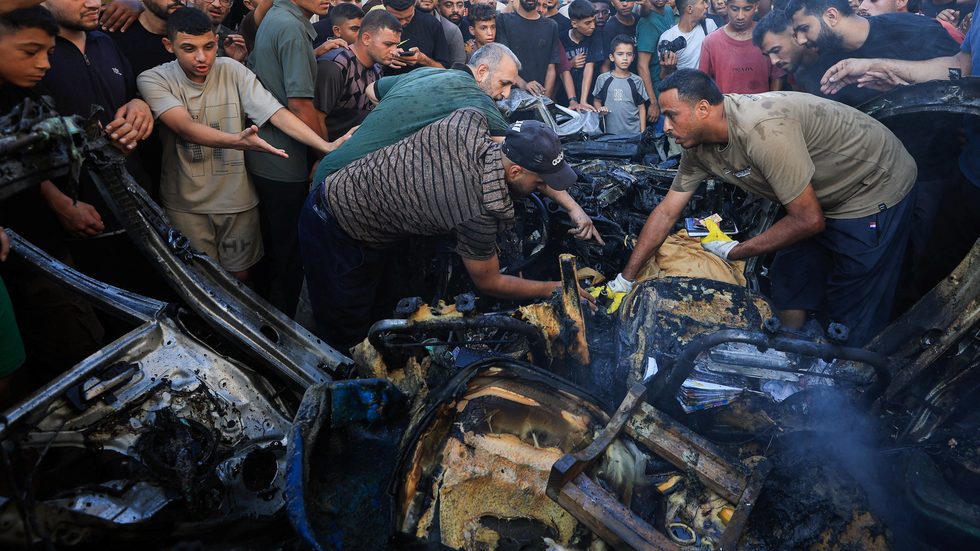
At the same time as the funeral of victims killed nearly three years ago, new Palestinians fell in Israeli strikes on Gaza City.
An Israeli strike targeted a car in the city on Sunday, killing Yousef Oqeila and his eight-year-old daughter Wafaa, and wounding six other people, according to health officials. The Israeli army said the attack targeted a Hamas operative and that it is reviewing the results of the strike.
Later the same day, further Israeli attacks killed additional Palestinians, including a three-year-old child, raising the death toll from Sunday's attacks to at least four.
According to the latest figures from medical sources in Gaza, the number of Palestinians killed since the start of the war in October 2023 has reached about 73,651, in addition to 174,592 injured. Since the ceasefire took effect in October 2025, 1,344 Palestinians have been killed, and the number of injured has risen to 4,481 as of 6 September. During the truce period, 826 bodies were also recovered from various areas of the Strip.
What is termed "Israel" says it continues to carry out limited operations against targets linked to Hamas, while the movement accuses "Israel" of violating the ceasefire agreement and continuing bombardment and military operations in the Strip.
The effects of destruction reach the sea
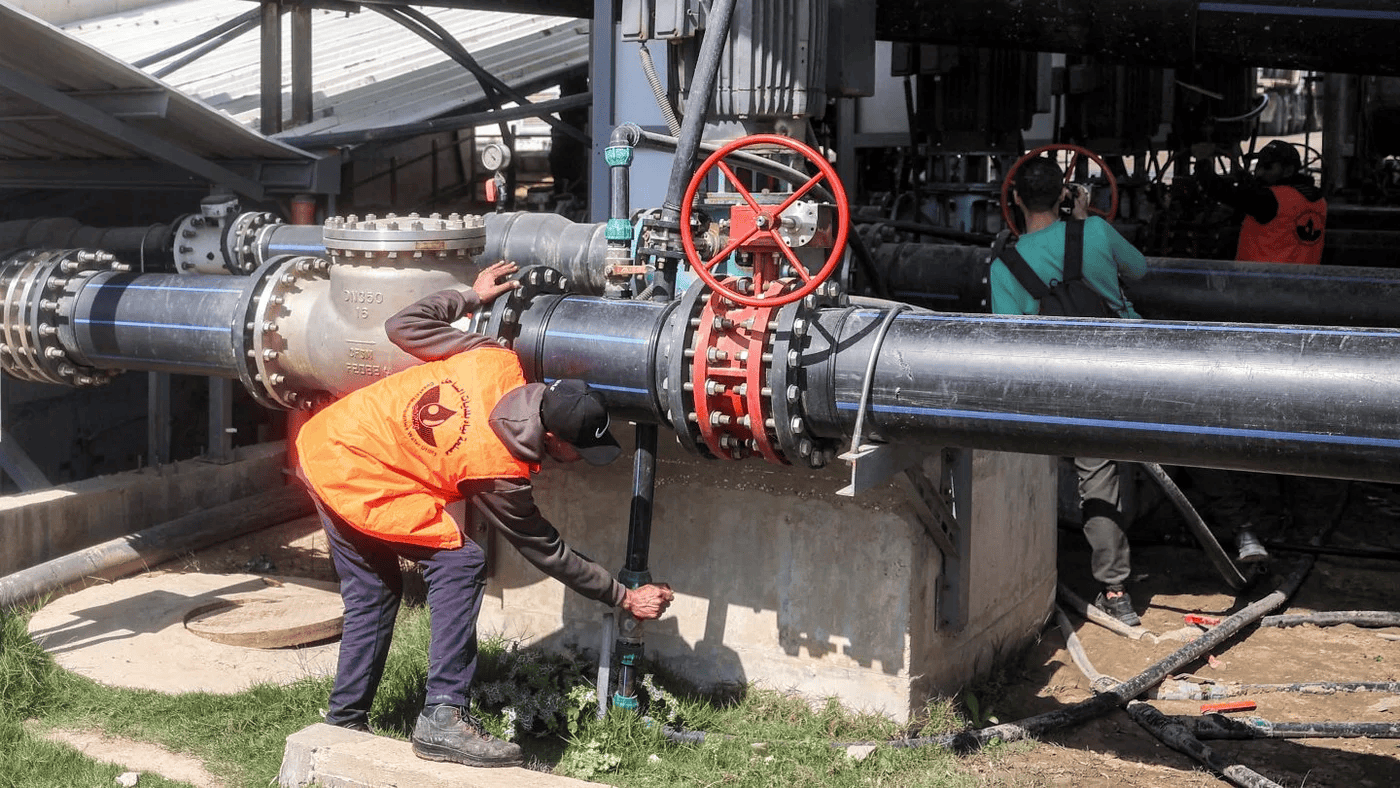
In another development revealing how the consequences of the destruction of Gaza's infrastructure extend beyond the Strip's borders, scientists are investigating the possibility that vast quantities of untreated sewage flowing from Gaza into the Mediterranean Sea contributed to an unprecedented proliferation of microalgae along the coast, an event that led to the shutdown of most Israeli desalination plants.
Five of the six main desalination plants on the Israeli coast were forced to halt or reduce their output after a sharp rise in seawater turbidity resulting from the algae bloom, before some plants began restoring part of their operations. Desalination plants provide a large share of the drinking water used in "Israel".
A spokesperson for the Israeli water company Mekorot described the phenomenon as an "extremely rare" event, while authorities increased their reliance on the Sea of Galilee, groundwater and reservoirs, in addition to imposing restrictions on some water uses in agriculture and irrigation.
United Nations data points to the scale of the collapse of Gaza's sewage system. In April, only 16 of the 73 sewage pumping stations were operating, causing an estimated 40,000 cubic metres of untreated sewage to flow daily into the sea, residential areas and groundwater.
Some Israeli researchers believe that this water, rich in nitrogen and phosphorus, may have contributed, along with rising sea temperatures, currents and weather conditions, to creating an environment conducive to the large-scale proliferation of algae.
However, the link has not yet been conclusively established scientifically. While some experts have considered the contribution of sewage from Gaza likely, other researchers argue that the algae began near the Nile Delta in Egypt and moved north with sea currents, and that rising Mediterranean temperatures, storms and nutrients from multiple sources may together be behind the phenomenon.
Thus one of the clearest paradoxes of the war's effects emerges: while the residents of Gaza live amid destroyed water and sewage networks and tonnes of rubble concealing thousands of dead, some environmental repercussions of this destruction have begun to cross the sea itself, affecting the water system on which Tel Aviv relies.
This underlines that the collapse of infrastructure in a small, densely populated coastal strip cannot be contained within its borders; sea water, currents and pollution do not recognise military barriers, and the effects of a war whose victims are still being recovered from Gaza's rubble nearly three years later are now appearing in human and environmental forms that extend across the surrounding region.


