

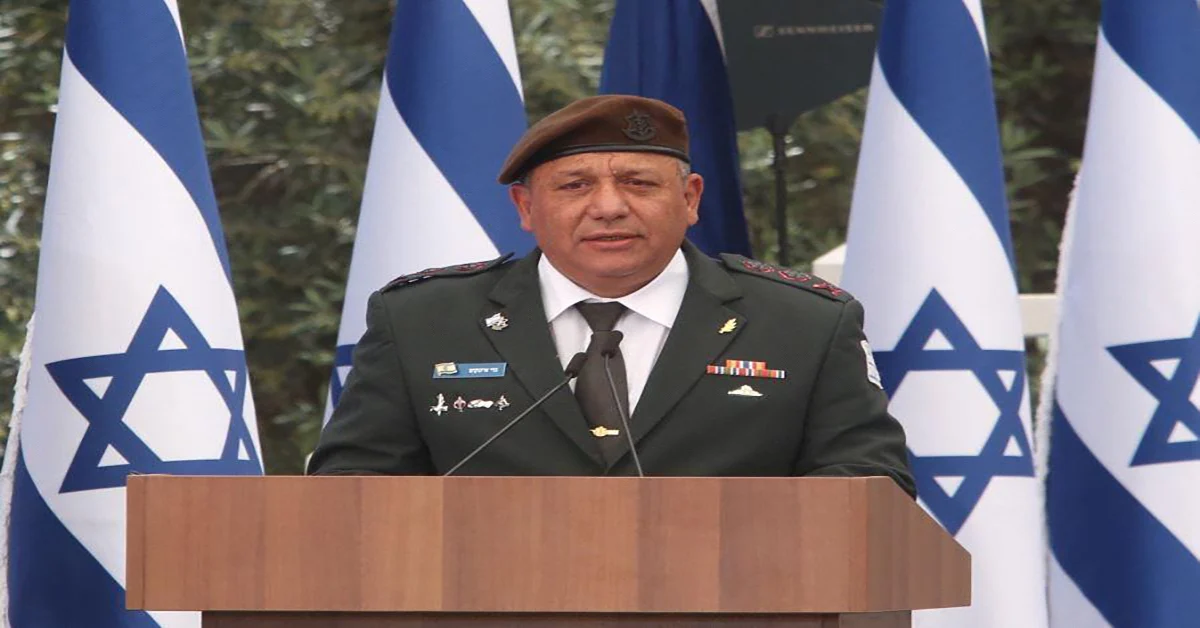
Gadi Eisenkot, the former Israeli Chief of Staff and the candidate for the next Israeli government, faces a new political test after being given 28 days to form the government, extendable by an additional 14 days.
Eisenkot's potential rise to the leadership of the Israeli government highlights his military and political record, including the military operations associated with him and the violations against the Palestinian and Lebanese peoples, as well as his role in directing military operations during the aggression on the Gaza Strip.
Eisenkot is one of the most prominent leaders of the Israeli military establishment. His name has been linked to what is known as the "Dahiya Doctrine," and he led the Israeli army during the events of the Great March of Return in the Gaza Strip in 2018. He also participated in the Israeli War Cabinet that directed the war on the Strip during 2023 and 2024.
Who is Gadi Eisenkot? Military and Political Career
Gadi Eisenkot rose through the ranks of the Israeli military until he reached the position of the twenty-first Chief of Staff, before moving into political work and participating in the war cabinet during the aggression on Gaza.
Most prominent military positions:
- Commander of the Northern Front of the Israeli army (2006–2011).
- The twenty-first Chief of Staff of the Israeli army (2015–2019).
Political positions:
- Minister without portfolio and observer member of the small Israeli War Cabinet (October 2023 – June 2024).
This military and political trajectory places Eisenkot among the most prominent figures who held leadership responsibilities in the Israeli military establishment during periods that witnessed large-scale operations in Lebanon and Palestine.
The Dahiya Doctrine: Strategy of Destruction and Collective Punishment
Gadi Eisenkot is one of the most prominent figures associated with what is known as the "Dahiya Doctrine," a military strategy linked to his statements in 2007, which drew on the model of extensive destruction inflicted on Beirut's southern suburb (Dahiya) during the 2006 Lebanon war.
Read also: The "Abrahamic" Movement and Its Syrian Branch: A Reading of the Normalization Project
This doctrine rests on the use of excessive and disproportionate force, targeting civilian infrastructure, and the complete destruction of villages and residential areas, with the aim of imposing deterrence and inflicting massive human and material losses on the population that hosts armed groups.
This strategy has drawn wide legal and human rights criticism, on the grounds that targeting civilians and civilian objects, and extensive destruction not justified by military necessity, may constitute a grave breach of international humanitarian law and, in certain circumstances, rise to the level of war crimes.
The Fourth Geneva Convention also prohibits targeting civilians and imposing collective punishment on protected populations.
The Great March of Return in Gaza 2018: Gunfire at Palestinian Protesters
Eisenkot led the Israeli army during the events of the Great March of Return that began in the Gaza Strip on 30 March 2018, during which Israeli forces used live ammunition and lethal force against Palestinian protesters at the Strip's border.
Read also: Working for the Sake of God: Reward and Sincere Intention, Not Reputation and Showing Off
During those events, the Israeli military leadership ordered the deployment of hundreds of snipers and authorized them to use live ammunition and explosive projectiles against the protesters.
Human losses during that period
- Killing of approximately 215 to 270 Palestinians, including 47 children.
- Injury of more than 36,100 people, including about 8,800 children.
- Live-ammunition injuries to more than 8,000 Palestinians.
- Recorded targeting of limbs in more than 7,000 injuries.
The independent international commission of inquiry affiliated with the United Nations documented serious violations during these events and concluded that there were reasonable grounds to believe that some of the violations may rise to the level of war crimes or crimes against humanity.
Amputations and permanent disabilities: the effects of attacks on protesters
The effects of the injuries sustained by Palestinians extended to permanent disabilities and severe physical deformities, with 156 injuries resulting in amputation, according to the figures in the data provided:
- 126 cases of lower-limb amputation.
- 30 cases of upper-limb amputation.
- At least 94 amputations resulting from complications and bone infections that followed the injury.
These figures reveal the scale of human suffering caused by the confrontations, and the severe injuries and permanent disabilities that affected Palestinians, including children.
These events also raise questions about command responsibility for military orders and the use of lethal force against protesters, during the period in which Eisenkot served as Chief of Staff of the Israeli army.
Eisenkot's role in the war of extermination on the Gaza Strip 2023–2024
Eisenkot returned to the Israeli military and political decision-making circle after 7 October 2023, when he became an observer member of the small Israeli War Cabinet, which directed the first eight months of the war on the Gaza Strip.
That period saw large-scale military operations that caused enormous destruction and heavy human losses, alongside a deterioration of the humanitarian situation and the collapse of large parts of the Strip's infrastructure.
The policies and operations about which legal and human rights accusations have been raised include:
- Imposing a suffocating blockade on the Gaza Strip.
- Using starvation and deprivation of basic necessities as a tool of war.
- Targeting hospitals and facilities belonging to the United Nations.
- Destroying densely populated residential blocks.
- Adopting military operations that caused a large-scale humanitarian catastrophe.
Eisenkot's participation in the war cabinet places his name among the military and political figures addressed by human rights demands concerning responsibility for decisions on the war, the blockade, and military operations in the Gaza Strip.
International demands for accountability for Gadi Eisenkot
Demands for Eisenkot's accountability have extended to the international level, in light of his military and political role in the operations witnessed in Lebanon and the Gaza Strip.
In July 2024, human rights organizations, including the 30 March Movement, announced that they had submitted complaints to the Office of the Prosecutor of the International Criminal Court in The Hague, supported by documents and evidence, regarding the responsibility of a number of members of the Israeli War Cabinet for alleged crimes during the war on Gaza.
The complaints called for arrest warrants against Gadi Eisenkot and a number of other members of the Israeli War Cabinet, on charges of complicity in and participation in designing and carrying out acts of genocide and crimes against humanity in the Gaza Strip.
These demands aim to hold accountable those responsible for formulating, approving and implementing military policies, and to hold them to account for violations committed against the Palestinian people.
28 days to form the Israeli government: will Eisenkot reach the premiership?
On the political level, Eisenkot faces a deadline of 28 days to form the new Israeli government, with the possibility of extending it by 14 additional days, bringing the total period to 42 days.
This task requires reaching understandings with parties and parliamentary blocs and forming a coalition that holds the majority necessary to win the confidence of the Knesset.
This mandate marks a new stage in Eisenkot's career, as he moves from leading the military establishment to political work, at a time when international criticism of the Israeli war on the Gaza Strip is growing, along with the martyrs, wounded, extensive destruction and deepening humanitarian crisis it has left behind.
Gadi Eisenkot: from the destruction of Dahiya to the war on Gaza
Gadi Eisenkot's military and political record extends from commanding the Northern Front in the period after the 2006 Lebanon war, through the statements linked to the Dahiya Doctrine, to leading the Israeli army during the Great March of Return in Gaza in 2018, and then his participation in the war cabinet during the aggression on the Strip in 2023 and 2024.
While he now seeks to lead the Israeli government, his earlier roles remain subject to criticism and to human rights demands for accountability for those responsible for the violations committed in Palestinian territories and in Lebanon.
Protecting civilians, halting attacks, and holding those responsible for war crimes and crimes against humanity accountable are legal and humanitarian obligations that should not lapse with the passage of time or with changes in political and military positions.
Ensuring justice for the Palestinian people, ending their suffering, and guaranteeing that those responsible for violations are not spared accountability remain among the most prominent challenges facing the international community and the competent judicial institutions.


