


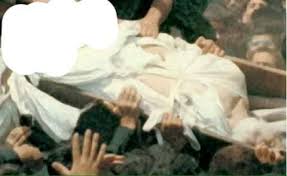
While some believe that large numbers of mourners are a sign of a good end, it is worth recalling the funeral of the late Khomeini (pictured) whose attendance was estimated by official authorities in Iran in 1989 at more than ten million and 200,000 people. Yet Khomeini's funeral was among the most grotesque funerals known in history: his body fell four times during the procession, his shroud was torn and his nakedness was exposed before the media. He himself had issued a fatwa that whoever's funeral body fell even once was among the people of the Fire.
Khomeini's heirs learned the lesson, and the funeral is now conducted in a manner that does not expose the body to falling.
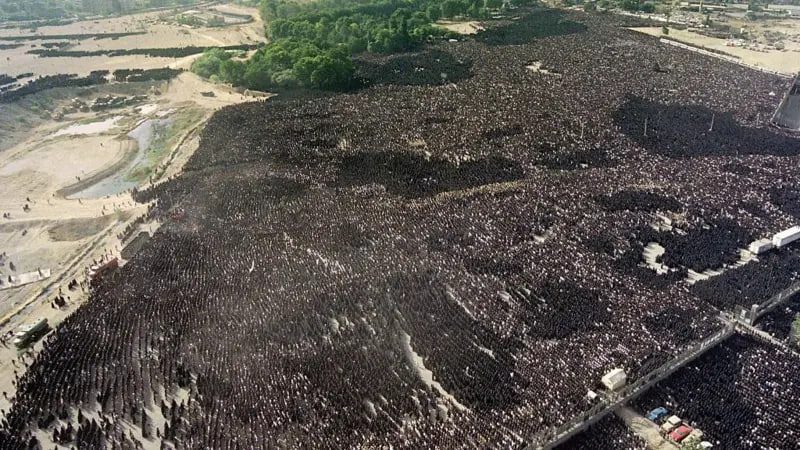
Tehran has long held massive funerals for many prominent figures, such as Raisi, Rafsanjani and Soleimani. This was not a sign of a good end as some imagine, for how could it be for someone whose creed is corrupted by polytheism and error and whose hands are stained with the massacres and blood of Muslims? Rather, it reflects the number of Shiites who attend the funerals of their leaders.
Were the number of mourners a basis for judging endings, the funerals of Christian popes would be attended by millions around the world.
Statistics have recorded the largest number of mourners at a funeral in history, as documented by the Guinness World Records, at the funeral of Indian leader C. N. Annadurai in 1969, which was attended by approximately 15 million people during his funeral procession in Tamil Nadu, India. He was an atheist.
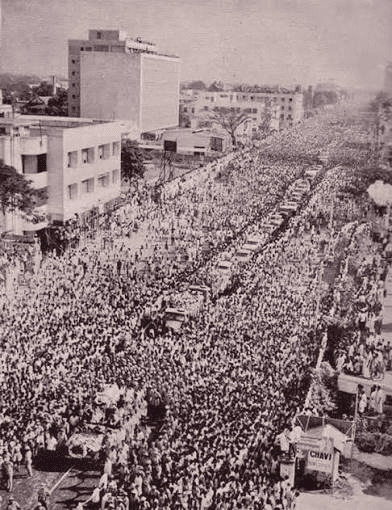
Funeral of Indian leader C. N. Annadurai


