


Information reported by Reuters indicates that Iran is seeking to acquire hundreds of shoulder-fired air defence systems from China to rebuild Iranian military capabilities, months after a confrontation that revealed the limits of Iran's air defence network in dealing with combined American air strikes, drones and precision weapons.
According to three informed sources who spoke to the agency, Tehran is preparing to receive the first batch of a deal comprising between 300 and 400 short-range air defence systems, including QW-12 and FN-16 missiles, in a contract valued at between $60 million and $70 million. The Chinese Foreign Ministry denied the reports, describing them as "without any basis in fact."
Despite the absence of official confirmation from Beijing and Tehran, the mere circulation of this information reflects a clear Iranian tendency to close one of the most prominent gaps exposed by the recent war: the defence of vital sites against low-altitude threats.
A Review of the War's Outcomes
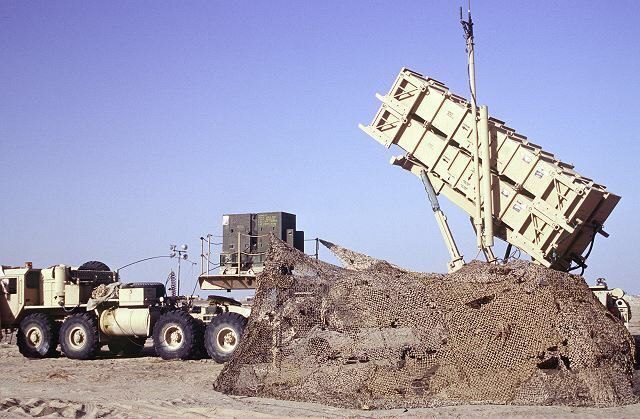
The war, which saw American and Israeli strikes targeting facilities linked to Iran's missile, drone and air defence programmes, did not limit its effects to material losses. It also prompted the Iranian military establishment to review its defence priorities. The confrontation showed that possessing long-range or medium-range systems alone is not sufficient to protect military installations and sensitive infrastructure, particularly in light of the intensive use of drones and precision munitions that operate at low altitudes and can exploit gaps in air defence networks.
Why Shoulder-Fired Systems?
Although they are not among the most advanced air defence systems, shoulder-fired missiles have operational advantages that make them a suitable choice during a phase of reconstruction. They are easy to transport and quick to deploy, can be operated by small teams, and are harder to detect and target than fixed air defence systems, which gives them greater survivability on the battlefield.
These systems can provide local protection for military airfields, ammunition depots, power stations and command and control sites, in addition to strengthening defence against drones, helicopters and aircraft flying at low altitudes. For Iran, which relies on a wide dispersal of military facilities across different regions, this flexibility represents considerable military value.
Why China?
If the information about the deal is accurate, the choice of China carries dimensions that go beyond the technical. In recent years Beijing has become a growing economic and strategic partner for Tehran. Western sanctions have also limited Iran's options in the arms market, making Chinese and Russian suppliers the most able to meet Iran's military needs.
Moreover, the reliance on intermediary companies in Hong Kong, according to the sources, reflects the continued use of complex commercial networks to reduce the impact of restrictions and sanctions imposed on Iran's defence sector.
An Additional Defence Layer, Not a Substitute for Major Systems
Regarding the QW-12 and FN-16 systems, the military information available about them indicates that they cannot by themselves change the balance of air power, as they are designed primarily to deal with specific targets at low altitudes. Their importance lies in adding a complementary layer to long-range and medium-range systems, a concept adopted by most modern air defence networks, in which protection relies on multiple layers rather than a single system.
If Iran were to obtain hundreds of units, it would be able to distribute them across dozens of military and strategic facilities, which would raise the cost of any potential air attack and force the attacker to allocate greater resources to penetrate this defensive layer.
Supply Routes
The sources indicated that the preliminary transport plan passes through China's Xinjiang region, then Pakistan, before reaching Iran. Islamabad has denied any link to these arrangements.
The debate over transport routes reflects the scale of political and logistical complexities associated with moving military equipment amid the ongoing war, in addition to international sanctions and oversight. The choice of supply routes is no less sensitive than the deal itself.
Furthermore, some sources' mention of studying the use of land routes to transport equipment and dual-use components suggests that logistical considerations have become an essential part of Iranian military calculations.
Strategic Messages
Beyond its direct military value, this deal, if implemented, carries political and strategic messages. The first is that Iran is proceeding with rebuilding its defence capabilities despite the war. The second is that military relations between Tehran and Beijing appear set to expand further, even if China continues to officially deny such deals.
What Could Change?
If the systems arrive in the numbers cited by the sources, Iran will likely redistribute its air defences according to a more flexible model, relying on the wide dispersal of small units rather than concentrating on fixed batteries.
However, this step, whatever its scale, will not by itself be sufficient to close all the gaps exposed by the war, as the success of any air defence system will remain tied to its ability to integrate with radar, early-warning, command and control networks, elements some of which were targeted over the past months.
In conclusion, the potential deal appears to indicate that Iran has moved from the phase of containing the war's effects to the phase of restructuring its defence system, in an attempt to build a network more capable of withstanding a new style of warfare that relies on drones, precision weapons and multi-axis attacks. Even with the continued official denial, the movements attributed to Tehran reflect a growing awareness that the future contest of air defence will not be decided by major systems alone, but by the integration of defensive layers, the speed of redeployment and the ability to adapt to changing threats.


