


In 476 CE, roughly 146 years before the Prophet's migration (Hijra), the Western Roman Empire fell after the deposition of Emperor Romulus Augustulus by the Germanic leader Odoacer. Within a few years, the central authority that had governed Europe for centuries disintegrated, and many cities turned into small settlements after losing their economic and political role.
Amid this immense vacuum, the Catholic Church seized the opportunity to gradually become the continent's greatest political, social and economic power. The Pope came to wield influence exceeding that of many kings, while monasteries became centres of administration, and clergy became the most educated elite in a society where levels of knowledge had declined markedly.
By the sixth century CE, roughly half a century after the fall of Rome, the Church had become the only institution with a structure spanning European borders. It possessed vast agricultural lands, collected a tax known as the "tithe," and ran ecclesiastical courts that examined matters of marriage, inheritance and doctrine. It also exercised direct influence in the crowning and deposing of kings, so that the struggle between the crown and the Church became one of the most prominent features of medieval European history.
In the eyes of many Europeans, a ruler's legitimacy was not complete without the blessing of the Church, while whoever was excommunicated could find himself politically and socially isolated. This gave the papacy immense power to steer public life.
This dominance was not confined to politics; it extended to culture, education and the arts. The schools attached to churches and monasteries were the main source of education, and Latin, the language of the Church, was the language of knowledge and writing, at a time when ordinary people did not understand it.
Europeans themselves coined the term "Dark Ages"
The term "Dark Ages" emerged among Christians in Europe. The Italian thinker Francesco Petrarch used it in the fourteenth century CE when he compared his era with the Greek and Roman heritage. Many studies also confirm that Western Europe did indeed pass through phases marked by declining levels of education, weak scientific output, diminished urban life, and the severance of a large part of the classical heritage from ordinary society, compared with what the Roman Empire had been, or with what the Islamic civilisation would later achieve.
Accordingly, a number of researchers have used the expression "Dark Ages," acknowledging that this period did witness deep crises that affected the course of European civilisation.
Knowledge under guardianship
The Church held that absolute truth derives from revelation as understood by the ecclesiastical institution. Education was therefore under its direct supervision. Theology led the sciences, while philosophy, medicine and natural sciences were subject to strict religious constraints. Intellectual debate was tolerated as long as it did not contradict official doctrine, and the space for discussion remained limited compared with what other civilisations of the same period experienced.

The question of the "Bible" between text and authority
One of the most contested issues in the history of medieval Europe is the circulation of the Bible. For centuries the Western Church relied on the Latin translation known as the Vulgate, completed by Saint Jerome in the late fourth century CE, which became the official text of the Catholic Church.
Over the centuries, differences appeared between some manuscripts as a result of hand copying and translation. A deep doctrinal dispute also arose between different churches over the extent to which the existing texts had remained free of alteration or distortion throughout history. The monopoly over interpreting the texts gave the ecclesiastical institution exceptional authority over European society and entrenched its position as the highest reference in religion, thought and politics.
In the second half of the eleventh century CE, Europe still lived under an unprecedented religious authority. The Pope was not merely a spiritual leader; he had become a political player capable of mobilising the kings and princes of Europe under a single banner.
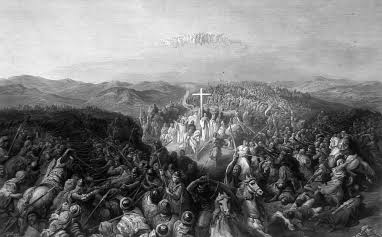
On 27 November 1095 CE (19 Sha'ban 488 AH), Pope Urban II delivered his famous sermon at the Council of Clermont in France, calling on the princes of Europe to take up arms and head towards the East under the slogan "liberation of Jerusalem," and promised participants full remission of sins. Thus began one of the most influential religious wars in human history: the Crusades.
War in the name of heaven: how did faith become a weapon?
Although the official discourse focused on the religious dimension, historical records show the picture was more complex. Europe was suffering from continuous feudal conflicts among the nobility, and many knights were seeking land, wealth and influence. The Crusades provided an opportunity to export this violence beyond Europe, while at the same time strengthening the standing of the papacy as the supreme authority in the Latin Christian world.
Some historians argue that the call to war was not merely a response to appeals from the Byzantine Empire, but also an attempt to unify Europe under the leadership of the Church and grant the Pope unprecedented political authority.
The massacre that preceded Jerusalem
Before the Crusader armies reached the East, Europe witnessed a wave of violence against Jews. In 1096 CE (489 AH), Jewish communities in German cities such as Mainz, Speyer and Worms were subjected to extensive massacres carried out by Crusader groups that regarded Jews as "enemies of Christ." Thousands were killed, and others were forced to convert to Christianity or fled.
These events were an early indication that the religious war was not directed only outward, but also reached minorities within Europe itself.
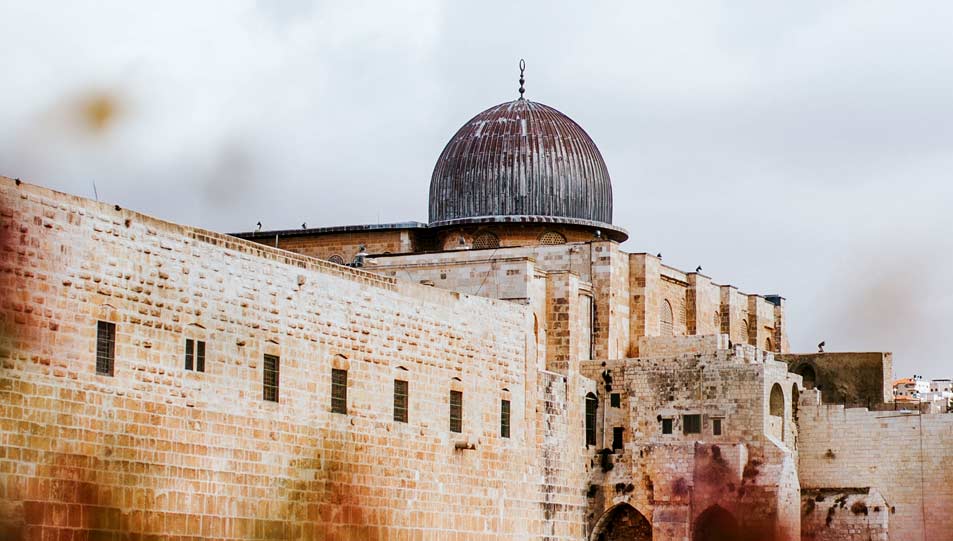
On 15 July 1099 CE (23 Sha'ban 492 AH), the forces of the First Crusade succeeded in storming Jerusalem. Latin and Islamic sources, despite differing in their figures, agree that the city witnessed a widespread massacre of its Muslim and Jewish inhabitants after it fell into Crusader hands.
Some Western historians have described the scenes of killing as among the bloodiest events of the Crusades, while the expedition's leaders at the time regarded it as a sacred victory fulfilling the divine will.
Yet these massacres left a deep wound in the historical memory of relations between East and West, and their political and cultural effects lasted for centuries.
The Church and the Inquisition: when doubt became a crime
If the Crusades were directed outward, Europe itself saw another mechanism for controlling the inside. In 1231 CE (628 AH), Pope Gregory IX issued a decree organising the papal Inquisition, with the aim of pursuing those the Church considered to have deviated from the faith.
The courts relied on investigation and interrogation, and at certain periods used methods of torture permitted by the laws prevailing at the time to extract confessions, before issuing sentences that could reach life imprisonment or execution by burning, while civil authorities carried out the physical punishments.
Although the severity of these courts varied from region to region and from era to era, they became a symbol of the religious institution's dominance over conscience and thought.
Disagreement with the Church was not merely an intellectual difference; it could turn into an accusation of heresy. Heresy, in the ecclesiastical understanding of the time, meant departing from official doctrine or spreading ideas contrary to the Church's interpretation. This climate narrowed the space for free debate on a number of philosophical and scientific questions.
Europe in darkness and Al-Andalus writing in the language of science
While Western Europe was submerged in feudal wars and religious divisions, the scene on the southern shore of the Mediterranean was strikingly different.
Since the Muslims entered the Iberian Peninsula in 711 CE (92 AH) under the leadership of Tariq ibn Ziyad, a civilisation arose in al-Andalus that became one of the greatest centres of knowledge in the world.
Under Abd al-Rahman III, who came to power in 912 CE (300 AH) and proclaimed the Caliphate in 929 CE (317 AH), Córdoba reached the peak of its prosperity.
Historians note that the library of the Caliph al-Hakam al-Mustansir billah, who ruled between 961 and 976 CE (350–365 AH), held hundreds of thousands of manuscripts, whereas major European libraries contained only a few hundred books.
Although estimates of the exact number of volumes differ, it is certain that Córdoba was among the largest centres of knowledge production in the medieval world.
From Córdoba to Paris: the journey of ideas
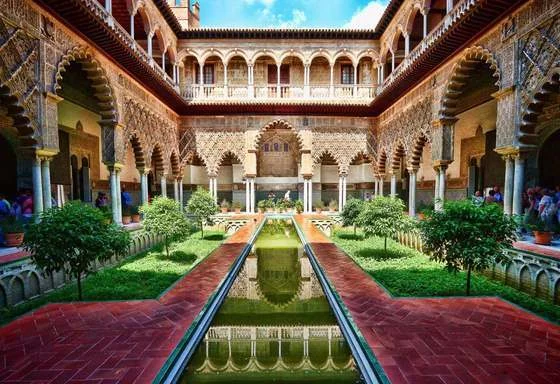
The influence of al-Andalus was not merely military; it was primarily civilisational. After the Europeans recaptured the city of Toledo in 1085 CE (478 AH), the city became a vast centre of translation.
There, Christian, Jewish and Muslim scholars began working together to translate the works of Muslim scholars, as well as Greek books that had been preserved and developed in the Islamic world.
These translations were not merely a transfer of texts; they were the spark that helped reshape the European mind and paved the way for the emergence of the great universities, and later the Renaissance, centuries afterwards.
Thus, while the Church sought to monopolise the interpretation of truth, al-Andalus offered a different model based on translation, debate and cumulative scientific work, which made it the link between the Greek heritage and the later European Renaissance.
From Córdoba to Florence: how the monopoly on knowledge was broken
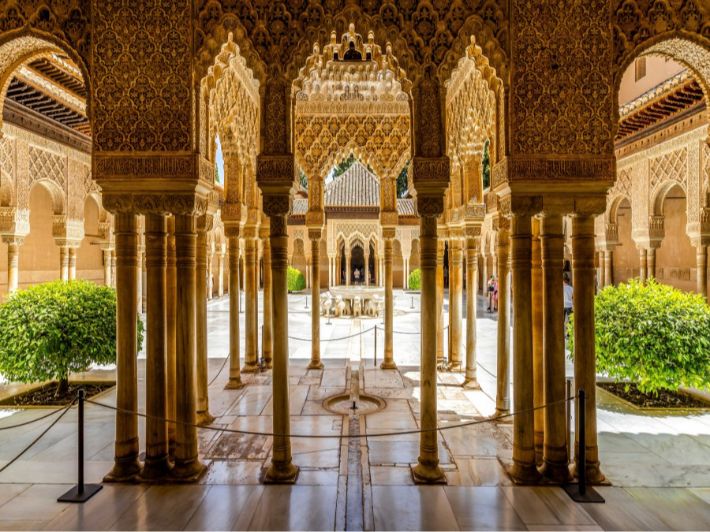
The transfer of sciences from the Islamic world to Europe was not a passing event but a historical process spanning centuries, beginning with translation and developing into the reconstruction of the European mind.
In the twelfth century CE, Toledo became one of Europe's most important centres of translation. There, translators such as Gerard of Cremona (died 1187 CE / 583 AH) worked to render dozens of Arabic works into Latin. He had come to al-Andalus in search of a single book on astronomy, and ended up translating dozens of books on medicine, mathematics, philosophy and logic.
These translations were not merely linguistic transfers; they conveyed a new scientific method based on observation, experiment and analysis, which Western Europe had lacked for long stretches of the Middle Ages.
Medicine: when Europe learned from al-Andalus
Until the seventeenth century, Ibn Sina's The Canon of Medicine continued to be taught at a number of European universities as one of the most important medical references.
The works of Abu al-Qasim al-Zahrawi, especially al-Tasrif liman 'ajaz 'an al-ta'lif (The Method of Medicine), became a principal reference in surgery. Its instruments and techniques were translated into Latin, and European physicians benefited from them for centuries.
The matter was not confined to medicine; it extended to mathematics, algebra, optics, chemistry, astronomy and geography.
The fall of al-Andalus: another beginning
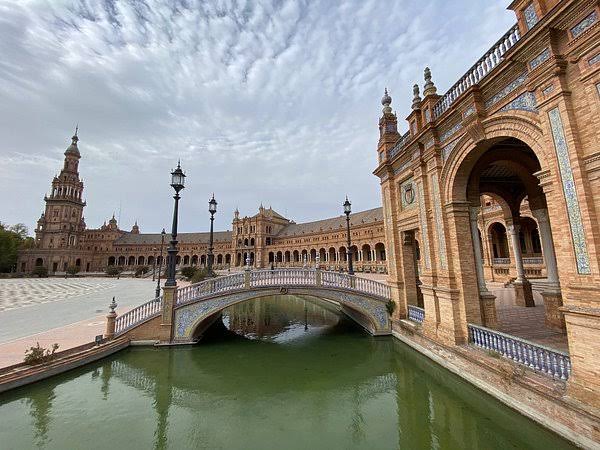
On 2 January 1492 CE (21 Muharram 897 AH), Granada, the last Muslim stronghold in al-Andalus, fell, after nearly eight centuries of Islamic presence in the Iberian Peninsula. That was the end of a state, but not the end of its influence.
The books that had left the libraries of Córdoba, Seville and Toledo, and the translators who carried knowledge to European universities, had already accomplished the most important task: transferring knowledge from one world to another.
While the political existence of al-Andalus came to an end, its scientific legacy continued to shape modern Europe. Because of this influence, less than a quarter-century after the fall of Granada, Europe underwent a tremendous transformation.
On 31 October 1517 CE (10 Jumada al-Akhira 923 AH), the German friar Martin Luther published his Ninety-Five Theses, criticising practices within the Catholic Church, foremost among them the sale of indulgences.
This was not merely a theological dispute; it was the beginning of what came to be described as the "Protestant Reformation," which shook the Church's monopoly on religious authority, opened the door to new readings of sacred texts, and encouraged the translation of the Bible into local languages, after Latin had remained the dominant language of liturgy and ecclesiastical education.
With Johannes Gutenberg's invention of movable-type printing around 1450 CE (approximately 854 AH), books spread at an unprecedented pace, and knowledge was no longer the preserve of monasteries and clergy.
That era saw the rise of the first universities, the development of Gothic architecture, and the emergence of legal and administrative systems that left a lasting imprint. At the same time, it witnessed religious conflicts, long wars, persecution of dissenters, and the wide dominance of the ecclesiastical institution over public life.
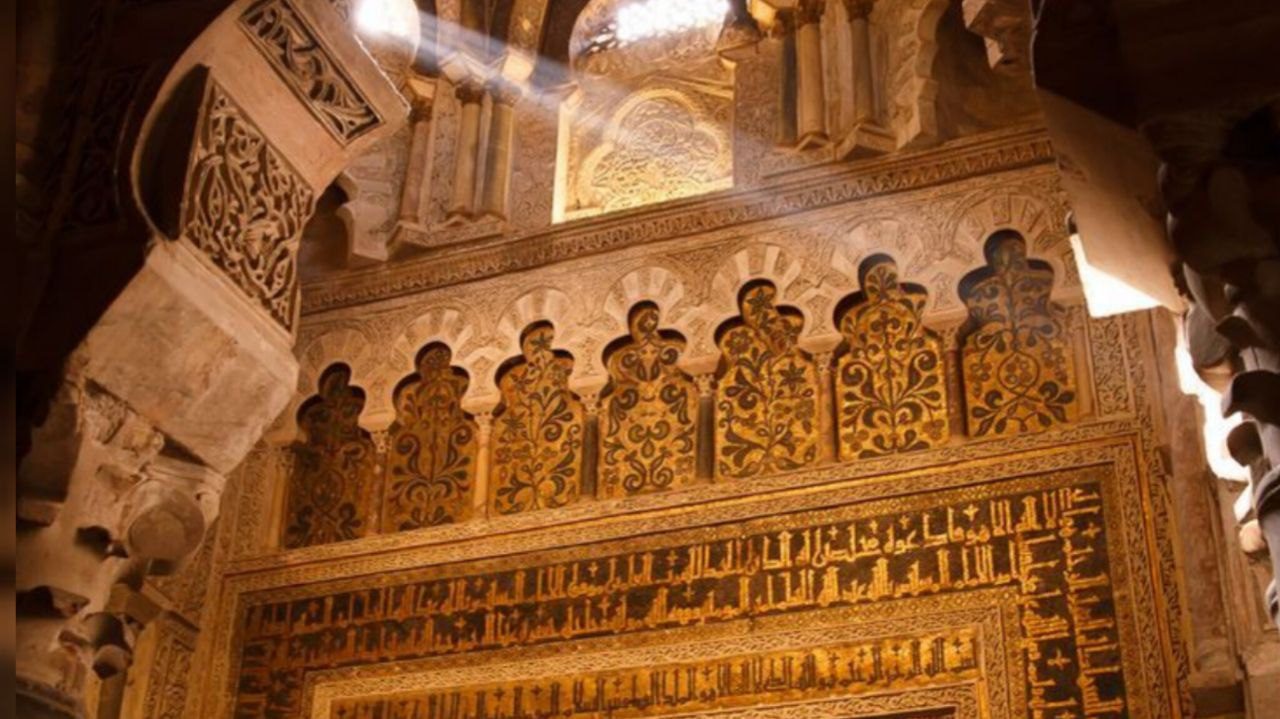
The Catholic Church exercised broad authority over thought and belief, and this authority came at a historical cost, manifested in religious conflicts, the pursuit of opponents, and narrow limits on debate in certain periods.
By contrast, al-Andalus offered a different model in which translation, medicine, astronomy, mathematics and philosophy flourished, and through which the knowledge of the Greeks and of Muslim scholars passed into Europe, becoming part of the foundation upon which the Renaissance was built.


