


On the morning of 1 Ramadan 1447 AH, corresponding to 28 February 2026, Iran entered one of the most sensitive moments in its history, after the Supreme Leader Ayatollah Ali Khamenei was killed in the opening US-"Israeli" strike of the war launched against Iran. After more than four months of uncertainty and anticipation, Tehran has finally announced that the official funeral ceremonies will be held between 18 and 23 Muharram 1448 AH, corresponding to 4 to 9 July 2026, in a funeral journey that spans Tehran, Qom, Karbala and Najaf before ending in Mashhad, where he will be laid to rest.
However, the question that has dominated political and religious circles concerns not only the course of the funeral but also its delay of 131 full days, a rare precedent that departs from the customs calling for the swift burial of the dead. This exceptional delay has opened the door to profound questions about whether the funeral has been transformed from a farewell ceremony into a fully integrated political and strategic project, carefully designed to serve as Iran's first major display of strength after the war and the truce.
The Body That Disappeared for Five Months
Since the announcement of Khamenei's death, information about the whereabouts of the body has remained extremely scarce. The Iranian authorities have confined themselves to brief statements about the continuation of funeral arrangements, while postponement announcements have been repeated under security and logistical pretexts. Multiple reports indicated that the continuation of US and Israeli military operations during the war's first months made it practically impossible to organise a funeral attended by millions of Iranians amid the risks of direct targeting or large-scale security disturbances.
Revolutionary regimes often treat the funerals of founding leaders as an occasion to reproduce political legitimacy. Accordingly, the five months that preceded the announcement of the funeral ceremonies appear more like a carefully managed period of political transition than mere waiting for security conditions to improve.
During this period, Iran was reorganising the apex of power after the assassination of the man who had ruled the country for more than three and a half decades, while his successor, Ayatollah Mojtaba Khamenei, remained largely absent from the public scene. At the same time, the war was nearing its end, with talk beginning of understandings and a truce between Washington and Tehran.
From this perspective, concealing the body was not merely a security measure but part of the precise management of the post-assassination moment: a moment in which the regime needed first to consolidate the new leadership, and then to organise farewell ceremonies capable of showing that the state had not disintegrated despite the strike that targeted the head of the regime itself.
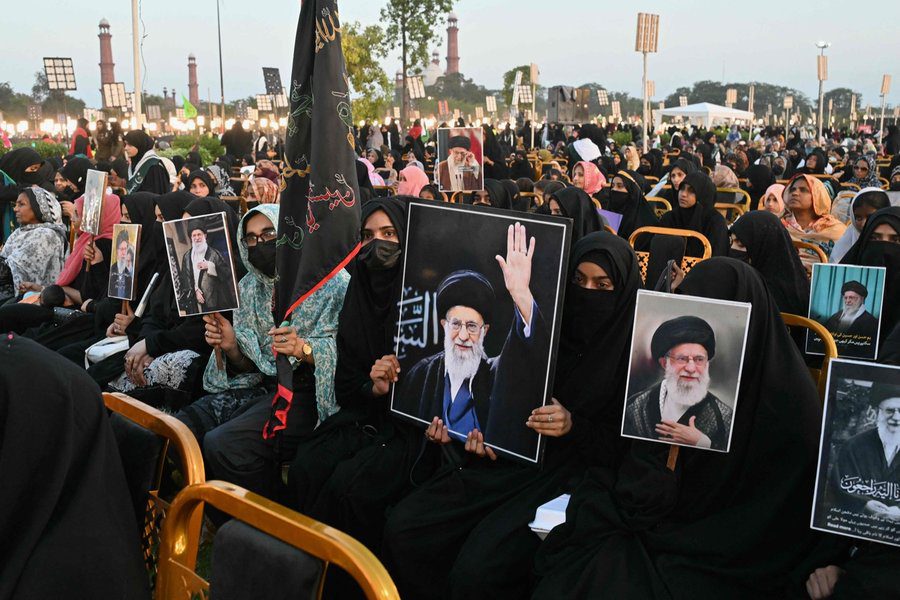
Why Did the Funeral Come After the Truce?
The timing of the funeral announcement was not arbitrary. After months of war and attrition, signs of de-escalation began to appear clearly with talk of a framework agreement between the United States and Iran, which provided a more secure environment for organising a massive public event. This allowed the Iranian authorities to transform the funeral from a defensive event into an offensive one in terms of political messaging.
For the new Iranian leadership, the success of a ceremony of this scale represents evidence that Khamenei's assassination did not lead to the collapse of the state or the disintegration of its institutions, and may even have offered an opportunity to demonstrate its capacity to overcome the gravest crisis it has faced in decades.
Tehran: The Journey Begins at the Centre of Power
The ceremonies begin in Tehran between 18 and 20 Muharram 1448 AH, corresponding to 4 to 6 July 2026.
Here the matter concerns not only bidding farewell to a former leader but also re-presenting the image of the regime to both domestic and foreign audiences. The Iranian capital is the centre of political, military and security decision-making, and its hosting of the body for three full days aims to affirm that power remains cohesive and that state institutions are capable of managing crowds that could reach tens of millions.
During these days, Tehran is expected to become a vast propaganda platform through which the state displays its organisational and mobilisation capacity, in a scene closely resembling the historic funerals that accompanied the departure of pivotal figures in the history of revolutions and doctrinal regimes.
Qom: Reconnecting Politics with Religion
On 21 Muharram 1448 AH, corresponding to 7 July, the body moves to the city of Qom.
This stop may seem self-evident given the city's religious standing, but it carries much deeper implications. Qom is not merely a holy city; it is the intellectual heart of the Iranian Shia religious establishment and the centre of the seminaries that have provided the regime with its religious legitimacy since its founding. The body's passage through Qom therefore conveys the message that Iran's Shia religious legitimacy remains intact despite the assassination of its supreme leader.
Karbala: Crafting the Idea of Victimhood
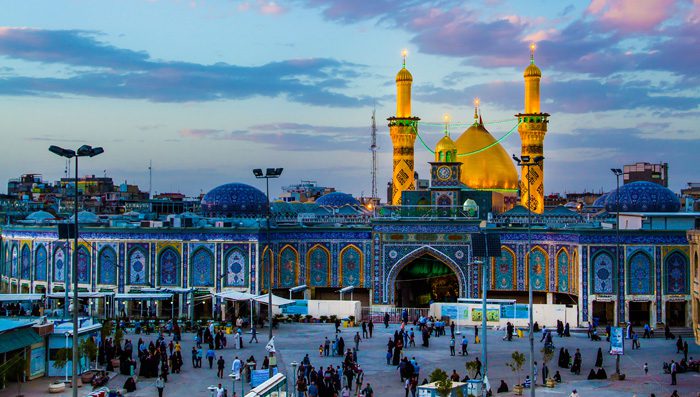
If Qom confers religious legitimacy, Karbala confers emotional legitimacy. On 22 Muharram 1448 AH, corresponding to 8 July, the body enters the city that forms the central memory of the Shia collective conscience.
Karbala is not merely a geographical stop; it is the greatest symbol of the ideas of victimhood, martyrdom and sacrifice. Through the passage of the funeral there, Iran seeks to recast the assassination of Khamenei within a "narrative of martyrdom" whose symbolic structure resembles, as Shia belief holds, the event of Karbala.
The implicit message is clear: Khamenei did not die merely as a political leader; he was killed confronting the enemies of the nation, and therefore his memory must be read within a framework of sacrifice and resistance.
Najaf: The Most Sensitive Message
If Karbala addresses sentiment, Najaf addresses the balance of power.
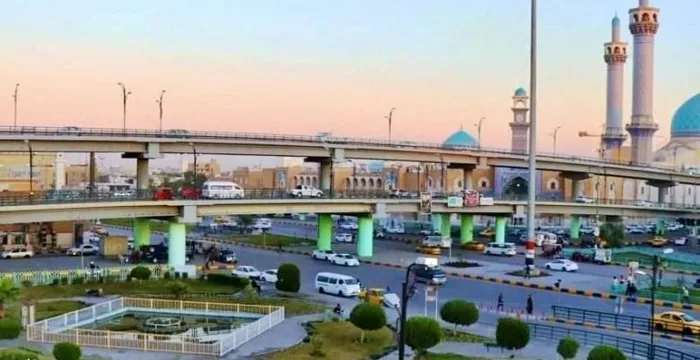
Najaf represents the centre of the traditional Shia religious authority and the most important seminary in the Shia world. Accordingly, including Najaf in the funeral route is not a protocol detail but a politically calculated step.
Iran understands that religious influence in the Shia world does not pass exclusively through Tehran or Qom but also through Najaf.
Holding ceremonies linked to Khamenei in Najaf also reflects an attempt to demonstrate the unity of the Shia sphere extending from Iran to Iraq, and to affirm that the assassination of the leader failed to dismantle what Tehran describes as the "Axis of Resistance."
Mashhad: The End Where the Story Began
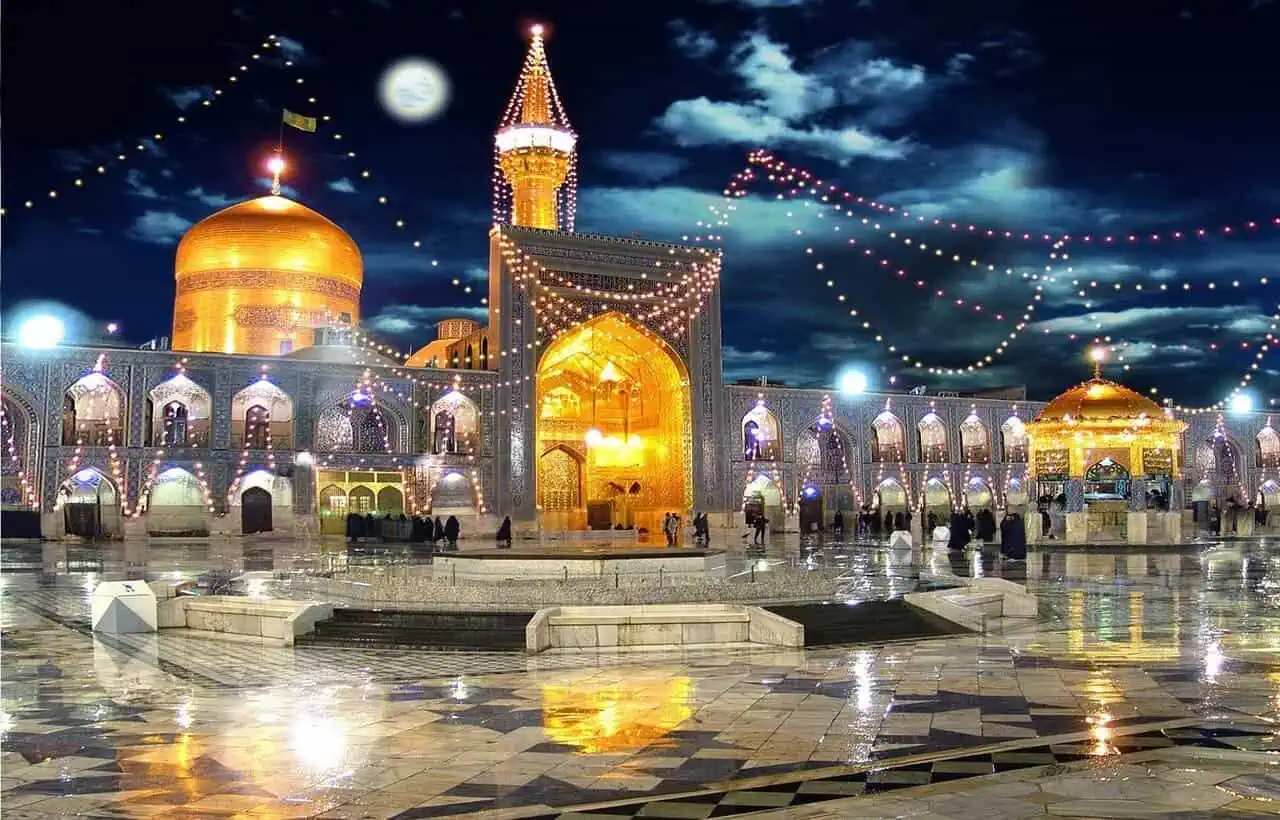
On 23 Muharram 1448 AH, corresponding to 9 July 2026, the journey reaches its final stop in Mashhad.
The choice of Mashhad is not merely a personal decision, given that it is Khamenei's birthplace, but because it carries intertwined religious and political significance.
Ending the journey in the far northeast of the country, after passing through Iraq and the heart of Iran, reflects an attempt to draw a symbolic map linking the Iranian state with the regional Shia space within a single funerary route.
A Funeral That Transcends the Meaning of Mourning
Viewed as a whole, it becomes clear that Iran did not delay Khamenei's funeral for five months for security considerations alone, important as they were. The state needed time to manage the transfer of power, arrange the internal scene, and await a more suitable regional moment after the truce, and then design a ceremony capable of performing political and religious functions far beyond the traditional role of a funeral.
It may therefore be said that the anticipated funeral is not the end of the story of Ali Khamenei but the beginning of a new phase in which the Shia republic seeks to redefine itself after the war and the assassination. It is a funeral designed to be as much a political statement as a burial, as much a regional message as a moment of mourning, and an attempt to demonstrate that the man whose body has been absent for 131 days remains present in Iran's strategic calculations.


