


Reports that Iran's Islamic Revolutionary Guard Corps (IRGC) has deployed large numbers of fighters from the Afghan "Fatemiyoun Brigade" and the Pakistani "Zainabiyoun Brigade" in the province of Sistan and Baluchestan in southeastern Iran have raised questions about the new role Tehran is assigning to two groups whose names were associated over the past decade primarily with the war in Syria.
These movements are especially sensitive because of the nature of the province itself. Sistan and Baluchestan is a turbulent border region in which Sunni Baluch form an essential part of the population, and in recent years it has witnessed deadly protests and repeated clashes between Iranian forces and armed Baluch groups.
According to the website Haalvsh, which specialises in following news from Iran's Baluchestan, the IRGC has over recent months deployed hundreds of Fatemiyoun elements in several areas, including Zahedan, Mirjaveh, Rasak, Saravan, Zabol, Chabahar, Konarak and Iranshahr, in addition to deploying Zainabiyoun elements in parts of the south of the province.
The website said, citing local sources, that some local Basij bases had been handed over to Fatemiyoun elements. The Iranian authorities have not officially announced the size of these forces or the nature of their mission, and it has not been possible to independently verify all details of the deployment.
The presence of Fatemiyoun elements in the province was reinforced by a new field development: reports said four members of the brigade were killed when their vehicle came under gunfire in the Rudmahi area near Zahedan, in an incident that occurred on 11 September 2026 (approximately 30 Rabi al-Awwal 1448 AH), and photos and videos of the burned vehicle were later published.
Who are the "Fatemiyoun"?
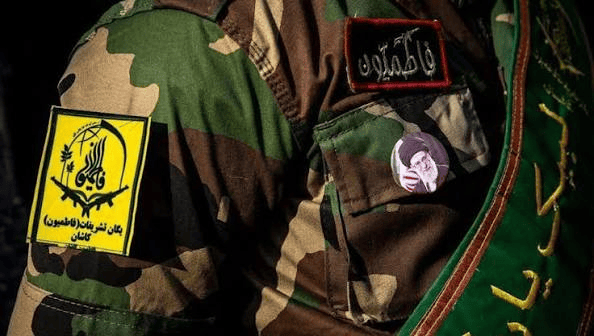
The "Fatemiyoun Brigade" is an armed formation composed primarily of Afghan Shia, and took its current form during the Syrian war when Iran recruited thousands of Afghans to fight alongside the forces of the regime of Bashar al-Assad the Nusayri.
However, the formation's roots predate the Syrian war: they are linked to groups of Afghan Shia who fought alongside Iran during the Iran-Iraq War, and some of their members later took part in conflicts in Afghanistan.
With the outbreak of the Syrian war, Iran reorganised the Afghan fighters into a military formation known as the "Fatemiyoun Brigade," which later expanded and came to be referred to as the "Fatemiyoun Division."
The US Department of the Treasury says the formation was led by the IRGC's "Quds Force," and that its members were recruited mainly from Afghan migrants and refugees present in Iran.
Washington accused the IRGC and the Basij of exploiting the precarious situation of some Afghans, and said testimonies from former fighters described being offered options such as prison, deportation or joining the fighting in Syria, in exchange for promises of obtaining legal residence. Human rights organisations also documented the recruitment of Afghan minors into the formation's ranks.
In Syria, Fatemiyoun fighters took part in some of the war's fiercest fronts, and Iran used them within the network of local and foreign forces that supported the Assad regime.
On January 2019 (Jumada al-Awwal 1440 AH), the United States imposed sanctions on the Fatemiyoun, describing it as a militia led by the IRGC's Quds Force.
And what about the "Zainabiyoun"?
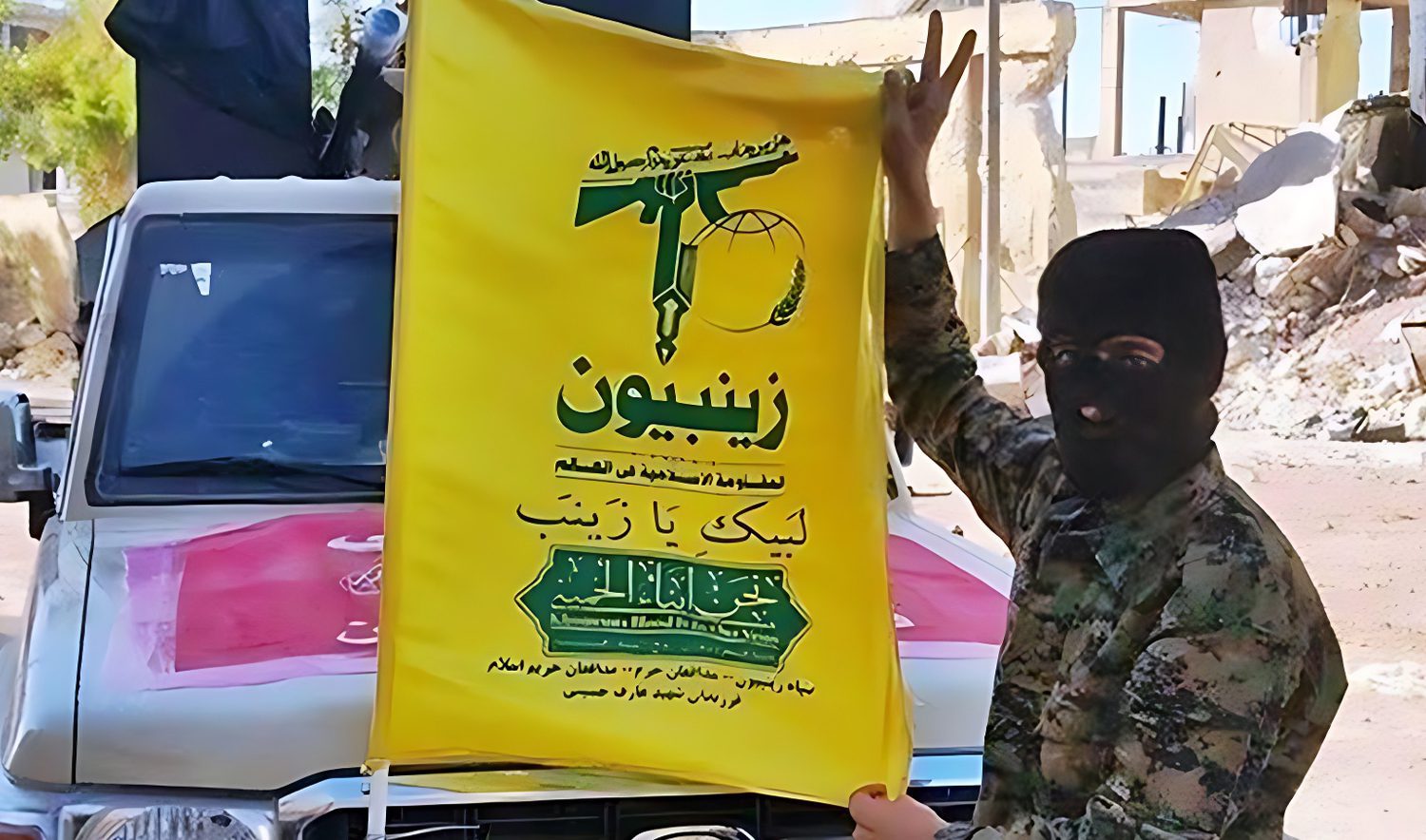
The "Zainabiyoun Brigade" resembles the Fatemiyoun in structure and role, but its members are Pakistani Shia rather than Afghan.
The US Department of the Treasury says the IRGC recruited Zainabiyoun fighters primarily from Pakistani Shia, including poor or undocumented migrants living in Iran, and sent them to fight in Syria.
The brigade's name became more prominent from around 2013, and it took part alongside Iranian forces and their allies in the Syrian war under the umbrella of the Quds Force.
The United States also imposed sanctions on the Zainabiyoun in January 2019, and said that both the Fatemiyoun and the Zainabiyoun had been providing support to the Quds Force.
Thus, during the Syrian war Iran built a model that allows it to employ fighters of different nationalities within a military network linked to the IRGC: Afghans in the "Fatemiyoun," Pakistanis in the "Zainabiyoun," alongside Iraqi, Lebanese and other groups.
Why are they appearing now in Sistan and Baluchestan?
What has been documented so far is the existence of multiple reports of the deployment of Fatemiyoun and Zainabiyoun in Sistan and Baluchestan, and the handover of some sites to them according to local sources, alongside the killing of four Fatemiyoun elements near Zahedan.
The mission they have officially been assigned has not been announced by the Iranian authorities, but from monitoring Iranian policies it appears their mission is to suppress the Baluch or Sunnis specifically.
However, the timing and location of the deployment offer several indications that help in understanding the move.
First: Deterioration of the security situation in Baluchestan
Over recent weeks, Sistan and Baluchestan has witnessed a series of armed confrontations between IRGC forces and armed groups opposed to Iran that seek the independence of Baluchestan.
In Saravan, the Bakhshan area witnessed in September an hours-long confrontation between government forces and fighters belonging to the "Popular Fighters Front," according to both sides' accounts, while other clashes occurred in Zahedan and various areas of the province.
The province is one of Iran's most security-disturbed regions, and it extends along long borders with Pakistan and Afghanistan, which gives it particular importance for the IRGC.
Second: The trust crisis between the authorities and a segment of the Baluch
The deployment carries a more sensitive dimension because of the tense relationship between the government and sections of the Sunni Baluch population.
Zahedan witnessed on 30 September 2022 (4 Rabi al-Awwal 1444 AH) the "Bloody Friday" events, when security forces opened fire during protests that followed Friday prayers, and dozens were killed according to human rights organisations.
Since then, Friday sermons in Zahedan led by Molavi Abdolhamid have become one of the most prominent platforms criticising the policies of the Iranian authorities.
In his latest comment, Molavi Abdolhamid said in the Friday sermon of 18 September 2026 (7 Rabi al-Thani 1448 AH) that he hears of the introduction of "foreign and parliamentary forces" into the country and the province, criticising this policy and calling on the authorities to rely on the population and win its trust instead of external forces.
Third: Forces directly linked to the IRGC
There is also a practical factor. The Fatemiyoun and Zainabiyoun are not independent foreign forces that each came to Iran by an individual decision; they are formations that have historically been tied to the Quds Force and the IRGC.
Consequently, their use inside Iran can be understood as transferring forces whose combat experience and command frameworks Tehran had already built during the Syrian war to a new security mission within the country.
Fourth: After Syria
For years Syria was the main arena in which Iran needed the Fatemiyoun and Zainabiyoun.
With the changing Syrian scene, the question of the future of the thousands of fighters Iran recruited during the years of war has been increasingly raised.
The network of foreign fighters and Shia militias that Tehran built has not disappeared automatically with the end of major phases of the Syrian war; elements of it can be redistributed to protect Iran's interests, strengthen internal security, or deploy in border areas.
Why does their deployment worry the Baluch?
The sensitivity is not only about these fighters being non-Iranian. Sistan and Baluchestan has a Sunni majority in its Baluch areas, while the Fatemiyoun and Zainabiyoun consist of ideologically Shia formations that emerged under IRGC supervision and fought a long war in Syria.
For this reason, reports of their deployment have raised local fears of introducing forces with a sectarian background and a record of abuses against Sunnis into an environment that already suffers from tension between the Sunni population and state institutions.
Baluch sources say some residents fear these militias will be used in security operations or in confronting future protests.
A record that raises the fears of the Sunni Baluch
The concern over the deployment of the "Fatemiyoun" and "Zainabiyoun" in Sistan and Baluchestan stems not only from their Shia background but from the reputation associated with the Iran-backed armed formations during the Syrian war.
The two brigades fought under the supervision of the Quds Force alongside the forces of the regime of Bashar al-Assad the Nusayri in a war that, according to documentation by human rights organisations, witnessed widespread abuses against civilians, including killing, arbitrary detention, torture, displacement and attacks on civilian areas, as well as the use of expressions hostile to Sunnis and to the Companions of the Prophet, may God be pleased with them.
The participation of these militias in the Iran-backed camp gave them a deeply negative reputation among large sections of Syrians, particularly in Sunni-majority areas that witnessed the fighting and displacement.
The name "Fatemiyoun" was also linked to abuses affecting its own members: the US Department of the Treasury said the IRGC exploited the precarious situation of Afghan refugees and migrants in Iran to recruit them and send them to Syria, and that former fighters described being offered a choice between prison, deportation, or joining the fighting in exchange for promises of residence; it also spoke of the recruitment of children under the age of 14 and of pushing fighters with limited training to the front lines.
As for the "Zainabiyoun," the Treasury says its members were recruited primarily from Pakistani Shia, including poor or undocumented migrants in Iran, to fight within the IRGC's military project in Syria.
For this reason, the appearance of the two formations now in Sistan and Baluchestan generates particular sensitivity among the Sunni Baluch population; for many, it is not a matter of ordinary military units, but of hostile foreign ideological formations created by the IRGC and used in the Syrian war.
The killing of four Fatemiyoun members shows the deployment is not theoretical
The most significant development came from the Rudmahi area near Zahedan. Haalvsh reported that four Fatemiyoun elements were killed after coming under gunfire during a patrol, and said they had been stationed at a base in the area for months.
Recordings also appeared of a burned vehicle that sources said was carrying Fatemiyoun elements, alongside other recordings that sources said show dozens of motorcycles being transported to the base.
Although the Iranian authorities have not officially announced details of the incident, the event gives greater weight to reports speaking of the actual presence of Fatemiyoun elements on the ground in Baluchestan, rather than merely their arrival in Iran or their remaining in camps far from the province.
From the Syrian battlefields to the Iranian interior
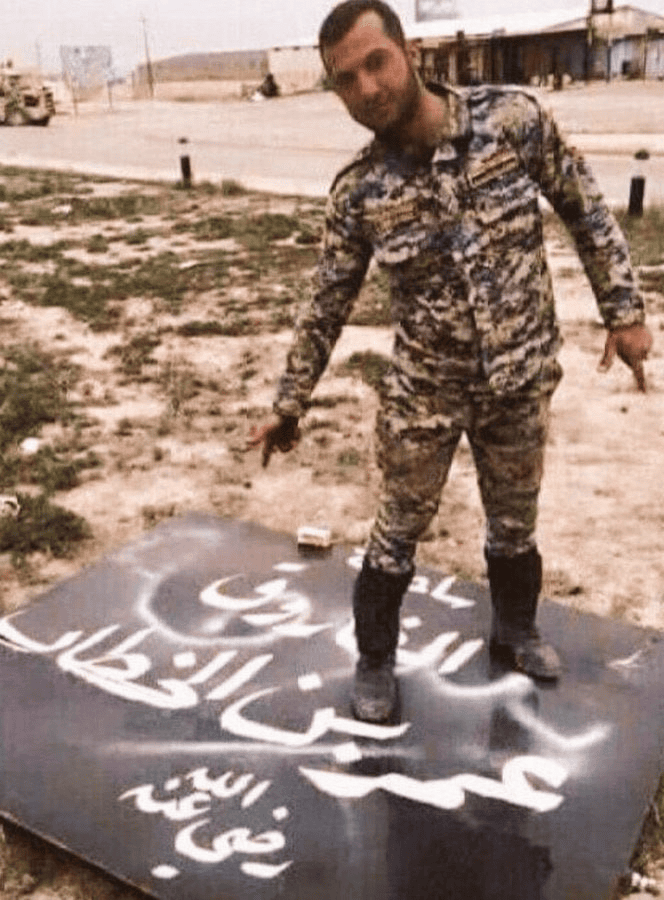
A circulated image from the war in Syria shows an armed element stepping on a placard bearing the name of the Companion Umar ibn al-Khattab, may God be pleased with him. The image was circulated in the context of accusations against hostile Shia militias loyal to Iran that provoke Sunnis in the areas they control.
Therefore, the significance of what is taking place in Sistan and Baluchestan goes beyond merely moving military units.
The handover of local bases to the Fatemiyoun and the deployment of the Zainabiyoun in the south of the province mean that formations Iran originally built for use in regional conflicts are now performing security roles within a highly sensitive Iranian region.
As for the most important question — is the aim protecting the borders, confronting armed opposition groups, strengthening the capacity to suppress possible protests, or all of these tasks? — Tehran has not yet given a clear official answer.
It is precisely this ambiguity that makes the return of the "Fatemiyoun" and "Zainabiyoun" from regional battlegrounds to the heart of the security file in Baluchestan a development worth following.


