

A reading of the Dahiya doctrine, the military record and the prospective political programme of Israel's likely prime minister
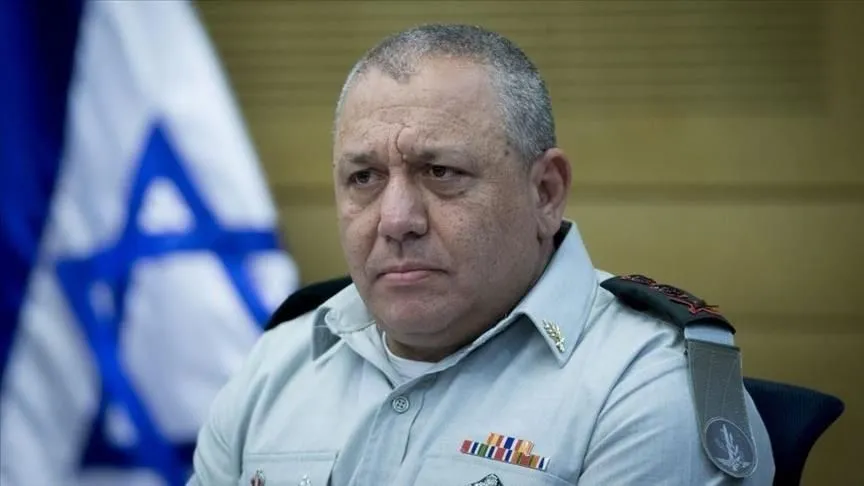
As former Israeli Chief of Staff Gadi Eisenkot is tasked with forming the new government following elections that weakened Benjamin Netanyahu's position, a question arises that goes beyond the contest for the prime minister's office: does the arrival of a former general in power represent a genuine shift in Israeli policies toward the Palestinians and the region, or does it concern replacing one way of managing power with another that is more disciplined and better able to sustain itself?
Eisenkot, who presents himself as a statesman capable of transcending internal divisions and managing crises with more realistic calculations, is not far from some of the most controversial Israeli military doctrines. His name has been linked to the "Dahiya Doctrine," which is based on the use of wide-scale destructive force to achieve deterrence. He was Chief of Staff during the Great March of Return protests in Gaza in 2018, during which the United Nations documented the killing and injury of thousands of Palestinians.
Netanyahu, for his part, faces a political record weighed down by wars and internal crises, as well as an arrest warrant issued against him by the International Criminal Court in 2024 over allegations of war crimes and crimes against humanity in Gaza.
However, the comparison between the two men should not be reduced to the question of which is more hardline. The difference between a politician who uses force within calculations of power and alliances, and a military commander who employs it according to an organised strategic doctrine, may be a difference in the way the conflict is managed, not in the fundamental objectives that govern it.
Hence the importance of returning to the records of both men, not through their media image or the political disputes between them, but through their decisions, military doctrines and declared programmes, leading to the most important question: Could a more pragmatic leader be less escalatory in the short term, yet more capable of consolidating and sustaining Israeli superiority in the long term?
Eisenkot on the threshold of power: a change of leadership or a rebuilding of the system?
On 8 November 2026, Israeli President Isaac Herzog tasked the leader of the "Yashar" party, Gadi Eisenkot, with forming the new government, after parliamentary blocs comprising 67 members of the Knesset recommended him, against 46 members who recommended that Netanyahu be tasked.
The mandate gave Eisenkot a period of 28 days to form a government that enjoys the confidence of the Knesset, with the possibility of an additional extension of 14 days.
However, receiving the largest number of recommendations does not mean he will be able to form the government. The party camp supporting him is not united on the shape of the coalition, and some parties refuse to participate in a government that depends on the support of Arab parties, while other parties oppose an alliance with Netanyahu or with hardline religious parties.
These complexities reflect the fact that Eisenkot, despite his political advancement, still needs to build an internal settlement that transcends the divisions deepened by years of Netanyahu's rule.
Eisenkot has pledged to work toward forming a "national emergency government," calling for mutual political concessions and for overcoming partisan disputes to confront security and regional challenges.
This language distinguishes him from the confrontational rhetoric associated with Netanyahu, but it is not sufficient on its own to judge the nature of his foreign and military policies.
Internal Israeli consensus may open the way to reviewing some decisions, and it may also become a means of rebuilding the political and military capacity to continue the same policies, but at a lower domestic and international cost.
Netanyahu: when war intertwines with calculations of political survival
Netanyahu differs from Eisenkot in his professional background and his path to power. The former is a civilian politician who spent decades leading governments and party coalitions, while the latter came from the military establishment after a long service that ended with the post of Chief of Staff between 2015 and 2019.
Netanyahu's long years in office gave him wide influence in setting Israel's national security priorities, and in the relationship between the political establishment, the army and the security services.
However, this influence was also linked to recurring internal crises, most notably the judicial overhaul crisis of 2023, which sparked widespread protests and led to deep divisions within Israeli society.
The repercussions of the crisis extended to the military establishment, after a number of reservists announced the suspension of their participation in service, amid warnings that continuing this could affect the army's readiness.
These events showed how internal political conflict can turn into a source of pressure on the security establishment itself, and how the state's ability to manage external crises becomes linked to the degree of internal cohesion.
Then the war on Gaza after 7 October 2023 revealed deeper disagreements over the objectives of the war, its management and the future of the Strip.
On 21 November 2024, the International Criminal Court issued an arrest warrant against Netanyahu, on the basis that there were reasonable grounds to believe he bore responsibility for alleged war crimes and crimes against humanity, including the use of starvation as a method of warfare.
The warrant does not constitute a verdict of guilt, but it represents an important judicial development in holding the Israeli political leadership accountable for the conduct of the war.
In June 2024, Eisenkot and Benny Gantz withdrew from the emergency government, after disputes with Netanyahu over the absence of a clear war strategy and the future of Gaza. Following their withdrawal, Netanyahu dissolved the smaller war cabinet.
From a political standpoint, one source of danger in Netanyahu's leadership may be seen as resulting from the intertwining of security considerations with calculations of coalition politics and staying in power, and the consequences this may have in prolonging conflicts or complicating prospects for settlement.
However, this interpretation does not mean that every military decision Netanyahu made was driven by personal interest, nor does it mean that Eisenkot's disagreement with him represents a difference in strategic objectives.
Eisenkot and the Dahiya Doctrine: destructive force as a means of deterrence
If Netanyahu's record raises questions about the use of military decision-making in political conflict, Eisenkot's military record raises another, deeper question: how does this man view the use of force, and what limits does he accept for achieving deterrence?
In October 2008, when Eisenkot was commander of the Northern Command of the Israeli army, he spoke about a military concept that became known as the "Dahiya Doctrine," named after the southern suburb of Beirut that suffered extensive destruction during the 2006 Lebanon war.
This doctrine, as reflected in his statements reported by the Israeli press and analysed by the Institute for National Security Studies, is based on responding with disproportionate force and inflicting massive destruction on the areas from which attacks against Israel are launched, with the aim of imposing swift and decisive deterrence.
Eisenkot then spoke of treating villages from which fire is launched as military bases, and of using wide-scale force against them, while stressing the need for a swift resolution without waiting for international approval.
This vision is not limited to responding to a specific military attack; it goes beyond that to employ the anticipated scale of destruction as an element of deterrence.
Herein lies the danger of the doctrine: when the built environment of inhabited areas becomes part of military pressure calculations, the risk increases of exposing civilians, their homes and essential facilities to extensive damage.
From a legal standpoint, it is not enough to describe a civilian area as a military base for all its installations to become legitimate targets. International humanitarian law requires distinction between civilians and combatants, and between civilian objects and military objectives; it prohibits indiscriminate and disproportionate attacks, and obliges parties to take feasible precautions to protect civilians.
Therefore, the debate over the Dahiya Doctrine concerns not only its military effectiveness, but the extent to which its applications are compatible with these obligations.
Nevertheless, a distinction should be drawn between the role Eisenkot played in adopting this military concept, and proving his personal responsibility for every military operation Israel subsequently carried out in Lebanon or Gaza.
What can be established historically is the association of his name with a doctrine that makes the use of wide-scale destructive force a strategic instrument of deterrence, which calls for scrutiny of his military conceptions when assessing his fitness to lead the government.
The 2018 Return marches: a record that calls for accountability of the leadership
The debate about Eisenkot has not been limited to military concepts. His tenure as Chief of Staff witnessed one of the most prominent episodes of Israeli force used against Palestinian protesters in the Gaza Strip.
On 30 March 2018, the "Great March of Return" protests began near the separation fence between the Gaza Strip and Israel, demanding the right of return and the lifting of the blockade on the Strip.
During the following months, Israeli forces used live ammunition against participants in the protests, resulting in large numbers of deaths and injuries.
According to the independent international commission of inquiry established by the United Nations, 189 Palestinians were killed during the protests covered by its inquiry up to 31 December 2018, of whom 183 were killed by Israeli forces with live ammunition, and among the dead were 35 children.
The commission also documented 6,106 Palestinians injured by live fire, as well as 122 cases of amputation up to the date of its report.
The commission concluded that there were reasonable grounds to believe that serious violations of international human rights law and international humanitarian law had been committed, and noted that the use of live ammunition was not legally justified in the vast majority of the cases it examined.
At that time, Eisenkot was at the head of the Israeli military establishment.
Holding this post alone is not sufficient to establish his personal criminal responsibility for each incident, as that would require determining the orders, rules of engagement and decisions he issued or approved, and the extent of his knowledge of the violations.
However, his leadership position makes it legitimate to hold him accountable for military policies and rules for the use of force, and prevents ignoring that period when assessing his record.
The man presented today as a more disciplined political alternative led the army during protests that a United Nations inquiry documented as having caused this large number of civilian casualties.
This does not automatically place him on the same footing as Netanyahu in responsibility for all subsequent events, but it requires an assessment of his record that goes beyond his current political image.
From the war cabinet to opposition to Netanyahu: have Eisenkot's convictions changed?
After the outbreak of the war on Gaza in October 2023, Eisenkot joined the Israeli war cabinet as an observer and took part in discussions on managing military operations.
He later disagreed with Netanyahu over the viability of continuing the war in the manner it was being conducted, particularly regarding whether all its objectives could be achieved by military force, the fate of Israeli captives, and the absence of a clear plan for the day after.
Eisenkot called for giving greater priority to an agreement guaranteeing the return of the captives, and criticised what he regarded as shortcomings in political and strategic planning.
In June 2024, he left the emergency government together with Gantz, a step that revealed the escalating dispute within the Israeli leadership.
But the question here is: did his positions reflect a fundamental shift in his view of the use of military force, or were they an objection to the way the war was being managed, its costs and its effectiveness?
The available facts do not provide sufficient evidence that he has abandoned his earlier security doctrine or adopted a fundamentally different vision for the future of the conflict with the Palestinians.
What can most reasonably be drawn from his stated positions is that he criticised the management of the war and the absence of a comprehensive strategy, without necessarily rejecting Israel's core security objectives.
This distinction is essential.
Pragmatism may push a leader to halt a military operation or accept an interim agreement when he sees that continued fighting threatens his objectives, but it does not necessarily mean abandoning those objectives.
Accordingly, Eisenkot's disagreement with Netanyahu should be read within the limits of what the man has declared and done, not as automatic proof that he adopts a more moderate policy toward the Palestinians.
Eisenkot's political programme: peace from a position of strength
A review of the objectives of the "Yashar" party, which Eisenkot leads, reveals a political vision that combines reform of internal institutions with strengthening Israel's security and military superiority.
The party affirms its commitment to keeping Israel a Jewish and democratic state, strengthening the army, expanding military or national service, and enhancing Israel's position as a regional power with strategic influence tools.
It also adopts the pursuit of peace and regional cooperation agreements from a position of military and economic strength.
This outlook gives an important indication of the nature of the project Eisenkot seeks to present: it is not based on reducing Israeli power as a source of problems, but on reorganising it, enhancing its effectiveness, and linking it to broader diplomatic and political tools.
On the Palestinian file, the distance between Eisenkot and Netanyahu appears less clear than their personal and political disputes might suggest.
According to positions reported by the Israeli press during the election campaign, Eisenkot opposes the establishment of a Palestinian state, supports dismantling the military and governmental capabilities of Hamas, and proposes security arrangements that would ensure Israel's continued ability to intervene in Gaza.
He has also spoken of the possibility of gradually proceeding with reconstruction in parallel with disarmament arrangements, and of reorganising the security administration in the West Bank.
On the Iranian file, he calls for addressing the nuclear threat in a sustainable and verifiable manner, while keeping open options of pressure and security action should diplomatic paths fail.
In Lebanon, he supports security arrangements that prevent threats from returning to the northern border, while strengthening the American and French roles in addressing the confrontation with Hezbollah.
These positions show that Eisenkot may differ from Netanyahu in priorities, timing and methods, but according to his current programme he does not present a project that ends Israeli military superiority or abandons its use as a central instrument for managing the conflict.
Rather, the concept of peace he adopts starts from strengthening power first, and then employing it in shaping political and security arrangements.
This raises a highly important question: will the settlements he seeks be a path toward ending the conflict and addressing its causes, or a means of managing the conflict on terms more favourable to Israel?
The answer cannot be determined before his policies are tested in office, but his programme allows the question to be posed on the basis of stated positions rather than assumptions about his intentions.
Could Eisenkot be more dangerous than Netanyahu?
The answer to this question depends on what is meant by danger, and over what time period the comparison is made.
If the criterion is the direct impact of policies on Palestinian civilians, then assessing Netanyahu rests on an actual record of decisions and wars during his tenure as head of government, and the resulting human losses and extensive destruction.
As for Eisenkot, he has not yet been tested as head of government, so the potential outcomes of his rule should not be treated as established facts.
However, if the criterion is the capacity to build a long-term security policy, maintain military superiority, reduce internal divisions and restore international support, then Eisenkot may possess some of the qualities that would allow him to manage the Israeli security project differently from Netanyahu.
A leader who can achieve broader internal consensus, combine military deterrence with diplomacy, and set achievable objectives may be more capable of sustaining the continuity of the policies he adopts.
Hence a hypothesis worth considering arises: a leadership that is less noisy and less impulsive in some positions may be more capable of consolidating the existing system of power, if it uses de-escalation, negotiation and the rebuilding of alliances as tools to achieve long-term strategic goals.
But the other side of this possibility is that the more pragmatic leadership may also be better able to avoid some costly confrontations, reduce human losses, and open political paths that had been closed.
Therefore, the hypothesis of strategic danger should not be turned into a presumptive judgement that Eisenkot will be more destructive or more aggressive.
The military record and the political programme help identify the potential risks, but actual decisions are what determine outcomes.
The seriousness of leaders cannot be measured by the sharpness or calmness of their rhetoric alone, but by the force they use, the goals they pursue, and the effects their policies leave on the lives of civilians and the rights of peoples.
What should Palestinians and the region be watching?
If Eisenkot succeeds in forming the government, the test of his direction will not be in the language he uses to attack Netanyahu, nor in his ability to form a more stable coalition, but in a set of concrete decisions.
In Gaza, the criterion will be his position on the continuation of military operations, the protection of civilians, the lifting of restrictions on aid, reconstruction, and the future of the Palestinian administration of the Strip.
In the West Bank, his real orientation will show through policies on settlement, settler violence, arrests, land confiscation, freedom of movement, and the treatment of Palestinians' political and civil rights.
As for Lebanon, Syria and Iran, the question will concern whether he continues to rely on military force to achieve deterrence, or gives diplomatic paths greater weight, and the extent to which state sovereignty and international law are respected.
In relations with the United States, it will be important to know whether Eisenkot uses improved political relations to ease regional escalation, or to strengthen Israel's ability to continue similar security policies with less diplomatic burden.
These indicators, not personal impressions, are what will reveal the nature of the change his government may bring.
Changing faces is not enough to change policies
The comparison between Netanyahu and Eisenkot is not a simple choice between hardline and moderate, nor between the impulsive politician and the calm military man.
Each has a different record, different tools, and a particular way of viewing the relationship between force and politics.
Netanyahu represents a model of long-lasting political leadership, whose decisions were shaped by coalition calculations and internal conflicts, and which was tied to the management of wars and wide-ranging crises.
Eisenkot, for his part, carries an institutional military legacy linked to a deterrence doctrine based on the use of large-scale destructive force, and today presents a political project that seeks to strengthen internal cohesion, restore the effectiveness of institutions, and consolidate Israeli security superiority.
The difference between them may be real in leadership style and in the management of war and negotiation, but it does not on its own prove a fundamental difference in strategic goals.
Nor is pragmatism synonymous with moderation, and military and political competence is no guarantee of respect for civilians' rights or of an end to occupation.
Pragmatism may permit interim concessions and de-escalation, but it may also be used to rearrange balances of power and entrench existing policies more effectively.
The resolution between these two possibilities comes not from predicting leaders' intentions, but from monitoring their decisions and holding them accountable for their results.
Therefore, the question that should occupy Palestinians and the region is not whether Gadi Eisenkot is less noisy than Benjamin Netanyahu, but whether his arrival in power will make Israeli policies less unjust and destructive, or more capable of achieving their goals and sustaining themselves.
Real change is not measured by who leaves power and who enters it, but by what changes on the ground in terms of policies, rights and the humanitarian reality.


