


On Tuesday, 29 September 2026 (18 Rabi al-Akhir 1448 AH), Jantar Mantar in the heart of the Indian capital New Delhi became the venue for a new protest over issues affecting Muslims in India. Leaders of Islamic organisations, MPs, activists and students gathered to protest demolitions that have targeted mosques and religious structures, and what the organisers described as discrimination against Muslims, alongside concerns linked to the review of voter rolls.
The gathering ended with the Delhi Police detaining a number of participants, including three MPs from the Samajwadi Party, in a development that moved the controversy over mosques from scattered local incidents in Indian states to a political and civil protest in the capital.
Who called for the protest?
The demonstration was organised by the Monitoring Committee of Indian Muslims (MCIM), with the participation of Islamic and civil organisations, and with the support of the Jamiat Ulama-i-Hind.
Footage from Jantar Mantar showed participants gathering and raising slogans concerning the protection of mosques and an end to what they describe as the selective use of bulldozers, in addition to demands related to voters' rights and calls to hold the Chief Election Commissioner of India, Gyanesh Kumar, accountable. India Today
The demonstration, contrary to what some circulated clips may suggest, was not devoted to mosques alone; it brought several issues together in a single protest.
The issue of places of worship was the most prominent concern relating to Muslims, alongside the Special Intensive Revision (SIR) of voter rolls and opposition concerns about names being removed from electoral registers. These claims are the subject of political dispute: the Election Commission denies any wrongdoing and says its procedures are lawful.
A series of disputes over mosques behind the protest
The mobilisation did not come out of nowhere. In recent weeks, India has seen several consecutive cases concerning mosques and Islamic structures, some of which the organisers cited to explain their call to gather at Jantar Mantar.
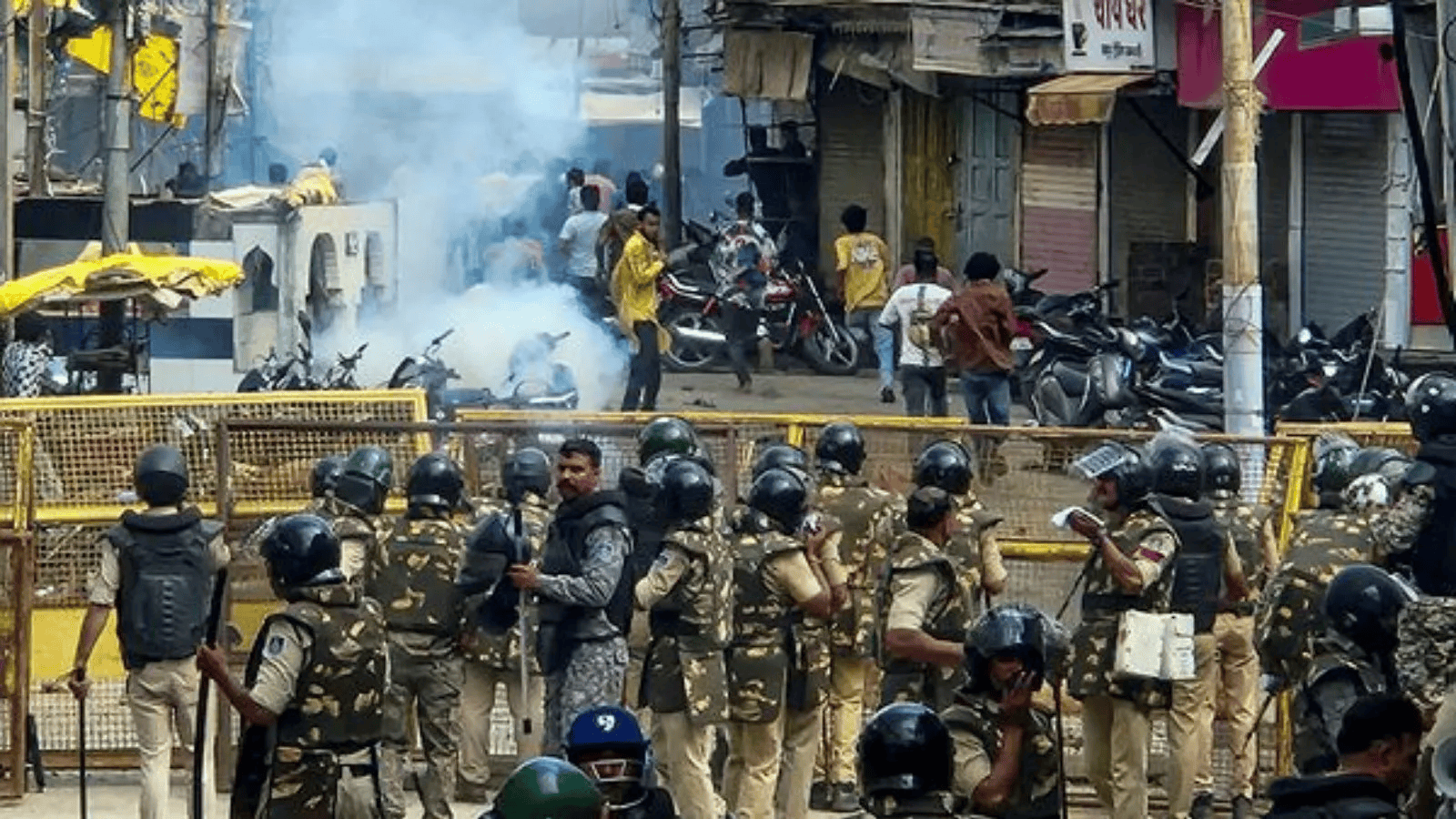
Among the most prominent is a mosque inside a government administrative complex in Saharanpur, Uttar Pradesh, which the authorities demolished on 5 September.
A local court had upheld, before the demolition, an earlier order treating the mosque as standing without authorisation on 315 square metres of government land and ordering its eviction; the authorities also imposed a fine of 6.41 crore rupees for occupying the land.
However, the mosque's administration objected to the proceedings. The mosque's custodian said the court's latest order rejected the appeal and upheld the eviction, but did not issue an explicit order to demolish the mosque, and that the committee still had a legal avenue for appeal. The authorities, for their part, said they had followed legal procedures.
The demolition provoked political protests; MP Iqra Hasan said at the time that she had been placed under house arrest to prevent her from going to the site.
Then came the Shahi Masjid crisis in Ujjain
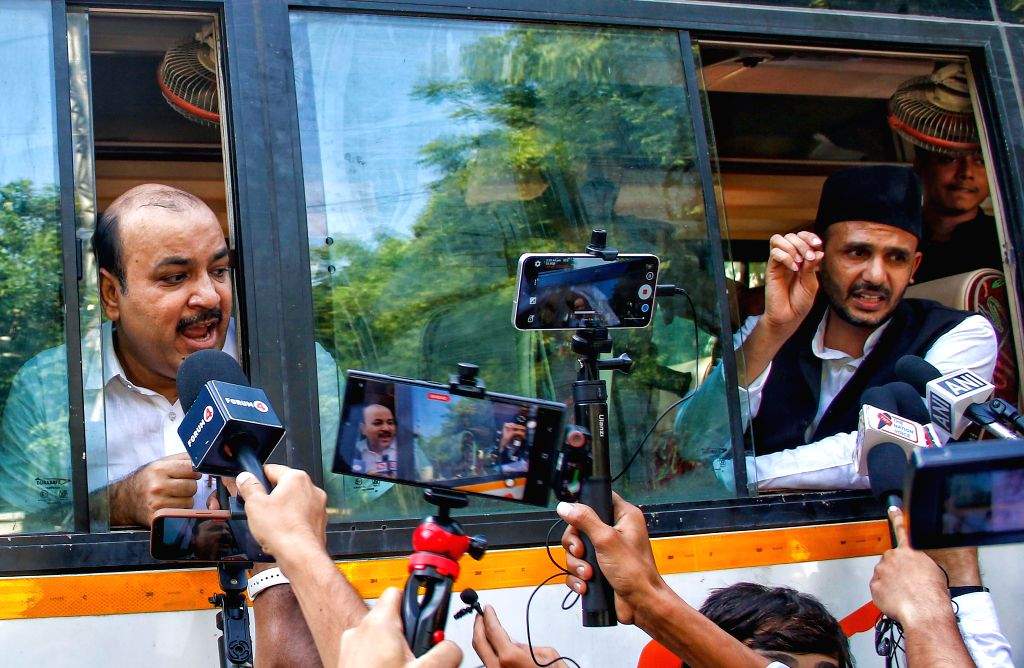
Just one day before the New Delhi demonstration, clashes broke out over the Shahi Masjid in Ujjain, Madhya Pradesh.
The Ujjain Municipal Corporation wants to widen the road running alongside the mosque to 15 metres in preparation for the Simhastha Kumbh festival scheduled for 2028, and the project requires removing part of the mosque's structure that lies within the path of the road.
In September, the Madhya Pradesh High Court rejected two petitions against the partial removal, holding that the municipal corporation had acted in accordance with the law and for public-interest purposes. The court also noted that similar measures had affected other religious structures along the route, including parts of ten temples and another mosque, and relied on this in rejecting the argument that the measure targets the mosque on religious grounds. The Indian Express
The case, however, angered Muslims in Ujjain, and residents gathered inside and around the mosque on the night of 27 September in protest against the removal of part of it.
The following morning, clashes broke out; police said some protesters pelted their personnel with stones, while security forces used tear gas to disperse the gathering. The Indian Express
The police then revealed that AI-generated videos falsely showing the mosque being demolished in its entirety had circulated shortly before the clashes and, according to their account, contributed to misleading and mobilising some protesters. The authorities opened cases against several content creators on charges related to spreading false information and promoting enmity between religious groups.
The New Delhi demonstration thus took place less than 48 hours after the events in Ujjain, and participants explicitly cited the Shahi Masjid case among the reasons for their mobilisation.
"Mosques and madrasas"
Before the demonstration, activist Nadeem Khan, national secretary of the Association for Protection of Civil Rights (APCR), called for participation, saying the mobilisation was a protest against what he described as the continuing use of bulldozers against religious sites.
In his call he named Islamic mosques and madrasas, citing the Saharanpur mosque case and other incidents in Delhi, Uttar Pradesh, Gujarat and Uttarakhand.
The organisers also said their objection was not limited to Islamic structures, pointing to concerns about Christian structures as well, and called for officials to be held accountable when demolitions are carried out in violation of the law.
This point requires editorial care: describing these events as "systematic targeting of mosques" is the position of the protest's organisers, and not an established judicial finding in every case. In a number of these cases the Indian authorities provide justifications related to unauthorised construction, land ownership or road projects, while mosque administrations, human rights organisations and opposition politicians dispute the legality of some of the measures or the manner in which they were implemented.
Other concerns: Are Muslim names being removed from voter rolls?
The second issue the protesters brought to Jantar Mantar was electoral.
India is witnessing a broad controversy over the review of voter rolls. The crisis escalated after the Indian Express revealed disagreements within the Election Commission over a number of decisions relating to updating the rolls and digital systems.
The opposition says the review process has led to large numbers of voters being removed improperly, and that it may disproportionately affect Muslims and other groups.
The Election Commission denies any manipulation, saying internal disagreements are a normal part of the institution's work and that the measures taken are lawful. The ruling Bharatiya Janata Party also denies opposition accusations that the review of rolls is being used to its advantage.
In this way, the organisers of the Muslim demonstration linked the security of places of worship with political participation and the right to vote, which they consider part of a broader crisis concerning the situation of minorities.
Three MPs join the protest
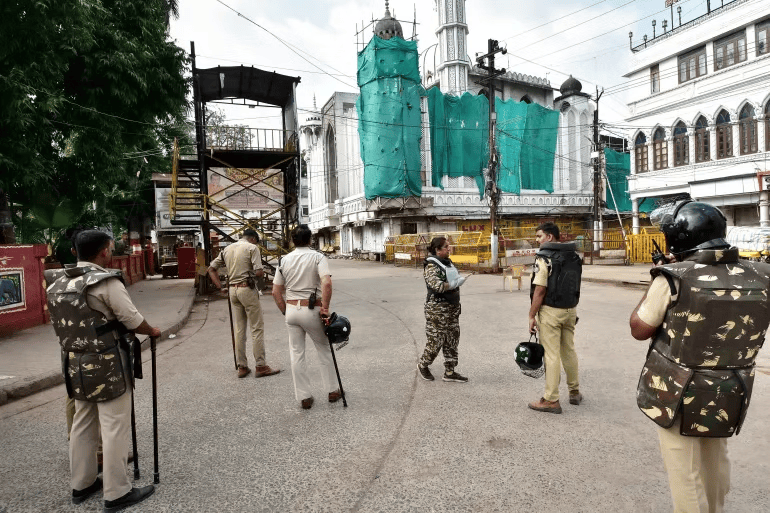
The protest gained political weight with the participation of three MPs from the opposition Samajwadi Party:
Ziaur Rahman Barq, MP for Sambhal; Mohibbullah Nadvi, MP for Rampur; and Iqra Hasan, MP for Kairana.
A video report published by India Today confirms the presence of the three MPs in the mobilisation alongside Islamic organisations.
Representatives of civil society, Islamic organisations and public figures also took part. Among the names reported in coverage were the president of the Jamaat-e-Islami Hind, Syed Sadatullah Husaini, former MP Kunwar Danish Ali, and academic Apoorvanand, alongside representatives of student and human rights organisations.
MP Ziaur Rahman Barq said during the protest that they would continue to demand what they consider "justice" for Muslims, affirming that their mobilisation will continue.
Iqra Hasan criticised the authorities' treatment of minorities, saying Muslims have a constitutional right to protest concerning mosques, religious schools, graveyards and their other institutions. These remarks reflect her political position on the events.
Police detain MPs and participants
The gathering did not continue without police intervention.
The Delhi Police detained members of the Monitoring Committee of Indian Muslims and a number of participants, in addition to the three Samajwadi Party MPs. Video material shows police officers dealing with participants and taking some of them out of the protest area.
Local reports say more than 50 people, including organisation leaders, activists, sitting and former MPs and others, were detained; however, I have not found a final official figure issued by the Delhi Police that would allow the number to be presented as an official total. The more precise statement is therefore that dozens of participants were detained.
The organisers also said that activist Nadeem Khan was prevented from participating and had been placed under house arrest since Tuesday morning.
From local disputes to a protest in the capital
The significance of the New Delhi demonstration lies in the fact that it brought together in one place issues that had appeared in recent weeks as separate incidents: a mosque demolished in Saharanpur after a legal dispute, a historic mosque partly removed in Ujjain as part of a road-widening project, other objections to measures affecting religious structures, and political concerns over voter rolls.
The events at Jantar Mantar were therefore not a protest over a single mosque incident, but an attempt by Islamic organisations and opposition MPs to present these facts as a national issue concerning the rights of Muslims, their religious institutions and their political participation.
On the other side, the legal background differs from one case to another. The authorities insist that some demolitions are linked to building violations, occupation of government land or infrastructure projects, while mosque administrations, politicians and human rights organisations say the way these measures are applied raises questions of discrimination and due process.
Thus the scenes of 29 September from the heart of New Delhi revealed that the controversy that began with a bulldozer in front of a mosque is no longer confined to a single city or state, but has become a subject present in a protest attended by members of parliament, Islamic and civil organisations, a short distance from the central institutions of government in India.


