


Yemen's fronts are witnessing a rapid military escalation as fighting intensifies in Marib Governorate between Yemeni government forces, backed by Saudi Arabia, and the Houthis, backed by Iran, while the escalation has again spread into Saudi territory through missile and drone attacks that reached the capital, Riyadh.
In the past few hours, clashes have focused on areas south of Marib, where government forces announced they repelled Houthi attempts to advance and targeted the group's gatherings, reinforcements and military positions with artillery, drones and airstrikes.
A Yemeni military official said on Sunday, 20 September 2026, that fierce battles took place over the preceding 24 hours in the areas of Harib, Mala'a and Umm Reesh south of Marib, after the Houthis intensified their attacks on government positions.
According to Brigadier General Yahya al-Hatimi, director of the Military Media Department of the Yemeni army, more than 80 Houthi fighters were killed and nine military vehicles were destroyed during the battles and airstrikes. This toll is issued by the Yemeni army and could not be independently verified.
Infiltration attempts south and west of Marib
Government forces also announced that they foiled two Houthi infiltration attempts toward their positions on the southern and western fronts of Marib.
Military sources said one of the attempts took place in the al-Fulayha sector south of the governorate, before artillery and drones targeted gatherings of the attackers, which, according to the government's military account, resulted in deaths and injuries among the Houthis.
Airstrikes and artillery shelling also targeted Houthi support positions and reinforcements around the Umm Reesh and al-Khaniysha camps and the Mala'a Pass, as part of operations aimed at preventing the group from making new advances toward Marib.
Marib holds major military and economic importance, as it contains oil and gas fields and energy facilities, in addition to being one of the most prominent strongholds of the Yemeni government in the north of the country and a centre for a large number of displaced people.
Over the past years, the Houthis have launched repeated military campaigns to take control of the governorate, before the intensity of the fighting declined significantly following the truce mediated by the United Nations in 2022.
Kahbub front and Bab al-Mandab
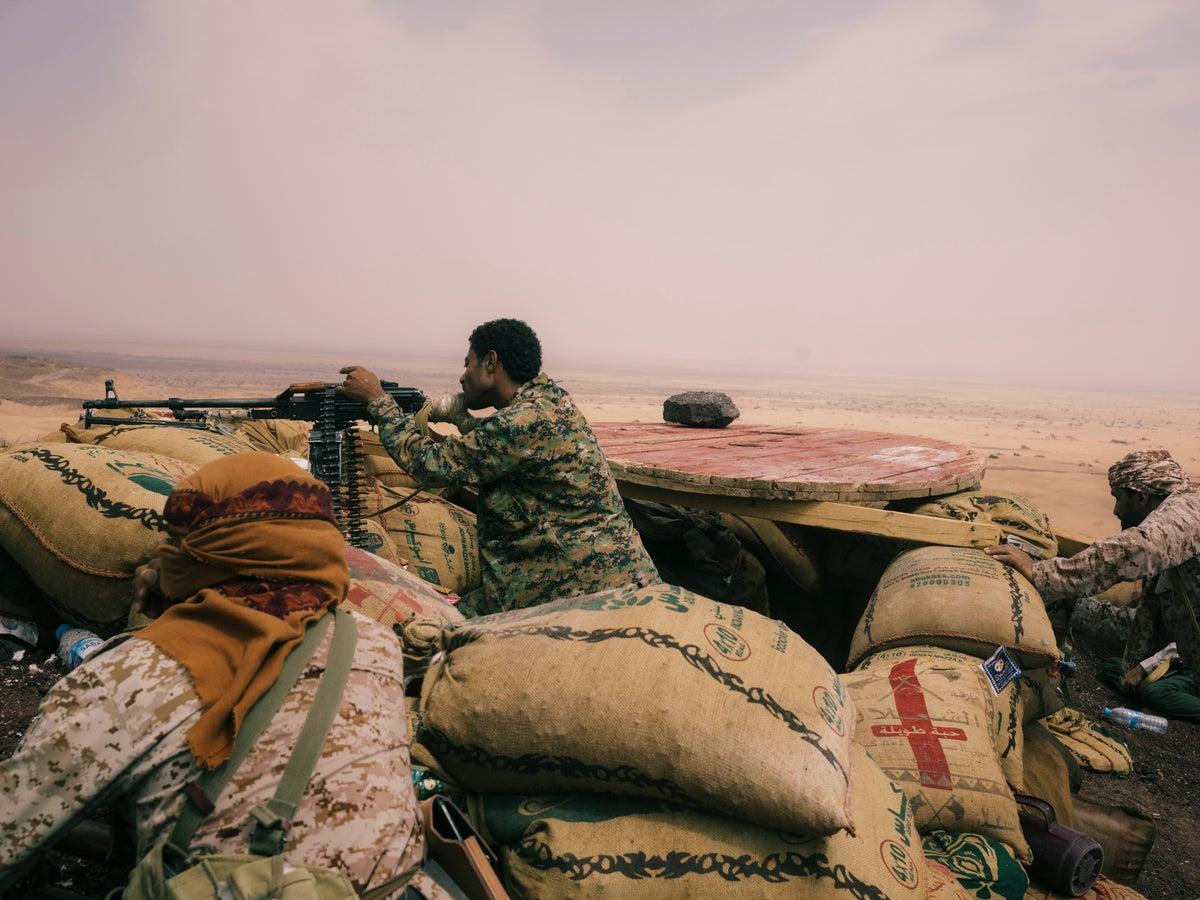
The escalation is not limited to Marib, as fighting continues on other fronts in Taiz, Lahj and al-Bayda, in an attempt by government forces to halt the advance the Houthis have recently made in western Yemen.
Government forces said they repelled a new Houthi attack on the Kahbub front in Lahj Governorate, close to the Bab al-Mandab Strait, and shot down a drone belonging to the group.
The Kahbub heights are of particular importance due to their position overlooking the areas surrounding Bab al-Mandab, following the gains the Houthis have made in recent weeks on the western coast.
Government forces also announced they carried out strikes against Houthi personnel and military equipment in al-Bayda Governorate, an indication of the widening scope of confrontations alongside the fighting in Marib and the western coast.
Ballistic missile toward Riyadh
In parallel with the fighting inside Yemen, the escalation across the border has widened notably.
Before dawn on Saturday, 19 September 2026 (8 Rabi' al-Akhir 1448 AH), Saudi Arabia announced the interception and destruction of a ballistic missile launched by the Houthis toward the capital, Riyadh.
The spokesman for the Saudi-led coalition, Brigadier General Turki al-Maliki, said Saudi air defences intercepted the missile, accusing the Houthis of attempting to target civilians and civilian objects in the capital.
The coalition also said Saudi defences foiled other Houthi attempts to target Yanbu, Bisha, Taif and Farasan.
Targeting Riyadh represents a significant development in the current round of escalation, as it was the first Saudi announcement of intercepting a Houthi missile toward the capital since hostilities broadly resumed in July of this year.
Houthis: 28 Saudi airstrikes in 24 hours
For its part, the Houthis' military spokesman, Yahya Saree, said on Monday, 21 September, that Saudi forces carried out 28 airstrikes within 24 hours on sites in Yemen.
This toll remains a Houthi account, and no independent confirmation of the announced number of strikes has been available so far.
In an interview published by the Associated Press, senior Houthi official Mohammed al-Bukhaiti warned other countries against joining Saudi Arabia in the fighting, at a time when the group seeks to consolidate the gains it has made in western Yemen.
A confrontation beyond Yemen's borders
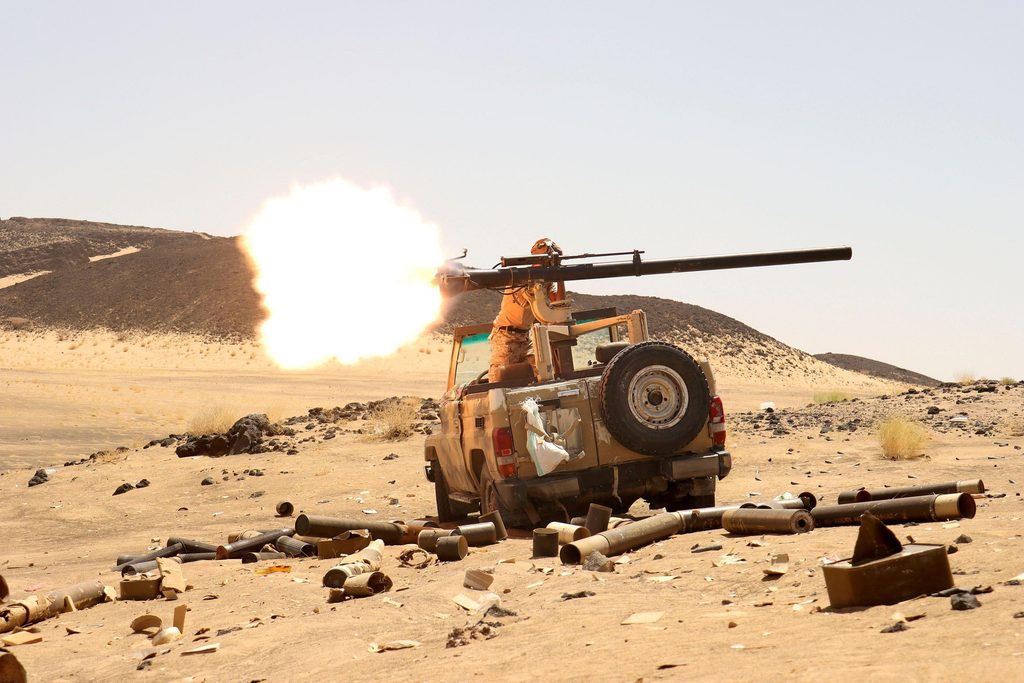
The simultaneous fighting on the fronts of Marib, Lahj, Taiz and al-Bayda, together with the launching of missiles and drones toward Saudi Arabia, points to a shift of the confrontation into a phase broader than the relative calm that followed the 2022 truce.
At the same time, parts of the battlefield picture remain contested between the parties: the casualty and military loss figures announced by the government forces or the Houthis are difficult to verify independently, while some developments, most notably the interception of the missile heading to Riyadh, can be confirmed from official Saudi statements.
On the ground, Marib and Bab al-Mandab remain among the most important fronts to watch in the coming days: the first for its military and economic weight for the Yemeni government, and the second because any change in control around the strait carries repercussions extending beyond Yemen to the security of navigation in the Red Sea.


