


Among the earliest images that have stayed with me since childhood is the scene of Israeli occupation soldiers surrounding unarmed Palestinian youths on a hill, the soldiers heavily armed, then beating the youths with hard rocks to break their bones while they were still alive. It was a brutality my young mind could not comprehend at the time.
I did not understand everything that was happening that day, but I clearly remember the anguish I felt when I learned that some of those youths were relatives of mine. From then on, the image was no longer a distant news item or a scene that memory might erase; it became a deeply personal pain that I recall with every report of bone-breaking by Jews.
One question has pressed on me ever since: why bone-breaking specifically? Why this terrible and tragic insistence on shattering the arms or legs of a young man who is unarmed, held in the hands of soldiers who have weapons, strength and complete control? The scene was about more than beating. It seemed the aim was not to end a protest or disperse youths, but to leave a lasting mark on both body and memory, a harsh message that the punishment does not end with the moment but remains carried in the bone itself.
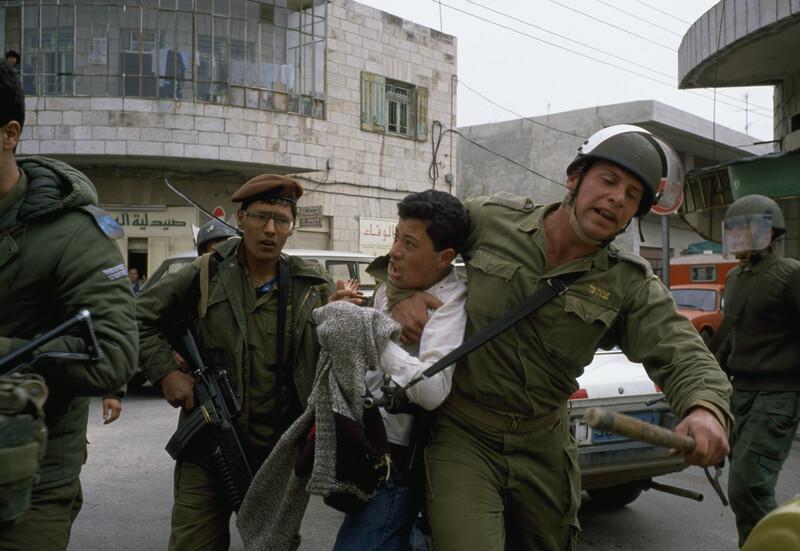
Some images need little explanation.
A twisted hand, a broken rib, a body released from detention bearing the marks of beating, and a prisoner who cannot stand as he did before falling into the hands of occupation soldiers.
When these images recur in Palestine, the question is no longer only: why all this violence? It becomes: why do bones and joints themselves become a target for punishment?
14 Centuries Ago
This question brings to mind an older episode, more than fourteen centuries removed, recorded in Sahih al-Bukhari concerning the Companion Abdullah ibn Umar, may Allah be pleased with them both.
Abdullah ibn Umar had gone out to his property in Khaybar, and was assaulted at night. The narration states: "his hands and legs were fadaʿa" (were dislocated or twisted).
Fadʿ is not merely a passing wound. Lexicographers and commentators on hadith explain it as the bending and displacement of the joints from their places, with the palms and soles turned over or the limbs deformed as a result of severe injury to the joints.
The narration in Bukhari reads: When the people of Khaybar fadaʿa Abdullah ibn Umar, Umar stood up to address the people and said: The Messenger of Allah, may Allah bless him and grant him peace, had made an agreement with the Jews of Khaybar over their property, saying: "We will let you remain as long as Allah lets you remain." Abdullah ibn Umar went out to his property there and was attacked at night, and his hands and legs were fadaʿa, and we have no enemy there other than them; they are our enemy and the object of our suspicion, and I have decided to expel them. When Umar resolved on this, one of the Banu Abi al-Huqayq came to him and said: O Commander of the Faithful, will you expel us when Muhammad, may Allah bless him and grant him peace, let us remain and dealt with us over the property and stipulated this for us? Umar said: Did you think I had forgotten the saying of the Messenger of Allah, may Allah bless him and grant him peace: "How will you be when you are expelled from Khaybar and your she-camel carries you night after night?" He said: That was a joke from Abu al-Qasim. He said: You lie, O enemy of Allah. Umar then expelled them, and gave them the value of what they had of the fruit, in money, camels, and goods such as saddles, ropes and other things.
Umar ibn al-Khattab, may Allah be pleased with him, knew the hostility of the Jews of Khaybar, and that such an aggressive act could come only from them in that era. The incident was among the direct causes after which he declared his intention to expel them, while also relying on the earlier condition under which they remained in Khaybar, and on what the Prophet ﷺ had said about their departure from it.
Notably, the narration itself records that when Umar expelled them, he did not seize their property but gave them the value of their fruit and belongings. In other words, anger at the assault did not become a cancellation of their financial rights. The Muslims are governed by a divine law, whereas the Jews followed their whims, and their treachery and tyranny stood out as a prominent feature of their history.
This historical incident recalls the Jewish hostility that extended across eras, taking the same form and method in dealing with Muslims.
When we turn to modern Palestine, we find something very similar: the deliberate beating of limbs and bones as an instrument of punishment under Israeli occupation.
Beating as Policy
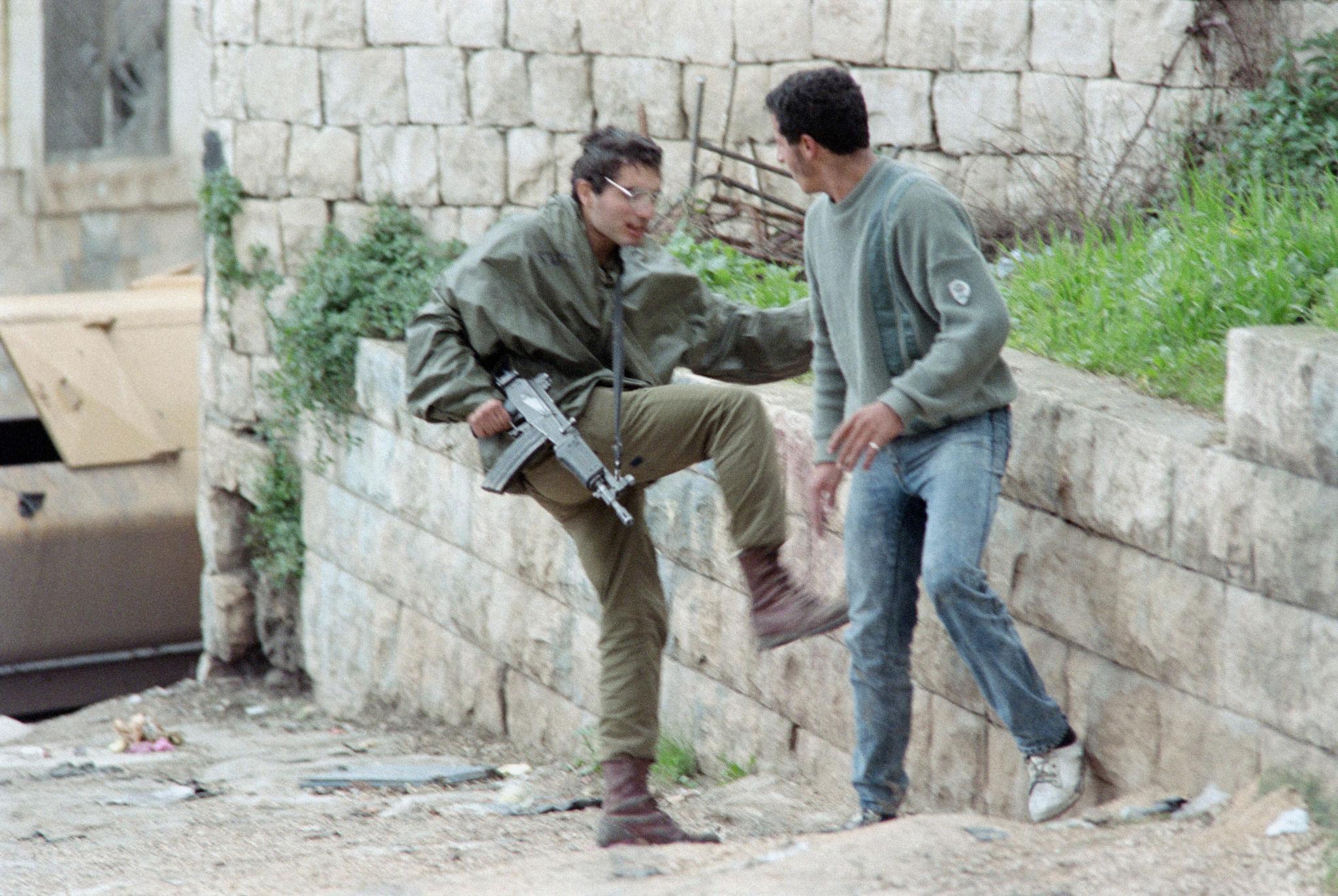
With the outbreak of the First Intifada in 1987, the occupation confronted a broad popular movement involving demonstrations, strikes and civil disobedience across the West Bank and the Gaza Strip.
In January 1988, then Israeli Defence Minister Yitzhak Rabin announced a policy based on "force, brutality and beating" in dealing with the Intifada, treating beating as a means of controlling protests rather than relying mainly on opening fire.
Hospitals were soon filled with Palestinians suffering fractures and injuries caused by beatings, to the point that the Israeli government's legal adviser warned Rabin in February about the growing number of complaints, saying that the claim that the violations were isolated cases no longer accurately reflected reality.
Here the phrase that would remain associated with that period emerged: "the policy of breaking bones." Soldiers then implemented a military order issued by the Israeli occupation army's then Defence Minister Yitzhak Rabin, which called for breaking the bones of the "stone children" as a first step to deter them and suppress their Intifada (the First Intifada) against it.
Limbs were broken, and Israeli occupation army officers and soldiers confirmed the reality of the orders they had received in this direction. More seriously, the matter reached the Israeli courts themselves.
Officers of the occupation army testified before a military court that they had received instructions from Rabin to break the limbs of stone-throwers; one of them quoted him as saying: "I want you to grab the stone throwers and break their arms and legs, not their heads."
Rabin denied that he had issued a literal order to "break bones," but acknowledged that he ordered soldiers to beat demonstrators to subdue them. Between the political denial and the officers' testimony, the truth remained written on Palestinian bodies. The Palestinian body was no longer merely a target for halting a protest; pain itself became a means of instilling fear and making an entire people understand that the price of resisting occupation could be carried in the bones for years.
In January 1988, Palestinians from the villages of Huwwara and Beita near Nablus were taken while handcuffed, and an order was issued to beat them and break their arms and legs. Years later, an Israeli military court convicted Colonel Yehuda Meir for ordering his soldiers to break the limbs of Palestinians in their custody, and described the orders as clearly illegal.
"Breaking bones," then, was not merely a propaganda phrase born in the Palestinian street. There were bones that were actually broken. Limbs that were smashed. Detained prisoners who were deliberately beaten on the arms and legs.
Nearly Four Decades Later: Bones Are Still Being Broken
Looking at the images coming out of Palestine today becomes more painful.
Nearly thirty-eight years after the First Intifada, human rights reports still describe bone fractures as a recurring result of abuse of Palestinians in Israeli detention facilities.
In January 2026, the Israeli organisation B'Tselem published a new report based on testimonies from Palestinian detainees who had been released, saying that violence in prisons includes beating with clubs, electric shocks, rubber-bullet firing and dog attacks, and that the assaults caused injuries including bone fractures, internal bleeding, and loss of consciousness, sight and hearing.
The accounts are not Palestinian alone. The independent international commission of the United Nations documented that some detainees were beaten during interrogation to the point of fractures, and that the necessary medical care was not provided to them in many cases. It also spoke of cases that ended in amputation of limbs as a result of restraints, detention conditions and poor care.
In July 2026, Palestinian Rizq Shakarna, 47 years old, was released after eight days of detention, unable to stand and move normally. Medical examinations, according to reports on his condition, showed rib fractures, bruising and head injuries after what he said was severe beating during his detention.
Earlier, Human Rights Watch documented the case of a Palestinian paramedic from Gaza who said he had been beaten until his ribs were broken, and then did not receive treatment at the Sde Teiman detention facility.
A report by Physicians for Human Rights–Israel went further, drawing on examinations and autopsies of the bodies of Palestinians who died in custody, and described injuries including multiple rib fractures, bleeding and internal injuries, amid calls for an independent investigation into the causes of the deaths.
Why Bones?
There is a harsh meaning in targeting the limbs specifically. Killing ends a person's life; shattering the body leaves him alive while he carries the punishment with him.
The hand that is broken is the hand one works with. The leg that is smashed is the one one walks on to one's land, mosque and home. A broken rib makes breathing, movement and sleep a continuous pain.
It is a violence that seeks not only to stop the body in a moment, but to make the body itself a memory of punishment.
This is why the images of the First Intifada were so affecting: the viewer did not see a military confrontation between two armies; he saw armed soldiers surrounding a Palestinian and then beating his limbs, as if the message was not only "stop," but: remember with your body who holds the power.
Today, when fractures reappear in detainees' testimonies, they cannot be viewed as a minor medical detail in a wider file.
A broken bone is a document. An injured body is testimony.
Does History Repeat Itself?
Looking back to the era of the Prophet and the Companions, may Allah be pleased with them, we find what the Jews did in the past and still do today.
Although history is more complicated than that, the warning about the Jews is exactly the advice that must be taken into account. Allah the Exalted says: {You will surely find the most intense of the people in enmity toward the believers to be the Jews and those who associate others with Allah…}
Before us is an ancient incident in Khaybar whose essence was the assault on a man until his joints were fadaʿa; then in modern Palestinian history there is a declared policy of beating linked to breaking bones; then in the present there are repeated reports of Palestinians leaving detention centres with broken ribs and limbs and severe injuries.
What unites them is the logic of force when it targets the body of a Muslim.
It is a logic that holds that humiliating an opponent is not complete by restraining him, but only by shattering him.
Between Khaybar and Palestine
Perhaps what most shakes a person reading the narration of Abdullah ibn Umar, may Allah be pleased with them both, today is that short phrase: "his hands and legs were fadaʿa."
A few words, yet they make one imagine a body whose joints were ruined in the darkness of night.
Then the centuries pass, and testimonies reach us from Palestine of broken ribs, dislocated shoulders, and bodies beaten while restrained.
The lesson in all of this is to understand the occupation when it strips the Muslim of his dignity before it, and to recognise to what extent inflicting pain on the body can become a tool for subduing an entire people.
The Palestinian does not need a myth to prove what befalls him.
Modern history itself is documented; the courts, reports, testimonies and images are sufficient.
When you see a broken Palestinian bone today, do not regard it as a mere injury that will heal in a few weeks.
There are things a cast does not mend. There is the dignity of a person beaten while helpless. A family waiting for his return. A people who keep in the bodies of their children the memory of decades of occupation.
The bone may heal. What must not heal in our consciousness is the habit of seeing it broken.
And we must not neglect the instructions of our Prophet, peace and blessings be upon him, and of his Companions, may Allah be pleased with them, to recognise the seriousness of our enemies, their methods and their malicious aims, and to prepare for them responsibly.


